Picking
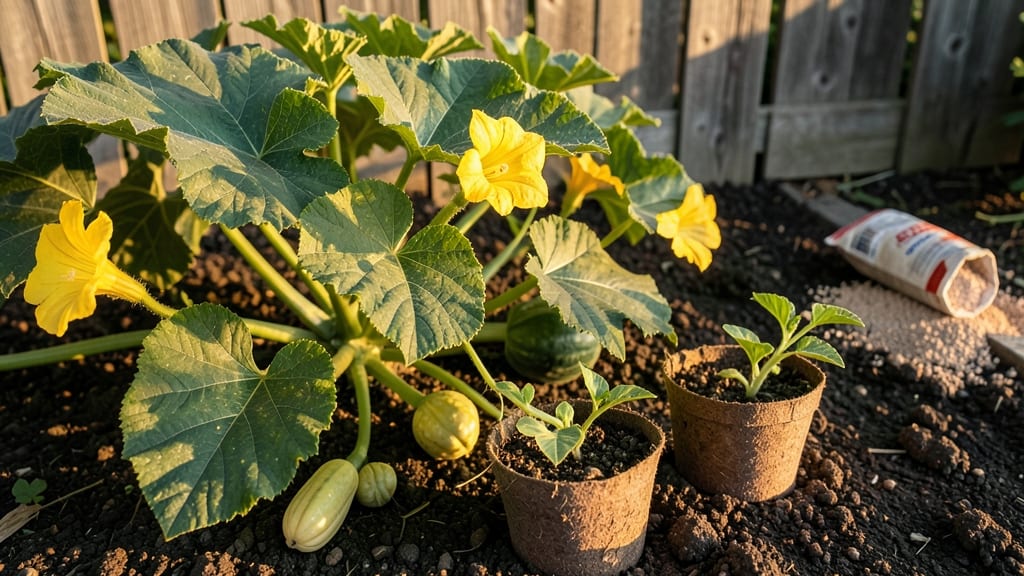
Planting honeynut squash requires timing after the last frost in fertile, well-draining soil with full sunlight, spacing plants 3-4 feet apart in mounds. Begin seeds indoors 2-3 weeks before transplanting for a productive 75-90 day growing window.
Honeynut squash loves warmth and space, so timing is everything. 🌱 The key is waiting until soil temperatures reach at least 60°F—cold soil slows germination and weakens seedlings. I always test soil moisture before planting; these squash prefer consistent dampness but hate soggy roots.
A trick I use is planting in raised beds with compost-rich soil, which warms faster in spring and drains better after rains. This helps prevent the common issue of rotting stems when moisture sits too long.
For best results, pair your honeynut squash with marigolds—they naturally repel pests like squash bugs. 💛 The 3-4 foot spacing might seem generous, but it gives vines room to sprawl without competing for nutrients.
I've found that planting in hills (mounds of soil) improves drainage and makes harvesting easier, especially when fruits get heavy. Just remember: patience pays off with honeynuts, as their sweet flavor develops fully only after 90 days of proper care.
💡 In This Article
- Optimal Growing Conditions for Honeynut Squash
- Step-by-Step Honeynut Squash Planting Guide
Optimal growing conditions for honeynut squash
Honeynut squash thrives in soil with a pH between 6.0 and 6.8, which ensures optimal nutrient uptake. The plant's root system prefers slightly acidic to neutral conditions—anything outside this range can lead to nutrient deficiencies, particularly iron and zinc.
I've noticed that when soil pH drops below 6.0, the plants show yellowing leaves, a classic sign of iron chlorosis, even when iron is present in the soil. Testing your soil before planting and amending with lime (to raise pH) or sulfur (to lower it) can prevent these issues.
Temperature plays a critical role in growth, with ideal daytime ranges between 70°F and 90°F. Below 55°F, germination slows dramatically, and seedlings may fail to emerge.
The plant's vines also struggle to develop properly in cooler temperatures, leading to stunted growth. 🔥 What's fascinating is how honeynut squash responds to heat waves—while they tolerate brief periods above 90°F, prolonged exposure can cause blossoms to drop, reducing fruit set.
This is why planting in regions with hot summers requires careful water management and shade cloth during peak heat.
Sunlight needs are non-negotiable for honeynut squash, which requires at least 6-8 hours of direct sunlight daily. The plant's broad leaves have a high photosynthetic rate, converting sunlight into energy for rapid vine growth and fruit development.
I've observed that plants receiving less than 6 hours of sunlight produce smaller, less flavorful fruits. The key is positioning your plants where they'll get morning sun and afternoon shade if your climate is extremely hot—this prevents leaf scorch while maintaining energy production.
Moisture management is where many gardeners stumble with honeynut squash. These plants need consistent soil moisture—about 1-2 inches of water per week—but they absolutely hate soggy conditions.
Overwatering leads to blossom end rot, where the fruit's blossom end turns black and mushy due to calcium deficiency under waterlogged conditions. 💫 To prevent this, I always use drip irrigation or soaker hoses to deliver water directly to the roots, keeping leaves dry.
Mulching with straw or shredded leaves helps maintain even moisture while suppressing weeds that compete for nutrients.
Common issues like powdery mildew and blossom end rot often stem from poor environmental conditions. Powdery mildew thrives in warm, humid conditions with poor air circulation—spreading it 3-4 feet apart helps, but I've also found that spacing rows 5 feet apart improves airflow.
For mildew prevention, I apply a mix of baking soda and water (1 tablespoon per gallon) every 2 weeks as a preventive spray. Blossom end rot, meanwhile, is directly linked to inconsistent watering or calcium deficiencies—adding crushed eggshells to planting holes provides a slow-release calcium source.
One nuance worth noting is how honeynut squash responds to different soil types. While they adapt to clay or sandy soils, they perform best in loamy soil with 30-40% organic matter. Amending heavy clay with compost improves drainage, while sandy soils benefit from adding peat moss to retain moisture.
The goal is creating a soil environment that mimics their native habitat—warm, fertile, and well-draining. This attention to soil structure pays off in larger, sweeter fruits with fewer blemishes.
Here's what actually happens when you nail these conditions: the plant's vines grow vigorously, producing abundant flowers that lead to consistent fruit set.
The fruits develop their signature sweet, nutty flavor when grown in optimal conditions—something you won't get with stressed plants. 🌟 Paying attention to these details transforms honeynut squash from a challenging crop to one of the most rewarding summer garden additions.