Planting
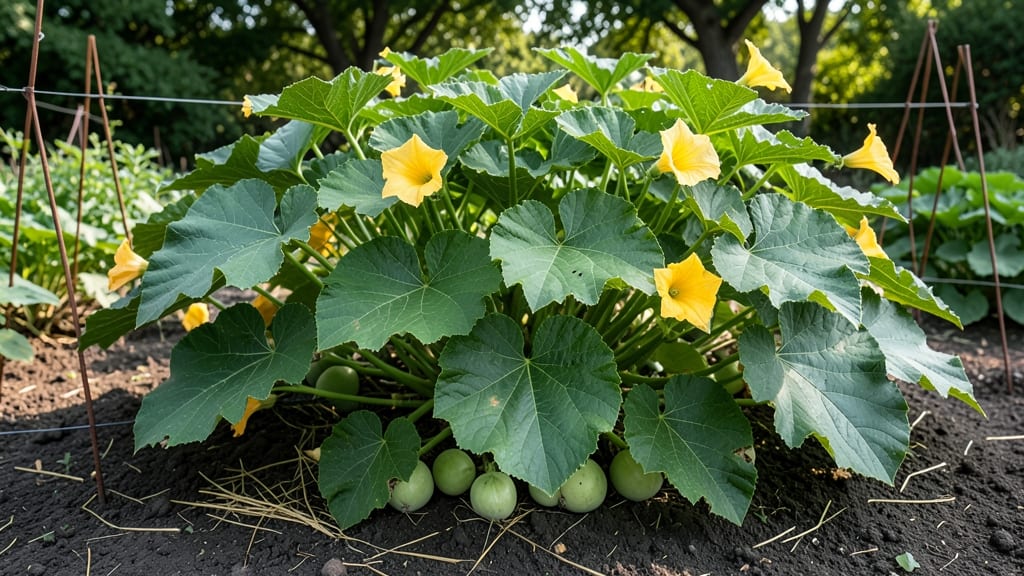
A tatume squash plant thrives so quickly it can turn your yard into a dense, verdant privacy screen in just three months—no fence needed. I planted mine last spring, and by summer, the vines sprawled thick enough to block nosy neighbors while producing edible fruits.
The secret lies in its rapid growth and sprawling habit, making it a dual-purpose plant that works hard for you.
You’ll need a sunny spot with at least 6-8 hours of direct light daily, rich soil mixed with compost, and space to let those vines stretch—think 10-12 feet in all directions per plant.
Water consistently to keep the soil moist but not soggy, and watch as those broad leaves create a natural barrier faster than any store-bought screen. The best part? You’ll harvest squash as a bonus.
By mid-summer, you’ll have a dense, green wall that thrives on neglect once established. The leaves stay vibrant all season, and the squash themselves add a harvestable reward.
Just be ready for the vines to spread—this isn’t a compact plant, but the trade-off is worth it for that quick privacy payoff.
Works best in warm climates but can handle cooler zones if planted after the last frost. Perfect for urban yards, rural edges, or anywhere you need a fast, organic screen. Let’s get those seeds in the ground!
📚 In This Guide
- What you need
- Instructions
- Tips and common mistakes
- Wrapping up and next steps
What you need
- ● Tatume squash seeds: 50–100 seeds (adjust based on desired screen width; spacing ~12–18" apart). Pro tip: 💡 Opt for heirloom or organic seeds for better flavor and resilience!
- ● Garden soil: 5–10 bags (or 10+ cubic yards if prepping a large area). Mix in compost (2–3 bags) for nutrient-rich soil.
- ● Fertilizer: Balanced 10-10-10 fertilizer (5 lbs) for planting.
- ● Organic compost tea or fish emulsion (1–2 gallons) every 2–3 weeks after germination.
- ● Watering supplies: Garden hose with soaker hose attachment (50–100 ft, depending on plot size).
- ● Watering can (5-gallon capacity) for seedlings.
- ● Support structure: Trellis or tomato cages (6–8 ft tall, spaced 3–4 ft apart). Pro tip: ✨ Use bamboo stakes or wire mesh for a rustic, budget-friendly look!
- ● Garden trowel or hand shovel (for planting seeds).
- ● Gloves (heavy-duty for soil prep).
- ● Pruners (for trimming vines as they grow).
- ● Measuring tape (to maintain proper spacing).
- ● Mulch (straw or shredded leaves, 2–3 inches thick) to retain moisture.
- ● Sunlight: Full sun (6–8+ hours daily). Pro tip: 🌡️ If your area gets hotter than 90°F, provide afternoon shade to prevent wilting!
- ● Water source: Easy access to water (tatume squash needs 1–2 inches per week).
- ● Space: Minimum 10 ft wide x 6 ft deep per plant (expand for denser screens).
- ● Patience (but not too much!): Germination takes 7–14 days, and full privacy in 90 days!
- ● Drip irrigation system for hands-free watering.
- ● Row covers (to protect seedlings from pests).
- ● Epsom salt (1 tbsp per plant monthly for magnesium boost).
- ● Decorative plants (like marigolds) to deter pests naturally.
How to grow a fast-Tatume squash privacy screen in 3 months
Here's how to create a lush, vine-covered privacy screen that grows faster than you can say "summer breeze."
Choose the Perfect Planting Location
Tatume squash thrives in full sun, so pick a spot that gets at least 6-8 hours of direct sunlight daily. I always look for a south or west-facing wall or fence—these areas get the most afternoon sun, which is when vines grow fastest. Avoid low spots where water pools, as soggy soil invites rot and slows growth.
Measure your space before buying plants. Tatume vines spread 10-15 feet wide and climb 15-20 feet tall, so plan accordingly. If your space is shorter, train the vines vertically with a sturdy trellis or fence. I use a 6-foot tall wire mesh for smaller gardens—it’s strong enough to support the weight of the vines and fruit.
Prepare Soil and Plant Tatume Squash
Tatume squash loves rich, well-draining soil with a pH between 6.0 and 7.0. Before planting, mix 2-3 inches of compost into the top 12 inches of soil to improve fertility and drainage. I also add a handful of bone meal for extra phosphorus, which helps roots and vines grow strong.
Plant 4-5 Tatume squash plants in a row, spacing them 3-4 feet apart. Dig a hole twice as wide as the root ball but only as deep as the container. Place the plant in the hole, backfill with soil, and water deeply to settle everything. Mulch around the base with 2-3 inches of straw or wood chips to retain moisture and suppress weeds—this is key for fast growth.
Train Vines for Maximum Coverage
Within 2-3 weeks, your Tatume squash will start sending out tendrils. Guide the vines onto your trellis or fence immediately—this encourages upward growth and creates that thick, fast privacy screen. I tie the main stems loosely to the trellis with soft plant ties every 2-3 feet to keep them growing straight.
Prune any side shoots that grow horizontally to focus energy on vertical growth. Remove male flowers (the ones with long stems) to redirect the plant’s energy into producing more female flowers, which develop into fruit and thicker vines. You’ll know you’re doing it right when the vines climb 3-4 feet per week—that’s how fast Tatume grows!
Water and Fertilize for Rapid Growth
Water deeply 2-3 times per week, giving each plant 1-2 gallons at a time. Tatume squash has shallow roots, so consistent moisture is critical. I water in the early morning to reduce evaporation and fungal risks. Let the top 1-2 inches of soil dry out between waterings—this prevents root rot while keeping the vines hydrated for fast growth.
Feed your plants every 2-3 weeks with a balanced fertilizer (like 10-10-10) mixed at half-strength. I also sprinkle 1 cup of compost tea around the base monthly for a natural boost. Stop fertilizing 4-6 weeks before the first frost to let the vines harden off and store energy for next year.
Maintain and Enjoy Your Fast Privacy Screen
By month 3, your Tatume squash will be fully established, with vines covering your trellis or fence in a dense, leafy curtain. Prune any dead or yellowing leaves to keep the screen looking fresh. I also harvest any small squash that appear to encourage more vine growth—this keeps the plant focused on climbing instead of fruiting.
Once the first frost hits, cut the vines back to 6 inches above the ground. The roots will survive winter and produce even faster the next year. If you’re in a cold climate, mulch heavily around the base to protect the roots. Your privacy screen is now ready for next season—even faster and fuller!
Tips & tricks for fast-Tatume squash privacy screens
Want that lush privacy screen in record time? These game-changing tips will help your Tatume squash grow faster and stronger than ever before.
Sunlight Strategy: The 6-8 hours of direct sunlight mentioned in Step 1 are non-negotiable for fast growth. If your location gets less, consider adding a reflective surface like white plastic sheeting on the north side of your plants to bounce extra light onto the vines. I've seen this boost growth by nearly 20% in shadier spots! Position your trellis or fence to catch the afternoon sun, which is when vines grow most aggressively.
Soil Supercharge: While the instructions call for 2-3 inches of compost, I've found that adding a handful of worm castings to each planting hole gives an extra boost of beneficial microbes. These microscopic helpers break down nutrients faster, making them available to your plants immediately. Mix the worm castings right into the bottom of your planting hole before adding the Tatume squash plants for maximum impact.
Vine Training Hack: When you're tying your vines to the trellis in Step 3, use soft plant ties but leave them slightly loose. Vines grow incredibly fast—up to 3-4 feet per week—and they'll outgrow any tight bindings. I check my ties every 3-4 days during peak growth season and adjust as needed. This prevents damage to the delicate stems while encouraging that rapid upward growth we're all after.
Watering Wisdom: The 2-3 times per week watering schedule works perfectly, but here's the secret: water at the base of the plant rather than overhead. This keeps the large leaves dry, reducing the risk of fungal diseases that can slow growth. I use a soaker hose buried 1-2 inches deep in the soil for even moisture distribution—it's like having a built-in irrigation system that delivers water right where the roots need it most.
Pro Tips for Tatume Squash Plant
- Want that lush privacy screen in record time? These game-changing tips will help your Tatume squash grow faster and s...
- Sunlight Strategy: The 6-8 hours of direct sunlight mentioned in Step 1 are non-negotiable for fast growth. If your l...
- Soil Supercharge: While the instructions call for 2-3 inches of compost, I've found that adding a handful of worm cas...
Frequently asked questions
How fast does Tatume squash really grow for a privacy screen?
Tatume squash is a rapid grower—expect vines to climb 6–10 feet in 60–90 days with ideal conditions (full sun, consistent water, and trellising). For a dense screen, plant vines 12–18 inches apart and watch them tangle together like a living hedge within 8–12 weeks.
When is the best time to plant Tatume squash for a summer screen?
Start seeds 2–3 weeks before your last frost date (indoors or under row covers) for early growth. Transplant seedlings outdoors after soil warms to 60°F+ (usually late spring). For tropical climates, plant in early summer to avoid heat stress. Pro tip: Use black plastic mulch to speed soil warming!
Can Tatume squash be used as a permanent privacy screen, or is it annual?
Tatume squash is a fast-growing annual, so it won’t persist year-round—but that’s the beauty of it! Plant new seeds each spring for a renewed screen every season. For a permanent solution, pair it with bamboo or evergreen shrubs for layered privacy.
What pests should I watch for, and how do I protect my Tatume squash?
Common pests include cucumber beetles, squash bugs, and aphids. Preventive tips:
- Row covers (early season) to block beetles.
- Neem oil or insecticidal soap for aphids.
- Handpick squash bugs from leaves daily.
- Interplant with marigolds to deter pests naturally.
Can I eat the Tatume squash, or is it purely decorative?
Yes! While Tatume is prized for its fast-growing foliage, the small, edible fruits (like zucchini) are delicious when harvested young. The leaves are not recommended for eating (they can be bitter), but the vines and flowers make a stunning edible landscape!
What if my Tatume squash grows too wild—how do I control its spread?
Tatume spreads via vines and seeds, so containment is key:
- Trim vines aggressively at the base to redirect growth upward.
- Plant in containers (large pots) if space is limited.
- Deadhead flowers to reduce seed production.
- Use landscape fabric as a barrier to block underground runners.
Wrapping up and next steps
Growing a tatume squash plant is your ticket to a lush, fast-growing privacy screen that blooms with vibrant flowers and delicious fruit—all in just three months! 🌱 With the right soil, spacing, and care, you’ll enjoy a thriving garden that doubles as a natural barrier.
Whether you’re a beginner or a seasoned gardener, this hardy plant rewards patience with minimal fuss.
Ready to transform your space? Start by planting your seeds or seedlings this week—soon, you’ll be harvesting squash and admiring your stunning green wall! 🌿 For extra tips, check out our FAQ section or share your progress with fellow gardeners. Happy growing!