
Pruning
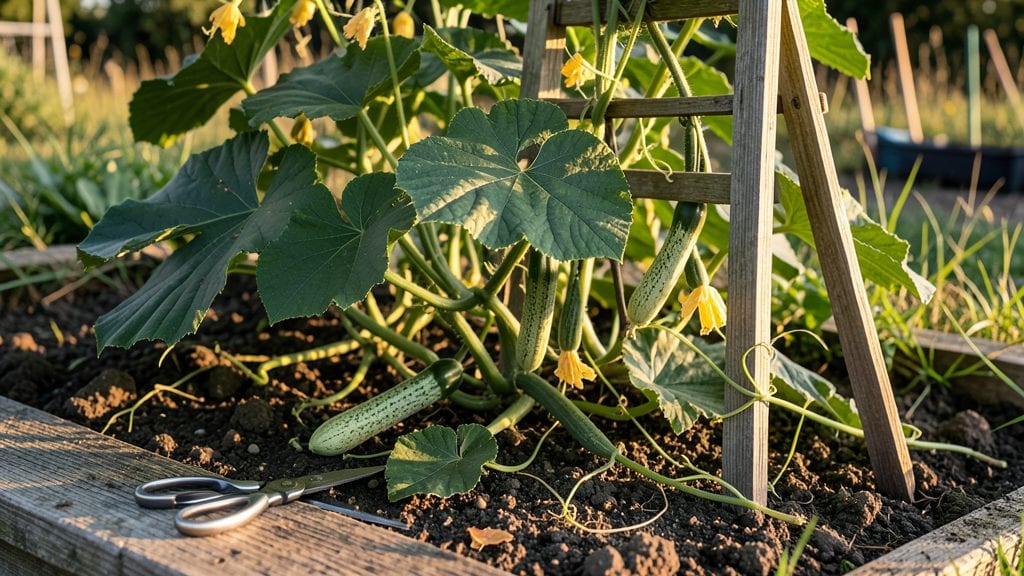
Trimming cucumber plants isn't just about keeping them tidy—it’s the secret to doubling your harvest this summer. ✨ I learned the hard way that skipping this step means fewer fruits and more disease pressure, but once I mastered the three key cuts, my vines exploded with production.
The right trims encourage stronger growth, better airflow, and bigger cucumbers—no fancy tools or gardening degree required.
You’ll need sharp pruning shears (or clean scissors in a pinch), a sunny morning for trimming, and about 15 minutes per plant once you get the hang of it.
Focus on three types of cuts: removing suckers (those little shoots between the main stem and branches), thinning overcrowded vines, and opening up the plant’s center for airflow. Bush varieties need less aggressive trimming than vining types, but the same principles apply—just dial back the intensity.
After a few weeks of consistent trimming, you’ll notice thicker stems, more flowers, and cucumbers forming closer to the main vine. The plants stay healthier too, with fewer yellowing leaves or powdery mildew spots.
Plus, harvesting becomes easier when you’re not fighting through a jungle of tangled vines. This is how you turn a decent garden into a bountiful one without extra work.
Works for both bush and vining cucumbers, and the technique scales from container gardens to full-sized trellises. The key is consistency—once you see the difference, you’ll never go back to letting your plants grow wild. Let’s get those shears ready!
📚 In This Guide
- What you need
- Instructions
- Tips and common mistakes
- Wrapping up and next steps
What you need
- ● Pruning shears or sharp bypass pruners – Look for clean, sterilized tools (alcohol wipe before/after use) to prevent disease spread.
- ○ Gloves (optional but recommended) – Garden or work gloves to protect hands from thorns and dirt.
- ● Disinfectant (70% isopropyl alcohol or bleach solution) – 1 part bleach to 9 parts water for sterilizing tools.
- ● Small trash bag or bucket – For collecting pruned branches and debris.
- ● Watering can or hose (with gentle spray nozzle) – To hydrate plants post-trimming.
- ● Plant growth hormone (rooting powder) – If propagating cuttings, use a 1% IBA (Indole-3-butyric acid) powder.
- ● Mulch (straw or shredded leaves) – To retain moisture and protect soil after trimming.
- ● Notebook & pen – To track trimming dates and plant progress.
- ● Knee pad or stool – For comfort if plants are tall or ground access is tricky.
Step-by-Step guide to pruning cucumber plants for maximum harvest
Here’s how to channel your cucumbers’ energy into bigger yields—not more vines.
✂️ Step 1: Remove Suckers for Stronger Main Stems
Suckers are those tiny shoots that form in the leaf axils where the main stem meets a leaf. These energy vampires divert nutrients from fruit production. I use clean, sharp pruning shears to snip them off at the base—never tear them, or you risk damaging the main stem.
Start when vines reach 12-18 inches tall. Focus on the first 6-8 leaves from the base, where suckers appear most aggressively. You’ll see them as small, pointed growths about 1-2 inches long. Remove them within 24 hours of spotting—the longer they grow, the more they drain your plant.
Real talk: If you miss a sucker, it’ll turn into a competing vine. That’s why I check every 3-4 days during peak growth. A quick scan of the plant’s underside reveals them best—light filters through their delicate leaves.
✂️ Step 2: Prune Lower Leaves to Improve Airflow
Cucumber leaves love shade, but your plant’s lower foliage creates a damp, disease-friendly environment. Use your shears to trim off yellow or diseased leaves first, then remove every other leaf along the stem’s lower 12-18 inches. This opens the plant to sunlight and airflow, reducing powdery mildew risk.
Stop pruning when you reach the first flower cluster. Leaves above this point help photosynthesize for fruit production. You’ll know you’ve gone too far if new leaves start wilting—signs of over-pruning. Aim for a pyramid shape: wide at the top, tapered at the base.
I schedule this step on a dry, sunny morning. Pruning after rain or in humid conditions stresses the plant and invites fungal infections. Always sterilize your shears with rubbing alcohol between cuts to prevent spreading pathogens.
✂️ Step 3: Thin Overcrowded Vines for Bigger Fruits
When your cucumber plant produces 4-6 vines from the main stem, it’s time to thin. Use your fingers to gently twist off all but one or two strongest vines, leaving a 1-inch stub. The goal? Redirect energy into fewer, larger fruits instead of dozens of tiny ones.
Choose vines that grow upright and sturdy, not leggy or weak. You’ll notice these have darker green leaves and thicker stems. If you’re unsure, wait until the vines reach 6-8 inches long—then compare their vigor. The one with the most compact leaf structure is your winner.
Here’s the thing—this step feels brutal, but it pays off. After thinning, your plant will focus on 3-4 main vines, each producing 2-3 cucumbers that grow 20-30% larger than unpruned plants. Watch for new side shoots forming at the base of the remaining vines—remove these immediately to avoid reversing your progress.
🌿 Step 4: Maintain Pruning Through the Season
Pruning isn’t a one-time task. Every 7-10 days, inspect your plant for new suckers, yellowing leaves, or overcrowded vines. I carry a small pair of shears in my gardening apron so I can snip as I walk the rows. This prevents problems before they start.
As vines grow, train them along a trellis or string. Prune any side branches that form below the trellis—these won’t reach sunlight and will rot. You’ll see the difference immediately: fruits hang upward, reducing soil-borne disease risk from touching the ground.
Stop pruning 4-6 weeks before your first frost. At this point, your plant is directing all energy into ripening existing cucumbers. Over-pruning late in the season delays harvest. Instead, focus on harvesting regularly—pick cucumbers when they’re 6-8 inches long for peak flavor and to encourage more production.
Tips & tricks for perfect cucumber plant trimming
Mastering these pruning techniques transforms your cucumber plants from prolific but underwhelming producers into yield powerhouses.
Timing is Everything: The 24-hour window for removing suckers in Step 1 is non-negotiable. These little energy thieves grow aggressively—what starts as a tiny 1-inch shoot can become a full vine siphoning nutrients within just 48 hours. I've seen plants go from healthy to stressed in days when suckers are ignored. Check plants every 3-4 days during peak growth (late morning on dry days works best) to catch them early.
The Pyramid Principle: When pruning lower leaves in Step 2, visualize a pyramid—not a bush. The lower 12-18 inches should be sparse enough to see sunlight through the gaps, while the top remains dense. I test airflow by holding my hand near the base—if I can't feel a breeze, I need to trim more. This pyramid shape prevents powdery mildew while maximizing photosynthesis higher up where it matters most.
Vine Selection Secrets: In Step 3, the "one or two strongest vines" rule requires close inspection. Look for stems with a slight woody texture and leaves that are dark green with prominent veins. I press gently on candidate vines—healthy ones spring back immediately. The remaining vines will produce cucumbers that are 20-30% larger because the plant isn't dividing its energy among weak competitors.
Late-Season Strategy: The 4-6 week rule before first frost in Step 4 is your cue to shift focus from pruning to harvesting. At this point, your plant is directing all resources to ripening existing cucumbers. I mark my calendar with frost dates and set reminders to stop pruning—over-trimming now can delay harvest by weeks as the plant recovers.
Pro Tips for Trimming Cucumber Plants
- Mastering these pruning techniques transforms your cucumber plants from prolific but underwhelming producers into yield powerhouses.
- Timing is Everything: The 24-hour window for removing suckers in Step 1 is non-negotiable.
- The Pyramid Principle: When pruning lower leaves in Step 2, visualize a pyramid—not a bush.
Frequently asked questions
Got questions about trimming cucumber plants? You’re not alone—this step can feel tricky, but it’s key to a bountiful harvest! Below, we’ve rounded up the most common queries to help you prune like a pro.
When is the best time to trim cucumber plants?
Trim cucumber plants early and often—ideally when they’re young (6–12 inches tall) and throughout the growing season. Focus on removing suckers (side shoots) in the morning when plants are hydrated. Avoid trimming late in the day, as it can stress the plant.
How do I know which stems to cut?
Look for suckers (small shoots growing between the main stem and leaves) and yellowing or diseased leaves. Also trim overly long vines to redirect energy to fruit production. Use clean, sharp pruners to avoid damaging the plant.
Can I trim cucumber plants too much?
Yes! Over-trimming removes too much foliage, reducing the plant’s ability to photosynthesize and produce energy. Aim to leave 3–5 main vines on bush types or 1–2 main vines on trellised varieties. Balance pruning with leaf retention for optimal growth.
What if my cucumbers stop growing after trimming?
If growth stalls, you may have trimmed too aggressively or stressed the plant. Water deeply and fertilize with a balanced feed (like 10-10-10). Also check for pests or disease—trim only healthy growth moving forward. Patience helps too!
Do I need to trim cucumber plants if they’re in containers?
Container-grown cucumbers benefit even more from trimming since space is limited. Focus on removing suckers and pruning to encourage upward growth toward trellises. Smaller containers mean more frequent trimming to prevent overcrowding.
Wrapping up and next steps
Trimming your cucumber plants isn’t just about tidying up—it’s a game-changer for bigger harvests and healthier vines! 🌱 By mastering the three key cuts (removing suckers, pruning yellow leaves, and thinning overcrowded stems), you’ll encourage stronger growth, better airflow, and more delicious cucumbers all season long.
Whether you’re a seasoned gardener or just starting out, these simple techniques make pruning feel effortless—and the results speak for themselves.
Ready to put your new skills to work? Grab your pruners, head to the garden, and give your cucumbers the care they deserve! 🌿 Next, check out our guide on fertilizing cucumbers for even sweeter rewards—your future harvest is waiting!