
Pruning
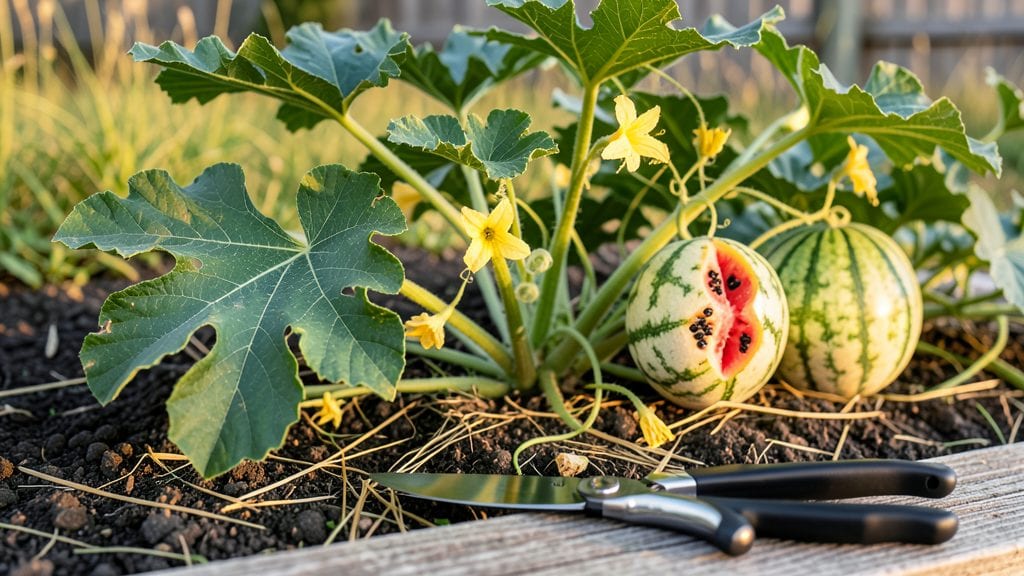
Trimming watermelon plants isn't just pruning—it's the secret to bigger fruit and vines that fight disease like champions. 🌱 I learned the hard way when my first watermelon harvest was half the size it could've been because I ignored the runners and overgrown leaves.
The right cuts redirect energy where it matters most: into those sweet, heavy melons.
You only need three simple tools: sharp pruning shears, clean gloves, and a sunny morning to work. The key is timing—trim early in the season to shape the plant, then focus on removing excess leaves and runners after the first fruit sets.
Most gardeners overlook the runners, but they're the real energy drain, stealing nutrients from your melons.
When done right, you'll see thicker vines, more flowers, and fruit that ripens faster. The extra airflow keeps powdery mildew at bay, and the plant puts all its effort into growing fewer, but heavier melons.
It takes about 20 minutes once you get the rhythm, and the difference in your harvest will make it worth every cut.
This works for both bush and vining watermelons, though bush types need less aggressive trimming. Whether you're growing in a small space or a big patch, the same principles apply. Ready to turn those scraggly vines into a high-yielding powerhouse?
📚 In This Guide
- What you need
- Instructions
- Tips and common mistakes
- Wrapping up and next steps
What you need
- ● Sharp pruning shears or bypass pruners – Choose a pair with sterilized, stainless steel blades (4-6 inch size) to avoid damaging vines or spreading disease. (1 pair)
- ● Garden gloves – Opt for nitrile-coated or heavy-duty leather gloves to protect against thorns and blisters. (1 pair)
- ● Disinfectant (70% isopropyl alcohol or bleach solution) – Clean tools before and after use to prevent bacterial/fungal spread. (Small bottle or spray)
- ● Garden twine or plant ties – Use 1/8-inch thick, biodegradable twine to support vines post-pruning. (1-2 rolls)
- ● Hand pruners (smaller than 4 inches) – For delicate trimming in tight spaces. (1 pair)
- ● Mulch (straw or black plastic) – Reduces weed competition and retains moisture after pruning. (2-3 yards)
- ○ Plant growth regulator (optional) – Helps manage excessive vine growth in high-yield varieties. (Follow label instructions)
How to trim watermelon vines for maximum yield and plant health
This simple 3-step method boosts fruit size, improves airflow, and keeps your vines thriving all season.
✂️ Step 1: Remove Weak or Crowded Vines Early in Season
Start trimming when vines are 4-6 inches long and have 3-4 true leaves. Use clean, sharp pruning shears to cut back any weak or leggy vines growing from the main stem. These are the thin, pale stems that stretch upward without leaves or flowers—your plant’s way of reaching for light but not producing fruit.
Focus on keeping 2-3 of the strongest, most upright vines per plant. You’ll know you’ve picked the right ones because they’ll have dark green leaves and compact spacing between nodes (the little bumps where leaves and vines grow). Remove the rest at the base—this redirects energy to the remaining vines, resulting in thicker stems and larger fruit later.
🌱 Step 2: Prune Excess Side Shoots and Flowers
Once your vines start flowering, switch to selective pruning of side shoots and flowers. Watermelons produce fruit on male and female flowers—you want to keep only the female flowers, which have a tiny watermelon-shaped swelling at their base. Cut off any male flowers (no swelling) and excessive side shoots growing from the main vine.
Leave 1-2 side shoots per vine to balance growth and fruit production. Too many side shoots compete for nutrients, leading to smaller fruit and weaker vines. Prune in the early morning when the plant is turgid (full of water) and temperatures are cooler—this reduces stress on the plant. Always cut just above a leaf node to encourage healthy regrowth.
☀️ Step 3: Thin Fruit and Maintain Airflow
When watermelons begin to form, limit the number of fruit per vine to 2-3 mature melons. Use your fingers to gently twist off excess small melons at the stem—don’t cut, as this can introduce disease. Larger fruit means fewer but bigger, sweeter watermelons with less competition for resources.
Throughout the season, keep an eye on leaf density. If leaves are too crowded, thin out a few leaves near the base of the plant to improve air circulation. Good airflow prevents powdery mildew and bacterial infections, which can ruin your harvest. Prune any yellow or diseased leaves immediately—never leave them on the vine, as they spread problems faster than you can say "squash vine borer."
Tips & tricks for perfect watermelon vine trimming
Here's what I've learned after years of experimenting with watermelon pruning—these tricks make all the difference for bigger, healthier fruit.
Timing is Everything: I can't stress this enough—don't wait until your vines are sprawling everywhere. Start pruning when vines are just 4-6 inches long with 3-4 true leaves. This is when your plant is most responsive to shaping. Waiting too long means you're playing catch-up with weak growth that's already established. Think of it like training a young athlete—you want to build strong habits from the beginning.
The Right Tools Matter: Using clean, sharp pruning shears isn't just about making clean cuts—it's about preventing disease. Dull shears crush stems and create entry points for bacteria. I sterilize my shears with rubbing alcohol between plants to prevent spreading any potential infections. And always cut at a 45-degree angle just above a leaf node—this helps water run off and reduces the chance of rot.
Female Flowers Are Your Gold: When your plants start flowering, become a detective looking for those tiny watermelon-shaped swellings at the base of flowers—those are your female flowers. Keep these and remove the male flowers (no swelling) immediately. I've found that plants with more female flowers produce fruit faster and more consistently. Pro tip: Do this pruning in the early morning when plants are hydrated and temperatures are cooler—they handle stress better.
Less Is More with Fruit: I know it's tempting to let every little watermelon grow, but trust me on this—limiting each vine to 2-3 mature melons gives you fewer but much larger, sweeter fruits. The competition for nutrients actually stunts growth when you have too many small melons. When thinning, gently twist off the smaller ones at the stem rather than cutting—this prevents disease from entering through open wounds.
Pro Tips for Trimming Watermelon Plants
- Here's what I've learned after years of experimenting with watermelon pruning—these tricks make all the difference for bigger, healthier fruit.
- Timing is Everything: I can't stress this enough—don't wait until your vines are sprawling everywhere.
- The Right Tools Matter: Using clean, sharp pruning shears isn't just about making clean cuts—it's about preventing disease.
Frequently asked questions
Got questions about trimming watermelon plants? You’re not alone! Here are some of the most common concerns—and straightforward answers to help you prune like a pro.
Why should I trim my watermelon plants at all?
Trimming encourages bigger, sweeter fruit by redirecting energy from excessive vine growth to fruit development. It also improves airflow, reducing disease risk and making harvesting easier. Think of it as giving your plants a spa day—less stress, more rewards!
When is the best time to trim watermelon plants?
Start trimming when vines are 6–12 inches long, focusing on side shoots (suckers) that grow from the main stem. Avoid heavy pruning after flowering—this can stress the plant and reduce fruit set. Early morning trims (when dew is gone) minimize stress on the plant.
How do I know which vines to cut?
Remove weak or leggy vines and suckers growing below the first 6–12 inches of the main stem. Keep 2–3 strong, healthy vines per plant to maximize fruit production. If a vine looks diseased (yellowing, spots, or wilting), trim it immediately to prevent spread.
Can I still get good fruit if I don’t trim my watermelon plants?
Yes, but yields may be smaller and less sweet. Untrimmed plants put energy into extra vines instead of fruit, leading to fewer, underdeveloped watermelons. Trimming isn’t mandatory, but it’s like choosing between a handful of acorns vs. a full oak tree—why settle for less?
What if I trim too much? Can I fix an over-pruned plant?
If you’ve gone overboard, don’t panic! Stop trimming immediately and fertilize with compost or a balanced organic fertilizer to help the plant recover. Reduce water stress by keeping soil moist (but not soggy) and watch for new growth. Over-pruned plants may take longer to fruit, but they can bounce back with patience.
Does trimming work for all types of watermelons?
Most varieties benefit from trimming, but bush-type watermelons (like ‘Sugar Baby’) need less aggressive pruning than sprawling vining types (like ‘Crimson Sweet’). For bush varieties, focus on removing only the weakest suckers. Always check your seed packet for variety-specific tips!
Wrapping up and next steps
Trimming your watermelon plants isn’t just about keeping them tidy—it’s the secret to bigger, sweeter fruit and stronger vines! By focusing on pruning suckers, removing dead leaves, and balancing growth, you’ll encourage your plants to put energy where it matters most: on those juicy, sun-ripened melons. 🍉✨
Ready to see the results? Grab your pruners and get started—your future harvest will thank you! For even more gardening wins, check out our guide on watermelon care tips to keep your plants thriving all season long.