
Watering
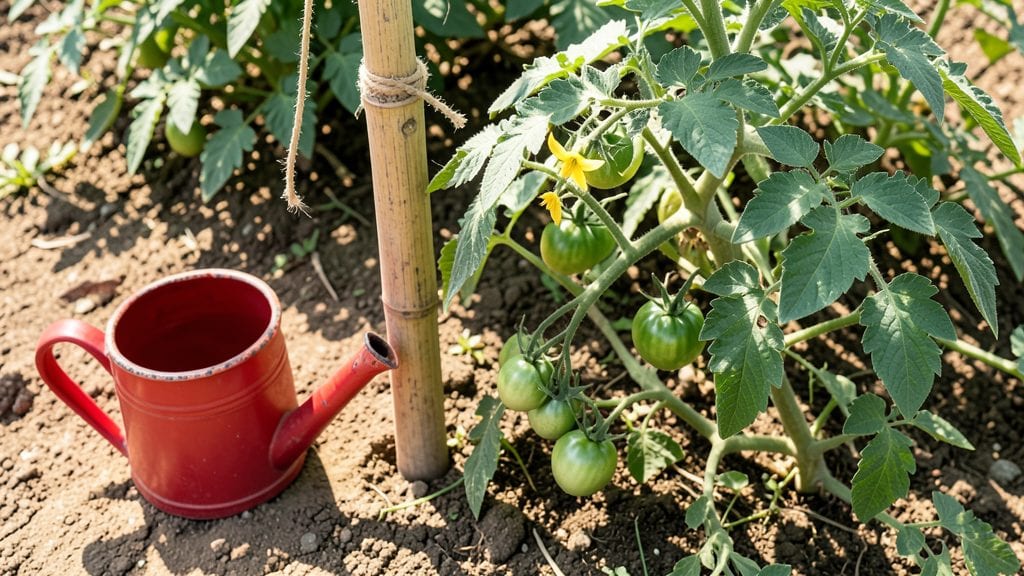
Under-watering tomato plants reveals itself in three sneaky ways—wilted leaves that don’t bounce back, dry soil that cracks like desert earth, and fruit that splits open before ripening.
I’ve seen tomato plants go from lush and green to desperate for water in just a few days, and the good news is you can turn things around fast with the right moves. The key isn’t just dumping water on them but understanding how and when they need it most.
Most gardeners overlook the soil’s moisture level, assuming tomatoes drink like thirsty campers. But the truth? They prefer steady, deep hydration over frequent shallow sips. A simple fix is watering at the base—right where the roots live—using soaker hoses or drip irrigation to keep the soil consistently damp, not soggy.
Mulch with straw or grass clippings to lock in moisture, and you’ll cut watering time in half while keeping roots happy.
Reviving a stressed plant starts with a deep watering session—think 1-2 gallons per plant, depending on size—until water runs out the drainage holes. Then, monitor the soil: stick your finger 2 inches down. If it feels dry, water again.
Within 3-5 days, you’ll see leaves perk up and new growth push out. The goal isn’t just survival—it’s getting back to that shockingly productive, vine-heavy tomato plant you planted.
Long-term, upgrade your watering game with a moisture meter or bury a rain gauge to track how much your soil actually holds. Tomatoes thrive when their roots stay in a 60-70°F zone, so water in the early morning to avoid evaporation and fungal issues.
Once you master this, your plants won’t just survive—they’ll reward you with heavier, sweeter fruit all season long.
Root Causes Of Tomato Stress
Underwatering tomato plants isn’t just about forgetting to water—it’s often a mix of environmental, human, and plant-specific factors working against your garden. Understanding these causes helps you fix the problem before your tomatoes start screaming for help.
Let’s dig into the science (and the soil) behind why your plants might be thirstier than you think.
Tomatoes thrive on predictability. When watering fluctuates—like skipping a day or two, then overcompensating—roots struggle to adapt. Here’s why:
- Shallow Root Systems: Tomatoes develop a fibrous root network in the top 6–12 inches of soil.
If water disappears quickly (e.g., sandy soil or hot days), roots can’t reach deeper moisture, leading to **wilting even when soil appears damp. - Osmotic Stress: Frequent dry-wet cycles cause roots to shrink and expand, damaging cell membranes.
Think of it like a sponge being squeezed and released repeatedly—eventually, it loses elasticity. - Human Error**: Busy schedules or misjudging soil moisture (e.g., checking surface soil instead of 2–3 inches deep) are common culprits. Pro tip: Use a moisture meter or the "squeeze test" (grab a handful of soil—if it crumbles, it’s dry).
Not all soil is created equal. If your garden bed drains like a sieve or holds water like a swamp, tomatoes can’t access moisture efficiently.
- Sandy Soil: Water drains too fast, leaving roots high and dry. Solution: Amend with compost or coconut coir to improve water retention.
- Clay Soil: Water pools at the surface, suffocating roots. Solution: Mix in perlite or aged manure to create air pockets.
- Compacted Soil: Heavy foot traffic or machinery can crush roots, reducing their ability to absorb water. Fix: Aerate with a garden fork or add organic mulch to protect soil structure.
Tomatoes lose water faster than you can pour it—thanks to transpiration, the process where leaves release moisture into the air. When conditions are extreme:
- High Temperatures: Soil heats up, causing water to evaporate before roots can absorb it. Red flag: Wilting by 10 AM on sunny days.
- Strong Winds: Increase transpiration rates by 20–30%, drying leaves and soil out quicker. Solution: Use windbreaks (like burlap screens) or plant tomatoes near taller crops (e.g., corn) for shade.
- Low Humidity: Dry air pulls moisture from plants faster. Fix: Mulch heavily (straw or wood chips) to lock in soil moisture and reduce evaporation.
Young tomato plants (especially seedlings or newly transplanted ones) are root-bound and vulnerable.
- Transplant Shock: Roots take 1–2 weeks to adjust to new soil.
If underwatered during this time, they can’t establish properly. - Small Containers: Roots in pots or seedling trays circle the edges, limiting their ability to seek water. Solution: Transplant when plants have 4–5 true leaves and roots fill the container. - Slow Growth Conditions: Cool nights or nutrient deficiencies stunt root development. Boost growth with phosphorus-rich fertilizer (e.g., bone meal) to encourage root expansion.
Your eyes can deceive you. Here’s why what you see isn’t always what’s happening underground:
- Surface-Dry Soil ≠ Underwatered Roots: The top inch of soil may feel dry, but 2–3 inches down could still be moist. Always check deeper. - Morning Wilting ≠ Permanent Damage: Tomatoes often droop in the heat of the day but recover at night.
True underwatering causes evening wilting or leathery, curled leaves. - Ignoring Leaf Signals: Yellowing between veins (chlorosis) or brown, crispy edges are late-stage signs of stress. Act before symptoms appear!
Sometimes, the problem isn’t water at all—it’s what’s blocking it.
- Root Rot (Overwatering’s Evil Twin): While underwatering causes wilting, overwatering can rot roots, making them unable to absorb moisture. Check for: Black, mushy roots or a foul smell.
- Root-Knot Nematodes: Microscopic pests pierce roots, reducing water uptake. Signs: Stunted growth, gnarled roots.
- Fungal Infections: Diseases like early blight or verticillium wilt clog root pathways. Prevent with: Crop rotation and resistant varieties (e.g., ‘Mountain Merit’ tomatoes).
Not all water is equal—or delivered equally.
- Surface Watering: Hoses or sprinklers wet leaves, leading to evaporation loss and fungal spores (like blight). Fix: Water at the base with drip irrigation or soaker hoses.
- Inconsistent Pressure: A weak sprinkler or clogged emitter means uneven distribution. Test your system: Place cups around the plant to measure output.
- Wrong Time of Day: Watering at noon causes rapid evaporation; early morning (6–9 AM) is ideal for absorption.
Key Takeaway: Underwatering is rarely just about "not enough water"—it’s about how, when, and where water reaches those hungry roots. Once you identify the root cause (pun intended), you can tailor a fix to keep your tomatoes thriving. 🌱💧
Revive Your Tomatoes Now
If your tomato plants are suffering from underwatering, don’t panic—these resilient plants can bounce back with the right care. The key is acting fast, diagnosing the root cause (literally!), and adjusting your watering strategy.
Below, we’ll break down practical fixes for the most common signs of thirsty tomatoes, plus prevention tips to keep your plants thriving.
Cause: Shallow watering or inconsistent moisture triggers stress, causing leaves to droop or curl. How to Fix It:
- 🔥 Step 1: Deep Water Immediately Stick your finger 2–3 inches into the soil. If it’s dry, water slowly and deeply until moisture reaches 6–8 inches down. Use a soaker hose or drip irrigation to avoid runoff and encourage deep root growth.
- 🍳 Step 2: Mulch to Retain Moisture Apply 2–3 inches of organic mulch (straw, wood chips, or grass clippings) around the base (but not touching the stem). This locks in moisture and keeps roots cool.
- 👨🍳 Step 3: Adjust Your Watering Schedule Tomatoes need 1–2 inches of water per week, delivered 2–3 times per week (morning is best). If your soil drains too fast (sandy), water more frequently but less intensely.
💡 Pro Tip: Test your soil’s moisture retention. If water pools on top after watering, your soil may be too dense—amend with compost to improve drainage.
Cause: Underwatering during flowering stresses plants, causing buds to fall off before fruiting. How to Fix It:
- 🔪 Step 1: Flush the Soil Over time, salt buildup from tap water or fertilizers can worsen drought stress. Leach the soil by watering heavily for 10–15 minutes, then let it drain completely.
- ⏰ Step 2: Water at the Right Time Water early in the morning (before 10 AM) to reduce evaporation and fungal risks. Avoid evening watering, which can promote disease.
- 🌡️ Step 3: Boost Humidity (Temporarily) If your area is hot and dry, mist the leaves lightly in the morning or place a shallow tray of water near the plants (but not under them). This mimics a more humid environment.
✨ Prevention Tip: Use a moisture meter ($10–$20) to track soil hydration—aim for 40–60% moisture during fruiting.
Cause: Chronic underwatering weakens roots, leading to poor nutrient uptake and yellowing lower leaves. How to Fix It:
- 📊 Step 1: Fertilize Lightly (But Smartly) Underwatered plants need balanced nutrients but can’t absorb them well. Use a diluted liquid fertilizer (like 10-10-10) only after rehydrating the soil. Avoid high-nitrogen feeds—focus on potassium and phosphorus (e.g., 5-10-10) to support fruiting.
- 💪 Step 2: Prune Damaged Foliage Snip off yellow or crispy leaves to redirect energy to new growth. Sterilize scissors with rubbing alcohol to prevent disease.
- 🥗 Step 3: Improve Soil Structure Amend the soil with compost or aged manure to enhance water retention. If planting in containers, switch to a moisture-retentive potting mix (add coconut coir or peat moss).
🎯 Long-Term Fix: Upgrade to self-watering containers or install a drip irrigation system for hands-off hydration.
If your tomatoes are completely limp or the stems feel hollow when squeezed:
- 🌊 Submerge the Container (Temporary Fix) For potted plants, place the entire container in a shallow tray of water for 30–60 minutes to rehydrate roots. Drain excess water afterward.
- 🌱 Root Prune & Repot (Last Resort) If roots are black or mushy (signs of root rot from overwatering after drought), trim damaged roots, repot in fresh soil, and water lightly for 3 days to recover.
🔥 Final Reminder: Tomatoes are forgiving but not patient—consistency is key. Once revived, monitor soil moisture daily and adjust your routine to prevent future stress.
Need a quick cheat sheet? ✅ Morning watering > Evening ✅ Deep soaks > Light sprinkles ✅ Mulch always to save water ✅ Check soil, not just leaves (roots talk first!)
Frequently asked questions
How do I tell if my tomato plants are underwatered vs. just wilting from heat?
Check the soil 2-3 inches deep—if it's dry, that's underwatering. True heat stress wilts leaves that recover by evening, while underwatered plants stay limp all day. Also, look for leathery leaves or yellowing between veins, which are classic thirst signals.
Can I fix underwatered tomato plants if the leaves are already yellow or crispy?
Yes, but act fast! Prune the damaged leaves to redirect energy, then give a deep watering (1-2 gallons per plant). For severe cases, add 2 inches of mulch and fertilize lightly with potassium (like banana peels or a 5-10-10 mix) to help recovery. New growth should appear in 3-5 days.
Why does my tomato plant wilt even when the soil feels moist at the surface?
Tomato roots grow 6-12 inches deep, so surface moisture can be deceiving. Sandy soil drains too fast, while clay holds water too close to the top. Test deeper—stick your finger 2-3 inches down. If dry, water slowly until moisture reaches 8 inches deep. Use a soaker hose for even distribution.
How often should I water tomato plants in extreme heat (90°F+)?
In scorching weather, water every 1-2 days in the early morning (6-9 AM) to prevent evaporation. Aim for 1-2 inches of water per week, delivered deeply. Mulch with 3 inches of straw to retain moisture and protect roots. Container plants may need daily watering in heatwaves.
Will underwatered tomatoes still produce fruit?
Underwatered plants may set fruit, but it’ll be smaller, fewer, and prone to cracking from uneven moisture. Stress during flowering causes buds to drop. To maximize yield, keep soil consistently moist (not soggy) and water deeply 2-3 times per week. Prioritize hydration during fruiting stages for sweeter, larger tomatoes.