
Watering
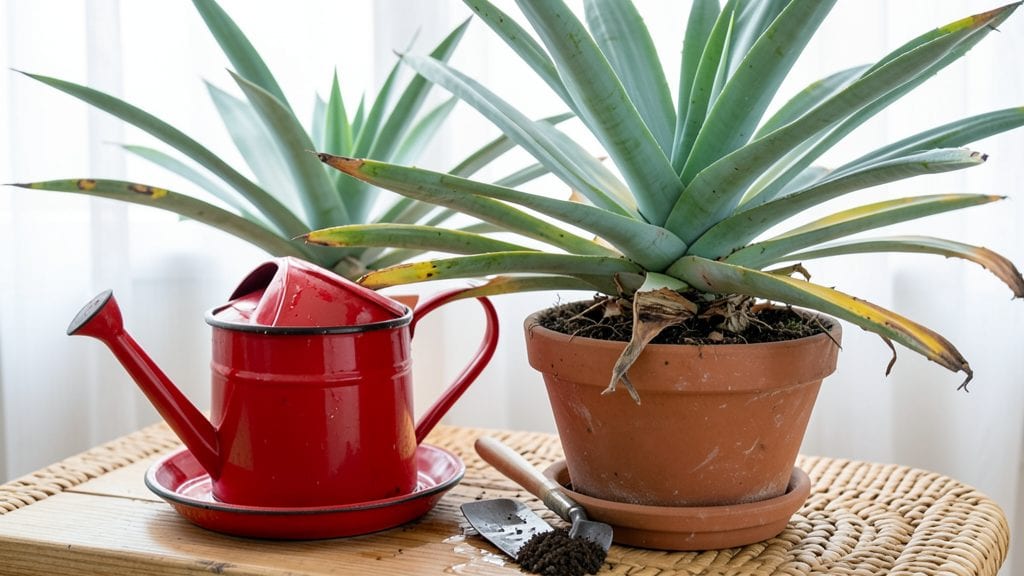
Your yucca plant’s yellowing leaves and mushy stems scream one thing: overwatering. I’ve nursed back more sad-looking yuccas than I’d like to admit, and the fix isn’t complicated—it’s just counterintuitive.
These desert survivors hate soggy roots, so we’re draining, drying, and resetting their routine. The good news? You can turn this around in 2-3 weeks with the right moves.
Here’s the hard truth: yuccas store water in their thick stems, so they need deep soaks followed by bone-dry soil. My first mistake was watering every week—now I check the top 2-3 inches of soil first. If it’s damp, I wait.
If it’s dry, I water until it runs out the bottom, then empty the saucer. That’s the desert rule: soak and forget. The yellow leaves will fade as the roots recover, and new growth will tell you it’s working.
For plants with root rot, you’ll need to repot into fresh, gritty mix—think 50% cactus/succulent soil, 30% perlite, 20% coarse sand. Trim any blackened roots with clean scissors, then let the plant sit in its new home for 7-10 days before watering again.
You’ll see crisp, green leaves return within 3-4 weeks if you stick to the drought-like care. Trust me, your yucca will thank you.
This works for both container yuccas and those in the ground—just adjust your watering schedule to match your climate. In hot, dry summers, they’ll barely need watering; in humid springs, you might need to water every 3-4 weeks.
Keep a finger in the soil, and you’ll never overdo it again. Let’s get that yucca back to its thriving, sword-like glory.
Root Causes Of Overwatering Yuccas
Yuccas are famously drought-tolerant, but when they’re drowned in excess moisture, their roots and leaves react dramatically. Understanding why this happens helps you avoid common pitfalls and keep your plant thriving.
Here’s a breakdown of the key factors that lead to overwatering—so you can address them before damage sets in.
Yuccas hate soggy roots, and poor drainage is the #1 culprit. When water pools around the roots instead of draining away, oxygen can’t reach them, leading to:
- Root suffocation: Roots need air to respire (breathe). Waterlogged soil displaces oxygen, forcing roots to suffocate and rot.
- Fungal infections: Excess moisture creates the perfect breeding ground for Phytophthora and Pythium—fungi that attack weakened roots.
- Nutrient starvation: Waterlogged soil binds nutrients, making them unavailable even if you’re fertilizing.
Actionable fix: Use cactus/succulent mix (60% mineral grit, 30% potting soil, 10% perlite) and containers with drainage holes. Elevate pots on feet or trays to prevent water from sitting in saucers.
Many plant owners fall into the trap of watering every X days—but yuccas don’t follow calendars. They rely on:
- Soil moisture sensors (your fingers!): Stick your index finger 2–3 inches into the soil. If it’s dry, water; if damp, wait.
- Seasonal slowdown: Yuccas go dormant in winter, needing 80% less water than in summer.
- Pot size matters: A 6-inch pot dries out faster than a 12-inch one. Adjust frequency accordingly.
Pro tip: 💡 Use a moisture meter or terracotta pot (they dry out visibly) to track needs accurately.
Even with good soil, external factors can turn your yucca’s pot into a swamp. Watch for:
| Factor | How It Causes Overwatering | Solution |
|---|---|---|
| 🌿 Humidity spikes | High humidity (above 50%) slows evaporation, keeping soil wet longer. | Use a dehumidifier or place near a fan in humid climates. |
| ☀️ Low light | Yuccas need bright, indirect light to metabolize water. In shade, they can’t dry out fast enough. | Move to a south- or west-facing window or use grow lights. |
| 🏢 Indoor heating/AC | Dry air from HVAC can create a false sense of dryness—you might overcompensate by watering too much. | Check soil moisture before watering; use a hygrometer to monitor humidity. |
Fertilizer contains salts and nutrients that bind water in the soil, making it harder for roots to dry out. Over-fertilizing a thirsty plant is like giving it a double dose of drowning.
- Salt buildup: Excess salts lower soil’s water-holding capacity, causing roots to drink more without absorbing nutrients.
- Root burn: High nitrogen/phosphorus levels scorch roots, weakening their ability to regulate moisture.
Fix it: ✨ Flush the soil with water every 2–3 months to leach out salts. Use a diluted, balanced fertilizer (5-5-5 or 10-10-10) only in spring/summer, at half strength.
When you repot a yucca into fresh, moist soil, it’s like giving it a temporary spa day—but the new environment changes its needs. Common mistakes:
- Fresh soil = high moisture retention: New potting mix holds water longer than old, dry soil.
- Shock from root disturbance: Repotting stresses roots, making them more susceptible to rot if overwatered immediately after.
Rule of thumb: 🔥 Wait 7–10 days before watering after repotting. Use dry potting mix (mix in extra perlite) to reduce initial moisture.
Revive Your Yucca Plant Fast
If your yucca plant is suffering from overwatering, don’t panic—it’s often reversible with the right steps! Below, we’ll break down cause-specific fixes to restore your plant’s health, along with prevention tips to keep it thriving. Let’s get your yucca back to its happy, drought-tolerant self!
Yellowing leaves are a classic sign of overwatering, but they can often be reversed with proper care.
**🔥 Step 1: Stop Watering Immediately
- Why? Overwatering stresses the roots, preventing them from absorbing nutrients. Let the soil dry out completely before watering again.
- How? Skip your next watering session and wait until the top 2–3 inches of soil feel dry to the touch.
🍳 Step 2: Check Soil Moisture Levels
- Why? Yuccas hate soggy soil. If the soil stays damp for more than a few days, it’s a red flag.
- How? Stick your finger 2 inches deep—if it’s wet, hold off on watering. Use a moisture meter for accuracy.
👨🍳 Step 3: Improve Drainage
- Why? Poor drainage traps excess water, leading to root rot.
- How?
- Repot your yucca in a
- Ensure the pot has drainage holes—if not, transfer it to one ASAP.
- Elevate the pot on feet or a saucer to prevent water pooling.
🥘 Step 4: Trim Damaged Foliage
- Why? Yellow or mushy leaves won’t recover and can attract pests.
- How? Use sterilized scissors to snip off yellowed or browned leaves at the base. Avoid cutting healthy green growth.
⏰ Step 5: Gradually Resume Watering
- Why? Rushing back into a watering routine can shock the plant.
- How?
- Wait
- Water deeply but infrequently—only when the soil is bone-dry.
- Water at the base (not the leaves) to avoid fungal issues.
If your yucca has soft, black, or mushy roots, root rot may have set in. Act fast!
🔥 Step 1: Remove the Plant from the Pot
- Why? Inspecting the roots is the only way to assess the damage.
- How? Gently tap the pot or slide the plant out. Shake off excess soil to reveal the roots.
🍳 Step 2: Prune Rotten Roots
- Why? Dead roots won’t recover and can spread rot to healthy ones.
- How?
- Use
- Keep only firm, white or light tan roots—these are healthy.
👨🍳 Step 3: Disinfect the Plant
- Why? Fungal/bacterial spores can linger on the remaining plant.
- How?
- Dip
- Alternatively, use fungicide (like neem oil or copper-based spray) to prevent reinfection.
🥘 Step 4: Repot in Fresh, Dry Soil
- Why? Old, contaminated soil can reintroduce pathogens.
- How?
- Choose a
- Use fresh, fast-draining soil (cactus mix + perlite).
- Let the plant air-dry for 24–48 hours before watering lightly.
⏰ Step 5: Monitor and Adjust Care
- Why? Recovery takes time, and old habits may return.
- How?
- Place the plant in
- Wait 7–10 days before watering—only when the soil is completely dry.
- If new growth appears, you’re on the right track!
Once your yucca is back in shape, prevent future overwatering with these habits:
- 🌡️ Water Only When Necessary
- Yuccas store water in their leaves—
- Pro Tip: The "finger test" is foolproof—stick your finger 2 inches deep. If dry, water; if damp, wait.
Water at the base only. - Ignoring Seasonal Changes: Reduce watering in winter (growth slows, so does water need).
With these steps, your yucca should bounce back within a few weeks—just be patient! Overwatering is a common mistake, but once you adjust your routine, your plant will reward you with lush, healthy growth for years. 🌵✨
Need a quick cheat sheet? ✅ Stop watering immediately. ✅ Check for root rot—prune if needed. ✅ Repot in dry, fast-draining soil. ✅ Water only when soil is bone-dry. ✅ Prevent future issues with the right pot and light.**
Frequently asked questions
How do I know if my yucca plant is truly overwatered?
Check for yellowing leaves (especially at the bottom), mushy stems, or blackened roots when you remove it from the pot. If the soil smells sour or the leaves feel soft, that’s a clear sign of overwatering. Even if the plant looks sad, it’s often reversible with proper drainage and a drying-out period.
Can I save a yucca with root rot?
Yes, but act fast! First, remove the plant from its pot and trim away any black, mushy roots with sterilized scissors. Repot in fresh, gritty soil (cactus mix + perlite) and let it dry completely for 7-10 days before watering lightly. Keep it in bright light but avoid direct sun until new growth appears.
Why does my yucca keep getting overwatered even when I think I’m being careful?
Yuccas thrive on consistent dryness, not a schedule. Many people water based on days passed instead of soil moisture. Use the finger test: stick your finger 2-3 inches deep—if it’s damp, wait. Also, check your pot’s drainage holes and soil mix (should be 60% mineral grit).
How often should I water a yucca after fixing overwatering issues?
Once recovered, water your yucca every 2-3 weeks in summer and monthly in winter. The key is deep soaking followed by bone-dry soil. Use terracotta pots (they dry faster) and avoid saucers that trap water. Always water at the base, never the leaves.
Will my yucca grow back after losing most of its leaves?
Yes! Yuccas are resilient. If the stem is still firm and roots are healthy, new leaves will sprout from the center. Trim any remaining dead foliage, repot if needed, and maintain bright light with minimal water. You’ll often see fresh growth within 4-6 weeks.