
Diseases
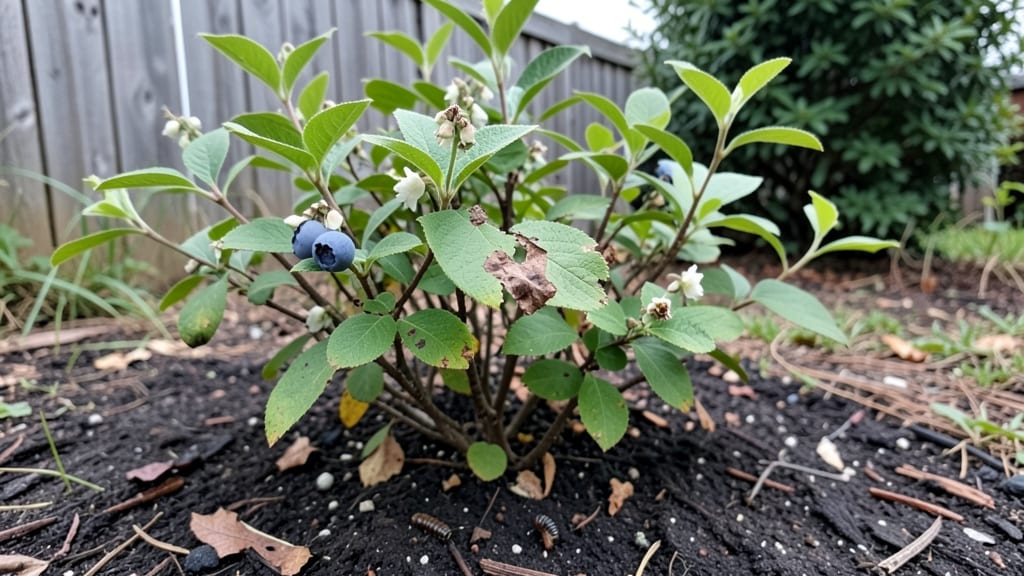
These blueberry plant diseases pictures reveal how leaf spots and berry molds can ruin your harvest overnight—until you learn to spot the warning signs early. 🌿 I’ve spent years watching fungal diseases creep into my bushes—until I learned to stop them before they spread.
The key is catching them when symptoms first appear, and that starts with knowing what to look for.
Most fungal problems begin with tiny specks or discoloration that growers often mistake for weather damage. Take blueberry leaf spot, for example: those grayish-brown spots with yellow halos? That’s your plant screaming for help.
Or mummy berry, where infected fruit turns into hard, shriveled shells—it’s not just ugly, it ruins next year’s crop too. Prevention is easier than cleanup, and the right timing makes all the difference.
You’ll walk away knowing exactly which spots, molds, or rusts are attacking your bushes—and how to stop them before they take hold. We’re talking simple fixes like pruning infected branches, adjusting watering habits, or even a quick spray that saves your harvest.
No more guessing games when your berries start looking off.
This guide covers the 12 most common fungal blights, with clear descriptions of what to watch for in your own garden. Whether you’re dealing with a single branch or a full bush outbreak, you’ll have the tools to act fast. Let’s get those berries thriving again.
Root Causes Of Blueberry Ailments
Blueberry plants, though resilient, are vulnerable to a variety of diseases—especially fungal infections—that thrive under specific conditions. Understanding why these issues arise is the first step to prevention. Below, we break down the key factors that create the perfect storm for blueberry plant diseases, from environmental triggers to cultural mistakes.
Fungal pathogens like Botrytis cinerea (gray mold) and Phomopsis twig blight love warmth + moisture. Blueberries grow best in acidic, well-drained soil, but when temperatures hover between 60–80°F (15–27°C) with high humidity (above 75%), fungal spores germinate rapidly.
- Why it happens: Warm air holds more moisture, creating a dew-laden environment where fungal hyphae spread like wildfire. Poor air circulation (e.g., dense plantings or thick foliage) traps humidity, accelerating infection.
- Scientific twist: Many fungi release enzymes that break down plant cell walls when humidity exceeds 80%—think of it as a fungal "lockpick" for your blueberries.
- Actionable fix:
- Space plants 4–6 feet apart for airflow.
- Water early in the day (never overhead) to let foliage dry by evening.
- Use fungicides with copper or sulfur preemptively in humid climates.
Blueberries hate soggy roots. While they need consistent moisture, waterlogged soil suffocates roots, inviting Phytophthora (root rot) and Armillaria (shroom root disease). These fungi thrive in anaerobic (low-oxygen) conditions, where roots weaken and become easy targets.
- Why it happens: Compacted or clay-heavy soil blocks oxygen, forcing roots to "drown." Overwatering or poorly sloped beds exacerbate the problem.
- Scientific twist: Phytophthora releases oxalic acid, which disrupts root cell membranes—basically, it melts your plant’s defenses.
- Actionable fix:
- Amend soil with organic matter (peat moss, pine bark) to improve drainage.
- Plant on a slight slope or use raised beds.
- Test soil pH—aim for 4.5–5.5 (acidic) to deter fungal growth.
A blueberry plant under stress is like an open invitation to pathogens. Nitrogen excess (lush but weak growth) or potassium deficiency (poor cell integrity) make plants more susceptible to diseases like mummy berry and anthracnose.
- Why it happens: Too much nitrogen = soft, tender tissue that fungi love to colonize. Conversely, potassium deficiency weakens cell walls, making them easier to penetrate.
- Scientific twist: Potassium regulates stomatal closure—without enough, fungi exploit open stomata (leaf pores) to invade.
- Actionable fix:
- Use a balanced fertilizer (e.g., 10-10-10) with micronutrients like magnesium and calcium.
- Avoid fresh manure (high in nitrogen); opt for composted organic matter.
- Monitor for yellowing leaves (nitrogen burn) or brown leaf edges (potassium deficiency).
Every cut, scrape, or insect bite is a gateway for fungal invaders. Pruning wounds, hail damage, or even bird pecks can introduce Venturia (a common leaf spot) or Leveillula (powdery mildew).
- Why it happens: Open wounds expose vascular tissue, which fungi exploit to spread systemically. Some pathogens (like Cylindrocladium) even produce spore-forming structures on damaged bark.
- Scientific twist: Fungi release cellulase enzymes that degrade plant cell walls at injury sites—like a fungal "chewing" operation.
- Actionable fix:
- Prune only in dry weather with sterilized tools (rubbing alcohol or bleach).
- Seal large wounds with pruning sealant (though small cuts will heal on their own).
- Remove infected debris immediately to stop spore spread.
💡 Pro Tip: Rotate fungicides annually to prevent resistance—fungi adapt fast. If you used copper last year, switch to a biological option like Bacillus subtilis this season.
Fixing Fungal Foes Naturally
Now that you’ve identified the culprit behind your blueberry bush’s woes, it’s time to roll up your sleeves and restore your plants to their vibrant, berry-producing glory. The good news? Most blueberry diseases are preventable—or even reversible—with the right approach.
Below, we’ve mapped out practical, step-by-step solutions for each common fungal foe, plus proactive prevention tips to keep your bushes thriving.
Cause: Colletotrichum spores thrive in wet, humid conditions, causing dark lesions on leaves, stems, and fruit. How to Fix It: 🔥 Remove Infected Debris – Snip off and dispose of (not compost!) diseased leaves, stems, or fruit immediately. Use sterilized pruners (wipe with rubbing alcohol between cuts) to avoid spreading spores. 👨🍳 Apply Fungicide – Spray with a copper-based fungicide (like copper sulfate) or a baking soda mix (1 tbsp baking soda + 1 tsp dish soap + 1 gallon water) every 7–10 days during wet seasons. Best time: Early morning or evening to avoid burning leaves. 🌡️ Improve Airflow – Thin out dense foliage and space plants 3–4 feet apart to reduce humidity. Avoid overhead watering—use drip irrigation instead. 💡 Prevention Pro Tip: Plant resistant varieties like ‘Duke’ or ‘Bluecrop’ and mulch with pine needles (acid-loving blueberries prefer pH 4.5–5.5, and pine mulch helps deter fungi).
Cause: Botrytis cinerea spreads in damp, shaded areas, mummifying fruit and leaves with fuzzy gray mold. How to Fix It: 🔪 Cut Out the Dead – Remove all infected berries, stems, and leaves. Do not compost them—bag and trash them to prevent spore survival. ⏰ Space Out Watering – Water early in the day so foliage dries by night. Aim for 1–1.5 inches of water per week (including rain). 🥘 Boost Fungicide Rotation – Alternate between neem oil (natural fungicide) and potassium bicarbonate (1 tbsp per gallon of water). Spray weekly during blooming and fruiting. 🎯 Prevention Pro Tip: Thin fruit clusters so air circulates—overcrowded berries trap moisture. Also, avoid late-season nitrogen (it encourages lush, susceptible growth).
Cause: Monilinia spores overwinter in "mummy" berries (dried, infected fruit), reinfecting in spring. How to Fix It: 🔥 Destroy Mummies – Collect and burn (or deep-bury) all mummified berries before buds swell in early spring. No composting! 🍳 Prune Strategically – Remove all cankers (sunken, dead areas on stems) and sterilize tools between cuts. 👨🍳 Spray Preventively – Use fixed copper fungicide (like Copper Sulfate 50) 3 times:
- Pink bud stage
- Full bloom
- Petal fall
💡 Prevention Pro Tip: Plant disease-resistant varieties like ‘Jersey’ or ‘Patriot.’ Also, rotate crops if possible—don’t plant blueberries in the same spot year after year.
Cause: Puccinia or Kunkelia fungi cause orange-yellow pustules on leaves, weakening the plant. How to Fix It: 🔪 Rake Up Rusty Leaves – Remove all infected leaves before they fall (they’re spore factories!). 🌡️ Increase Sun & Air – Thin bushes to 50% of normal density to reduce humidity. Avoid shade—rust loves damp, shady spots. 🥘 Copper Spray Schedule – Apply copper fungicide every 2 weeks from bud break to leaf drop. 💡 Prevention Pro Tip: Test soil pH—rust thrives in alkaline soil (pH > 6.0). Keep blueberries acidic (4.5–5.5) with sulfur or peat moss.
Cause: Sphaerotheca mculsbergii coats leaves in white powder, blocking sunlight and stunting growth. How to Fix It: 🍳 Horticultural Oil Spray – Mix 1 tbsp neem oil + 1 tsp dish soap per gallon of water and spray both sides of leaves every 5–7 days. 👨🍳 Baking Soda Blast – Spray 1 tsp baking soda + 1 tsp light oil + 1 gallon water weekly (great for organic gardens). ⏰ Water at the Roots – Never wet leaves. Use soaker hoses or drip lines instead of overhead sprinklers. 💡 Prevention Pro Tip: Plant mildew-resistant varieties like ‘Blue Jay’ or ‘Top Hat.’ Reflective mulch (like aluminum foil under black plastic) can also reduce fungal spores.
✅ Sanitize Tools – Wipe pruners with rubbing alcohol between cuts. ✅ Rotate Fungicides – Don’t rely on one product; switch between copper, neem, and sulfur to avoid resistance. ✅ Test Soil pH – Use a meter or lab test to keep it 4.5–5.5 (blueberries hate alkaline soil). ✅ Mulch Smart – Use pine needles, wood chips, or straw (not grass clippings, which raise pH). ✅ Monitor Weather – Cover bushes with row covers during prolonged rain (especially during bloom).
Remember: Early action is key! The sooner you remove infected parts and apply treatments, the better your blueberries’ chances of bouncing back. With these steps, your bushes will be stronger, healthier, and packed with juicy berries in no time. 🍇✨
Frequently asked questions about blueberry plant diseases
How do I tell if my blueberry leaves have fungal spots?
Look for small grayish-brown spots with yellow halos on leaves—this is classic blueberry leaf spot. Check the undersides too, where tiny black specks (fungal spores) often appear. Compare with pictures of Venturia or Colletotrichum infections in our guide to confirm.
Can I save my blueberries if they're covered in gray mold?
Remove all infected berries immediately—don’t compost them! The fuzzy gray mold (Botrytis) spreads fast. Thin remaining fruit clusters for better airflow, and spray with potassium bicarbonate (1 tbsp/gallon) weekly during wet weather.
Why do my blueberries turn into hard, shriveled "mummies"?
Those are mummy berries from Monilinia fungus—common in humid springs. Burn or deep-bury infected fruit before buds swell next year. Prune cankers (sunken dead spots) and apply copper fungicide at pink bud stage.
Will rain make my blueberry diseases worse?
Yes—prolonged rain creates the perfect fungal breeding ground. Water early in the day so leaves dry by evening, and use drip irrigation instead of overhead sprinklers. Space bushes 4–6 feet apart for airflow, and cover with row fabric during heavy downpours.
Are there blueberry varieties that resist diseases?
Try ‘Duke’ or ‘Bluecrop’ for leaf spot resistance, or ‘Jersey’ to fight mummy berry. These cultivars are bred to tolerate common fungal pressures. Always check your local nursery’s disease-resistant recommendations for your climate.