Planting
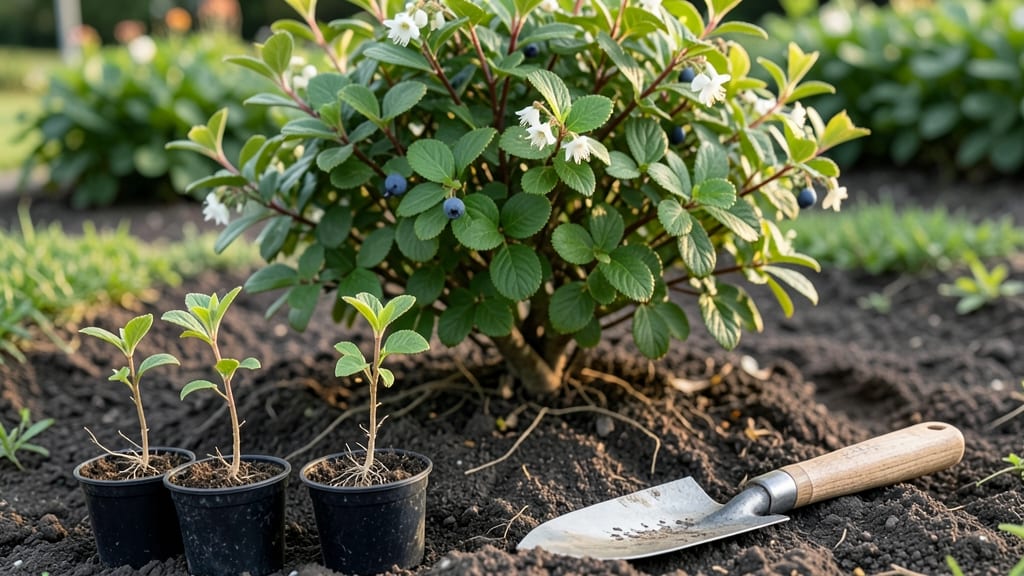
Here are blueberry planting tips that’ll turn your scraggly bushes into fruit-laden giants—trust me, I learned the hard way when my first attempt crowded plants too close, stealing sunlight and stunting growth.
The right spacing gives roots room to breathe and branches space to spread, which means bigger yields and easier maintenance.
You’ll need well-draining, acidic soil (aim for pH 4.5–5.5), a sunny spot with 6+ hours of light daily, and the right variety for your climate—highbush for warmer zones, rabbiteye for the South, or lowbush for cooler areas.
Dig holes twice as wide as the root ball but no deeper, then mix in compost and sulfur to lock in that critical acidity. Plant in early spring or fall when roots can establish before extreme weather hits.
📚 In This Guide
- What you need
- Instructions
- Tips and common mistakes
- Wrapping up and next steps
What you need
- ● Blueberry plants: 2–3 healthy, disease-free bushes (choose northern or southern highbush varieties based on your climate zone).
- ● Well-draining soil: Acidic (pH 4.5–5.5), loamy soil (amend with peat moss or sulfur if needed).
- ● Organic mulch: 2–3 inches of pine needles or wood chips (keeps soil acidic and moist).
- ● Fertilizer: Acid-loving plant fertilizer (e.g., 10-10-10 or cottonseed meal for organic options).
- ● Watering system: Drip irrigation or soaker hose (blueberries hate wet leaves—avoid overhead watering!).
- ● Garden trowel or spade (for digging holes 12–18 inches deep).
- ● Pruning shears (sterilized with rubbing alcohol to prevent disease).
- ● pH testing kit (to monitor soil acidity—critical for success!).
- ● Gloves (thorny bushes? Yes, please.)
- ● Epsom salt (magnesium boost for lush foliage).
- ● Row covers (protects from late frosts or pests).
- ● Blueberry pollinator-friendly plants (e.g., bee balm or lavender nearby).
- ● Stakes or cages (supports tall varieties like ‘Duke’ or ‘Premier’).
Step-by-Step blueberry planting for a productive bush
Here's how to plant blueberries for maximum yield, using proven spacing and soil tricks.
Choose the Right Location and Soil Type
Blueberries thrive in acidic soil with a pH between 4.5 and 5.5. Test your soil before planting—most garden centers sell inexpensive kits. If your soil is too alkaline, amend it with sulfur or peat moss (follow package instructions for amounts). These plants also need full sun, meaning at least 6 hours of direct sunlight daily. A south-facing spot with afternoon shade in hot climates works best.
I dig a hole twice as wide as the root ball but only as deep as the container the plant came in. Loosen the sides of the hole to encourage root spread. Avoid compacting the soil—blueberries hate soggy roots but also can't tolerate heavy, clay-heavy ground. If your native soil is dense, mix in 3 inches of organic matter (like compost) into the bottom of the hole.
Plant at the Correct Depth and Spacing
Remove the plant from its container and gently tease the roots apart if they're circling. Place it in the hole so the top of the root ball sits level with the surrounding soil—burying the stem too deep can cause rot, while planting too high stresses the plant. For 4 plants, space them 6 feet apart in a square or rectangular pattern. This spacing gives each bush room to spread and improves air circulation, which prevents fungal diseases.
Fill the hole with soil, pressing lightly around the edges to remove air pockets. Water deeply right after planting to settle the soil and encourage root contact. You'll know it's done right when the soil surface looks slightly damp but not muddy. Mulch with 3 inches of pine needles or wood chips (avoid cedar—it's too acidic) to maintain soil acidity and retain moisture.
Water and Fertilize for Strong Establishment
Blueberries need consistent moisture, especially in their first year. Water once a week (or more in hot, dry weather) to keep the soil evenly moist but not soggy. You'll see the right moisture level when the top 2 inches of soil feel damp to the touch. Overwatering leads to root rot, while underwatering causes stress and poor fruit production. A drip irrigation system works best—it delivers water slowly and directly to the roots without wetting the leaves.
Wait 4-6 weeks after planting before fertilizing. Use a slow-release, acidic fertilizer (like one formulated for blueberries) and follow the package instructions for amounts. I apply mine in early spring before new growth appears. Avoid high-nitrogen fertilizers—they encourage leafy growth at the expense of fruit. Instead, focus on balanced nutrients (like 10-10-10) to support strong root and berry development.
Prune and Maintain for Long-Term Productivity
Prune your blueberries in late winter or early spring before new growth starts. Remove any dead, diseased, or crossing branches first—these compete for energy and can spread problems. Then, cut back last year's growth by about one-third to encourage new, fruiting wood. You'll see healthy growth when new shoots emerge bright green and upright within a few weeks.
Blueberries produce best when they get regular care. Reapply mulch annually to maintain soil acidity and moisture. Test soil pH every 2-3 years and adjust if it drifts above 5.5. If birds become a problem, cover the bushes with fine netting once flowers appear. With this routine, your bushes will start bearing fruit in 2-3 years and keep producing for decades.
Tips & tricks for thriving blueberry bushes
These proven strategies will help you avoid common pitfalls and maximize your blueberry harvest from day one.
Soil Preparation Secret: When testing your soil pH, aim for the lower end of the 4.5-5.5 range—around 5.0 is ideal for maximum fruit production. If you're amending with sulfur, apply it a full month before planting to allow it to fully acidify the soil. I've found that mixing in 3 inches of sphagnum peat moss (in addition to compost) gives an extra acidity boost that makes a noticeable difference in plant health.
Planting Depth and Spacing: The 6-foot spacing between plants isn't just about room to grow—it's about airflow. In Step 2, when you're planting your 4 bushes, arrange them so they form a square. This creates a microclimate in the center that stays cooler and more humid, which blueberries love. Also, use a level to verify the root ball sits perfectly level with the surrounding soil—even a slight tilt can cause water to pool and rot the roots.
Watering Wisdom: The once-a-week watering guideline works for average conditions, but don't rely solely on memory. In Step 3, check the top 2 inches of soil before watering—it should feel like a wrung-out sponge. I've learned the hard way that blueberries are more sensitive to underwatering than overwatering, so it's better to water slightly less than the recommended amount if you're unsure. A moisture meter is worth the investment for first-time planters.
Mulching Mastery: The 3 inches of pine needles or wood chips isn't just for moisture retention—it's a slow-release acidifier. Refresh this mulch annually in late winter, just before pruning season. I've noticed that bushes with consistent mulch produce larger berries with fewer seeds. And remember, cedar mulch might seem like a good idea, but its natural oils can actually harm blueberry roots over time.
Pro Tips for Blueberry Planting Tips
- These proven strategies will help you avoid common pitfalls and maximize your blueberry harvest from day one.
- Soil Preparation Secret: When testing your soil pH, aim for the lower end of the 4.5-5.5 range—around 5.0 is ideal fo...
- Planting Depth and Spacing: The 6-foot spacing between plants isn't just about room to grow—it's about airflow. In St...
Frequently asked questions
Got questions about growing your own blueberry bushes? You’re not alone! Here are answers to the most common queries from gardeners just like you.
When is the best time to plant blueberry bushes?
The ideal window is late fall to early spring—before buds swell in spring or after harvest in summer. Planting in dormant seasons gives roots time to establish without competing with active growth. If you’re in a warm climate, aim for fall to avoid summer heat stress. Pro tip: Bare-root plants thrive best when planted within 2 weeks of purchase.
How far apart should blueberry bushes be planted?
Spacing depends on the variety and your goals:
- Dwarf varieties: 2–3 feet apart (great for containers or small gardens).
- Semi-dwarf varieties: 4–5 feet apart (ideal for hedgerows or mixed borders).
- Standard varieties: 5–6 feet apart (allows airflow and easier harvesting).
For rows, space them 6–8 feet apart to prevent overcrowding. Remember: Southern highbush types need slightly less space than rabbiteye or northern highbush varieties.
Can I grow blueberries in containers? What’s the best soil mix?
Dwarf varieties like ‘Top Hat’ or ‘Peach Sorbet’ thrive in 15–20 gallon containers with:
- 50% peat moss or coconut coir (for acidity).
- 30% pine bark fines (for aeration).
- 20% compost or well-rotted leaf mold (for nutrients).
Add a slow-release fertilizer (like 10-10-10) at planting and maintain a pH of 4.5–5.5. Drainage holes are a must—blueberries hate soggy roots! Top off with 2 inches of mulch (pine needles or oak leaves) to retain moisture and acidity.
Why aren’t my blueberry bushes producing fruit?
Common culprits include:
- Improper pH: Test soil—blueberries need acidic conditions (4.5–5.5). Amend with sulfur or peat moss if needed.
- Lack of pollinators: Plant multiple varieties (e.g., ‘Duke’ + ‘Bluegold’) or hand-pollinate with a brush.
- Young age: Bushes take 2–3 years to bear fruit. Be patient!
- Over-fertilizing: Too much nitrogen = leafy growth, no fruit. Use a low-nitrogen, high-phosphorus fertilizer.
Check for pests too—birds, bears, or mites can raid buds. Use netting or organic sprays if needed.
How do I extend the blueberry harvest season?
Plant a mix of early-, mid-, and late-season varieties to stagger ripening. For example:
- Early: ‘Jersey’ (June).
- Mid-season: ‘Bluecrop’ (July–August).
- Late: ‘Patriot’ (August–September).
In warmer climates, prune lightly in late winter to encourage new growth. For cooler areas, mulch heavily to protect roots and delay dormancy. Bonus: Harvest every 2–3 days to keep bushes producing!
Wrapping up and next steps
Growing blueberries is a rewarding journey—one that starts with the right spacing, soil prep, and care! 🌱 By mastering the three proven spacing secrets (upright, semi-dwarf, and lowbush varieties), you’ll set your bushes up for bountiful harvests and long-term health.
Remember: patience and consistency pay off, and soon you’ll be enjoying fresh, juicy berries straight from your garden.
Ready to take the next step? Start planting your blueberries this season—your future self (and taste buds!) will thank you. Need a refresher? Review the materials checklist or check out our FAQs for extra confidence. Happy gardening! 🌟