Diseases
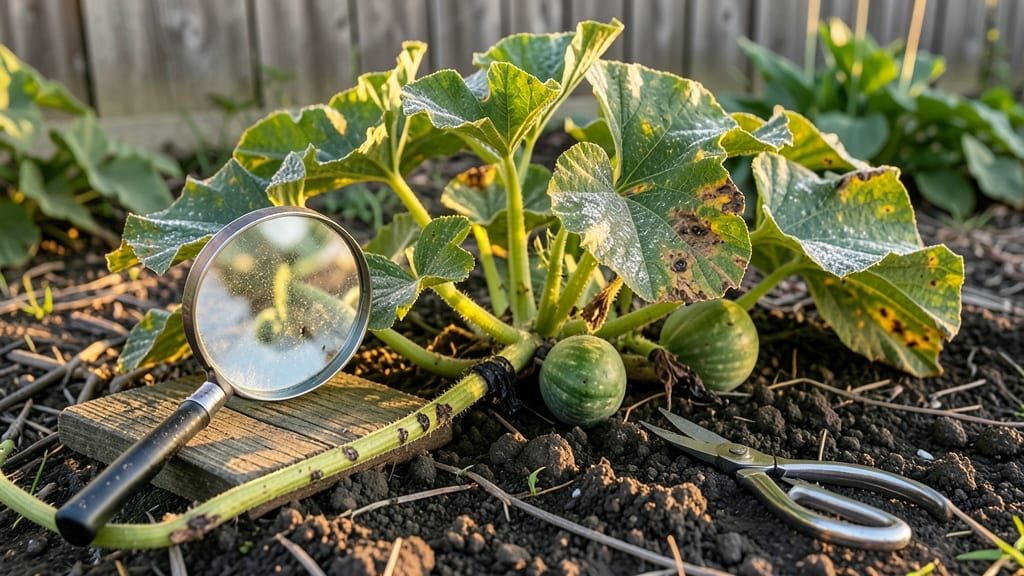
Pumpkin plant diseases can turn your sprawling vines into a sad, spotted mess if you don’t catch them early. 🌱 I’ve lost entire patches to powdery mildew and bacterial wilt—until I learned the warning signs and organic fixes that actually work.
The key isn’t fear; it’s knowing what to look for before the leaves start curling into crispy brown husks.
Most problems start with poor airflow or overwatering, but even healthy plants get hit by downy mildew or fungal infections when humidity spikes. The good news? Spacing vines 3–4 feet apart, watering at the base (not overhead), and rotating crops every 3 years cuts your risk dramatically.
I’ve seen pumpkins thrive with these simple tweaks—no fancy chemicals needed.
When you spot white powder on leaves or yellowing spots that spread fast, act immediately. A mix of baking soda, water, and a drop of dish soap stops powdery mildew in its tracks, while copper fungicide keeps bacterial wilt at bay.
Prune infected leaves and toss them in the trash (not compost)—this stops the spread before it becomes a full-blown crisis.
Even experienced growers panic when their pumpkins start wilting, but the fixes are straightforward. Focus on prevention first: mulch to keep soil moist but not soggy, and pick varieties bred for your climate.
With these organic cures, your vines will stay lush, your fruits will swell, and you’ll skip the heartbreak of a failed harvest.
Root Causes Of Pumpkin Plant Decline
Pumpkin plants are resilient, but when diseases strike, they often do so because of environmental stress, microbial invaders, or poor growing conditions. Understanding why these issues arise is the first step to preventing them.
Below, we break down the most common culprits—from fungal spores lurking in soil to pests that weaken defenses—and explain the science behind their attacks.
---
Fungal and bacterial diseases thrive in moist, stagnant environments, where spores or bacteria multiply rapidly. Here’s why:
- Overhead Watering 💦 Water droplets on leaves create a perfect breeding ground for pathogens like Phytophthora (root rot) or Powdery Mildew. Unlike direct soil watering, splashing water spreads spores like a contagious virus.
- Poor Drainage 🏗️ Clay-heavy or compacted soil traps excess moisture at the roots. Fungi such as Fusarium or Pythium exploit this, cutting off nutrient uptake and causing wilting—even in well-watered plants.
- Humidity & Crowding 🌫️ Dense plantings restrict airflow, keeping foliage damp longer. This slows evaporation and turns leaves into pathogen buffets. Alternaria leaf spot, for example, spreads aggressively in these conditions.
💡 Pro Tip: Space vines 3–4 feet apart and water at the base early in the morning. Mulch with straw to balance moisture without suffocating roots.
---
Insects and mites don’t just eat pumpkin leaves—they create wounds that invite secondary infections. Here’s how:
- Squash Vine Borers 🐛 These caterpillars burrow into stems, creating entry points for bacteria like Erwinia (soft rot). A single infestation can turn a healthy vine into a mushy, collapsing mess.
- Aphids & Spider Mites 🕷️ These sap-suckers excrete honeydew, a sticky residue that fosters sooty mold. The mold blocks sunlight, stressing the plant and making it vulnerable to viral infections like Cucumber Mosaic Virus.
- Root-Knot Nematodes 🐍 Microscopic worms feed on root cells, reducing water absorption. Weak roots? More prone to Fusarium wilt or Verticillium—two fungal diseases that clog vascular tissues.
✨ Action Step: Use neem oil or kaolin clay to deter pests early. Healthy plants resist invasions better!
---
Pumpkins are warm-season crops, but temperature swings or nutrient deficiencies throw them into survival mode—making them disease magnets.
- Cold Snaps ❄️ Chilly nights slow metabolic processes, weakening cell walls. Downy Mildew capitalizes on this, forming fuzzy gray patches on undersides of leaves.
- Heat Stress 🔥 High temps (above 90°F) cause physiological stress, reducing chlorophyll production. Yellowing leaves (a sign of mosaic viruses) become more common as the plant struggles to photosynthesize.
- Nutrient Imbalances 🌱 Too much nitrogen = lush, weak growth (perfect for mildew). Too little phosphorus? Roots can’t support the plant during fungal attacks. Test soil pH (aim for 6.0–6.8) and amend with compost.
🎯 Fix It: Use shade cloth in peak summer and balanced organic fertilizer (like 5-5-5) to avoid overfeeding.
--- Diseases often hitchhike from previous crops or gardening tools. Here’s how:
- Old Plant Debris 🍂 Leaving infected vines or leaves in the soil over winter means next year’s pumpkins start with a pre-loaded pathogen buffet. Powdery Mildew spores, for instance, can survive for years.
- Reused Containers/Tools 🔪 Pruners, trellises, or pots harboring Phytophthora or Bacterial Leaf Spot can reintroduce diseases. Even "clean" tools might spread bacteria if sanitized improperly.
🔥 Prevention: Rotate crops (avoid planting cucurbits in the same spot for 3+ years) and sterilize tools with 70% isopropyl alcohol or a 10% bleach solution.
--- Stagnant air and aggressive pruning disrupt the plant’s natural defenses.
- Over-Pruning ⚠️ Cutting too aggressively removes protective foliage, exposing tender stems to Anthracnose (a fungal disease that thrives on fresh wounds).
- Trellis Overload 🪜 Pumpkins on trellises with no airflow trap humidity. Alternaria and Septoria leaf spot love this environment, turning leaves into brown, crinkled messes.
💡 Quick Fix: Prune only to remove dead or diseased leaves, and avoid overcrowding on supports.
--- Key Takeaway: Most pumpkin diseases are opportunistic—they exploit weaknesses caused by poor practices. By addressing moisture, pests, stress, and hygiene, you’ll starve these pathogens before they even start. 🚀
Fixing pumpkin plant problems naturally
When your pumpkin vines start looking sad, quick action can save your harvest! Below are practical, organic solutions tailored to common pumpkin diseases, along with prevention tips to keep your garden thriving. No harsh chemicals needed—just smart fixes.
---
Cause: White, powdery spots on leaves (often from humidity + poor airflow). Fix: 🍳 Clean Up: Remove infected leaves immediately—don’t compost them! Toss in the trash to stop spores from spreading. 👨🍳 Spray Mix: Combine 1 tbsp baking soda + 1 tsp dish soap + 1 gallon water. Spray leaves early in the morning (so they dry fast). 🥘 Prevent: Space plants 3–4 feet apart for airflow. Water at the base, never overhead. Pro tip: 💡 Sprinkle neem cake (dried neem seeds) around the base—it deters fungi naturally.
---
Cause: Yellow spots on top leaves, fuzzy gray growth underneath (loves wet foliage). Fix: 🔪 Prune & Toss: Snip off severely infected leaves and destroy them (don’t leave them near the patch). ⏰ Copper Spray: Mix 1 tbsp copper fungicide (organic) + 1 gallon water. Apply every 7–10 days at dawn. 🌡️ Adjust Care: Avoid watering late in the day. Use drip irrigation or soaker hoses to keep leaves dry. ✨ Boost Defense: Plant marigolds nearby—they repel pests that spread mildew.
---
Cause: Wilting, yellowing vines (bacteria clogs the plant’s waterways). Fix: 🚨 Remove Immediately: Dig up and destroy the entire plant—bacterial wilt spreads fast. No composting! 🛡️ Rotate Crops: Don’t plant cucurbits (pumpkins, squash, melons) in the same spot for 3 years. 💪 Strengthen Soil: Add compost + mycorrhizal fungi to help roots fight stress. Pro tip: 🎯 Plant garlic or chives nearby—they inhibit bacterial growth.
---
Cause: Mushy stems, yellow leaves (too much water + poor drainage). Fix: 💦 Drainage First: Amend soil with perlite or coarse sand to improve airflow. Raise beds if soil stays soggy. 🌱 Transplant If Needed: Gently move the plant to a drier spot with fresh, well-draining soil. 🔥 Fungicide Tea: Brew 1 cup wood ash + 5 gallons water, strain, and water the base weekly. 🌡️ Water Smarter: Only water when the top inch of soil is dry. Use a moisture meter to avoid overdoing it.
--- - Crop Rotation: Never plant pumpkins in the same spot two years in a row. - Healthy Soil: Test soil pH (aim for 6.0–6.8).
Add compost + worm castings before planting. - Resistant Varieties: Choose disease-resistant seeds (e.g., ‘Howden’ or ‘Waltham Butternut’). - Early Morning Care: Water before 10 AM so leaves dry by sunset.
--- Remember: The key is speed—catch problems early, and your pumpkins will bounce back! 🎃💪 With these fixes, your garden will be back to thriving in no time.
Frequently asked questions
What’s the first sign my pumpkin plants have a fungal disease?
Look for white powdery patches (powdery mildew) or yellow spots with fuzzy gray undersides (downy mildew). These appear on leaves first, often within 2-3 weeks of warm, humid weather. Act fast—remove infected leaves immediately and spray with a baking soda solution (1 tbsp baking soda + 1 tsp dish soap per gallon of water).
Can I still save my pumpkins if the vines start wilting suddenly?
If wilting happens with yellowing veins, it’s likely bacterial wilt—dig up and destroy the plant immediately to stop spread. For root rot (mushy stems), improve drainage by amending soil with perlite and avoid overwatering. In both cases, crop rotation for 3 years is critical to prevent recurrence.
How do I know if my pumpkin problems are from pests or diseases?
Pest damage (like aphids or squash vine borers) often shows as holes, chewed edges, or sticky honeydew. Diseases cause spots, discoloration, or wilting without visible pests. Check leaf undersides with a magnifying glass—tiny mites or eggs confirm pests, while fuzzy growth confirms fungal infections. Use neem oil for pests and copper spray for diseases.
Will composting pumpkin leaves help or spread diseases?
Never compost infected leaves—toss them in the trash instead. Healthy leaves can compost, but only if they’re disease-free. Diseased plant matter can reintroduce pathogens to your soil. For prevention, practice crop rotation and sterilize tools between uses with 70% isopropyl alcohol.
Are some pumpkin varieties more disease-resistant?
Yes! Look for hybrids like ‘Howden’ or ‘Waltham Butternut’—they’re bred to resist common diseases. Also, choose smaller varieties (like ‘Jack Be Little’) for better airflow between plants. Proper spacing (3–4 feet apart) reduces humidity buildup, which is key to preventing fungal spread.