
Diseases
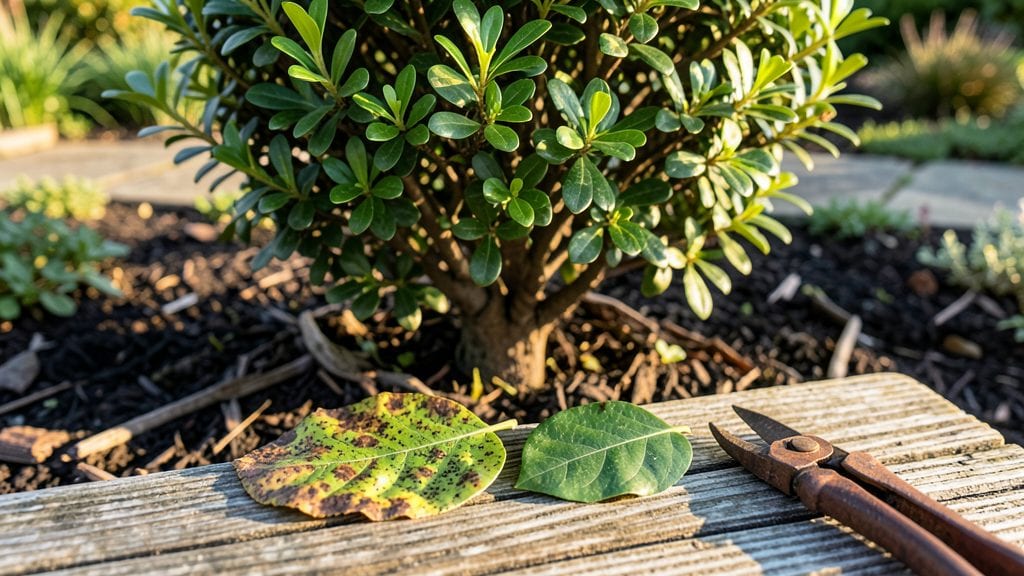
Boxwood plant diseases strike fast, but catching them early means saving your shrubs. I’ve seen boxwoods go from lush green hedges to sad, brown skeletons in just a few weeks—until I learned the telltale signs of the worst offenders.
The key? Spotting symptoms before they spread, like those tiny black spots on leaves or the sudden wilting that no amount of water fixes.
Most problems start with poor air circulation, overwatering, or stressed plants. Boxwood blight, for example, thrives in damp, shady spots, while root rot sneaks in when soil stays soggy for days.
My hedge recovered completely after I swapped heavy mulch for gravel and pruned to improve airflow—changes that took less than an hour but made all the difference.
You’ll learn to identify the 10 most common diseases by their unique marks—from powdery white fungus to sticky honeydew trails—and how to treat them with fast-acting fixes, whether it’s a simple spray or a soil swap.
Early action turns a potential disaster into a minor trim and a stronger plant by summer.
Whether you’re dealing with a single browning leaf or a full hedge under siege, this guide cuts through the guesswork. Prevention tips here will keep your boxwoods thriving year after year, no matter how humid your climate gets.
Root Causes of Boxwood Ailments
Boxwoods are prized for their lush, evergreen foliage and structured growth, but they’re not immune to disease. Understanding why these issues arise is the first step to prevention and treatment.
Below, we break down the science behind the most common culprits—from fungal invaders to environmental stressors—so you can take action before your plants suffer.
Fungi are the #1 enemy of boxwoods, thriving in damp, shaded conditions. These microscopic organisms latch onto weak spots—like damaged leaves or stems—and multiply rapidly. Here’s how it happens:
- Moisture Overload: Boxwoods love shade, but that same shade traps humidity. Fungi like Cylindrocladium (box blight) and Volutella (leaf spot) require prolonged leaf wetness (12+ hours) to germinate. Poor air circulation in dense plantings or mulch piled against stems creates the perfect petri dish. 💡 Pro Tip: Space plants 3–4 feet apart and avoid overhead watering.
- Stress Weakens Defenses: Drought, poor soil, or root damage (from compacted soil or construction) reduce a boxwood’s ability to fight off fungi. Think of it like a human with a weakened immune system—one sneeze (fungal spore) can turn into pneumonia (severe blight).
- Warm, Wet Seasons: Fungal spores explode in growth during spring and fall when temps hover between 60–75°F and humidity spikes. That’s why box blight outbreaks peak in May and September. 🌡️ Watch for: Dark, greasy spots on leaves that spread like ink in water.
Why it’s sneaky: Many fungal spores overwinter in old mulch, infected leaves, or even your tools. A single infected cutting or pruner can reintroduce the problem year after year.
Boxwoods are tough, but they’re not indestructible. When their environment goes rogue—whether too hot, too cold, or too soggy—they become prime targets for pests and diseases. Here’s the breakdown:
| Stressor | How It Works | Disease Risk |
|---|---|---|
| 🔥 Heatwaves | Intense sun + high temps (>90°F) cause leaf scorch, drying edges and killing cells. The plant’s energy shifts to survival, leaving it vulnerable to bacterial leaf spot. | Bacterial infections, powdery mildew |
| 💧 Waterlogged Soil | Boxwoods hate “wet feet.” Poor drainage cuts off oxygen to roots, leading to root rot (caused by Phytophthora fungi). Rotten roots can’t absorb nutrients, making the plant a fungal buffet. | Root rot, boxwood blight |
| ❄️ Winter Burn | Cold, dry winds desiccate leaves in winter. Damaged tissue provides entry points for Volutella (a fungus that causes boxwood leaf spot) when spring arrives. | Leaf spot, twig dieback |
| 🌪️ Poor Airflow | Tightly packed boxwoods or those near walls/fences trap moisture. Stagnant air prevents leaves from drying, giving fungi like Botrytis (gray mold) a foothold. | Gray mold, powdery mildew |
🎯 Key Takeaway: Most environmental stressors are preventable. Amend heavy clay soil with compost, water deeply but infrequently, and prune for airflow. A healthy boxwood is a disease-resistant boxwood.
Pests don’t just nibble—they damage boxwoods in ways that open doors for pathogens. Here’s how insects turn your shrubs into disease magnets:
- Boxwood Leafminers (🐛): These tiny worms burrow into leaves, creating silver trails that disrupt photosynthesis. Weakened leaves become easy targets for bacterial leaf spot.
- Scale Insects (🐞): These sap-suckers excrete honeydew, a sticky residue that fosters sooty mold (a black fungal growth). Sooty mold blocks sunlight, further stressing the plant.
- Japanese Beetles (🐝): Their skeletonized feeding leaves large wounds where Volutella or Cylindrocladium can infiltrate. One beetle = one potential infection site.
Why it’s a domino effect: Pests don’t just cause disease—they amplify existing problems. A boxwood already struggling with drought? Leafminers will turn it into a disease hotspot in weeks.
🔥 Quick Fix: Inspect new plants for pests before buying. Use neem oil or insecticidal soap as a preventive spray in early spring.
Even the best boxwoods can fall prey to human error. Common gardening oversights create the perfect storm for disease:
- Over-Fertilizing: Too much nitrogen promotes soft, lush growth that’s fungi-loving. Think of it like feeding a cold—you’re making the plant more attractive to pathogens.
- Improper Pruning: Cutting into old wood (instead of new growth) creates wounds that never heal, leaving entry points for bacterial infections. ✂️ Rule: Prune in late winter/early spring, using sterilized tools.
- Reusing Contaminated Tools: Fungal spores hitchhike on pruners like stowaways on a cruise ship. Moving from a diseased plant to a healthy one? You’ve just smuggled in an outbreak.
- Planting in the Wrong Spot: Boxwoods in low-lying areas or near sprinkler heads stay soggy. ⚠️ Red Flag: If water pools around the base, relocate or improve drainage now.
💡 Prevention Hack: Keep a 10% vinegar solution in a spray bottle to wipe tools between cuts. It kills 99% of fungal spores on contact.
Quick Fixes for Boxwood Blight
Boxwood blight, caused by the fungus Calonectria pseudonaviculata, can devastate your prized shrubs if left unchecked. But with the right approach, you can save your plants and prevent future outbreaks. Here’s how to tackle it—and keep your boxwoods thriving.
What to do:
- Snip off infected leaves, stems, or branches using sterilized pruners (clean with 70% rubbing alcohol or bleach solution).
- Bag and discard the clippings in the trash—do not compost them, as spores can survive.
- Wear gloves to avoid spreading spores to healthy plants.
Pro Tip: 💡 Check for hidden infections—look for dark, sunken spots on stems or yellowing leaves before they turn black. Early removal is key!
What to do:
- Use a copper-based or systemic fungicide (like chlorothalonil or propiconazole) as a preventive spray.
- Follow label instructions—typically, apply every 2–4 weeks during wet or humid conditions (the fungus thrives in moisture).
- Reapply after heavy rain to maintain coverage.
Pro Tip: 🌡️ Best timing is spring and fall, when spores are most active. Avoid spraying in extreme heat (fungicides work best at 50–85°F).
What to do:
- Thin out dense growth to improve air circulation—fungi love stagnant, humid conditions.
- Remove lower branches that touch mulch or soil (moisture lingers there).
- Avoid overhead watering—use drip irrigation or water at the base.
Pro Tip: ✨ Mulch properly—keep mulch 2–3 inches away from the stem to prevent fungal buildup.
What to do:
- Clean pruners between cuts with bleach (1 part bleach to 9 parts water) or isopropyl alcohol.
- Disinfect garden tools after each use to prevent cross-contamination.
- Remove and replace infected mulch—fungal spores can hitchhike on organic matter.
Pro Tip: 🎯 Quarantine new plants for 2–4 weeks before adding them to your garden to avoid introducing blight.
| Action | Why It Works | How to Do It |
|---|---|---|
| Choose resistant varieties | Some boxwoods (like 'Green Velvet') are less susceptible. | Ask your nursery for blight-resistant types. |
| Space plants properly | Reduces humidity and fungal spread. | Keep 3–4 feet between shrubs. |
| Avoid overhead watering | Prevents leaf wetness, which fuels spores. | Use soaker hoses instead. |
| Test soil drainage | Waterlogged soil encourages fungal growth. | Amend with compost or sand if needed. |
Final Reminder: 🚨 Boxwood blight is contagious—act fast, stay vigilant, and your shrubs will bounce back stronger! For severe cases, consider replacing heavily infected plants to protect your garden.
Frequently asked questions
Why are my boxwood leaves turning brown in patches?
Brown patches on boxwood leaves usually signal boxwood blight or leaf spot fungus. These diseases thrive in damp, shaded conditions. Check for dark, greasy spots that spread rapidly—this is classic blight. For leaf spot, you’ll see small brown or black dots with yellow halos. Prune infected areas immediately and improve airflow by spacing plants 3–4 feet apart.
Can I save a boxwood with root rot?
Root rot is serious, but early action can help. First, stop watering and improve drainage by amending soil with compost or sand. Remove any infected mulch and consider transplanting the plant to a drier location. For severe cases, you may need to dig up the plant, trim rotted roots, and repot it in fresh, well-draining soil. If the roots are mushy and black, the plant may not recover.
How do I know if my boxwood has powdery mildew?
Powdery mildew appears as a white, powdery coating on leaves, often starting on the undersides. Unlike blight, it doesn’t cause dark spots but instead smothers the leaf surface. To confirm, gently rub a leaf—if white residue comes off on your finger, it’s mildew. Treat with neem oil or a fungicide like baking soda spray (1 tsp baking soda + 1 quart water + a drop of dish soap). Improve airflow by pruning dense growth.
Is it safe to prune boxwoods in the summer?
Summer pruning stresses boxwoods and can invite diseases like boxwood blight. Instead, prune in late winter or early spring to promote healthy growth. If you must prune in summer, do it on a cool, overcast day and avoid cutting into old wood. Always sterilize your tools with rubbing alcohol or a bleach solution to prevent spreading pathogens.
Why do my boxwoods get diseases every year?
Recurring issues usually stem from poor air circulation, overwatering, or contaminated tools/mulch. Fungal spores often overwinter in old mulch or on pruners, so replace mulch annually and clean tools between cuts. Space plants properly and avoid overhead watering. If your garden stays humid, consider fungicide sprays in spring and fall as a preventive measure.