
Diseases
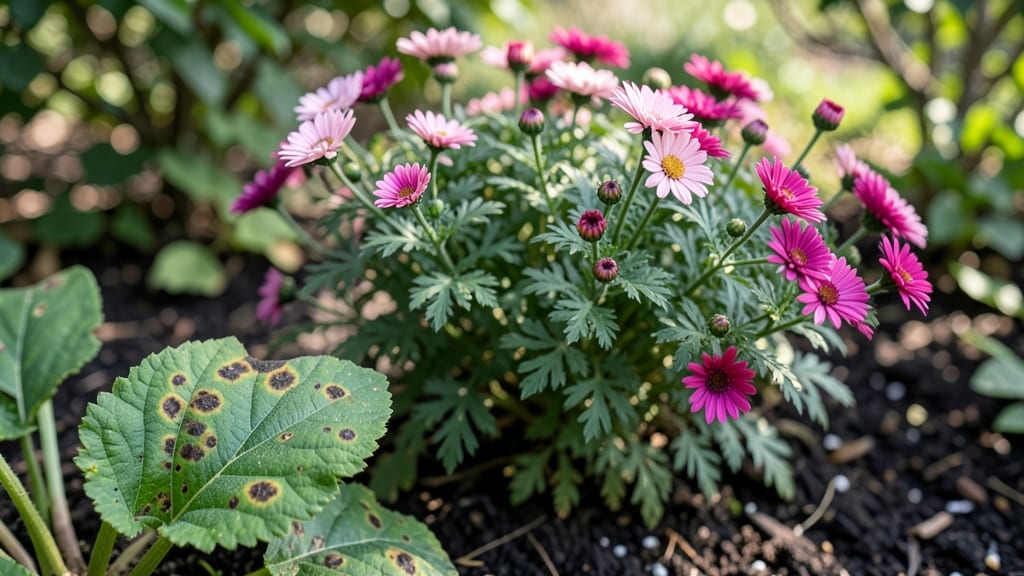
Those ghostly white spots and fuzzy coatings aren’t just cosmetic—they’re telltale signs of chrysanthemum plant diseases that can sabotage next year’s blooms if you don’t act fast. 🌿 I’ve seen powdery mildew turn vibrant foliage into a ghostly white mess in just two weeks, and rust... leave rust-colored stains that spread like confetti in the wind.
The good news? Most of these diseases respond fast to the right treatment if you catch them early.
Chrysanthemums get hit hardest by fungal infections because they love moisture—both the plant's natural preference and the humid conditions that fuel disease. Powdery mildew thrives in shady, damp spots, while leaf spot and rust need warm, wet leaves to take hold.
The key is prevention: space plants for airflow, water at the base (never overhead), and remove infected leaves immediately. My plants stay healthier when I rotate them every few weeks to break disease cycles.
You'll be able to revive struggling plants in days with simple sprays—neem oil for mildew, copper fungicide for rust, or baking soda mixtures for leaf spot. The secret weapon? A 30-second morning inspection before watering catches problems before they spread.
Once you recognize the patterns, diagnosing becomes second nature, and your chrysanthemums will bounce back with stronger growth and more abundant blooms.
Works for both garden beds and container-grown mums, and the same principles apply whether you're dealing with powdery mildew in July or rust in September. Let's turn those brown spots into a thing of the past.
Root Causes Of Chrysanthemum Struggles
Chrysanthemums may look delicate, but their health battles often stem from predictable—and fixable—factors. Understanding why these diseases strike helps you spot early warning signs and stop outbreaks before they wreck your blooms. Let’s break down the science behind the suffering.
Chrysanthemums thrive on circulation. When plants are packed too tightly—whether in gardens or containers—they trap moisture and block sunlight, creating the perfect storm for fungal diseases like gray mold (Botrytis cinerea) or powdery mildew (Erysiphe cichoracearum).
- Why it happens: Dense foliage slows evaporation, keeping leaves damp longer. Fungal spores (which float in the air) latch onto wet surfaces and germinate within 24–48 hours.
- Science deep dive: Fungi release enzymes that break down plant cell walls, causing necrosis (dead tissue). Powdery mildew, for example, smothers stomata (leaf pores), choking the plant’s ability to photosynthesize.
- Actionable fix: Space plants 12–18 inches apart and prune lower leaves to improve airflow. If growing in pots, use containers with drainage holes and avoid overpotting.
Chrysanthemums despise soggy feet but also wilt under drought stress—both extremes invite pests and pathogens. The most common culprits here are root rot (Phytophthora spp.) and leaf spot diseases (Septoria or Cercospora).
| Problem | Why It Happens | Signs To Watch For |
|---|---|---|
| Overwatering | Waterlogged soil cuts off oxygen to roots, weakening defenses. Fungal pathogens like Phytophthora thrive in anaerobic (oxygen-poor) conditions. | Yellowing leaves, blackened stems at the base, mushy roots. |
| Underwatering | Stressed plants produce less chlorophyll, making them 30% more susceptible to bacterial leaf spot (Pseudomonas syringae). | Crispy leaf edges, wilting despite moist soil, stunted growth. |
| Wrong watering time | Wetting foliage at night keeps leaves damp for hours, ideal for fungal spores. Alternaria leaf spot spreads 5x faster in humid, dark conditions. | Brown spots with yellow halos, often on older leaves. |
Pro tip: 💡 Water at soil level in the morning (6–9 AM) to allow foliage to dry by evening. Use drip irrigation or soaker hoses to avoid splashing.
Fungi are the silent invaders of the chrysanthemum world. They don’t just appear—they hitch rides on tools, wind, or even your gardening gloves. Diseases like rust (Puccinia spp.) or downy mildew (Peronospora spp.) often strike because spores linger in the environment or on infected plant debris.
- Why it happens:
- Survival mode: Fungal spores can remain dormant in soil for years (e.g., Verticillium wilt persists up to 10 years).
- Perfect conditions: Spores germinate when temps hit 60–75°F and humidity exceeds 75%.
- Human error: Reusing contaminated pruners or mulch spreads spores like wildfire.
- Actionable fix:
- Sterilize tools with 70% isopropyl alcohol or a 1:10 bleach-water solution between uses.
- Remove all plant debris after the first frost (don’t compost infected leaves!).
- Rotate crops: Avoid planting chrysanthemums in the same spot for 3+ years.
Pests like aphids, spider mites, or Japanese beetles don’t just nibble—they injure plant tissue, creating entry points for bacteria and fungi. For example, aphid saliva contains toxic compounds that weaken chrysanthemums, making them prime targets for bacterial leaf blight (Xanthomonas campestris).
- Why it happens:
- Mechanical damage: Beetle feeding creates open wounds where pathogens enter.
- Honeydew havoc: Aphid excretions (honeydew) feed sooty mold, a black fungal growth that blocks sunlight.
- Stress response: Damaged plants ramp up ethylene production, a hormone that accelerates disease susceptibility.
- Actionable fix:
- Inspect undersides of leaves weekly for pests. Use a neem oil spray (1 tsp/quart of water) to deter feeders.
- Introduce beneficial insects like ladybugs or lacewings to control aphids naturally.
- Prune heavily damaged stems to limit spread and improve airflow.
Remember: Most chrysanthemum diseases are environmental—not random. By addressing airflow, water habits, spore control, and pest pressure, you’re not just treating symptoms; you’re starving the problem at its source.
Quick Fixes for Chrysanthemum Woes
When your chrysanthemums start looking sad, don’t panic—most issues have simple, effective solutions. Below, we’ve mapped out practical fixes for the most common chrysanthemum diseases, along with prevention tips to keep your plants thriving. Whether it’s fungal infections, pests, or environmental stress, these steps will help you revive your blooms fast!
Fungal infections like powdery mildew, leaf spot, and root rot thrive in damp conditions. Act fast to prevent them from taking over.
🔥 Powdery Mildew: Scrub & Spray
- Fix it:
- Remove infected leaves (🔪) immediately—don’t compost them; toss them in the trash.
- Spray with a fungicide (neem oil, sulfur, or copper-based spray) every 7–10 days until the issue clears.
- Improve airflow by pruning crowded stems or spacing plants wider.
- Prevent it:
- Water at the base (not overhead) to keep foliage dry. (💡 Early morning is best!)
- Avoid overcrowding—chrysanthemums need 6–12 inches of space between plants.
- Rotate crops if you replant in the same spot yearly.
🍳 Leaf Spot: Clean & Sterilize
- Fix it:
- Prune infected leaves (👨🍳) and sterilize your pruners with rubbing alcohol.
- Apply a baking soda spray (1 tsp baking soda + 1 quart water + a drop of dish soap) weekly.
- Remove debris from the soil surface to reduce spores.
- Prevent it:
- Water only in the morning so leaves dry quickly.
- Space plants properly to reduce humidity buildup.
- Sterilize tools before and after use to avoid cross-contamination.
🌡️ Root Rot: Drain & Disinfect
- Fix it:
- Stop watering immediately—let the soil dry out completely for 2–3 days.
- Repot the plant in fresh, well-draining soil mixed with perlite or sand.
- Check the pot—if it has drainage holes, great!
If not, upgrade to a pot with holes or add a layer of gravel at the bottom. - Prevent it: - Use pots with drainage holes—no exceptions! - Water only when the top inch of soil is dry (stick your finger in to test). - Avoid over-potting—too much soil retains too much moisture.
Pests like aphids, spider mites, and earwigs can sap your chrysanthemums’ strength. Here’s how to kick them out for good.
🕷️ Spider Mites: Blast & Block
- Fix it:
- Spray with water (💦) to knock off mites—do this daily for a week.
- Apply insecticidal soap or neem oil (follow label instructions).
- Introduce predator mites (like Phytoseiulus persimilis) for a natural fix.
- Prevent it:
- Keep plants hydrated—mites love dry conditions.
- Use reflective mulch (like aluminum foil) to deter them.
- Inspect new plants before bringing them home.
🐛 Aphids & Earwigs: Soap & Traps
- Fix it:
- Blast aphids off with a strong stream of water (🚿).
- Wipe earwigs off leaves with a damp cloth or use sticky traps near the base.
- Spray with horticultural oil (like neem or canola oil) for stubborn infestations.
- Prevent it:
- Encourage ladybugs—they love aphids!
Plant marigolds nearby to attract them. - Remove weeds around your chrysanthemums (pests hide there!). - Check under leaves regularly—early detection = easier fixes.
Sometimes, the issue isn’t a disease or pest but the growing conditions. Tweak these factors to keep your chrysanthemums happy.
🌡️ Heat Stress: Shade & Hydrate
- Fix it:
- Move pots to partial shade (especially in peak afternoon sun).
- Mist leaves lightly on hot days to cool them down.
- Water deeply in the morning to replenish moisture lost to heat.
- Prevent it:
- Choose heat-tolerant varieties (like ‘Dynasity’ or ‘Bright Golden Anne’).
- Use mulch to retain soil moisture and regulate temperature.
- Avoid fertilizing in extreme heat—it stresses plants further.
🌧️ Overwatering: Let It Breathe
- Fix it:
- Stop watering until the soil is dry to the touch (usually 1–2 inches down).
- Loosen compacted soil with a fork to improve drainage.
- Repot if needed—if roots are mushy, trim the rotten ones and replant.
- Prevent it:
- Use a moisture meter to track soil dampness.
- Group pots together to create a microclimate with more stable humidity.
- Avoid watering at night—wet foliage overnight invites fungal growth.
- 💡 Rotate your fungicides—don’t use the same one repeatedly to avoid resistance. - 🎯 Test your soil—pH imbalances (too acidic or alkaline) weaken plants, making them prone to diseases. - 🌱 Practice crop rotation—don’t plant chrysanthemums in the same spot year after year. - 🔄 Sterilize everything—tools, pots, and soil can harbor pathogens.
A 10-minute boil or bleach wash (1 part bleach to 9 parts water) works wonders.
With these fixes, your chrysanthemums should bounce back in no time! Remember, prevention is key—consistent care keeps diseases and pests at bay. Happy gardening! 🌼
Frequently asked questions about chrysanthemum plant diseases
What are the first signs of powdery mildew on chrysanthemums?
Look for white, powdery patches on the tops and undersides of leaves—like someone dusted them with flour. These spots start small but spread quickly in humid conditions, eventually covering entire foliage. Catch it early by inspecting leaves weekly, especially in shaded or crowded areas.
Can I still use my chrysanthemums if they have leaf spot?
Yes, but remove infected leaves immediately to prevent spread. If the disease is mild, your plant can recover with proper care—prune affected areas, improve airflow, and apply a baking soda spray. Avoid using severely infected plants for cut arrangements, as the disease may spread to other flowers.
How do I know if my chrysanthemum has rust disease?
Rust shows as orange-brown pustules (like tiny blisters) on leaf surfaces, often appearing in damp conditions. Check both leaf sides and stems—these spots will darken and spread if untreated. Unlike powdery mildew, rust doesn’t look "fuzzy" but rather like scattered rust-colored spots.
Will neem oil work on all chrysanthemum diseases?
Neem oil is effective against fungal diseases like powdery mildew and leaf spot, but it won’t treat bacterial infections or root rot. For bacterial issues, use copper-based fungicides instead. Always mix neem oil with water (1 tsp per quart) and apply in the early morning for best results.
Can I save a chrysanthemum with root rot?
It depends on how severe the rot is. If only the tips are affected, you can trim the damaged roots and repot in fresh, well-draining soil. For advanced cases, the plant may not recover—look for blackened, mushy roots. Always use pots with drainage holes and avoid overwatering to prevent recurrence.