
Planting
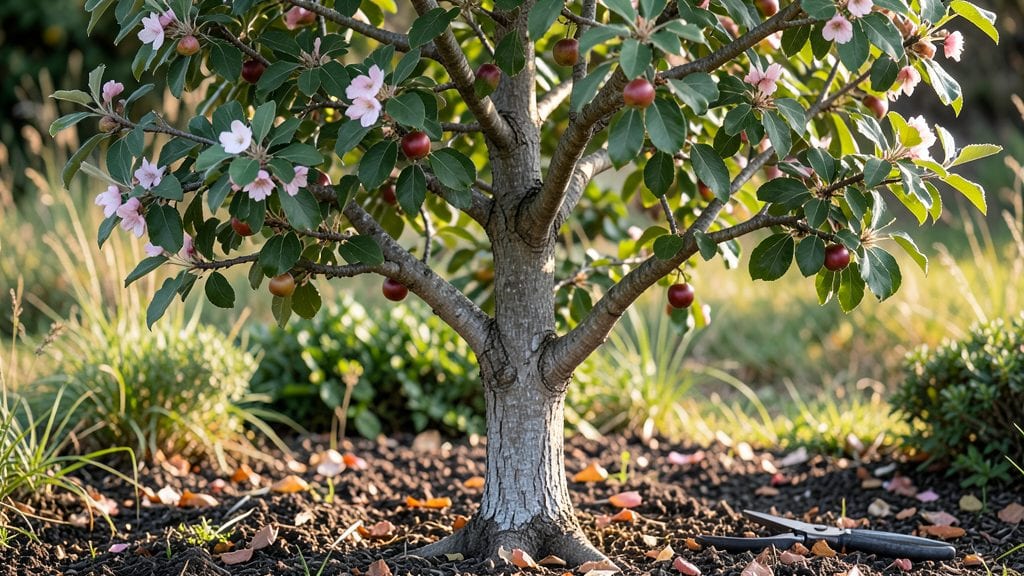
Planting a crab apple tree means four-season interest with almost no fuss. ✨ I’ve grown these trees for years, and they’ve never failed to deliver—glossy foliage in spring, fragrant blossoms in summer, fiery fall color, and even winter structure when most plants are dormant.
The best part? Their minimal pruning needs compared to fruit-bearing apples.
Crab apples thrive in full sun but tolerate partial shade, making them adaptable for small yards or urban spaces. They’re happy in average garden soil as long as it drains well—no need for fancy amendments unless your soil is heavy clay.
Water deeply after planting, then let nature take over; once established, they’re drought-tolerant. The only real maintenance is an occasional shape-up prune every few years to keep the tree open and healthy.
You’ll love how these trees attract pollinators in spring and birds in fall when the fruit ripens. The small, tart apples may not be edible for humans, but they’re perfect for jellies or wildlife snacks.
Plus, the disease resistance of modern cultivars means fewer worries about common apple tree pests. It’s the kind of tree that grows with you—literally and figuratively.
Perfect for beginners or anyone wanting low-maintenance beauty. Once planted, they’ll reward you with color and structure for decades with almost no effort. Here’s how to get started and keep them thriving year after year.
📚 In This Guide
- What you need
- Instructions
- Tips and common mistakes
- Wrapping up and next steps
What you need
- ● Crab Apple Plant: 1–3 Malus spp. saplings or bare-root plants (choose disease-resistant varieties like ‘Dolgo’ or ‘Sargent’)
- ● OR 5–10 crab apple seeds (collected from ripe fruit, stratified for 60–90 days in a cold, moist environment)
- ● Soil & Amendments: 5–10 gallons of well-draining loamy soil (pH 6.0–7.0)
- ● 1–2 cups of compost or aged manure per planting hole
- ○ Optional: 1 lb. of slow-release fertilizer (10-10-10 NPK ratio)
- ● Planting Supplies: 1 shovel (for digging)
- ● 1 garden trowel (for delicate root handling)
- ● 1–2 planting holes (18–24" wide, 12–18" deep)
- ● 1 mulch (3–4" layer of wood chips or straw)
- ● 1 pruning shears (for shaping or removing dead branches)
- ● 1 tree guard (to protect young trunks from pests)
- ● 1 drip irrigation system (for consistent moisture)
- ● 1 pH testing kit (to monitor soil acidity)
- ● 1 plant support stake (for windy areas)
Step-by-Step instructions for planting and caring for a crab apple tree
Here's how to grow a stunning crab apple tree that stays gorgeous year-round with just a little attention.
🪴 Step 1: Choose the Perfect Planting Spot
Crab apple trees thrive in full sun—pick a location with at least 6 hours of direct sunlight daily. They tolerate a range of soil types but prefer well-draining soil with a slightly acidic to neutral pH. I always look for a spot with good air circulation to prevent fungal diseases that can plague these trees.
Dig a hole that's twice as wide as the root ball and just as deep. Loosen the sides of the hole with a shovel to help roots spread easily. If your soil is heavy clay, mix in a few inches of compost or organic matter to improve drainage. This ensures your tree gets off to a strong start.
🌱 Step 2: Plant Your Crab Apple Tree Properly
Gently remove the tree from its container and loosen any circling roots at the bottom. Place the tree in the hole so the top of the root ball sits 1-2 inches above ground level. This prevents water from pooling around the trunk and causing rot.
Backfill the hole with soil, tamping it down lightly as you go to remove air pockets. Water deeply to settle the soil and eliminate gaps. Spread 3-4 inches of mulch around the base, keeping it 3 inches away from the trunk to prevent moisture buildup. This mulch layer helps retain moisture and regulates soil temperature.
☀️ Step 3: Water and Fertilize for Strong Growth
Water your new crab apple tree deeply once a week for the first growing season, providing about 1-2 gallons of water each time. You'll know it's getting enough when the top 6 inches of soil feel moist but not soggy. Overwatering is a common mistake—these trees hate wet feet.
In early spring, apply a balanced, slow-release fertilizer (like 10-10-10) following package instructions. This gives your tree the nutrients it needs without overwhelming it. I always fertilize again in midsummer to support the tree's energy as it prepares for winter. Avoid fertilizing in fall—this encourages new growth that won't harden off before cold weather.
✂️ Step 4: Prune for Shape and Health
Crab apple trees are naturally low-maintenance, but a little pruning keeps them looking their best. The best time to prune is late winter or early spring, before new growth begins. Remove any dead, diseased, or crossing branches first—these are easy to spot as they'll be brown, brittle, or growing toward the center of the tree.
To shape the tree, focus on opening up the center to allow sunlight and air to reach all parts of the canopy. Make clean cuts just outside the branch collar (the swollen area where the branch meets the trunk). Never leave stubs—this invites decay. After pruning, give the tree a good drink of water to help it recover.
🌿 Step 5: Enjoy Year-Round Beauty With Minimal Effort
Once established, crab apple trees need very little care beyond occasional watering during dry spells. In fall, you'll be rewarded with stunning fruit that attracts birds and adds color to your landscape. The trees also develop beautiful fall foliage and often have attractive bark for winter interest.
Watch for signs of stress like yellowing leaves or sparse fruiting—these usually indicate either too much shade or poor soil drainage. A simple soil test can tell you if your tree needs more nutrients or better-draining soil. With just these basic steps, your crab apple tree will provide decades of beauty with almost no effort.
Tips & tricks for perfect crab apple plant care
These game-changing tips will help you grow a thriving crab apple tree that stays stunning through every season with almost no effort.
Sunlight Secret: The 6 hours of direct sunlight mentioned in Step 1 is non-negotiable for vibrant growth and fruiting. If your yard has partial shade, consider planting near a south-facing wall or fence that reflects sunlight. I've seen crab apple trees in full sun produce fruit twice as abundant as those with just 4-5 hours of light.
Root Ball Strategy: When planting in Step 2, don't be afraid to gently tease apart any tightly bound roots at the bottom of the root ball. This encourages faster root establishment in your yard's native soil. If you're planting in heavy clay, mix in a 50/50 blend of native soil and compost—this improves drainage while maintaining the tree's natural growing conditions.
Watering Wisdom: The once-weekly deep watering in Step 3 works perfectly in most climates, but adjust based on your soil type. Sandy soils may need watering twice weekly, while clay soils might only need watering every 10 days. Always check that top 6 inches of soil—if it's dry, it's time to water again. A moisture meter makes this easy!
Pruning Pro Tip: For Step 4's late winter pruning, I recommend using sharp bypass pruners to make clean cuts. The key is to remove no more than 25% of the tree's foliage in any single pruning session—this prevents stress. After pruning, I always give the tree a deep watering to help it recover and promote new growth.
Pro Tips for Crab Apple Plant
- These game-changing tips will help you grow a thriving crab apple tree that stays stunning through every season with almost no effort.
- Sunlight Secret: The 6 hours of direct sunlight mentioned in Step 1 is non-negotiable for vibrant growth and fruiting.
- Root Ball Strategy: When planting in Step 2, don't be afraid to gently tease apart any tightly bound roots at the bottom of the root ball.
Frequently asked questions
Got questions about growing and caring for your crab apple plant? You’re not alone! Here are some of the most common queries—and their answers—to help you keep your tree thriving with ease.
How often should I prune my crab apple tree?
Prune your crab apple tree once a year, ideally in late winter or early spring (before new growth begins). Focus on removing dead, diseased, or crossing branches. Light pruning is key—these trees handle minimal effort beautifully! Avoid heavy pruning, as it can stress the tree.
Do crab apples taste good? Can I eat them?
While crab apples are edible, they’re tart and astringent—perfect for jams, jellies, or sauces, but not raw snacking. Some varieties (like ‘Dolgo’ or ‘Winesap’) are sweeter and better for eating fresh. Always research your specific cultivar before harvesting!
How cold-hardy are crab apple trees?
Most crab apple varieties are extremely cold-hardy, thriving in USDA Zones 3–8. They tolerate winter temperatures as low as -30°F (-34°C), making them ideal for northern climates. Just ensure they’re planted in well-draining soil to prevent root rot in soggy conditions.
What pests or diseases should I watch for?
Common issues include apple scab (fungal spots on leaves), codling moths (larvae in fruit), and aphids. Prevent problems with regular pruning for airflow, copper fungicide sprays (for scab), and row covers (for moths). Remove fallen fruit promptly to deter pests!
Can I grow a crab apple tree in a container?
Yes! Dwarf varieties (like ‘Adams’ or ‘Centennial’) thrive in 15–20 gallon containers with well-draining soil. Use a large pot with drainage holes and repot every 2–3 years. Place in full sun and water consistently—just avoid overwatering to prevent root rot.
Wrapping up and next steps
Growing a crab apple plant is a rewarding way to add year-round beauty to your garden with minimal fuss! 🌿 Whether you love their delicate blossoms, vibrant fall foliage, or the wildlife they attract, these trees are a low-maintenance yet high-impact choice.
With just a little care—like proper spacing and occasional pruning—you’ll enjoy their charm for decades.
Ready to get started? Pick your favorite variety, grab your tools, and plant your crab apple tree today! Your future garden will thank you—and so will the birds and bees.