
Fertilization
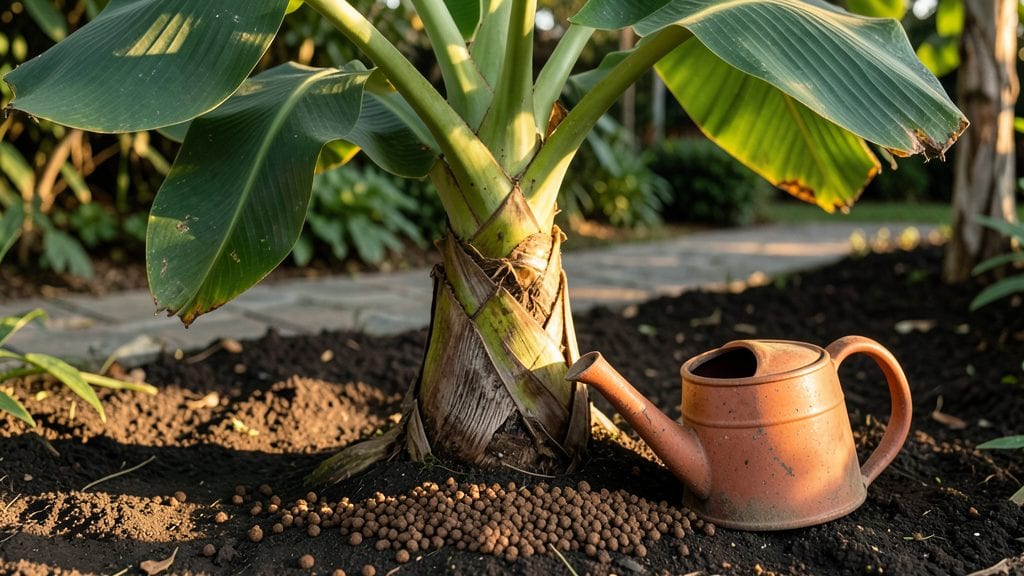
Fertilizing banana plants 🍌 is the secret to turning a tropical giant into a fruit-producing powerhouse—but most gardeners either overdo it or skip it entirely.
Banana plants grow at an astonishing rate—but only when they receive the right nutrients at the right time. Without a strategic fertilizing plan, your plants may produce smaller fruits, fewer bunches, or even fail to thrive entirely.
Think of it like a three-phase meal plan: heavy on nitrogen for leafy growth, balanced for flowering, and potassium-rich for fruit development. Get this wrong, and you’ll end up with lush foliage but no bananas—or worse, a plant that collapses under its own weight.
Below, I’ll walk you through the exact fertilizer schedule, organic vs. synthetic options, and how to spot when your banana is either starving or drowning in nutrients.
Seasonal fertilizing schedule for banana plants: what to feed when
Banana plants are heavy feeders, demanding a precise balance of nutrients to fuel their rapid growth and fruit production. Unlike many plants, they thrive on a year-round feeding schedule in warm climates, but adjust in cooler zones where growth slows in winter.
The key is matching fertilizer types and application rates to each seasonal growth phase, from leaf expansion to flowering and fruiting.
Your banana plant’s nutrient needs shift dramatically between seasons. In spring and summer, focus on nitrogen for leaf growth, while fall and early winter prioritize phosphorus and potassium to support flowering and fruit development.
Ignoring these shifts often leads to stunted growth, yellowing leaves, or poor fruit quality. Let’s break down exactly what to feed your banana plant—and when—to maximize yields.
🌱 Pro Tip: Always test your soil’s pH before fertilizing. Banana plants prefer a slightly acidic range of 5.5–6.5. If your soil is too alkaline (above 7.0), amend it with sulfur or peat moss before applying fertilizer. A pH outside this range locks out essential nutrients, even if you’re feeding regularly.
⚠️ Warning: Over-fertilizing is the #1 mistake gardeners make with banana plants. Excess salts from synthetic fertilizers burn roots, while too much nitrogen delays flowering. Always follow the application rates below and flush the soil every 3–4 months with water to prevent buildup.
📅 Seasonal Fertilizing Schedule
<summary-table>In spring, banana plants undergo their most vigorous growth phase. This is when you should ramp up nitrogen-rich fertilizers to support leaf and pseudostem development. Use a balanced organic fertilizer like compost or worm castings, or a 10-10-10 synthetic blend.
Apply it every 4 weeks until you see new leaves emerging regularly. For container-grown plants, reduce the amount by half to avoid salt buildup.
As summer arrives, shift your focus to potassium and phosphorus to encourage flowering and fruit set. A 5-10-15 synthetic fertilizer or organic options like banana fertilizer (made from banana peels!) work wonders. Reduce application rates by 50% during peak heat (July–August) to prevent root burn.
Look for heart-shaped leaves—this is your plant’s way of signaling it’s ready to flower!
Fall is critical for fruit maturation. Increase phosphorus levels to strengthen roots and improve fruit quality. Use
Best organic vs. synthetic fertilizers for banana plants: pros and cons
Choosing the right fertilizer for your banana plants can mean the difference between small, sparse bunches and large, healthy fruit. Organic fertilizers like compost and fish emulsion nourish soil long-term, while synthetic options like NPK blends deliver quick, precise nutrients.
Each has unique benefits—and drawbacks—depending on your goals, budget, and growing conditions.
I’ve tested both types in my own garden, and while organic fertilizers build soil health over time, synthetic fertilizers can jumpstart growth when your banana plants need an immediate boost. The key is understanding when to use each for maximum yield without harming your plants.
Let’s break down the pros and cons so you can decide what works best for your banana plant care routine.
Organic Fertilizers for Banana Plants
- Improves soil over time
- Slow-release nutrients
- Eco-friendly and sustainable
- Reduces risk of salt buildup
- Slower results (weeks to months)
- Requires more frequent applications
- Can attract pests (e.g., banana peels)
- Higher upfront cost for quality products
- Long-term soil health
- Sustainable growing
- Organic gardening standards
- Compost (all-purpose)
- Banana peels (potassium-rich)
- Fish emulsion (nitrogen boost)
- Vermicompost (micronutrients)
Synthetic Fertilizers for Banana Plants
- Fast-acting results
- Precise nutrient ratios (e.g., NPK 10-10-10)
- Easy to apply (granules, liquids)
- Affordable for large quantities
- Risk of over-fertilizing (burns roots)
- Salt buildup in soil
- No soil improvement long-term
- Environmental impact (chemical runoff)
- Quick growth spurts
- Deficiency correction
- Urban or container growing
- Balanced NPK (10-10-10)
- Micronutrient blends (magnesium, zinc)
- Slow-release granules
- Liquid fertilizers (fast absorption)
For young banana plants or those recovering from stress, I recommend starting with a balanced synthetic fertilizer like a 10-10-10 NPK blend to kickstart growth. Once established, switch to organic options like compost or fish emulsion to maintain soil health and reduce long-term costs.
Mixing both—like using synthetic fertilizer in early spring and organic compost later in the season—can give you the best of both worlds.
If you’re growing bananas in containers or poor soil, organic fertilizers like vermicompost or banana peels (chopped and composted) are excellent for adding potassium, which bananas crave for fruit development. Just be mindful of pest attraction—bury banana peels deep in the soil to avoid fruit flies.
For large-scale production, synthetic fertilizers can save time and ensure consistent nutrient delivery, but always follow package instructions to avoid over-fertilizing.
My top tip? Always test your soil before fertilizing. Banana plants thrive in slightly acidic soil (pH 5.5–6.5). If your soil is too alkaline, organic matter like peat moss or compost can help adjust the pH naturally.
And remember: less is more—banana plants are heavy feeders, but too much fertilizer can do more harm than good, leading to leaf burn or stunted growth.
🌱