Diseases
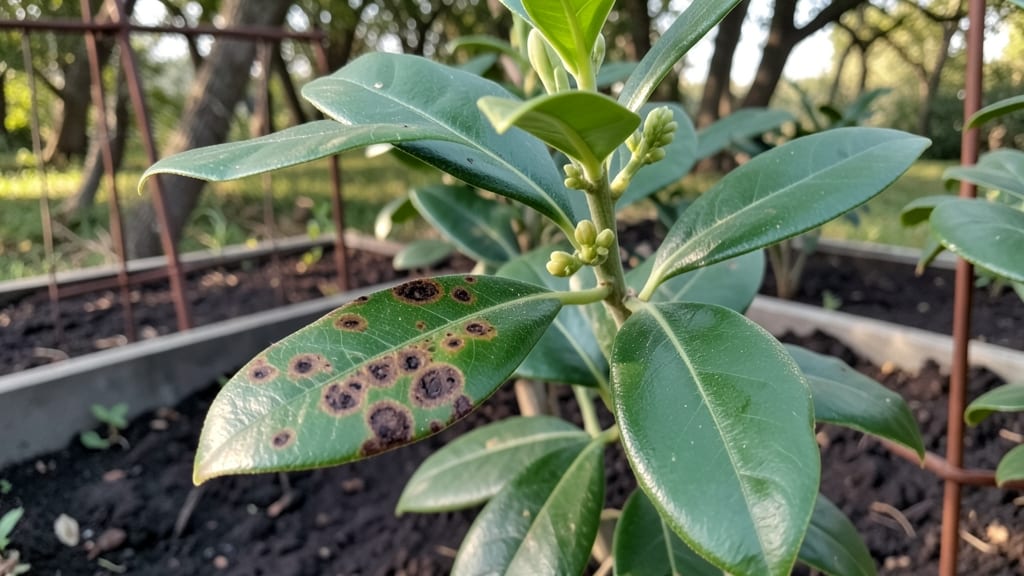
Laurel plants battling fungal diseases can go from lush and glossy to sad and spotted in weeks. 🌿 I’ve seen it happen to my own bay laurels—those dark, greasy leaf spots that spread like a shadow when you least expect it.
The good news? Most of these fungal foes respond well to early action, and I’ll walk you through the seven most common ones, what they look like, and how to stop them before they take over.
These diseases thrive in damp, crowded conditions, often starting as tiny specks that grow into larger, unsightly patches. Powdery mildew coats leaves with a white, flour-like dust, while leaf spot fungi create brown or black splotches that eventually kill leaf tissue.
The key to beating them is proper airflow, pruning, and avoiding overhead watering—simple changes that make a world of difference once you know what to watch for.
You’ll learn to recognize early symptoms like yellowing between veins or wilting despite regular watering. With the right mix of fungicides (organic or chemical), pruning out infected growth, and adjusting care routines, your laurels can bounce back faster than you’d expect.
The goal isn’t just to save the leaves—it’s to restore that healthy, vibrant look that makes these plants stand out.
Whether you’re dealing with a single branch or an entire shrub, these solutions work for both container and in-ground laurels. The secret is acting fast and staying consistent—once you spot the first signs, you’ve already won half the battle. Let’s get those plants back to their best.
Root Causes Behind Laurel Troubles
Laurel plants, whether Laurus nobilis (bay laurel) or ornamental varieties, are hardy but not immune to disease. Understanding why these issues arise is the first step to prevention and treatment.
Below, we break down the key factors—from environmental stressors to biological invaders—that turn your lush laurels into a battleground for fungi and pathogens.
Laurels thrive in moderate humidity, but too much moisture—especially when airflow stalls—creates the perfect breeding ground for fungal spores. Here’s how it happens:
- Dense foliage: Overgrown laurels with tightly packed leaves trap moisture, preventing evaporation. Think of it like a greenhouse effect—ideal for Phytophthora (root rot) and Cercospora (leaf spot).
- Shady, enclosed spaces: Laurels planted in corners of gardens, under dense canopies, or against walls with poor ventilation suffer from prolonged leaf wetness. Fungi like Septoria latch onto damp surfaces within 4–6 hours of moisture exposure.
- Overwatering: While laurels prefer consistent moisture, waterlogged soil (especially in clay or poorly draining areas) forces roots to suffocate. Anaerobic conditions weaken defenses, making plants 3x more susceptible to Fusarium wilt.
💡 Pro Tip: Prune laurels to open the canopy (aim for 30–50% light penetration to inner leaves) and space them 3–5 feet apart. If growing in containers, elevate pots with gravel or saucers to prevent water pooling.
Fungal diseases don’t just appear—they hitchhike or overwinter in your garden. Here’s how spores become a problem:
- Infected plant debris: Dead leaves, twigs, or mulch from last year’s infected laurels (or nearby plants) harbor Cercospora or Alternaria spores. These spores remain viable for 1–2 years in organic matter.
- Wind and water spread: Rain splashes spores onto leaves, while wind carries them from infected plants. Botrytis (gray mold) spores, for example, can travel up to 100 feet in gusty conditions.
- Tool contamination: Pruners, shears, or even your hands can transfer spores from one plant to another. A single cut with a dirty tool can introduce Phytophthora into healthy roots.
🔥 Action Step: Sanitize tools with 70% rubbing alcohol or a 10% bleach solution between cuts. Remove and dispose of debris (don’t compost infected material)—burn or bag it deep in the trash.
Laurels under stress—whether from nutrient starvation, pH imbalances, or physical damage—become easy targets for pathogens. Here’s the science:
| Deficiency/Stress | How It Weakens Laurels | Resulting Disease Risk |
|---|---|---|
| Nitrogen (N) deficiency | Leaves turn yellow (chlorosis) and grow weak, reducing cuticle wax production (the plant’s first line of defense). | Higher susceptibility to Septoria leaf spot and anthracnose. |
| Magnesium (Mg) deficiency | Interveinal chlorosis (yellowing between veins) disrupts photosynthesis, starving roots of energy to fight pathogens. | Increased risk of Fusarium root rot. |
| Soil pH >7.5 (alkaline) | Locks out micronutrients like iron and manganese, causing necrotic spots on leaves—entry points for fungi. | Promotes Cercospora and Alternaria infections. |
| Physical damage (pruning wounds, hail) | Exposed tissue lacks the suberin layer (a waxy barrier), allowing spores to penetrate within 24–48 hours. | Opens doors for Botrytis and Phytophthora. |
🌡️ Fix It: Test soil pH (ideal: 6.0–7.0 for laurels) and amend with sulfur (to lower pH) or lime (to raise it). Use a balanced fertilizer (10-10-10) in early spring to boost resilience.
Some diseases don’t act alone—they team up with insects to breach your laurel’s defenses. Here’s how:
- Scale insects & aphids: These sap-suckers weaken leaves by removing nutrients, creating sticky honeydew that fosters sooty mold (a fungal growth on the honeydew).
- Japanese beetles: Their skeletonizing (chewing leaf tissue) creates wounds where Botrytis or Alternaria spores can land.
- Root-knot nematodes: These microscopic worms damage roots, reducing water/nutrient uptake. Weakened roots are 50% more likely to succumb to Phytophthora.
🎯 Prevention: Introduce beneficial nematodes (Steinernema) to combat root pests, and spray neem oil (1% solution) to deter beetles and scales. Inspect new plants for pests before adding them to your garden.
Quick Fixes for Laurel Leaf Troubles
When your laurel plant starts showing signs of stress, acting fast can mean the difference between a full recovery and losing it for good.
Below are practical, step-by-step solutions tailored to the most common fungal diseases affecting laurel plants—powdery mildew, rust, leaf spot, and root rot—along with prevention tips to keep your plant thriving. No green thumb? No problem. These fixes are designed for ease and effectiveness.
Powdery mildew may look harmless, but it weakens leaves, stunts growth, and can kill your plant if ignored. Here’s how to tackle it:
🔥 Step 1: Isolate the Plant
- Move the infected laurel to a separate, shaded area (like a garage or under a tarp) to prevent spores from spreading to other plants.
- Pro Tip: 🌡️ Avoid watering overhead—this spreads spores like wildfire.
🍳 Step 2: Clean Up the Mess
- Remove severely infected leaves (wear gloves!) and dispose of them in the trash (not compost).
- Wipe down healthy leaves with a damp cloth to remove mildew buildup.
👨🍳 Step 3: Apply Fungicide
- Neem oil solution (1 tsp neem oil + 1 tsp mild soap + 1 quart water) – spray thoroughly on both leaf surfaces.
- Baking soda spray (1 tsp baking soda + 1 quart water + a few drops of dish soap) – great for mild cases.
- Store-bought fungicides (like copper fungicide or sulfur-based sprays) work well for stubborn cases.
⏰ Step 4: Prevent Recurrence
- Improve airflow by pruning dense growth.
- Water at the base (not the leaves) in the early morning so foliage dries quickly.
- Space plants 3–4 feet apart to reduce humidity buildup.
Rust fungus shows up as orange pustules on leaves and can defoliate your laurel if left untreated. Here’s how to stop it in its tracks:
🔥 Step 1: Prune Infected Foliage
- Cut off and destroy all leaves with rust spots (don’t compost them!).
- Pro Tip: ✨ Disinfect pruners with rubbing alcohol between cuts to avoid spreading spores.
🍳 Step 2: Boost Plant Health
- Fertilize lightly with a balanced, slow-release fertilizer (like 10-10-10) to strengthen the plant’s defenses.
- Avoid overwatering—rust thrives in wet conditions.
👨🍳 Step 3: Fungicide Treatment
- Copper fungicide (applied every 7–10 days) is highly effective against rust.
- Organic option: Chicken manure tea (fermented for 2–3 days) – spray foliage for natural resistance.
⏰ Step 4: Long-Term Prevention
- Mulch properly (2–3 inches of organic mulch) to reduce soil splashes that spread rust.
- Plant in full sun (rust loves shade and dampness).
- Rotate crops if growing laurels in containers—don’t replant in the same spot for at least 2 years.
Root rot is sneaky—by the time you see yellowing leaves or wilting, the roots may already be mushy and black. Act fast!
🔥 Step 1: Check the Roots
- Gently remove the plant from its pot and inspect the roots.
- Healthy roots = firm and white.
- Rotten roots = soft, dark, and smelly. Trim these off with sterilized scissors.
🍳 Step 2: Repot in Fresh Soil
- Use a well-draining mix (50% potting soil + 50% perlite or sand).
- Choose a pot with drainage holes (terracotta is ideal).
- Pro Tip: 💡 Add a handful of perlite to the new soil to prevent compaction.
👨🍳 Step 3: Adjust Watering Habits
- Let the top 1–2 inches of soil dry out before watering again.
- Water deeply but infrequently—never let the plant sit in soggy soil.
- Avoid saucers (or empty them after watering).
⏰ Step 4: Prevent Future Rot
- Water at the base (not the leaves).
- Ensure the pot has drainage holes—no exceptions!
- Avoid over-potting—laurels hate soggy feet.
No one wants to play whack-a-mole with fungal diseases. Here’s how to keep your laurel healthy long-term:
| Do This ✅ | Avoid This ❌ |
|---|---|
| Water in the morning (leaves dry faster). | Watering at night (promotes fungal growth). |
| Prune for airflow (thin out dense branches). | Overcrowding plants (traps moisture). |
| Use mulch (keeps soil moist but not waterlogged). | Piling mulch against the stem (causes rot). |
| Rotate pots (if indoors, move occasionally for even light). | Ignoring yellowing leaves (could be early disease). |
| Disinfect tools (rubbing alcohol after pruning). | Using the same tools on sick and healthy plants. |
Final Thought: 🎯 An ounce of prevention is worth a pound of cure—but if your laurel does get sick, act fast, clean thoroughly, and adjust care habits. With these fixes, your laurel will bounce back stronger than ever!
Frequently asked questions about laurel plant diseases
What do dark brown spots with yellow halos on laurel leaves mean?
Those are classic signs of Cercospora leaf spot, a common fungal disease. The spots start small and darken as they spread, often appearing on older leaves first. Prune infected foliage immediately and apply a copper fungicide every 10-14 days to stop its progress. Improve airflow around your plant to prevent recurrence.
Why does my laurel have white powdery patches on its leaves?
That white, flour-like coating is powdery mildew, thriving in humid, shaded conditions. Isolate the plant to prevent spread, then spray with a baking soda solution (1 tsp baking soda + 1 quart water + dish soap). For severe cases, use sulfur-based fungicide and avoid overhead watering to keep leaves dry.
Can I save a laurel plant with root rot?
Yes, but you must act fast! Remove the plant from its pot, trim all mushy black roots with sterilized scissors, and repot in fresh, well-draining soil mix with perlite or sand. Water only when the top 1-2 inches of soil are dry and avoid saucers that trap moisture. Keep it in bright, indirect light during recovery.
How do I know if my laurel's yellow leaves are from disease or nutrient deficiency?
Check the pattern: Yellowing between veins (especially on older leaves) usually means magnesium deficiency, while yellowing with brown spots indicates disease. Test your soil pH (ideal 6.0-7.0) and fertilize with Epsom salt (1 tbsp/gallon) for magnesium if needed. For disease, look for additional symptoms like leaf spots or powdery coatings.
Will pruning help prevent laurel diseases?
Prune to open the canopy (remove 20-30% of dense growth) to improve airflow and sunlight penetration. Always use sterilized tools and remove infected branches below the infection. Prune in late winter/early spring before new growth begins for best results.