
Planting
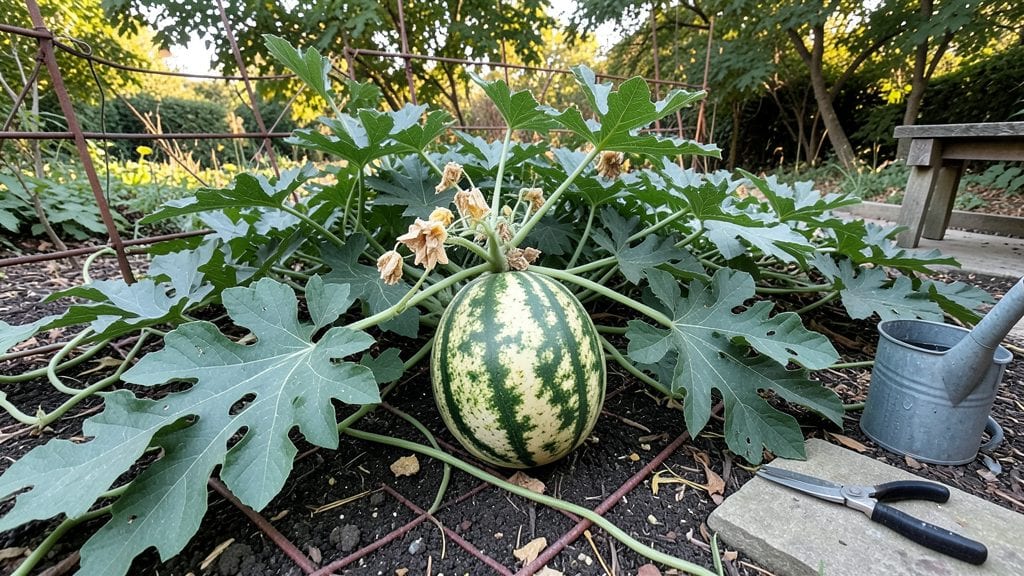
Your mature watermelon plant isn’t just a summer fling—it’s the key to year-round fruit if you trim it right. 🌱 I learned this the hard way after my first plant bolted in August, leaving me with half a season’s harvest.
The secret isn’t just water or sun; it’s three precise cuts that keep the plant focused on fruit, not vines.
Start by identifying maturity: look for 7-10 inch vines with male flowers (long stems) appearing before female flowers (tiny watermelons at the base). Once you spot those first female blooms, trim any side vines back to 12-18 inches from the main stem—this forces energy into fruit development.
Repeat this every 2-3 weeks until harvest, and you’ll extend your season by 4-6 weeks into fall.
The payoff? Heavier, sweeter melons with fewer seeds, plus a plant that stays productive instead of sprawling into chaos. You’ll also cut down on pests hiding in dense foliage and diseases spreading through crowded vines. Think of it as giving your plant a haircut—less fluff, more fruit.
Works in containers too, though you’ll need 5-gallon pots for dwarf varieties. Just adjust your trims to match the smaller growth habit. Here’s how to keep it thriving all season long.
📚 In This Guide
- What you need
- Instructions
- Tips and common mistakes
- Wrapping up and next steps
What you need
- ● Watermelon seeds: Choose a fast-maturing variety (e.g., Sugar Baby, Crimson Sweet) or buy a healthy seedling from a nursery. Quantity: 3–5 seeds per plant (or 1–2 seedlings).
- ● Potting soil: Well-draining, organic-rich mix (e.g., Miracle-Gro Potting Mix or homemade blend: 60% peat moss, 30% perlite, 10% compost). Quantity: 1–2 cubic feet per plant.
- ● Containers: Large pots (15–20 gallons) with drainage holes or fabric grow bags. Quantity: 1 per plant.
- ○ Fertilizer: Balanced organic fertilizer (10-10-10) or compost tea for nutrient boosts. Optional: Slow-release pellets for convenience.
- ● Mulch: Straw or black plastic to retain moisture and suppress weeds. Quantity: 2–3 inches per plant.
- ● Pruning shears: Sharp, sterilized shears for trimming vines (e.g., Felco F-2 pruners).
- ● Garden gloves: Heavy-duty to protect hands from thorns and soil.
- ● Watering can or hose: With adjustable nozzle for gentle watering.
- ○ Trellis or stakes: (Optional) For vertical growth—use 6–8 ft bamboo stakes or a sturdy A-frame trellis.
- ● pH test kit: To monitor soil acidity (ideal range: 6.0–6.8).
- ● Sunlight: Full sun (6–8+ hours daily)—watermelons are sun-worshippers!
- ● Temperature: Warmth is key! Seedlings: 70–90°F; Mature plants: 80–95°F. Use a greenhouse or row covers if in cooler climates.
- ● Water: Consistent moisture (1–2 inches per week), but avoid waterlogging.
Step-by-Step guide to pruning a mature watermelon plant for year-round fruit
Here's how I keep my watermelon vines productive for months—no waste, just strategic cuts.
✂️ Step 1: First Trim After Initial Fruit Set
Once your plant produces 4-6 mature fruits (about 30-40 days after pollination), remove all but 2-3 strongest vines at the base. I use sharp, sterilized pruning shears to cut cleanly just above a leaf node—never leave stubs. This redirects the plant’s energy toward fewer, larger melons instead of spreading resources thin.
Watch for yellowing leaves on weak vines—they’re the first sign the plant is struggling to support too many fruits. Remove any fruits smaller than a softball during this trim, as they’ll never reach full size and just drain energy. After pruning, water deeply to help the plant recover and encourage new growth from the remaining vines.
🌿 Step 2: Mid-Season Maintenance Trim
About 6 weeks after the first trim, inspect the plant for suckers—those small shoots growing from the main stem or fruit stems. These are energy vampires, siphoning nutrients from your melons. Pinch off any suckers smaller than 2 inches with your fingers or snip them cleanly with shears.
This is also the time to check for diseased or pest-damaged foliage. Remove any leaves with yellow spots, holes, or webbing immediately—don’t let them linger. I like to do this trim on a dry, sunny morning so the cuts heal faster. Afterward, apply a balanced fertilizer (like 10-10-10) to support the remaining vines.
⏰ Step 3: Late-Season Harvest and Renewal Trim
When your melons start ripening (check by tapping—ripe ones sound hollow), trim back one-third of the oldest vines at the base. This forces the plant to put its final energy into the remaining fruits and any new growth that’ll carry over into next season. Save the trimmed vines—they’ll root in water if you want to propagate new plants.
After harvesting, cut back any dead or spent vines and remove all fruit stems. This prevents pests and diseases from overwintering in the garden. I also add a 2-inch layer of mulch around the base to protect the roots and retain moisture for next year’s growth. If your climate allows, leave the plant alive—it’ll surprise you with new shoots in spring.
💧 Bonus: Year-Round Care Between Trims
Watermelons thrive with consistent moisture—keep the soil 2-3 inches deep damp but never soggy. I water at the base only, avoiding the leaves to prevent fungal diseases. If your plant looks stressed (leaves curling or wilting), give it a deep watering and check for adequate sunlight—they need full sun (6-8 hours daily) to produce sweet fruit.
Here’s the thing—pruning isn’t optional if you want melons year after year. Skipping it leads to overcrowded vines, smaller fruit, and exhausted plants. But with these three trims, you’ll get bigger, sweeter melons and a vine that keeps producing long after most gardeners have given up.
Tips & tricks for pruning a mature watermelon plant
These strategic tweaks will help you maximize your watermelon harvest while keeping your plant healthy and productive throughout the seasons.
The Timing Factor: The 30-40 day window for your first trim (Step 1) is critical—this is when your plant has established enough energy reserves to support fewer, larger fruits. I can't stress enough how important it is to wait until you have 4-6 mature fruits before pruning. Rushing this step can stress the plant and reduce yield. Watch for those fruits to reach softball size before making any cuts.
Tool Prep: Always sterilize your pruning shears with rubbing alcohol between cuts to prevent spreading disease. I learned this the hard way after losing a vine to bacterial wilt—now I keep a small spray bottle of alcohol handy for quick sterilization between each cut. Sharp tools make cleaner cuts that heal faster, so take 2 minutes to hone your shears before you start.
Sucker Management: Those 2-inch suckers (Step 2) might look harmless, but they're energy thieves. Pinch them off when they're still small—larger suckers will have already drained significant resources from your melons. For stubborn suckers, use your shears to make a clean cut just above a leaf node. I like to do this mid-morning when the plant is actively photosynthesizing, which helps it recover faster.
Seasonal Transition Strategy: In Step 3, when you're trimming back one-third of the oldest vines, focus on the vines that produced the smallest or poorest-quality melons. These are the ones that won't carry over well into next season anyway. Save the healthiest vines for propagation—these will give you the strongest new plants. The 2-inch mulch layer mentioned is non-negotiable in my book; it's the difference between a plant that struggles next season and one that thrives.
Pro Tips for Mature Watermelon Plant
- These strategic tweaks will help you maximize your watermelon harvest while keeping your plant healthy and productive throughout the seasons.
- The Timing Factor: The 30-40 day window for your first trim (Step 1) is critical—this is when your plant has established enough energy reserves to support fewer, larger fruits.
- Tool Prep: Always sterilize your pruning shears with rubbing alcohol between cuts to prevent spreading disease.
Frequently asked questions
How long does it take for a watermelon plant to mature?
A mature watermelon plant typically takes 70–100 days from seed to harvest, depending on the variety. Vining types (like Crimson Sweet) may take longer, while bush varieties (like Sugar Baby) mature faster. Watch for male and female flowers—female flowers (with tiny watermelons) signal readiness to pollinate and set fruit.
Can I trim a mature watermelon plant without harming it?
Strategic trimming boosts productivity by redirecting energy to fruit growth. Remove yellowing leaves, dead vines, and excessive side shoots (suckers) to improve airflow. Just avoid cutting more than 1/3 of the plant at once—gradual trims prevent stress. Check our trimming guide for variety-specific tips!
How do I protect a mature watermelon plant in cold weather?
Watermelons are tropical plants—they thrive in warmth (70–90°F) and cannot tolerate frost. If temps dip below 50°F, use row covers or move potted plants indoors (with bright light). For extended cold, harvest ripe fruit or mulch heavily to insulate roots. In zones below 9, grow watermelons in containers for easy relocation.
Why aren’t my mature watermelon plants producing fruit?
Common culprits include lack of pollination (hand-pollinate with a brush if bees are scarce), inconsistent watering (drought stress halts flowering), or nutrient deficiencies (add compost or a balanced fertilizer like 10-10-10). Also check for powdery mildew or pests—healthy leaves = better fruit set!
What can I do with mature watermelon vines after harvest?
Don’t toss those vines! Compost them to enrich soil, or use them as mulch to retain moisture. If pests (like cucumber beetles) were an issue, remove and destroy affected plants to prevent reinfestation. For next year, save seeds from your best fruit—just let them dry and store in a cool, dark place!
Wrapping up and next steps
Growing a mature watermelon plant is a rewarding journey that yields sweet, juicy fruit with the right care—especially those three strategic trims to boost productivity! 🌱 Whether you’re a seasoned gardener or just starting, pruning, feeding, and protecting your vines will ensure a bountiful harvest.
Remember, consistency is key, but so is patience—your hard work will pay off in delicious, homegrown watermelons.
Now that you’re armed with the know-how, take the next step: mark your calendar for planting season, gather your tools, and get ready to watch your garden thrive. Happy growing—your taste buds (and future picnics) will thank you! 🍉✨