
Watering
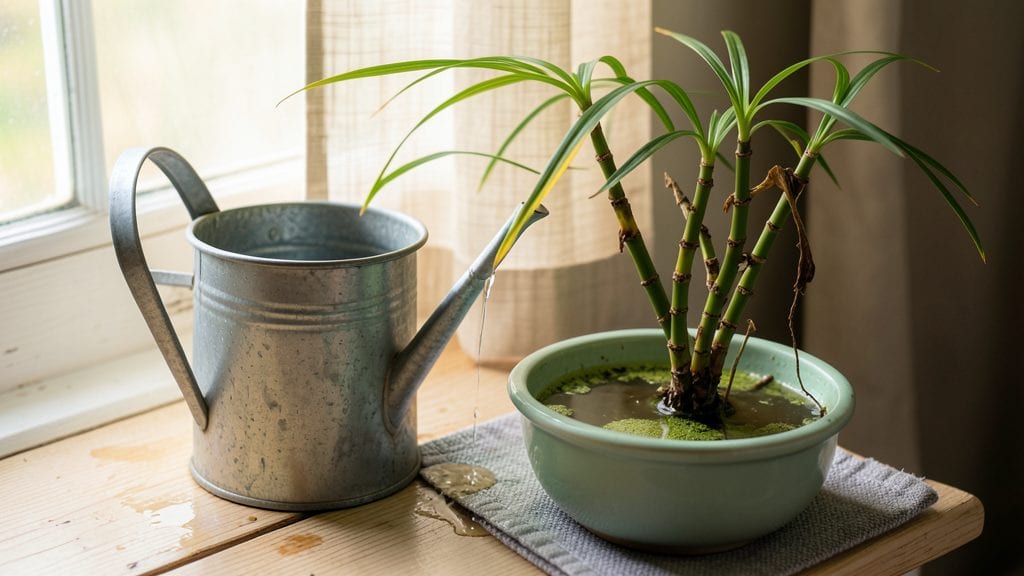
When your bamboo plant’s leaves turn yellow and stems feel mushy, root rot has already set in—overwatered bamboo needs urgent care before it’s too late. I’ve pulled plants back from the brink by cutting off the rot, drying out the roots, and adjusting watering habits, and you can too.
The key isn’t just fixing the damage but rewiring how you think about moisture.
Here’s the hard truth: bamboo thrives on damp but never soggy soil. Most people drown these fast-growing plants by watering on a schedule instead of checking soil moisture first. Stick your finger 1-2 inches deep—if it’s wet, wait.
A well-draining potting mix with perlite or sand is your best defense, and elevated containers help prevent water pooling. I’ve saved bamboo this way even after weeks of neglect.
What you’ll achieve is a revived plant with fresh green shoots in 2-4 weeks, provided you catch the rot early. Trim away blackened roots, repot in fresh mix, and water only when the top 1 inch feels dry.
The first flush of new growth is the best reward—proof that even a struggling bamboo can bounce back with the right care.
This method works for indoor clumping bamboo and outdoor running varieties alike, though larger specimens may need staking while they recover. The real secret? Treating bamboo like a desert plant in winter (less water) and a thirsty one in summer (more frequent checks).
Your plant’s future depends on breaking the overwatering habit now.
Why it happens
Bamboo plants thrive on balance—too little water and they wilt, but too much water suffocates their roots, leading to a cascade of problems. Understanding the root causes (literally!) of overwatering helps you adjust care before it’s too late. Here’s why your bamboo might be drowning in its own pot.
Bamboo roots need oxygen to breathe, but soggy soil cuts off airflow, triggering root rot (a fungal infection caused by Pythium or Phytophthora). The culprits?
- Clay or plastic pots without drainage holes: Water pools at the bottom, creating a swampy environment. Even "self-watering" pots can trap excess moisture if not monitored.
- Compacted or waterlogged soil: Heavy soils (like clay) or potting mixes with high peat moss retain water like a sponge. Bamboo prefers fast-draining mixes with perlite, sand, or orchid bark (30–50% air space).
- Overzealous mulching: Thick mulch layers (over 2 inches) can block evaporation and trap moisture against the roots.
💡 Pro Tip: Test drainage by filling the pot with water—if it doesn’t drain within 10–15 minutes, your bamboo is at risk. Upgrade to terracotta or fabric pots with holes!
Bamboo’s tolerance for moisture varies by species (e.g., Bambusa multiplex vs. Phyllostachys), but most hate "wet feet". Common mistakes include:
- Watering on a schedule, not by need: Rainy seasons or indoor humidity can make soil stay damp longer. Stick your finger 2 inches deep—if it’s wet, wait.
- Ignoring pot size: Small pots dry out faster, but they also retain moisture longer when watered. A 6-inch pot may need watering every 5–7 days, while a 12-inch pot could go 10–14 days.
- Using ice cubes or misting: These add surface moisture without hydrating roots. Bamboo prefers deep watering (soak the root ball) over frequent light sprinkles.
✨ Quick Fix: Use a moisture meter or the "squeeze test"—grab a handful of soil. If it forms a tight clump, it’s too wet.
Your bamboo’s surroundings can turn its pot into a sauna. Watch for these sneaky moisture traps:
| Factor | Problem | Solution |
|---|---|---|
| Low light + high humidity | Slow evaporation = soggy roots. Indoor bamboo in bathrooms or kitchens is especially vulnerable. | Move to bright, indirect light (east or north-facing windows) and use a dehumidifier if needed. |
| Cold temperatures | Cooler soil (below 60°F) reduces root activity, making roots more susceptible to rot. | Keep bamboo in consistent temps (65–85°F) and avoid drafts (e.g., near AC vents). |
| No airflow | Stagnant air = fungal growth. Crowded plants or sealed greenhouses accelerate rot. | Space plants 3–6 inches apart and use a small fan on low for circulation. |
🌡️ Warning Sign: Yellowing leaves with black, mushy roots? That’s root rot in action—act fast by trimming affected roots and repotting.
Revive Your Bamboo Plant Now
If your bamboo plant is drowning in excess moisture, don’t panic! With the right steps, you can nurse it back to health. Below, we’ve mapped out practical fixes based on the root cause of the issue—whether it’s soggy soil, poor drainage, or fungal infections.
Follow these solutions to save your plant and keep it thriving.
If your bamboo’s roots are suffocating in waterlogged soil, act fast to prevent permanent damage.
🍳 Step 1: Remove the Plant Gently
- Carefully lift the bamboo from its pot (if potted) or dig around it (if in-ground).
- Shake off excess soil to inspect the roots—healthy roots are firm and white, while rotten ones are mushy and brown/black.
👨🍳 Step 2: Trim Damaged Roots
- Use sterilized scissors or pruning shears to cut away any soft, discolored, or slimy roots.
- Focus on saving as much healthy root structure as possible—this helps the plant recover faster.
🥘 Step 3: Repot in Fresh, Well-Draining Soil
- Choose a pot with drainage holes (if repotting) and fill it with a mix of:
- 50% potting soil (lightweight, airy)
- 30% perlite or orchid bark (for aeration)
- 20% coarse sand or gravel (to prevent compaction)
- Avoid heavy garden soil—it retains too much moisture.
⏰ Step 4: Let It Dry Out Before Watering Again
- Place the repotted bamboo in a shady spot (bright indirect light is best).
- Wait 3–5 days before watering—this gives roots time to heal.
- When you do water, soak the soil until it drains freely from the bottom, then empty the saucer to prevent sogginess.
- 🌡️ Watering Schedule: Stick to the "finger test"—stick your finger 1–2 inches into the soil.
Water only if it’s dry. - 🎯 Pot Choice: Use terracotta or containers with drainage holes to wick away excess moisture. - ✨ Mulch Lightly: Add a thin layer of mulch (like pine bark) around the base to regulate soil moisture. - 🔥 Avoid Saucer Traps: Never let plants sit in standing water—empty saucers after watering.
If your bamboo shows signs of fungal rot (yellowing leaves, black spots, or a foul smell), take these steps:
🔪 Step 1: Sterilize the Pot & Tools
- Scrub the pot with a 10% bleach solution (1 part bleach to 9 parts water) to kill fungus.
- Disinfect pruning tools with rubbing alcohol.
🍄 Step 2: Apply Fungicide
- Use a copper-based fungicide or neem oil spray (mix 1 tbsp neem oil + 1 tsp mild soap in 1 quart of water).
- Spray the soil and foliage thoroughly, repeating every 7–10 days until new growth appears.
🌱 Step 3: Boost Air Circulation
- Move the plant to a well-ventilated area (avoid cramped spaces).
- Prune crowded or yellowing leaves to improve airflow.
Once your bamboo is back on track, keep these habits to prevent future waterlogging:
- 💪 Water Less in Winter: Growth slows down, so reduce watering frequency.
- 🥗 Monitor Leaf Health: Drooping or yellowing leaves signal overwatering—adjust immediately.
- 🍎 Rotate the Pot: Every few months, turn the pot slightly to ensure even light exposure and soil settling.
With patience and the right care, your bamboo plant can bounce back stronger than ever. Start with these fixes, and soon you’ll see fresh green shoots signaling a full recovery! 🌱💚
Frequently asked questions about overwatered bamboo
How can I tell if my bamboo plant is overwatered?
Check for yellowing leaves, mushy stems, and black, smelly roots—these are classic signs of root rot from excess moisture. If the soil stays damp for more than 2 days after watering, that's another red flag. Healthy bamboo roots should be firm and white, not slimy or discolored.
Can I save a bamboo plant with root rot?
Yes! Trim away all mushy roots with sterilized scissors, repot in fresh well-draining mix (50% potting soil + 30% perlite), and let it dry out for 3-5 days before watering again. Place it in bright, indirect light and avoid saucers that trap water. With this approach, you'll often see new growth in 2-4 weeks.
Why does my bamboo need so much less water than other plants?
Bamboo roots thrive in damp but never soggy conditions—unlike thirsty tropical plants, they store moisture efficiently. The key is drainage: Use pots with holes, avoid heavy clay soil, and water only when the top 1 inch feels dry. Think of it like a cactus in disguise—it hates "wet feet" but loves humidity.
Will moving my bamboo to a sunnier spot help with overwatering?
Indirectly, yes! More light speeds up evaporation, but direct sun can stress roots if soil stays wet. The real fix is improving drainage first. Pair bright light with a well-aerated mix and terracotta pots—this combo helps prevent waterlogging while keeping your bamboo happy. Test drainage by filling the pot: water should drain within 10-15 minutes.
How often should I water bamboo in winter?
Cut back dramatically—water only when the soil is completely dry 2-3 inches deep. In winter, growth slows, and roots need half the moisture they do in summer. A good rule: 1 watering every 2-3 weeks (less if indoors). Check with your finger—if it comes out clean, hold off on watering.