
Watering
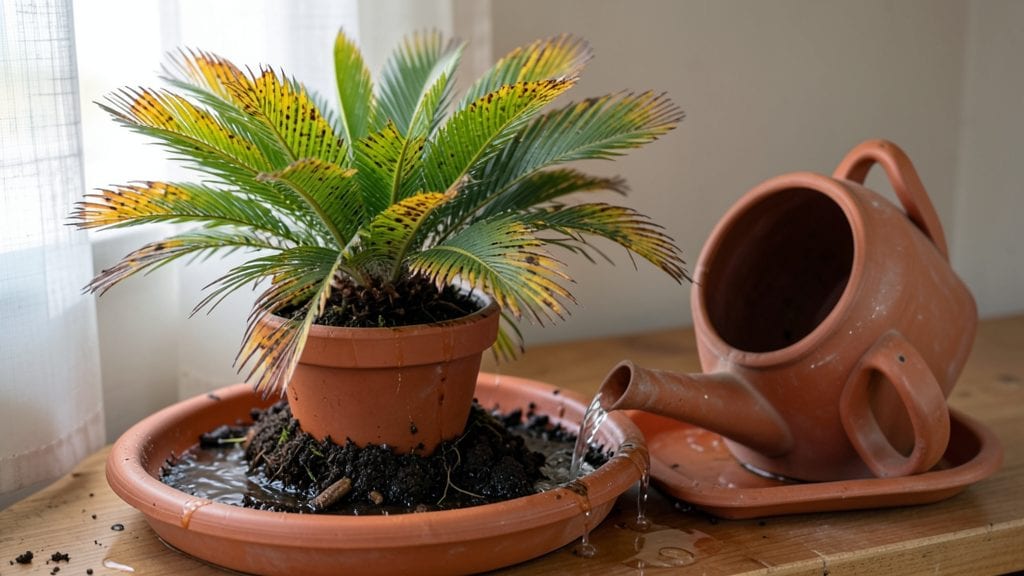
That drooping, yellowing mess isn’t just a sad palm—it’s an overwatered palm plant crying out for help, and I’ve got the rescue plan. 🌱 Here’s how I nursed my 10-foot Majesty palm after three weeks of neglect.
The key isn’t just cutting back water; it’s fixing the whole system so the roots can breathe again.
Start by checking the soil—if it smells sour or feels squishy, you’ve got a serious case. Drainage is everything: repot into a container with fresh, gritty mix (cactus soil works great) and holes big enough to fit your thumb.
Then, let the soil dry out completely between waterings—stick your finger in first to test. Most palms bounce back within weeks once they’re not drowning.
You’ll see new growth within 4-6 weeks if you’re consistent, with fronds turning a vibrant green again. The trick is patience—overwatered palms don’t recover overnight, but they do recover. By adjusting your schedule and upgrading the pot, you’ll prevent future yellowing and keep your palm thriving for years.
Works for indoor palms like Parlor, Areca, or Canary Island palms just as well as outdoor varieties. The same rules apply whether your plant lives in a sunny window or a shady patio. Let’s get those roots breathing again—fast.
Root Causes Of Overwatering
When your palm plant starts looking sad with yellowing fronds or mushy stems, it’s often a cry for help—not too little water, but too much.
Understanding the why behind overwatering is the first step to saving your plant. Let’s break down the real culprits, from soil science to human habits.
Palms thrive in well-draining soil because their roots hate sitting in soggy conditions. When soil doesn’t drain properly, excess water pools around the roots, cutting off oxygen and triggering anaerobic conditions—a fancy term for "root suffocation."
- Clay-heavy soil compacts easily, trapping water like a sponge that never dries. If your palm’s soil feels dense or hardens when dry, it’s a red flag.
- Lack of organic matter (like compost or perlite) reduces porosity, so water can’t escape. Think of it like a clogged drain—no room for water to flow out!
- No gravel or sand layer at the bottom of the pot? Without this, water just sits, creating a breeding ground for root rot (a fungal infection that eats away at roots).
Pro tip: 💡 Test your soil’s drainage by filling a pot with water, then timing how long it takes to drain. If it’s still wet after 30+ minutes, your palm is at risk.
We’ve all been guilty of it—watering on a schedule instead of checking the plant’s needs. But palms don’t follow a rigid calendar; they follow their own moisture signals. Here’s why your watering routine might be backfiring:
- Ignoring the "finger test": Stick your finger 2–3 inches into the soil. If it’s damp, wait. If it’s bone-dry, water deeply—but not until then.
- Watering without checking humidity: Indoor palms in dry air (like from HVAC or heaters) dry out faster, but outdoor palms in rainy climates can drown if you don’t adjust.
- Mistaking thirst for boredom: Some plant owners water just because they like to see wet soil, not because the plant needs it. Resist the urge!
- Using ice cubes or misting: While trendy, these methods often don’t reach the roots. Palms need deep, infrequent watering to encourage strong root growth.
Pro tip: ✨ Switch to a soak-and-dry method: Water until it runs out the drainage holes, then let the top 2–3 inches of soil dry completely before watering again.
Not all pots are created equal—and some are downright hostile to palm health. Here’s how your container might be sabotaging your plant:
| Problem Pot Type | Why It’s Bad | Fix It! |
|---|---|---|
| Glazed ceramic or plastic pots | Traps moisture against the roots, slowing evaporation and keeping soil wet longer. | Switch to terracotta or unglazed pots (they breathe better). |
| Pots without drainage holes | Water has nowhere to go, leading to root rot in days. Even "self-watering" pots can be deadly if overused. | Drill holes if possible, or use a cache pot (a pot inside a pot with gravel in between). |
| Too small for the plant | Roots get root-bound, circling and strangling themselves, which weakens water uptake. | Upgrade to a pot 2–3 inches larger in diameter and refresh the soil. |
Pro tip: 🌡️ If repotting isn’t an option, elevate the pot on feet or a saucer to improve airflow underneath—this helps soil dry faster.
Sometimes, overwatering isn’t your fault—it’s Mother Nature playing tricks. Here’s how external conditions can sneakily drown your palm:
- High humidity: If your home or garden stays humid (like in bathrooms or tropical climates), soil stays moist longer. Cut back on watering by 30–50%.
- Low light levels: Palms in shady spots photosynthesize less, so they don’t drink as much water. Overwatering in low light = recipe for rot.
- Rainy seasons or poor outdoor placement: If your outdoor palm is in a saucer or shallow bed, heavy rains can submerge the roots for days. Move it to a slightly elevated spot.
- Cold temperatures: Chilly weather slows root activity, so palms absorb water slower. Water less frequently in winter.
Pro tip: 🎯 Group palms with other plants—they’ll create a microclimate with better airflow, reducing humidity around the soil.
Revive Your Palm Fast
If your palm plant is struggling from too much water, don’t panic—it’s often fixable with the right steps. The key is to drain excess moisture, improve airflow, and adjust your watering habits to prevent further damage. Below, we break down the most common causes of overwatering and the best ways to tackle them—plus tips to keep your palm thriving long-term.
If your palm’s roots are sitting in waterlogged soil, they’ll start to rot, turning brown and mushy. Here’s how to rescue them:
👨🍳 Step 1: Remove the Plant Gently
- Carefully lift the palm from its pot to inspect the roots.
- If the soil is compacted or smells foul, it’s a sign of overwatering.
🔪 Step 2: Trim Damaged Roots
- Use sterilized scissors or pruners to cut away any black, mushy, or soft roots.
- Healthy roots should be firm and white or tan.
🌱 Step 3: Repot in Fresh, Dry Soil
- Choose a pot with drainage holes (if it doesn’t have them, drill some).
- Use a well-draining palm-friendly mix (e.g., 60% peat or coconut coir, 30% perlite, 10% sand or orchid bark).
- Avoid heavy garden soil—it retains too much moisture.
💡 Pro Tip:
> "Let the soil dry out completely between waterings—stick your finger 2-3 inches deep. If it’s damp, wait another day."
Yellowing leaves (especially the lower ones) are a classic sign of overwatering. To fix this:
⏰ Step 1: Hold Off on Watering
- Skip watering for 1-2 weeks to let excess moisture evaporate.
- If the soil is still soggy, wait longer—roots need time to recover.
☀️ Step 2: Boost Airflow and Light
- Move your palm to a spot with bright, indirect light (e.g., near a window but not in direct sun).
- Improve airflow by placing it in a well-ventilated area or using a small fan on low.
💡 Pro Tip:
> "Misting isn’t enough—palms need deep watering when the top 2-3 inches of soil are dry. Use a watering can with a narrow spout to target the roots."
Once your palm is on the mend, keep these habits to avoid repeating the mistake:
📊 Watering Schedule Checklist
- Check soil moisture before watering (use your finger or a moisture meter).
- Water deeply but less often—palms prefer drought-like conditions over soggy soil.
- Use the right pot—terracotta or ceramic pots dry out faster than plastic.
🎯 Long-Term Care Tips
- Mulch lightly with orchid bark or coconut chips to retain just enough moisture.
- Fertilize sparingly—over-fertilizing can burn roots and worsen water retention.
- Monitor humidity—palms love 40-60% humidity; use a humidifier if your home is dry.
With patience and the right adjustments, your palm can bounce back—often within a few weeks! The key is less water, more airflow, and better drainage. Now that you’ve got the fixes, keep an eye on those fronds and roots, and your palm will be back to its lush best in no time. 🌿✨
Frequently asked questions
How do I know if my palm plant is overwatered instead of underwatered?
Check the soil first—if it smells sour or feels squishy, it’s overwatered. Yellowing fronds (especially lower ones) and mushy stems are classic signs, while brown, crispy edges suggest underwatering. Also, lift the pot: if it feels heavy, the soil is likely too wet.
Can I save a palm with root rot from overwatering?
Yes, but act fast! Trim away black, mushy roots with sterilized scissors, then repot in fresh, gritty soil with drainage holes. Let the soil dry completely between waterings, and avoid watering until new growth appears—usually within 4-6 weeks.
Why does my indoor palm keep getting overwatered even when I follow the schedule?
Indoor environments often have inconsistent humidity or poor airflow. Use a moisture meter to check soil before watering, and switch to terracotta pots (they dry faster). Grouping palms together also helps balance humidity naturally.
Is it better to underwater than overwater a palm?
Palms are drought-tolerant and recover better from underwatering. Overwatering causes irreversible root rot, while underwatering just slows growth. The key is letting the top 2-3 inches of soil dry out between waterings.
How often should I water my palm in winter?
Cut back significantly—water only when the top 3-4 inches of soil are completely dry. Cold weather slows root activity, so palms need far less water. A general rule: water every 3-4 weeks indoors, or less for outdoor palms in winter.