
Watering
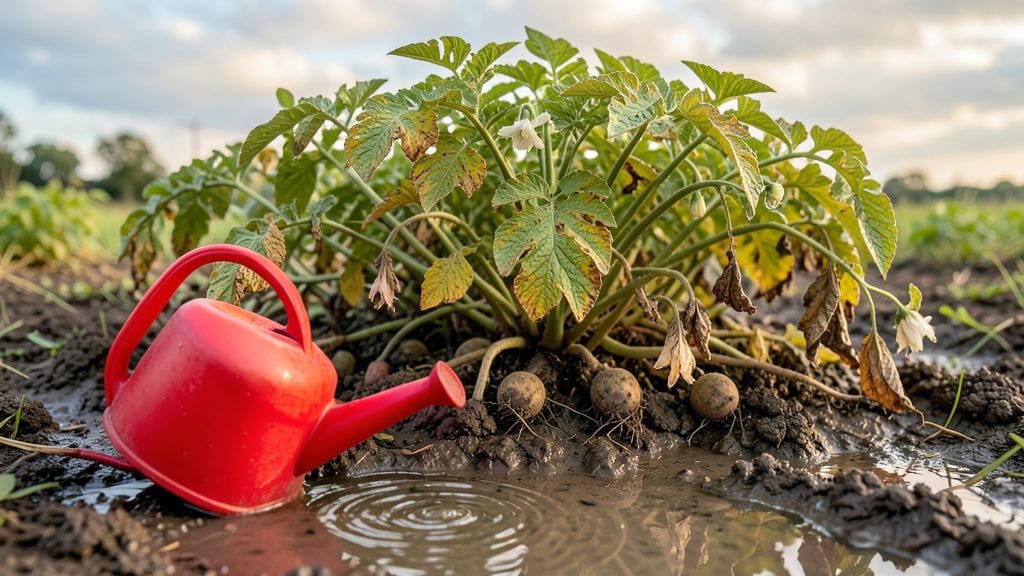
Overwatered potato plants can turn your harvest into a soggy mess—unless you act fast. 🌱 I’ve pulled more plants back from the brink than I’d like to admit, and the key is catching the problem early before mold sets in or roots drown.
The first sign? Yellowing leaves that feel mushy when you touch them, or stems that wilt despite damp soil.
Here’s the thing—potatoes hate soggy feet. Too much water cuts off oxygen, inviting rot and fungus. My go-to rescue starts with stopping all watering for 3-4 days to let the soil dry out, then amending it with coarse sand or perlite to improve drainage.
If the stems are soft or black, prune them back to healthy green tissue—it’s brutal, but necessary.
Within a week, you’ll see new growth pushing through if the tubers are still firm. The real payoff? Next season, you’ll test soil moisture with your finger before watering—no more guesswork. Mulch with straw to keep moisture even, and space plants 12 inches apart to prevent overcrowding.
This works for backyard gardens, raised beds, or even container-grown potatoes. The secret is patience—reviving overwatered plants takes time, but with these steps, you’ll save your harvest and your sanity. Let’s get those tubers back on track!
Common Causes of Soggy Soil
When your potato plants look more like a swamp than a thriving crop, overwatering is usually the culprit. But why does this happen? Let’s break down the most common reasons—so you can avoid them next season and save your tubers from a watery grave. 🌧️💦
Potatoes thrive in well-draining soil, but if your garden beds or containers lack proper drainage, water pools around the roots instead of draining away. This creates a soggy environment that suffocates roots and invites fungal diseases like Phytophthora.
Why it happens:
- Clay-heavy soil compacts easily, trapping water like a sponge. Without air pockets, roots can’t breathe.
- No raised beds or mounds mean water sits at the base of plants, especially in flat-ground gardens.
- Compacted soil from foot traffic or machinery crushes soil structure, reducing drainage.
Actionable fix: Amend soil with compost, perlite, or coarse sand to improve aeration. If planting in containers, use a mix with 50% potting soil and 50% perlite or vermiculite.
Potatoes need consistent moisture, but too much water disrupts their natural growth cycle. Overwatering can lead to:
- Root rot from prolonged saturation.
- Blossom end rot (yes, even potatoes get this!) due to nutrient imbalance.
- Weak stems that flop or snap under excess weight.
Why it happens:
- Ignoring soil moisture—watering on a strict schedule (e.g., every day) without checking soil dampness.
- Heavy rainfall + automatic irrigation doubling up on water, drowning roots.
- Small or shallow containers dry out quickly, leading to compensatory overwatering.
Actionable fix: Water only when the top 1–2 inches of soil are dry. Use a moisture meter or stick your finger in the soil to test. For containers, ensure drainage holes are present and water only when lightweight.
Potatoes grow underground, and if they’re planted too deep or too close together, water can’t evaporate properly, leading to a perpetually wet root zone.
Why it happens:
- Planting seed potatoes below 4 inches deep traps moisture near the base, slowing germination and encouraging rot.
- Overcrowding plants (less than 12 inches apart) creates a dense canopy that blocks airflow, increasing humidity around foliage.
- Mounding soil incorrectly (e.g., piling too much around stems) can trap water against the plant.
Actionable fix: Plant seed potatoes 3–4 inches deep and space them 12–15 inches apart. As they grow, hill soil around the stems (but leave the top 2 inches exposed to dry out).
Even with perfect watering habits, Mother Nature can throw a wrench in your plans. Humid climates, frequent rain, or lack of airflow can turn your garden into a potato sauna.
Why it happens:
- High humidity slows evaporation, keeping soil damp longer than ideal.
- No windbreaks or spacing allows fungal spores to linger near plants.
- Shady or low-lying areas retain moisture longer, especially after rain.
Actionable fix: Choose sunny, elevated spots for planting. In humid areas, space plants widely and avoid overhead watering (use drip irrigation instead). Mulch with straw or wood chips to regulate moisture.
Now that you know the root causes (pun intended), you’re ready to revive your soggy potatoes—and keep them thriving next season! 🚀🌱
Revive Your Plants Step by Step
Overwatered potato plants can feel like a gardener’s worst nightmare—wilting leaves, yellowing foliage, and the dreaded risk of rot. But don’t toss the taters just yet! With the right approach, you can nurse them back to health and even salvage some tubers.
Here’s how to diagnose the issue and take action, cause by cause.
If your potatoes are drowning in soggy soil, the first priority is stopping the waterlogging and improving drainage.
🔥 Step 1: Pause Watering Immediately
- Let the soil dry out naturally before adding more water.
Check moisture by sticking your finger 2 inches into the soil—if it’s damp, wait another day. - Pro Tip: 🌡️ Use a moisture meter for accuracy, especially if you’re unsure whether the soil is truly dry.
👨🍳 Step 2: Improve Soil Aeration
- Gently loosen the soil around the plants with a fork or trowel to break up compacted areas.
This helps roots breathe and excess water escape. - Mix in organic matter like compost or aged manure (1 part organic matter to 3 parts soil) to boost drainage and nutrient absorption.
🥘 Step 3: Elevate the Plant (If Needed)
- If your garden bed is naturally low-lying, consider mounding soil around the base of the plant to create a slight elevation. This prevents future water pooling.
⏰ Prevention Tip:
- Space plants properly (12–18 inches apart) to reduce competition for water and improve airflow.
- Mulch lightly with straw or wood chips to retain some moisture without suffocating the roots.
If leaves are turning yellow or mushy, the plant is struggling with root rot or nutrient imbalance from excess moisture.
🔥 Step 1: Trim Damaged Foliage
- Snip off yellow, brown, or mushy leaves with clean scissors to redirect the plant’s energy to healthy growth.
- Avoid pruning more than 20% of the plant at once to prevent shock.
🍳 Step 2: Fertilize Lightly (But Correctly)
- Overwatered plants often lack nitrogen and potassium. Use a balanced, water-soluble fertilizer (like 10-10-10) diluted to half strength.
- Avoid high-nitrogen fertilizers (like blood meal) if the soil is already too wet—they can worsen rot.
🥘 Step 3: Boost Air Circulation
- If humidity is high, space plants further apart or use a small fan on low setting near the bed for 10–15 minutes daily to dry leaves faster.
✨ Prevention Tip:
- Water in the morning so foliage dries by evening, reducing fungal risks.
- Rotate crops next season—potatoes shouldn’t follow other nightshades (like tomatoes) to prevent disease buildup.
If the plant is beyond saving but you still want tubers, act fast to avoid rot spreading underground.
🔥 Step 1: Dig Carefully (If Leaves Are Dead)
- Use a fork to gently lift the plant, shaking off excess soil to check for firm, healthy tubers.
- Discard any soft, mushy, or blackened potatoes—these are rotten and contagious.
🍳 Step 2: Cure and Store Tubers
- Lay salvaged potatoes in a cool, dark, dry place (50–60°F) for 1–2 weeks to let their skins toughen.
- Store in a mesh bag or cardboard box (not plastic) to prevent moisture buildup.
🥘 Step 3: Plan for Next Season
- Test your soil’s drainage with a simple DIY test: Dig a 6-inch hole, fill it with water, and time how long it takes to drain.
Ideal? 4–6 hours. - Amend heavy clay soil with perlite or coarse sand to improve structure.
💡 Pro Tip:
- Plant potatoes in raised beds next time—these drain faster and warm up quicker in spring.
Once your plants are on the mend, keep these habits to avoid future overwatering:
- Use a rain gauge to track weekly rainfall and adjust watering accordingly.
- Group plants with similar water needs (potatoes thrive with consistent moisture but hate soggy roots).
- Monitor weather forecasts—avoid watering before heavy rain is predicted.
With these steps, your potato plants can bounce back stronger, and you’ll be feasting on homegrown spuds in no time! 🥔✨
Frequently asked questions
How do I know if my potato plants are overwatered instead of underwatered?
Check the soil first—if it feels soggy 2 inches deep and your plants have yellowing leaves that feel mushy when touched, you're overwatering. Underwatered plants usually have dry, crispy leaves that feel brittle. Also, overwatered stems often develop black or brown spots near the base.
Can I still harvest potatoes from overwatered plants?
Yes, but only if the tubers themselves are firm and healthy. Gently dig around the plant to check—discard any soft, blackened, or mushy potatoes. The good ones can still be cured in a cool, dark place for 1-2 weeks before storing. Just avoid planting any salvaged seed potatoes next season.
What's the best way to fix drainage in my garden for potatoes?
For in-ground planting, mix compost or perlite into the soil before planting. For containers, use a blend of 50% potting mix and 50% coarse sand. If your garden is naturally low-lying, create mounds or raised beds. Always ensure containers have drainage holes and never let water sit in saucers.
How often should I water potato plants to prevent overwatering?
Water when the top 1-2 inches of soil feel dry to the touch. Potatoes need consistent moisture but hate soggy roots. In containers, water every 2-3 days (less in humid climates). For in-ground plants, 1 inch per week is ideal, adjusting for rainfall. Always water in the morning to allow foliage to dry.
Will mulch help prevent overwatering in potato plants?
Mulch can actually worsen overwatering if used incorrectly. Use straw or wood chips sparingly—just enough to suppress weeds without smothering the plant. Keep mulch 2-3 inches away from stems to prevent moisture buildup. The best mulch for potatoes regulates soil temperature more than retains moisture.