
Watering
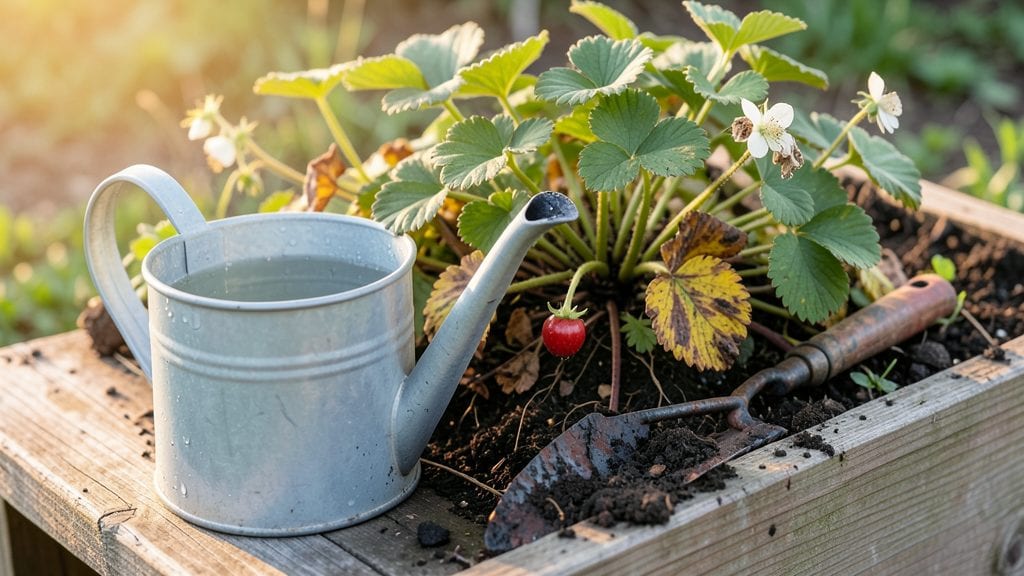
When your strawberry plants look more like a swamp than a garden, it's time to act. 🌱 Overwatering turns crisp green leaves into sad, yellow mush and invites mold that smothers roots before they can recover.
I’ve nursed back plants that looked hopeless—all it took was cutting back the water, loosening that soggy soil, and giving the roots room to breathe again.
The first step is easy: stop watering until the top 2 inches of soil feel dry to the touch. Strawberries hate soggy feet, and once you’ve drained the excess, focus on keeping the soil moist—not drenched.
A simple drip irrigation system or soaker hose gives you control, so you’re not guessing whether your plants are thirsty or drowning.
Within a week, you’ll see new growth pushing through the old damage. The leaves will perk up, the mold will fade, and those strawberry runners will start crawling again. The key is consistency—water deeply but infrequently, and always check the soil before reaching for the hose.
This works for container-grown strawberries too, just adjust the pot size and drainage holes. Once you’ve revived them, keep an eye out for signs of stress—wilting or discoloration means you’re either over- or underwatering. Your berries will thank you with a sweeter harvest next season.
📚 In This Guide
- What you need
- Instructions
- Tips and common mistakes
- Wrapping up and next steps
What you need
- ● Well-draining potting mix: 2–3 gallons (or enough to refresh 1–2 containers). Look for a blend labeled for berries or vegetables with perlite or sand for aeration.
- ○ Containers with drainage holes: 1–2 pots (10–12 inches deep) if repotting, or a tray for excess water if keeping in place. Optional: Elevate pots with feet to improve airflow.
- ● Garden trowel or small shovel: For gently loosening compacted soil.
- ● Perlite or vermiculite: 1 cup (mixes into soil to boost drainage).
- ● Spray bottle: For misting leaves if they’re wilting or yellowing.
- ● Pruning shears (sterilized): To trim mushy or diseased leaves.
- ○ Fungicide (optional): Copper-based or neem oil spray (1 tsp per quart of water) if you spot mold or gray mold (Botrytis).
- ● Patience: Reviving plants takes 1–2 weeks—avoid touching them daily!
- ● Sunny spot: Move pots to 6+ hours of indirect sunlight (direct sun helps dry soil faster).
- ● Water test: Stick your finger 1 inch into the soil—if it’s damp, wait before watering again.
Instructions for reviving overwatered strawberry plants
Here's how to bring your soggy strawberries back to life without losing the plants.
💧 Step 1: Stop Watering and Assess the Damage
Immediately halt all watering—this is the first and most critical move. Overwatered plants can't recover if you keep drowning them. Check the soil by pushing your finger 1-2 inches deep. If it feels cold, heavy, or smells musty, the roots are suffocating. Yellowing leaves and mushrooms at the soil line are red flags—these mean root rot has already set in.
Gently pull back the mulch if you've applied it, especially around the crown of the plant. Too much mulch traps moisture and worsens the problem. If the soil looks like wet clay, you're dealing with severe overwatering. Don't panic yet—strawberries are resilient, but they need air around their roots to recover.
✂️ Step 2: Prune Damaged Foliage and Improve Airflow
Use clean, sharp scissors to trim away any leaves that look mushy, black, or wilted beyond recovery. Focus on the outer edges of the plant first—these are often the most affected. You're not trying to drastically reduce the plant's size; just remove the parts that are actively rotting or preventing airflow. Healthy leaves should still be a vibrant green, not yellow or brown.
Space the remaining plants 12-18 inches apart if they're crowded. Overcrowding traps humidity and slows drying. If you're growing in containers, ensure they have drainage holes and elevate them slightly on pot feet or bricks to prevent water pooling. This step alone can make a huge difference in how quickly your plants bounce back.
☀️ Step 3: Adjust Watering and Light Exposure
Wait until the top 2-3 inches of soil feel dry before watering again—this could take 3-5 days, depending on your climate. When you do water, use a soaker hose or drip irrigation to deliver moisture directly to the roots without wetting the leaves. Water in the morning so any excess can evaporate during the day. Avoid overhead watering entirely until the plants show signs of recovery.
Move your strawberry plants to a spot with 6-8 hours of sunlight daily. If they were in shade before, they might need extra light to recover. A south-facing window or a grow light can help speed up the process. You'll see improvement in 5-7 days if the roots are still viable—look for new growth at the base of the plant and firmer leaves.
🪴 Step 4: Amend Soil and Fertilize Lightly (Optional)
If the soil is compacted or waterlogged, mix in 1-2 inches of compost around the base of the plant. This improves drainage and adds nutrients to help the roots recover. Avoid heavy fertilizers right now—they can burn stressed roots. Instead, use a balanced, water-soluble fertilizer at half strength once the plant shows signs of regrowth, like new leaves or runners.
For container-grown strawberries, consider repotting into fresh soil if the roots are severely waterlogged. Choose a pot with drainage holes and a mix designed for containers. This is a last resort, but sometimes necessary to save the plant. If you do repot, water lightly immediately after to help the roots adjust to their new environment.
Tips & tricks for reviving overwatered strawberry plants
Here's what I've learned from nursing soggy strawberry plants back to health—these simple tricks make all the difference.
Soil Test First: Before taking any action, do a quick soil check by pushing your finger 1-2 inches deep in Step 1. If the soil feels like wet clay or smells musty, that's your clear sign of root rot. I've seen gardeners waste time on other fixes when the real issue was simply too much moisture trapped in the soil. This simple test saves hours of guesswork.
Pruning Strategy: When trimming damaged leaves in Step 2, don't be afraid to be aggressive with the outer edges—these are often the most infected. I've found that removing 20-30% of the plant's foliage can actually speed up recovery by allowing better airflow. Just avoid cutting into healthy green tissue, as this can create new entry points for disease.
Drying Timeline: The 3-5 day drying period in Step 3 is non-negotiable for most climates. I've had success in humid areas by placing a small fan nearby to gently circulate air around the plants during this time. This can cut the recovery time by 1-2 days by preventing moisture buildup on leaves. Just be careful not to blast the plants directly with strong airflow.
Sunlight Secret: If your strawberries were previously in shade, don't rush them into full sun immediately. Gradually increase sunlight exposure over 3-4 days to avoid sunburn on recovering plants. I've seen dramatic improvements when moving plants to a south-facing window with morning sun first, then gradually adding afternoon sun as the leaves strengthen.
Pro Tips for Overwatered Strawberry Plants
- Here's what I've learned from nursing soggy strawberry plants back to health—these simple tricks make all the difference.
- Soil Test First: Before taking any action, do a quick soil check by pushing your finger 1-2 inches deep in Step 1.
- Pruning Strategy: When trimming damaged leaves in Step 2, don't be afraid to be aggressive with the outer edges—these are often the most infected.
Frequently asked questions
Got questions about saving your soggy strawberries? You’re not alone! Here are some of the most common concerns—and quick fixes—to get your plants back on track.
How do I know if my strawberry plant is overwatered vs. underwatered?
Check the soil first! Overwatered plants have soggy, mushy roots and yellowing leaves, while underwatered ones feel dry and crispy. Gently tug on a leaf—if it snaps easily, it’s thirsty. If it pulls out with resistance, you’ve likely drowned the roots.
How long does it take for overwatered strawberry plants to recover?
With proper care, recovery can take 3–7 days for mild cases. Severely waterlogged roots may need 2–4 weeks to bounce back. Focus on reducing water, improving drainage, and avoiding stress (like fertilizing) until the soil dries slightly. Patience is key!
Can I save strawberries from overwatered plants if they’re already wilting?
Yes! Trim mushy, blackened leaves to redirect energy to healthy growth. If the fruit is still firm and green, it may recover. For soft berries, harvest them ASAP—they won’t improve. Boost airflow by spacing plants wider and use mulch (straw or pine needles) to prevent future rot.
How often should I water strawberry plants after fixing overwatering?
Water deeply 1–2 times per week (or when the top 1–2 inches of soil feel dry). Use the “finger test”: Stick your finger in the soil—if it’s damp but not wet, you’re golden. Drip irrigation or soaker hoses work best to avoid soggy patches.
What’s a natural way to dry out overwatered soil fast?
Try the “sand trick”: Mix coarse sand (like horticultural sand) into the top 2–3 inches of soil to improve drainage. For pots, lift them and place under a shade cloth to dry evenly. Avoid direct sun—it can stress plants further. Pro tip: Skip watering for 3–5 days to let roots recover.
Wrapping up and next steps
Don’t let overwatered strawberry plants dampen your gardening spirits—your berries are totally salvageable! 🌱 With the right adjustments (like improving drainage, trimming damaged leaves, or adjusting watering habits), your plants can bounce back stronger than ever. Remember, consistency is key, so stay patient and monitor their progress.
Ready to give your strawberries a second chance? Start with one fix today—whether it’s aerating the soil or adjusting your watering schedule—and watch your plants thrive! 💧✨