
Diseases
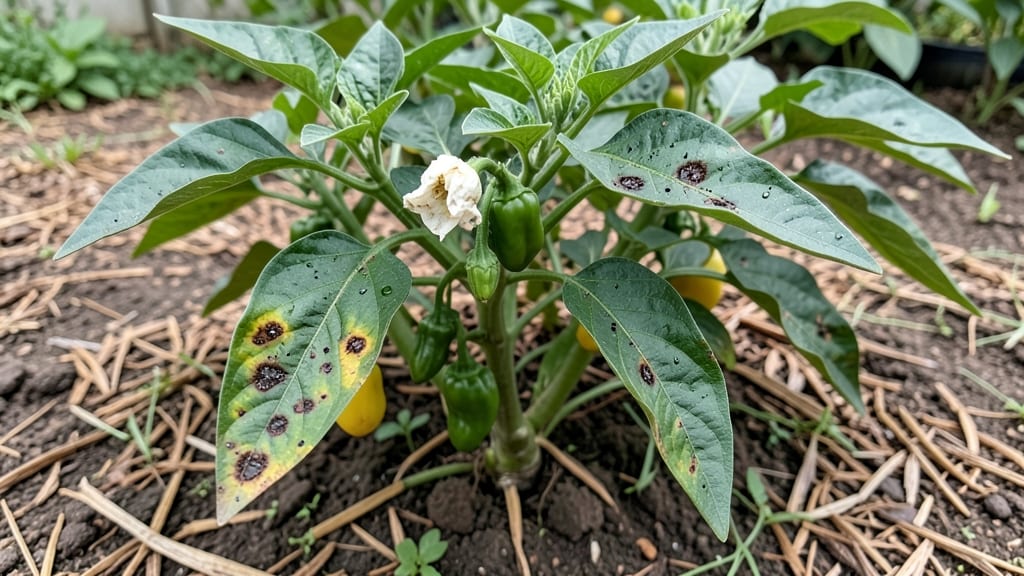
Pepper plant diseases can turn a thriving garden into a sad, spotted mess if you don't catch them early. 🌱 I've lost entire harvests to bacterial spot and powdery mildew, but now I spot these seven foes before they spread—and you can too.
The key is learning the warning signs fast, because once a disease takes hold, it's a battle to save the plant.
Most pepper diseases start with tiny marks you might miss: yellow spots, white powder, or wilting leaves. Humidity, poor airflow, and wet foliage create the perfect storm for trouble. My biggest lesson?
Prevention beats cure—clean tools, proper spacing, and good airflow keep 90% of problems away. But when they do show up, knowing the right move saves your peppers.
You'll learn to recognize each disease by its unique symptoms—like the greasy black spots of bacterial spot or the fuzzy white coating of powdery mildew. Organic sprays, copper treatments, and proper pruning can turn things around before your plants give up.
The goal isn't just to treat the problem; it's to protect next season's harvest from the start.
Whether you're dealing with a greenhouse full of peppers or just a few plants on your patio, these strategies work. The sooner you act, the better your chances of keeping those peppers productive and healthy all season long. Let's get those plants fighting fit!
Root Causes Of Pepper Plant Ailments
Pepper plants, like any living organism, are vulnerable to diseases when their balance is disrupted. Understanding why these issues arise is the first step in prevention and treatment.
Below, we break down the key factors that create the perfect storm for pepper plant diseases—so you can nip them in the bud before they take hold.
Peppers thrive in warm, stable conditions, but extremes—whether too hot, too cold, or excessively humid—can weaken their defenses. Here’s how climate missteps invite trouble:
- Cold Stress: Temperatures below 50°F (10°C) slow metabolism, making plants sluggish and susceptible to bacterial leaf spot or damping-off. Cold nights + wet foliage = fungal feast.
- Heat Stress: While peppers love heat, consistent temps above 95°F (35°C) can scorch leaves, creating entry points for pathogens. Overhead watering in heat also prolongs leaf wetness—fungi’s favorite condition.
- High Humidity: Stagnant air (especially in greenhouses or crowded gardens) traps moisture on leaves. Fungi like Phytophthora (which causes root rot) and Alternaria (leaf spot) flourish in humidity levels above 80%.
💡 Pro Tip: Use a hygrometer to monitor humidity. Aim for 40–60% during the day and 60–70% at night. Improve airflow with fan circulation or spaced planting.
Peppers hate "wet feet." Excess moisture—whether from overwatering, compacted soil, or lack of drainage—creates anaerobic conditions where root rot and fungal infections thrive. Here’s the breakdown:
| Issue | How It Harms Peppers | Diseases It Triggers |
|---|---|---|
| Overwatering | Oxygen is displaced in soil, suffocating roots and weakening the plant’s immune response. | Phytophthora blight, Pythium root rot |
| Compacted Soil | Prevents water drainage, leading to waterlogged roots and stunted growth. | Fusarium wilt, Verticillium wilt |
| Clogged Drainage Holes | Traps excess water at the root zone, creating a breeding ground for pathogens. | Bacterial soft rot, Rhizoctonia damping-off |
💡 Pro Tip: Always use well-draining soil mixes (e.g., 60% potting soil + 30% perlite + 10% compost). Water deeply but infrequently—aim for 1 inch (2.5 cm) per week, adjusting for rain.
Diseases don’t appear out of nowhere—they’re often carried in by spores, bacteria, or contaminated tools. Here’s how pathogens invade:
- Wind & Rain: Fungal spores (like Alternaria or Powdery Mildew) hitch rides on wind or rain splashes, landing on leaves and germinating in damp conditions.
- Contaminated Tools/Garden Soil: Pruners, gloves, or reused potting mix can harbor Xanthomonas (bacterial leaf spot) or Sclerotinia (white mold).
- Infected Plant Debris: Leaving old pepper stalks or mulch in the garden overwinters pathogens, ready to reinfect next season.
- Pests as Vectors: Aphids and thrips don’t just eat leaves—they spread viral diseases like Tobacco Mosaic Virus (TMV) from plant to plant.
💡 Pro Tip: Sterilize tools with 70% isopropyl alcohol between uses. Rotate crops yearly to break disease cycles, and remove infected plants immediately (bag and compost them away from the garden).
Peppers need a balanced diet of nitrogen (N), phosphorus (P), and potassium (K), plus micronutrients like calcium and magnesium. When they’re malnourished or stressed, their defenses crumble:
- Nitrogen Deficiency: Yellowing leaves (chlorosis) weaken the plant’s ability to repel pathogens, making it vulnerable to foliar diseases.
- Calcium Deficiency: Leads to blossom end rot (a bacterial/fungal entry point) and weak cell walls, making peppers prone to soft rot.
- Over-Fertilization: Too much salt (from synthetic fertilizers) burns roots, stressing the plant and inviting root rot.
- Transplant Shock: Sudden changes in soil or climate after repotting can stunt growth, leaving peppers susceptible to damping-off in seedlings.
💡 Pro Tip: Use a balanced fertilizer (10-10-10 or 5-5-5) and soil tests to check pH (peppers prefer 6.0–6.8). For calcium, crush eggshells into soil or use calcium nitrate.
Pests don’t just eat peppers—they create wounds that let diseases in. Common culprits include:
- Aphids & Whiteflies: Their honeydew secretions foster sooty mold, a fungal growth that blocks sunlight and stresses the plant.
- Cucumber Beetles: Chew leaves, creating entry points for bacterial wilt and viral infections.
- Spider Mites: Weakened plants from sap-sucking become prime targets for Powdery Mildew.
- Cutworms: Sever stems at the base, leading to secondary infections like Rhizoctonia.
💡 Pro Tip: Monitor plants weekly for pests. Use neem oil or insecticidal soap for prevention, and remove damaged leaves promptly to limit spread.
Quick Fixes for Pepper Plant Troubles
Now that you know the signs and causes, let’s tackle these pepper plant diseases head-on with practical, step-by-step solutions. Early action is key—don’t wait until the damage spreads! Below, we’ve mapped each issue to its fix, plus prevention tips to keep your peppers thriving.
Cause: Overcrowding, poor airflow, or wet foliage. Fix:
- 🔥 Prune & Space Plants – Thin out overgrown plants to improve airflow. Aim for 12–18 inches between plants.
- 🍳 Homemade Fungicide Spray – Mix 1 tsp baking soda + 1 tbsp vegetable oil + 1 quart water + a drop of dish soap. Spray under leaves every 7–10 days.
- 🌡️ Water at the Base – Avoid wetting leaves. Use drip irrigation or water early in the day for quick drying.
- ✨ Prevent Fungus Return – Apply copper fungicide (organic option) every 2 weeks as a precaution.
Cause: Weak plants, dusty leaves, or nearby weeds. Fix:
- 👨🍳 Blast Off Pests – Spray plants with soapy water (1 tsp mild soap per quart of water) twice daily for 3–5 days.
- 🥘 Introduce Beneficial Bugs – Release ladybugs or lacewings (available at garden centers) to eat pests naturally.
- 🔪 Neem Oil Barrier – Mix 1 tbsp neem oil + 1 tsp mild soap in 1 quart water. Spray every 5 days to repel and suffocate pests.
- 🎯 Prevent Future Infestations – Yellow sticky traps catch whiteflies. Remove weeds and clean up debris to deny pests hiding spots.
Cause: Contaminated tools, infected plants, or heavy rain. Fix:
- 🔪 Remove & Destroy Infected Parts – Cut off diseased leaves/stems with sterilized pruners (wipe with rubbing alcohol between cuts).
- 🌡️ Copper Spray Treatment – Use copper fungicide (like Copper Soap) every 10 days to slow bacterial spread.
- 💡 Prevention is Critical – Rotate crops (don’t plant peppers in the same spot yearly). Sterilize tools after each use.
- ❄️ Avoid Overwatering – Keep soil evenly moist but not soggy. Drainage is non-negotiable—raise beds if needed.
Cause: Overwatering, poor drainage, or fungal soil buildup. Fix:
- 💦 Adjust Watering Habits – Let top 1–2 inches of soil dry between waterings. Use a moisture meter if unsure.
- 🔪 Repot or Refresh Soil – If roots are mushy, trim blackened roots and repot in fresh, sterile potting mix with perlite or sand for drainage.
- 🌡️ Solarize the Soil (Advanced) – Cover infected soil with clear plastic for 4–6 weeks in hot sun to kill fungi.
- 🎯 Prevent Future Rot – Raise beds or use containers with drainage holes. Avoid mulch near stems to keep roots dry.
Cause: Infected plants or sap-sucking insects (aphids). Fix:
- 🔪 Remove & Dispose of Infected Plants – Burn or trash (don’t compost) plants showing yellowing or curling—viruses cannot be cured.
- 👨🍳 Quarantine New Plants – Inspect every new plant for symptoms before adding to your garden.
- 🔪 Control Insect Vectors – Use neem oil or insecticidal soap to eliminate aphids before they spread viruses.
- 💡 Prevention Tip – Rotate crops and keep weeds down to reduce virus hosts.
- 🌡️ Boost Plant Health – Feed with balanced fertilizer (like 10-10-10) every 4–6 weeks to strengthen defenses.
- 💡 Monitor & Act Fast – Check plants weekly for early signs. The sooner you act, the better!
- 🌱 Companion Planting – Grow marigolds, basil, or onions nearby to repel pests and improve airflow.
Remember: Some diseases (like viruses) are untreatable, but prevention keeps your pepper patch strong. Stay vigilant, act fast, and your peppers will reward you with a bountiful harvest! 🌶️💪
Frequently asked questions
What are the first signs of pepper plant diseases I should watch for?
Look for tiny yellow spots on leaves, white powdery coatings, or sudden wilting. Dark greasy spots (like bacterial spot) or fuzzy growth (powdery mildew) appear early. Check undersides of leaves too—many diseases start there before spreading.
Can I save a pepper plant already showing disease symptoms?
It depends! For fungal/bacterial issues like powdery mildew, prune infected leaves and apply copper fungicide. Viral diseases (curled leaves, yellowing) are untreatable—remove the plant immediately to prevent spread. Act fast with bacterial spot by cutting out spots and sterilizing tools.
How often should I spray my pepper plants as prevention?
Every 7-10 days during peak growing season (spring-fall) with a homemade spray (baking soda + oil) or neem oil. For high-risk areas, use copper fungicide every 2 weeks. Prevention is easier than treating established infections.
Will removing infected leaves stop the disease from spreading?
Partially—it slows spread but won't cure established infections. Always sterilize pruners with rubbing alcohol between cuts. Remove leaves early (when spots are small) for best results. For bacterial spot, isolate infected plants immediately to contain the outbreak.
Are some pepper varieties more disease-resistant than others?
Yes! Look for hybrid varieties like 'Aristotle' (resistant to bacterial spot) or 'Carolina Wonder' (tolerates powdery mildew). Heirloom varieties are often more susceptible. Check seed packets for disease resistance ratings before planting.