
Pruning
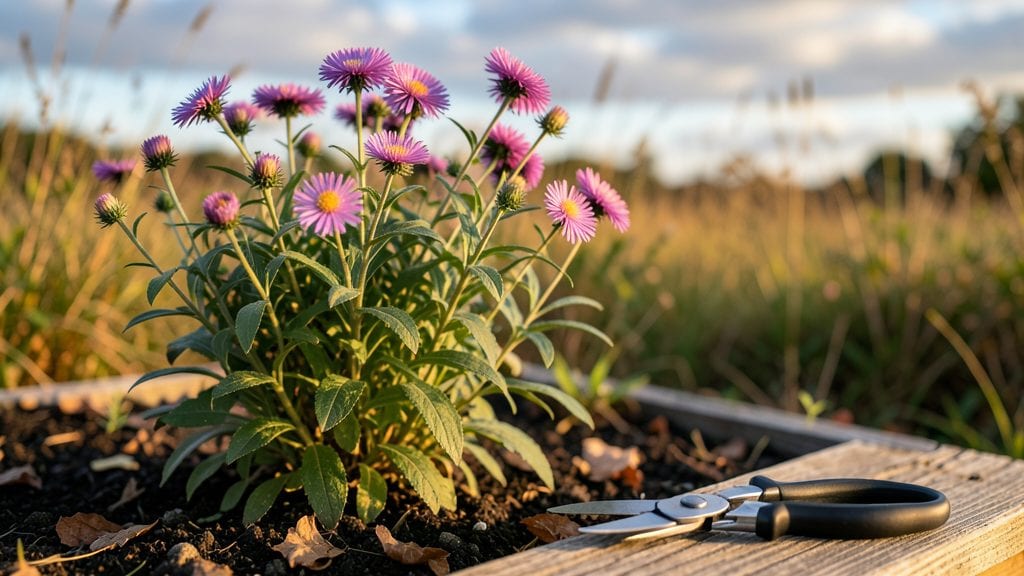
Pruning asters plants transforms a single flush of blooms into a nonstop summer show—I’ve gone from admiring my neighbor’s flowerbeds to having my own purple-and-pink asters lasting from July to frost.
The secret isn’t complicated: it’s all about timing, technique, and a little regular maintenance that keeps plants focused on flowers instead of seeds.
You’ll need just three things: sharp pruners (clean blades prevent disease), a sunny morning for trimming (less stress on the plant), and about 20 minutes every two weeks during peak bloom.
The key move is deadheading—snipping off spent blooms just above the next set of leaves—while leaving the lower stems intact to support new growth. This simple habit tricks asters into thinking they’re still in full bloom season, so they keep producing.
After pruning, you’ll notice something magical: within 7-10 days, fresh buds appear where there were none before. The plants stay bushier, flowers last longer, and you avoid the sad sight of leggy stems with just a few blooms clinging on.
Even better, asters become more disease-resistant because you’re removing old flowers that could harbor fungal spores.
This method works for all aster varieties—New England asters, calico asters, and even the taller varieties—whether you’re growing them in garden beds or containers. The only rule? Start early and stay consistent. Your neighbors won’t know what hit them when your asters keep blooming while theirs fade away.
📚 In This Guide
- What you need
- Instructions
- Tips and common mistakes
- Wrapping up and next steps
What you need
- ● Pruning shears or bypass pruners – Sharp, clean, and sterilized (avoid dull tools that crush stems).
- ○ Garden gloves – Durable, cut-resistant (optional but recommended for thorny varieties like Symphyotrichum).
- ● Disinfectant (70% isopropyl alcohol or bleach solution) – 1 part bleach to 9 parts water (for sterilizing tools between cuts).
- ○ Garden twine or plant ties – For securing sprawling stems if needed (optional but helpful for leggy asters).
- ● Garden waste bag or bucket – For collecting pruned stems and debris.
- ● Hand pruners or loppers – For thicker stems (if your asters are mature or woody).
- ● Knee pads or a small stool – For comfort if your garden is large or low to the ground.
- ● Compost bin or mulch – To repurpose pruned stems as nutrient-rich compost.
- ● Plant food or fertilizer – Balanced 10-10-10 or bloom booster (apply after pruning for a post-bloom boost).
Step-by-Step instructions for pruning asters plants
Here’s how I keep my asters flowering abundantly all season—no guesswork, just proven techniques.
Identify When and What to Prune
Start pruning once your asters finish blooming and the flowers begin to fade. Look for spent blooms with brown centers—they’re ready to go. I always prune in the morning when the plants are dry, so I can see what I’m cutting more clearly. This timing ensures you don’t accidentally trim fresh buds that are still developing.
Use clean, sharp pruners or shears to make precise cuts. Avoid tearing the stems, as this can damage the plant and invite disease. If you’re unsure whether a bloom is spent, give it a gentle tug—if it pulls away easily, it’s ready for removal.
Deadhead Spent Blooms Correctly
Cut the stem just above the first set of healthy leaves or buds below the faded bloom. This encourages new growth and prevents the plant from wasting energy on seed production. I like to make my cuts at a 45-degree angle about ¼ inch above the leaf node—this helps water run off the cut and reduces the risk of rot.
Don’t cut too close to the base of the plant, or you might remove potential new blooms. If your asters are particularly bushy, work in sections to avoid overwhelming yourself. A little patience here pays off with more flowers later in the season.
Thin Overcrowded Stems for Better Airflow
After deadheading, inspect the plant for stems that are growing too close together or crossing over. Overcrowding can lead to weak growth and increased humidity, which attracts pests and diseases. Use your pruners to trim back any stems that are rubbing against others or growing in awkward directions.
Focus on removing about one-third of the oldest or weakest stems first. This opens up the plant and allows light and air to reach the center. You’ll notice the remaining stems perking up almost immediately—they’ll grow stronger and produce more blooms.
Fertilize and Water After Pruning
Once you’ve finished pruning, give your asters a light feeding with a balanced, water-soluble fertilizer (like a 10-10-10 mix) to encourage new growth. Water the plant deeply right after fertilizing to help it absorb the nutrients. I water until the soil is moist 3-4 inches down, which usually takes about 10-15 minutes for a mature aster plant.
After pruning, keep an eye on the soil moisture. Asters prefer well-draining soil and don’t like to sit in soggy conditions, but they also need consistent moisture to recover. Water every 2-3 days until new growth appears, then taper off to once a week once the plant stabilizes.
Monitor for New Growth and Repeat as Needed
Within 7-10 days, you should see new buds forming at the base of the plant. This is your signal that the pruning worked! Keep an eye out for these fresh growth points—they’re where your next round of blooms will come from.
Repeat the deadheading process every 2-3 weeks throughout the growing season. The key is consistency—regular pruning keeps your asters looking tidy and encourages continuous flowering. If you notice any yellowing leaves or wilting, it might be a sign of overwatering or disease, so adjust your care routine accordingly.
Tips & tricks for pruning asters plants
Here's what I've learned after years of keeping my asters blooming beautifully—these tricks will help you avoid common mistakes and get the most out of your pruning efforts.
Timing is Everything: The best time to prune is indeed in the morning when plants are dry, but I've found that late morning or early afternoon works too, as long as you're done at least 2-3 hours before sunset. This gives the cuts time to dry slightly before evening moisture sets in, reducing the risk of fungal issues. I've noticed my asters recover faster when pruned during these windows.
Precision Cuts Matter: When making those 45-degree cuts just above the leaf node as mentioned in Step 2, I've learned to focus on the angle and placement. The slight upward angle helps direct water away from the cut, but I've also found that making the cut slightly to the side of the leaf node (rather than directly above) gives the plant a better chance to regenerate new growth from that spot. It's a small detail, but it makes a difference in how quickly your plant recovers.
Consistency is Key: The 2-3 week interval for deadheading is perfect, but I've noticed that in particularly hot climates, you might need to prune every 3 weeks instead. Pay attention to how quickly your asters produce new blooms—this is your guide. If you see buds forming faster than 2-3 weeks, you can safely extend the interval slightly. The goal is to keep the plant producing without overwhelming it.
Post-Pruning Care: After the deep watering for 10-15 minutes mentioned in Step 4, I've developed a habit of giving my asters a light mulch around the base. This helps retain moisture in the soil and regulates temperature around the roots. I use a thin layer (about 1-2 inches) of organic mulch like straw or shredded leaves, keeping it a few inches away from the plant stem to prevent rot.
Pro Tips for Pruning Asters Plants
- Here's what I've learned after years of keeping my asters blooming beautifully—these tricks will help you avoid common mistakes and get the most out of your pruning efforts.
- Timing is Everything: The best time to prune is indeed in the morning when plants are dry, but I've found that late morning or early afternoon works too, as long as you're done at least 2-3 hours before sunset.
- Precision Cuts Matter: When making those 45-degree cuts just above the leaf node as mentioned in Step 2, I've learned to focus on the angle and placement.
Frequently asked questions
Got questions about keeping your asters blooming all season? Here are some common ones—and their answers—to help you prune like a pro!
When is the best time to prune asters for more flowers?
Prune asters after they bloom to encourage a second flush of flowers. For most varieties, this means trimming back spent blooms in late summer or early fall. Avoid pruning too late, as asters need time to regrow before frost hits. Pro tip: If your asters are still blooming in fall, wait until half the flowers have faded before cutting back.
How much should I cut back asters when deadheading?
When deadheading, snip spent blooms just above a set of healthy leaves or buds (about ¼ inch above). For a heavier prune, cut back one-third of the plant’s height to promote bushier growth. Avoid over-pruning—leave enough foliage to support photosynthesis!
Can I prune asters too late in the season?
Yes! Pruning asters too late in fall (when temps drop below 50°F) can stunt regrowth or leave them vulnerable to frost damage. If you miss the window, focus on cleaning up debris in winter to prevent disease. Some gardeners skip fall pruning entirely and wait until spring for a fresh start.
What if my asters don’t rebloom after pruning?
Several factors could be at play: over-pruning, poor soil nutrients, or lack of sunlight. Check for yellowing leaves (a sign of nitrogen deficiency) and ensure they get 6+ hours of sun daily. If needed, feed with a balanced fertilizer (10-10-10) after pruning.
Do I need special tools to prune asters?
Not necessarily! A sharp pair of bypass pruners or clean scissors works great for deadheading. For heavier pruning, use hand pruners or loppers. Disinfect tools with rubbing alcohol between cuts to prevent spreading disease. Avoid dull tools—they crush stems, slowing recovery.
| Quick Fix | Problem |
|---|---|
| Trim at a 45° angle above a leaf node. | Stems look messy after pruning. |
| Water deeply after pruning. | Plants wilt or struggle to recover. |
| Remove only faded blooms—skip heavy cuts. | Asters stop blooming entirely. |
Wrapping up and next steps
Pruning asters doesn’t have to be intimidating—it’s all about timing, technique, and a little patience! 🌸 By mastering deadheading and strategic cuts, you’ll keep your plants thriving and blooming well into fall.
Whether you’re a seasoned gardener or just starting out, these tricks will help you extend the beauty of your garden with minimal effort.
Now that you’re armed with the know-how, grab those shears and get pruning! 🌿 Start with just one section of your aster bed, and soon you’ll see the difference in vibrant, long-lasting blooms. Happy gardening!