
Pruning
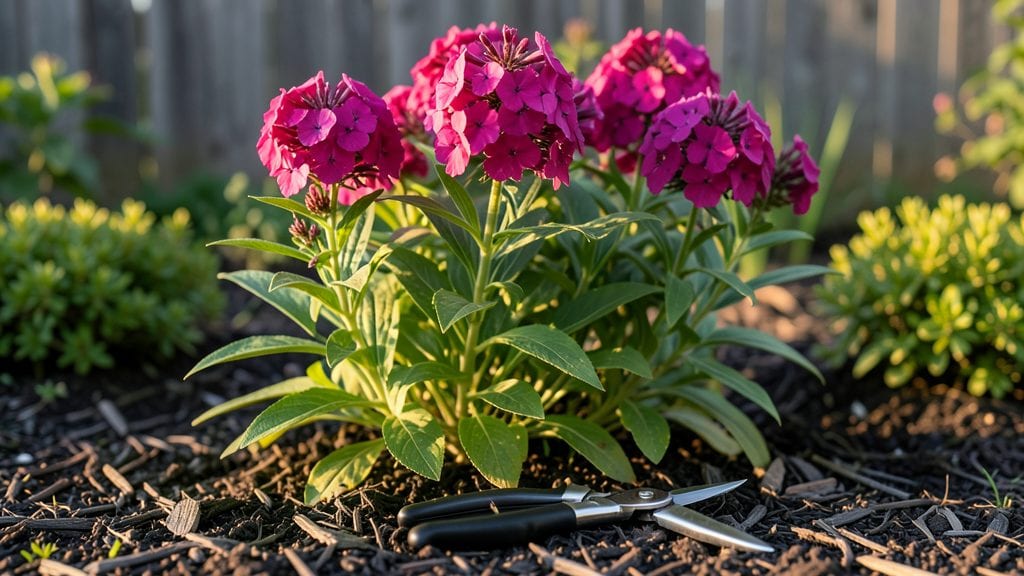
Pruning phlox plants isn't just about tidying up—it’s the secret to nonstop summer color that keeps your garden looking fresh until frost. 🌸 I used to cut everything back at once, only to end up with sparse blooms by August.
Now I time it just right, and my phlox bushes explode with flowers for weeks longer than before.
The key is knowing when to prune: garden phlox gets its first haircut in late spring after the first flush of blooms, while woodland phlox (the shorter varieties) only needs a light tidy-up.
You’ll need sharp bypass pruners and a bucket for clippings—no fancy tools, just the right technique. The goal is to remove spent blooms while encouraging new growth from the base.
After pruning, your phlox will bounce back with bold, healthy new shoots within days. The plants stay compact, resist flopping, and produce even more flowers than before. Just avoid cutting into old wood—focus on the top third of stems where fresh growth emerges.
For garden phlox, a second light trim in mid-summer keeps things looking neat.
This method works for both garden phlox (the tall, showy types) and woodland phlox (the smaller, woodland-edge varieties). The only rule? Don’t wait until the flowers are completely gone—prune when about half the blooms have faded. That’s when the magic happens.
📚 In This Guide
- What you need
- Instructions
- Tips and common mistakes
- Wrapping up and next steps
What you need
- ● Bypass pruners: A sharp, clean pair (avoid anvil pruners—they crush stems). Look for ergonomic, stainless-steel models (e.g., Felco or Fiskars) to prevent hand fatigue.
- ○ Hand pruners (optional): For smaller stems or tight spots where larger pruners won’t fit. Choose 5-inch blades for precision.
- ● Garden gloves: Nitrile-coated or heavy-duty leather (size medium or large) to protect against thorns and dirt.
- ● Disinfectant (70% isopropyl alcohol or bleach solution): 1 part bleach to 9 parts water to sterilize tools between cuts and prevent disease spread.
- ○ Garden shears (optional): For bulk pruning of overgrown foliage (e.g., Corona or Razor-Back shears).
- ● Dry, calm weather: Prune on a sunny morning after dew has evaporated to reduce stress on plants.
- ● Clear workspace: Remove weeds, debris, and old mulch within a 2-foot radius of your phlox.
- ○ Watering can (optional): A 1-gallon capacity with a gentle spray nozzle to hydrate plants post-pruning.
Instructions for pruning phlox plants
Here's the simple method I use to keep phlox blooming all summer long.
✂️ Step 1: Time Your First Cut Properly
Wait until your phlox has finished its first major flush of blooms—usually in early summer. You'll know it's time when about 80% of the flowers have faded and dropped their petals naturally. This signals the plant to put energy into new growth rather than seed production.
Grab your clean, sharp pruners and make your first cut just above a set of healthy leaves or buds. I always aim for a 45-degree angle to prevent water from pooling on the stem, which could cause rot. Avoid cutting into woody stems—focus only on the leggy, spent flower stalks.
🌿 Step 2: Deadhead Regularly for Continuous Blooms
After the first pruning, deadhead spent blooms weekly to encourage more flowers. Simply pinch or snip off the faded flower clusters just above the next set of leaves. The key is consistency—if you skip a week, you'll notice fewer new buds forming.
I like to do this on a sunny morning when the plants are dry. Wet stems can tear, and you'll get a cleaner cut. Watch for new buds forming at the base of the plant—these are your signal that the pruning is working. If you see mostly bare stems, it's time for another light trim.
✂️ Step 3: Lightly Shape in Late Summer
Around mid-to-late summer, give your phlox a light shaping trim to remove any woody or leggy growth. Cut back about one-third of the plant's height, focusing on the oldest stems first. This encourages fresh, vibrant growth and prevents the plant from becoming top-heavy.
Use your pruners to make clean cuts just above a leaf node or bud. Avoid shearing the entire plant—this can stress it and reduce future blooms. If you're unsure, just snip off the oldest stems first and leave the newer growth for later. You can always do more pruning next year.
🌱 Step 4: Prepare for Next Season
In early fall, after the first frost has blackened the foliage, cut back the entire plant to about 2-3 inches above the ground. This helps prevent disease and pests from overwintering in the plant debris. Use your pruners to make clean cuts rather than tearing the stems.
Leave the cut stems in place—they'll provide some winter protection for the crown. In spring, you'll notice fresh, new growth emerging from the base. Avoid pruning in late fall or winter, as this can stimulate early growth that might be damaged by late frosts.
Tips & tricks for perfect pruning phlox plants
Here's what nobody tells you about keeping your phlox blooming like crazy all season long.
The Timing Secret: That first cut in Step 1 is everything—don't rush it! Wait until you see those faded petals naturally dropping (about 80% of them). I've learned the hard way that cutting too early sends the plant into seed production mode, and you'll get fewer blooms. Trust me, patience pays off with bigger, more vibrant flowers later.
Tool Technique: Your pruners are your best friend, but only if they're sharp and clean. Dull blades crush stems instead of cutting cleanly, which can damage the plant. I like to wipe my pruners with rubbing alcohol between cuts to prevent spreading any potential diseases. And remember that 45-degree angle? It's not just for looks—it helps water run off and keeps rot at bay.
Weekly Deadheading: The weekly deadheading in Step 2 is non-negotiable for continuous blooms. I set a reminder on my phone because I've missed weeks before and noticed a dramatic drop in new buds. When you see those new buds forming at the base, that's your reward for staying consistent. Pro tip: Do this on a sunny morning when the plants are dry—wet stems tear easily and leave ragged cuts.
Late Summer Strategy: When you're shaping in mid-to-late summer (Step 3), focus on the oldest stems first. These are usually the leggy ones that have already put out their flowers. Cutting them back encourages the plant to put energy into newer growth. I always leave the newer, more vigorous stems for later—you can always do more pruning next year if needed. Think of it like giving your phlox a haircut that works with its natural growth pattern.
Pro Tips for Pruning Phlox Plants
- Here's what nobody tells you about keeping your phlox blooming like crazy all season long.
- The Timing Secret: That first cut in Step 1 is everything—don't rush it!
- Tool Technique: Your pruners are your best friend, but only if they're sharp and clean.
Frequently asked questions
Got questions about pruning phlox?
Here are the most common ones—and their answers—to help you keep your garden blooming beautifully all season!
When is the best time to prune phlox?
Prune phlox after the first wave of blooms (late spring to early summer) to encourage a second flush of flowers. For garden phlox, cut back one-third of the stems right after flowering. Perennial phlox can be trimmed back to 6 inches in early spring or after blooming, depending on your climate.
How much should I cut back phlox?
For garden phlox, trim one-third of the stems after the first bloom cycle. For perennial phlox, you can be bolder—cut back halfway to the ground in early spring or after flowering. Avoid over-pruning; leave enough foliage to support new growth.
What if I prune too late in the season?
If you prune phlox too late (after early fall), you risk damaging next year’s blooms since phlox sets buds on old wood. Late pruning can also leave plants vulnerable to frost. Aim to finish pruning by mid-to-late summer for best results.
Can I prune phlox in the fall?
Light cleanup is fine in fall, but avoid heavy pruning. Remove dead or diseased stems and trim back any leggy growth. Wait until spring for major pruning to avoid stressing the plant before winter.
What if my phlox isn’t blooming after pruning?
Check these fixes:
- Sunlight: Phlox needs 6+ hours of sun daily.
- Soil: Ensure well-draining, fertile soil (amend with compost if needed).
- Watering: Keep soil consistently moist but not soggy.
- Fertilizer: Apply a balanced bloom booster in early spring.
Wrapping up and next steps
Pruning your phlox plants is a simple yet powerful way to keep them blooming beautifully all summer long! 🌸 By deadheading spent flowers and giving them a light trim, you’ll encourage lush, vibrant growth and prevent leggy stems.
With just a little effort, your garden will stay a stunning showstopper—so grab those shears and enjoy the process!
Ready to see the difference? Start with one cluster of phlox today and watch your garden transform into a nonstop burst of color. Happy pruning!