
Planting
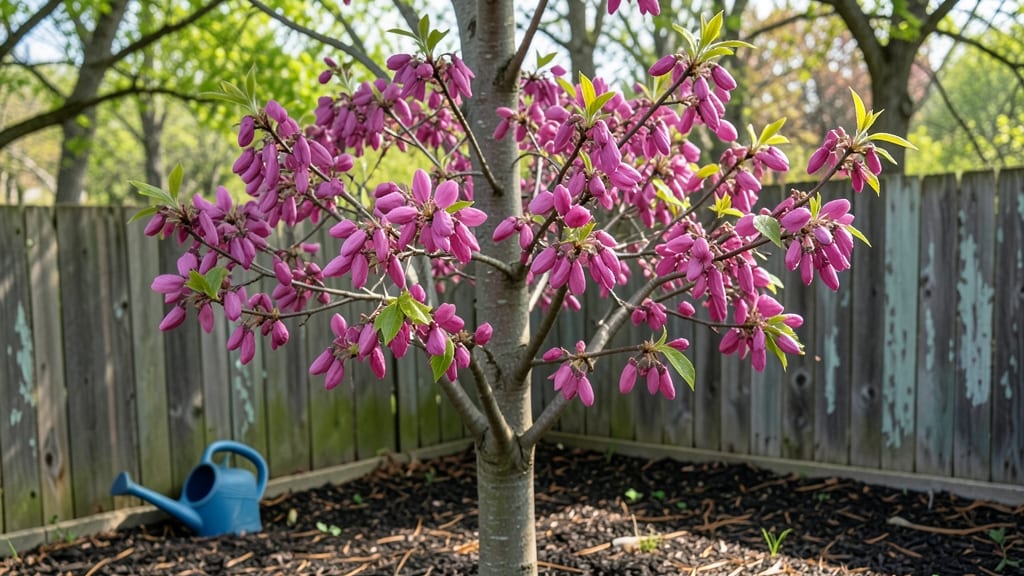
Purple leaf plum trees and other purple plant trees bring drama to any yard with their deep, jewel-toned foliage that never fades. 🌿 I planted mine last spring, and now my front yard looks like a living painting—even in winter when most plants go dormant.
The key is choosing varieties that thrive in your climate while pairing them with complementary textures like silvery eucalyptus or crisp white flowers.
These drought-tolerant trees need surprisingly little maintenance once established. A purple Japanese maple or Jacaranda adds vertical interest, while smaller purple-leaf shrubs like lilacs create layered color. I’ve found that mulching around the base and watering deeply once a week keeps them lush without extra fuss.
The real magic happens when you mix purple with silver or white—it makes the colors pop against the sky.
Your garden will feel like a secret sanctuary with these deep hues anchoring every season. Purple foliage contrasts beautifully with spring blooms, summer greens, and autumn golds, while the trees themselves provide shade and structure.
Even in winter, their bark and branches add architectural interest. The best part? These plants attract pollinators and keep your yard looking refined with almost no effort.
Whether you’re planting a single statement tree or creating a purple-themed border, start small and expand as you see what works. My favorite combo is a purple leaf plum with white hydrangeas—it’s simple, striking, and foolproof. Let’s bring that drama to your space!
📚 In This Guide
- What you need
- Instructions
- Tips and common mistakes
- Wrapping up and next steps
What you need
- ● Purple plant tree sapling: 1 (3–5 gallon container, 2–3 feet tall for best establishment). Choose a healthy, well-rooted specimen from a nursery.
- ● Well-draining soil: 5–10 cubic feet (or amend existing soil with compost or organic matter to improve drainage). Aim for a pH of 6.0–7.0.
- ● Mulch: 2–3 inches of wood chips, pine straw, or shredded bark (organic, dye-free preferred).
- ● Watering can or hose: With a gentle spray nozzle for even moisture distribution.
- ○ Fertilizer (optional but recommended): Slow-release granular fertilizer: 1–2 cups (e.g., 10-10-10 NPK or orgánico blend). Apply in early spring.
- ● Liquid seaweed extract: 1–2 tbsp (for root boost during transplanting).
- ● Garden trowel or spade: For digging the planting hole (depth/width twice the root ball).
- ● Gloves: Heavy-duty gardening gloves (to protect from thorns or rough bark).
- ● Pruning shears: Bypass pruners (for shaping and maintenance).
- ○ Staking (optional): 1–2 bamboo stakes + soft ties if planting in windy areas.
- ● Drought-resistant location: Full sun (6+ hours/day) and well-draining soil are non-negotiable for these tough beauties!
- ● 🌡️ Timing matters: Plant in early spring or fall to avoid extreme heat/cold stress.
- ● ✨ Soil test kit: Grab one ($10–$20) to check pH/drainage before planting—purple plant trees hate soggy roots!
- ● 🎯 Watering hack: Deep water 2–3 times/week for the first month, then taper to once/week (or when soil is dry 2" down).
How to plant and care for a stunning purple plant tree
This drought-tolerant beauty thrives with minimal fuss—here's how to plant and nurture it for year-round purple splendor.
🌱 Step 1: Choose the Perfect Location for Sun and Drainage
Select a spot with full sun exposure (6+ hours daily)—this tree loves basking. Purple plant trees despise soggy roots, so avoid low-lying areas where water pools. I always check the site first by digging a 6-inch deep hole to verify drainage; if water doesn't drain within 15 minutes, amend the soil with 2 inches of coarse sand or gravel.
Here's the thing—these trees grow 10-15 feet tall at maturity, so give it plenty of space. Measure 8-10 feet in all directions from nearby structures or other plants. The purple hues deepen in intense sunlight, so don't skimp on exposure. If your yard only offers partial shade, expect less vibrant foliage.
🪴 Step 2: Prepare the Soil for Optimal Growth
Purple plant trees thrive in well-draining, slightly alkaline soil with a pH between 7.0-8.0. Test your soil's pH using a simple kit—if it's too acidic, mix in 1 cup of crushed limestone per square foot and work it into the top 12 inches of soil. These trees hate heavy clay, so if your soil feels dense when squeezed, blend in 30% compost with 20% perlite for aeration.
Loosen the soil in a 2-foot wide circle around the planting area using a garden fork. Break up any compacted layers to encourage root spread. I always rake the surface smooth afterward—this prevents water from pooling around the base later. Real talk: Skipping soil prep leads to root rot, and nobody wants to replant a mature tree.
💧 Step 3: Plant with Proper Spacing and Watering
Dig a hole twice as wide as the tree's root ball but no deeper. Gently remove the tree from its container and place it in the hole so the top of the root ball sits 1 inch above ground level. This prevents water from suffocating the roots. Fill the hole with native soil, pressing lightly to remove air pockets but not compacting too firmly.
Water deeply right after planting—5 gallons total—to settle the soil and eliminate air gaps. You'll see the soil sink slightly as it absorbs moisture. Mulch the base with 2-3 inches of wood chips, keeping the mulch 6 inches away from the trunk to prevent rot. Purple plant trees are drought-tolerant once established, but young trees need 1 inch of water weekly during the first growing season.
☀️ Step 4: Maintain Through Seasons for Year-Round Color
Fertilize lightly in spring with a 10-10-10 balanced fertilizer applied 6 inches from the trunk. These trees don't need much—just ½ cup per year—so overfeeding leads to weak growth. Prune in late winter to remove any dead or crossing branches, cutting back to the nearest bud. I always sterilize my pruners with rubbing alcohol between cuts to prevent disease spread.
Watch for powdery mildew in humid climates—it shows up as white fuzzy patches on leaves. If you spot it, spray the tree with a 1% baking soda solution (1 tablespoon baking soda + 1 quart water + a drop of dish soap). Purple plant trees handle drought beautifully, but they'll reward you with deeper purple hues if you water during prolonged dry spells. You'll know it's happy when new growth emerges with rich, velvety purple leaves.
⏰ Step 5: Winter Care for Cold Climates
In zones with temperatures below 10°F, wrap the tree's trunk with tree wrap to protect it from winter sunscald. I also add 4-6 inches of mulch around the base in late fall to insulate roots. Purple plant trees are hardy to USDA Zone 7, so if you live in colder areas, choose a sheltered spot where snow can accumulate naturally for extra protection.
Don't prune in winter—wait until late February or early March when new growth begins. This ensures the tree has energy to recover before spring. You'll see the first signs of new growth as tiny purple buds swell in early spring. That's your cue to reduce watering slightly and let the tree establish its natural rhythm.
Tips & tricks for perfect purple plant tree care
Here's what I wish I knew before planting my first purple plant tree—these little details make all the difference for vibrant, healthy growth.
Drainage Test: That 15-minute drainage check in Step 1 is non-negotiable. I learned this the hard way after planting one in a spot that looked dry but had hidden clay layers. If water pools after 15 minutes, you're risking root rot. Pro tip: Test multiple spots in your yard—some areas might surprise you with poor drainage even if they look fine.
Soil pH Payoff: Don't skip the pH test! Purple plant trees thrive in that 7.0-8.0 range, and even a slight acidity can stress them. I use a simple kit and adjust with crushed limestone—it's worth the 10 minutes to get this right. The color difference between properly balanced soil and acidic soil is night and day. The leaves go from dull purple to that rich, velvety hue we all want.
Mulching Technique: When you add that 2-3 inches of wood chips in Step 3, keep it 6 inches away from the trunk. I see people pile mulch right against the bark all the time, and it causes rot. Think of it like a donut—mulch around the edges but leave the center clear. Also, refresh the mulch every spring to maintain that protective layer.
Winter Protection: In zones below 10°F, that tree wrap isn't just optional—it's essential. I've seen sunscald damage on trees that skipped this step, and it's ugly. Wrap the trunk like you would a gift, leaving room for the tree to grow. The extra 4-6 inches of mulch in late fall acts like a blanket, keeping roots cozy through winter. Don't forget to remove the wrap in early spring before new growth starts.
Pro Tips for Purple Plant Tree
- Here's what I wish I knew before planting my first purple plant tree—these little details make all the difference for vibrant, healthy growth.
- Drainage Test: That 15-minute drainage check in Step 1 is non-negotiable.
- Soil pH Payoff: Don't skip the pH test!
Frequently asked questions
Got questions about growing and maintaining your purple plant tree? You’re not alone! Here are some of the most common concerns—plus straightforward answers to keep your drought-resistant beauty thriving all year.
What’s the best time of year to plant a purple plant tree?
Plant your Lagerstroemia indica (the classic purple plant tree) in early spring or fall when temperatures are mild. Avoid extreme heat or frost—roots need time to establish without stress. If you’re in a warm climate, late winter is also ideal!
How often should I water a newly planted purple plant tree?
Water deeply 2–3 times per week for the first year to encourage root growth. Once established (after 1–2 years), these trees are drought-tolerant—water only when soil is bone-dry, usually every 2–3 weeks. Overwatering is worse than underwatering!
Do purple plant trees need pruning? If so, when?
Yes! Prune in late winter or early spring before new growth starts. Remove dead, crossing, or weak branches to improve airflow. For shaping, trim lightly in summer after flowering. Avoid heavy pruning—it can reduce next year’s blooms.
Why aren’t my purple plant tree leaves turning purple?
Purple foliage fades when the tree gets too much sun or fertilizer. Try moving it to partial shade or reducing nitrogen-rich fertilizers. Stress (like drought or poor soil) can also dull colors. Amend soil with compost for richer hues!
What are some low-maintenance alternatives to purple plant trees?
If you want year-round color with minimal fuss, consider:
- Crape Myrtle (Lagerstroemia) – Same family, different varieties (e.g., ‘Natchez’ for white blooms).
- Dwarf Lilac (Syringa meyeri) – Compact, fragrant, and drought-tolerant.
- Oakleaf Hydrangea (Hydrangea quercifolia) – Purple-tinged leaves + stunning fall color.
- Texas Sage (Leucophyllum frutescens) – Silver foliage + purple blooms after rain!
Wrapping up and next steps
The purple plant tree isn’t just a stunning addition to your garden—it’s a low-maintenance, drought-resistant superstar that brings year-round color with minimal effort. Whether you’re a seasoned gardener or a beginner, this hardy plant proves that beauty and resilience go hand in hand. 🌿✨
Ready to transform your outdoor space? Start by choosing the perfect spot, gathering your supplies, and planting with confidence. Before you know it, your yard will be bursting with vibrant purple hues—all while saving water and time!