
Diseases
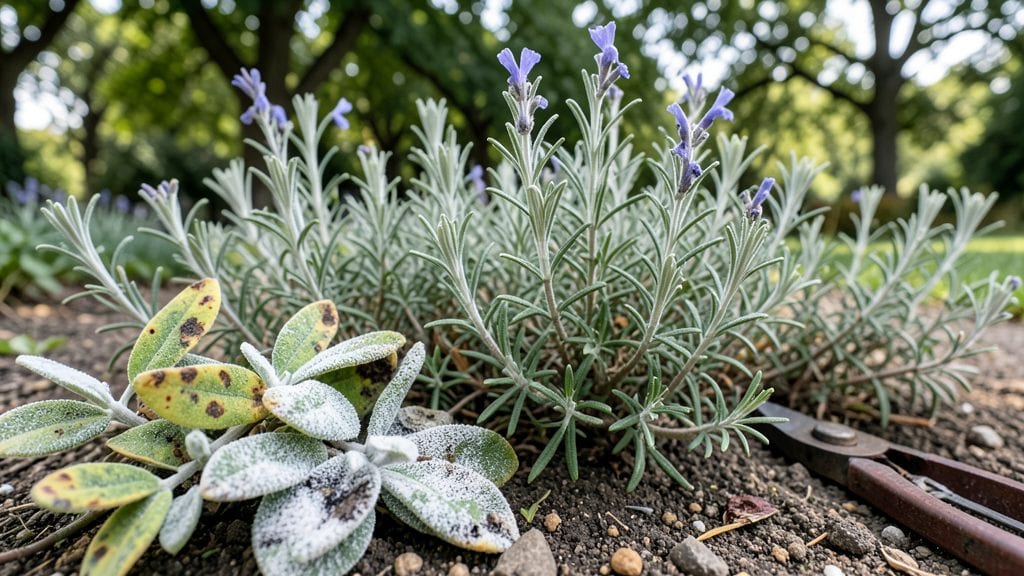
Rosemary plant diseases can turn your fragrant herb garden into a sad, yellowing mess—unless you catch them early. 🌿 I’ve seen powdery mildew smother stems and rust spots turn leaves brittle, but the good news is most fungal issues respond to simple fixes once you know what to look for.
The key is acting fast before the infection spreads.
Overcrowded plants, soggy soil, and poor airflow create the perfect storm for fungal growth. My rosemary thrived until I packed too many plants together after a pruning mistake—suddenly, white fuzzy spots appeared overnight.
The solution? Space plants 18–24 inches apart, prune for airflow, and water at the base (never overhead) to keep foliage dry.
Neem oil and copper fungicide are my go-to treatments for early-stage infections. Spray infected areas in the morning so the plant dries quickly, and repeat every 7–10 days until new growth appears.
For severe cases, snip off affected stems and dispose of them in the trash (not compost)—your other herbs will thank you.
With the right care, rosemary bounces back stronger. After treating mildew last summer, my plants grew back with thicker stems and even more aromatic leaves. The secret is consistency: monitor regularly, adjust watering, and don’t let problems fester. Let’s get your rosemary back to its healthy, fragrant best.
Root Causes Of Rosemary Struggles
Rosemary’s hardy reputation can take a hit when diseases strike, but understanding why these issues arise is the first step to prevention. Fungal pathogens, environmental stress, and cultural mismanagement often collide to create the perfect storm for problems.
Below, we break down the science behind the most common culprits—so you can nip them in the bud.
Rosemary thrives in well-draining soil and hates soggy roots. When excess moisture lingers, it creates the ideal breeding ground for fungal diseases like Phytophthora and root rot. Here’s why:
- Oxygen deprivation: Compacted or waterlogged soil cuts off oxygen to roots, weakening the plant’s defenses and inviting fungal invaders.
- Fungal spores thrive: Many soil-borne pathogens (e.g., Rhizoctonia) release spores in wet conditions, which germinate and infect weakened roots.
- Salt buildup: Overwatering flushes nutrients but can also leave behind harmful salts, further stressing the plant and making it susceptible to disease.
💡 Pro Tip: Rosemary prefers fast-draining mixes (like 60% grit/sand + 40% potting soil). If you’re growing in containers, ensure pots have drainage holes and never let water pool at the base.
Rosemary is drought-tolerant, but extreme heat, humidity, or sudden temperature swings can weaken its immune system, making it vulnerable to fungal attacks. Key triggers include:
- High humidity: Fungi like powdery mildew (Erysiphe spp.) spread rapidly when humidity exceeds 70% for prolonged periods. The spores land on leaves and germinate in damp conditions.
- Poor airflow: Crowded plants or dense foliage trap moisture, creating microclimates perfect for Botrytis blight (gray mold).
- Temperature shocks: Rapid drops below 50°F (10°C) or heatwaves above 95°F (35°C) stress the plant, reducing its ability to fight off pathogens.
🌡️ Actionable Fix:
- Space plants 3–4 feet apart for airflow.
- Water in the early morning to allow foliage to dry before nighttime humidity spikes.
- Avoid mulching heavily—rosemary prefers minimal organic matter near the base.
Fungal diseases don’t just appear—they hitch a ride on tools, soil, or even infected plant debris. Common entry points:
| Pathogen | How It Infects | Trigger |
|---|---|---|
| Verticillium wilt | Enters through root wounds or pruning cuts, blocking water transport. | Contaminated soil or tools. |
| Root rot (Pythium) | Invades damaged roots in waterlogged conditions. | Overwatering + poor drainage. |
| Leaf spot (Septoria) | Spores splash onto leaves from infected water or wind. | Rain or overhead irrigation. |
✨ Prevention: Sterilize pruners with 70% isopropyl alcohol between cuts, and avoid working with plants when foliage is wet. Rotate crops every 3–4 years to prevent soil-borne pathogens from building up.
A rosemary plant low on key nutrients is like a soldier with no armor—easily overrun by fungi. Deficiencies in:
- Potassium (K): Weakens cell walls, making them easier targets for Botrytis or powdery mildew.
- Calcium (Ca): Poor calcium levels lead to blossom end rot (in stems/leaves) and root rot susceptibility.
- Magnesium (Mg): Chlorosis (yellowing leaves) reduces photosynthesis, stressing the plant and lowering disease resistance.
💪 Fix It: Use a balanced fertilizer (e.g., 10-10-10) in early spring, and amend soil with crushed eggshells (calcium) or Epsom salt (magnesium) if deficiencies appear.
By addressing these root causes—water management, airflow, pathogen control, and nutrition—you’ll create an environment where rosemary stays resilient and fungal diseases struggle to take hold. Next, we’ll dive into identifying symptoms so you can act fast!
Quick Fixes for Rosemary Ailments
Rosemary’s hardy nature makes it resilient, but when diseases strike, acting fast is key. Below are practical, step-by-step solutions tailored to the most common fungal threats—plus prevention tips to keep your rosemary thriving. Think of this as your emergency repair kit for woody woes!
Cause: Alternaria or Septoria fungi thrive in damp, crowded conditions.
How to Treat It
- 🔪 Prune the Problem
- Snip off infected leaves (at least ½ inch below the spot) using sterilized pruners (wipe with rubbing alcohol between cuts).
- Dispose of clippings in the trash not the compost—fungi can survive!
- 🌡️ Boost Airflow & Sun
- Space plants 12–18 inches apart to reduce humidity.
- Thin out overcrowded branches or move pots to sunnier spots (rosemary needs 6+ hours of sunlight daily).
- 💡 Fungicide Spray (Organic or Chemical)
- DIY: Mix 1 tsp baking soda + 1 quart water + a drop of dish soap (spray every 7–10 days).
- Store-bought: Use copper fungicide or neem oil spray (follow label rates).
Prevent It
- Water at the base (avoid wetting leaves).
- Space plants properly from day one.
- Rotate pruning tools to prevent cross-contamination.
Cause: Erysiphe fungus loves shady, humid conditions.
How to Treat It
- 🌿 Increase Circulation
- Move rosemary to a sunnier location or rotate pots weekly for even light exposure.
- If indoors, place near a fan (gentle airflow disrupts spores).
- 🍳 Homemade Spray Remedy
- Milk spray: Mix 1 part milk to 9 parts water, spray every 3 days (milk’s proteins fight fungi).
- Neem oil: Apply weekly (1 tsp neem oil + 1 quart water + ½ tsp soap).
- 🔄 Remove Severely Infected Growth
- If 50%+ of leaves are covered, prune the branch back to healthy tissue.
Prevent It
- Avoid overhead watering (use drip irrigation or a watering can with a narrow spout).
- Space plants 18+ inches apart in gardens.
- Water in the morning so foliage dries by evening.
Cause: Phytophthora or Pythium fungi from overwatering or poor drainage.
How to Treat It
- ⏰ Stop Watering Immediately
- Let the soil dry out completely before watering again (stick your finger in—if the top 2 inches are damp, wait).
- 👨🍳 Repot in Fresh Soil
- Gently remove the plant, trim blackened roots with sterilized scissors.
- Repot in well-draining soil (mix cactus/succulent mix + perlite).
- Use a terracotta pot (porous material helps roots breathe).
- 💡 Fungicide Soak (For Severe Cases)
- Soak roots in 1:10 hydrogen peroxide solution (3% HP) for 10 minutes, then replant.
Prevent It
- Use pots with drainage holes (no exceptions!).
- Water only when soil is bone-dry (rosemary hates soggy feet).
- Avoid saucers or let excess water drain away within 30 minutes.
Cause: Puccinia spores spread via wind or splashing water.
How to Treat It
- 🍄 Prune & Destroy Infected Leaves
- Remove all orange pustules (they’re spore factories).
- Bag and trash infected leaves immediately.
- 🌿 Apply Copper Fungicide
- Spray copper-based fungicide (e.g., Bordeaux mixture) every 10–14 days for 3 weeks.
- 🌡️ Boost Heat & Light
- Move rosemary to the sunniest spot (rust thrives in cool, damp conditions).
Prevent It
- Water at the base (never overhead).
- Space plants 2+ feet apart to improve airflow.
- Clean up fallen leaves (they harbor spores).
- ✨ Rotate pruning tools between plants to avoid spreading fungi. - 🌡️ Monitor humidity—aim for 40–60%.
Use a hygrometer if growing indoors. - 🍃 Sterilize pots before reuse (soak in 10% bleach solution, rinse well). - 🌱 Start fresh—if a plant is beyond saving, replace it to prevent reinfection.
Pro Tip: 🎯 Act fast! Catching diseases early (before 10% of the plant is affected) means easier fixes and happier rosemary. Keep an eye out for those first weird spots, and your woody herb will reward you with fragrant, disease-free foliage all season!
Frequently asked questions
What are the first signs of rosemary diseases I should watch for?
Look for white powdery coatings (powdery mildew), orange rust spots (rust fungus), or blackened stems (root rot). Yellowing leaves or leaf spots that spread quickly are also red flags. Check both the tops and undersides of leaves—many fungal spores hide there. Early detection is key to saving your plant!
Can I save my rosemary if it’s already severely infected?
It depends on the disease. For root rot, you may need to repot with fresh soil and trim affected roots. With powdery mildew, prune heavily infected branches and apply fungicide. If 50%+ of the plant is damaged, it’s often better to replace it to prevent spreading spores to other plants. Start fresh with healthy cuttings if possible.
How often should I spray fungicide on my rosemary?
For prevention, spray every 7–10 days during humid seasons. If treating an active infection, follow the product’s instructions—usually every 3–7 days for 2–3 weeks. Always spray in the early morning so the foliage can dry quickly, reducing fungal growth. Avoid spraying when rain is forecasted within 24 hours.
Will neem oil work for all rosemary diseases?
Neem oil is effective against powdery mildew, leaf spots, and some rusts, but it won’t cure root rot or bacterial infections. For stubborn cases, combine it with copper fungicide or baking soda spray. Always mix neem oil with water and a drop of soap to help it stick to leaves. Test a small area first to ensure no sensitivity.
Can I use the same pruners for all my herbs if I sterilize them?
Yes, but sterilization alone isn’t enough—fungal spores can linger on tools. Wipe pruners with 70% isopropyl alcohol between cuts, then flame them or soak in a 10% bleach solution for 5 minutes. For extra safety, use separate tools for diseased and healthy plants. Disinfect tools before and after each use to prevent cross-contamination.