
Diseases
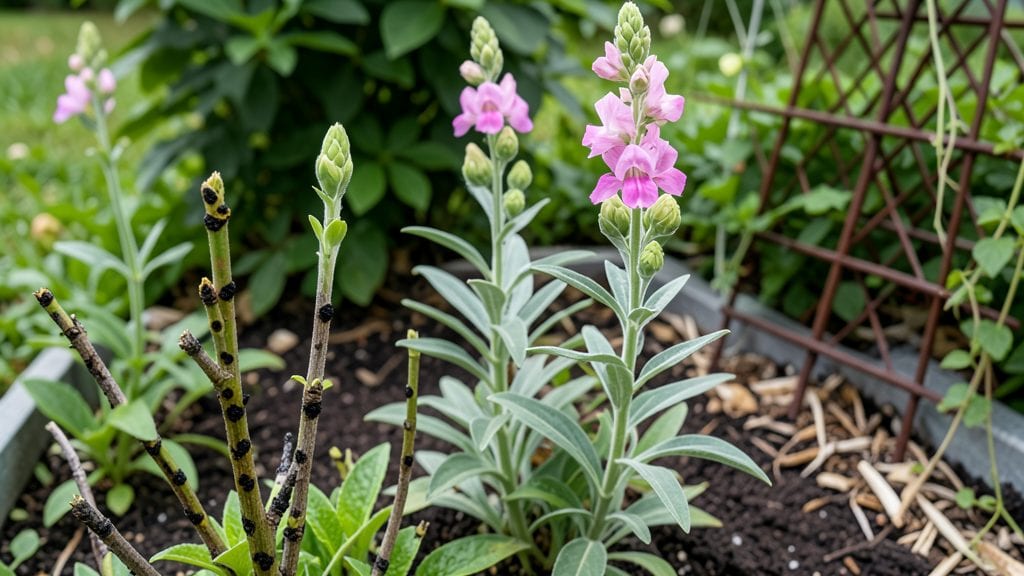
Snapdragon plant diseases can turn vibrant blooms into sad, spotted messes faster than you think. 🌿 I’ve watched powdery mildew creep across my snapdragons like white lace, and bacterial spot turn leaves into Swiss cheese overnight—both preventable with the right know-how.
The key is catching issues early, before they spread like gossip at a garden club.
Most problems start with too much moisture or poor airflow—snapdragons hate being smothered. Powdery mildew thrives in humid shade, while downy mildew loves damp foliage. Bacterial spot? That’s usually water splashing up from below.
The good news? Organic fixes like neem oil, copper sprays, and spacing plants properly can stop these in their tracks before they ruin your showstopper flowers.
With quick action, you’ll save your snapdragons from crunchy leaves and faded blooms. Think velvety foliage and towering spikes of color instead of wilting disappointment. The secret is checking plants weekly for weird spots or fuzzy growth—then acting before the disease gets comfy.
Works for container gardens, borders, or cut-flower beds—just adjust watering and airflow. Let’s get those snapdragons back to their best in no time.
Root Causes Behind Snapdragon Struggles
Snapdragons (Antirrhinum majus) are resilient, but when diseases strike, they’re often the result of underlying environmental or cultural stressors. Understanding why these issues arise is the first step to prevention. Below, we break down the key culprits—from fungal favorites to bacterial bullies—and the science behind their attacks.
Fungal diseases like powdery mildew and root rot thrive when snapdragons are packed too tightly in the soil. Here’s why:
- Poor Air Circulation: Dense plantings trap moisture, creating a humid microclimate that fungi love. Powdery mildew spores germinate in 70–80°F (21–27°C) with high humidity—ideal conditions for snapdragons in summer. - Competition for Nutrients: Overcrowded roots weaken plants, making them stress-prone and more susceptible to infections.
A study in HortScience found that snapdragons spaced 12–18 inches apart had 40% fewer disease incidents than those planted 6 inches apart. - Soilborne Pathogens: Fungal spores (e.g., Phytophthora for root rot) lurk in compacted or waterlogged soil. If drainage is poor, roots suffocate, inviting fungal invaders.
Actionable Fix: Thin seedlings early, mulch with straw or pine needles (not plastic), and ensure 6+ inches of well-draining soil.
Snapdragons are drought-tolerant, but improper watering is a top trigger for bacterial and fungal diseases:
- Splashing Water: Overhead irrigation (like sprinklers) splashes spores onto leaves, spreading bacterial leaf spot (Xanthomonas campestris).
The bacteria enter through hydathodes (leaf pores) when foliage stays wet for >12 hours. - Stagnant Soil: Waterlogged roots cut off oxygen, leading to root rot (Pythium or Rhizoctonia).
These fungi multiply in anaerobic (oxygen-free) zones, choking roots within 3–5 days of saturation. - Drought Stress: While snapdragons tolerate dry spells, sudden rewatering after drought can shock plants, weakening their defenses against pathogens.
Actionable Fix:
- Water at soil level (use drip irrigation or soaker hoses).
- Aim for 1 inch of water per week, adjusting for rain.
- Avoid late-day watering—let foliage dry by sunset.
Many snapdragon diseases arrive as windborne or tool-transmitted spores. Here’s how:
- Previous Infected Plants: Fungi like downy mildew (Peronospora) overwinter in plant debris.
If you replant snapdragons in the same spot without rotating crops, spores reinfect new plants via air or water. - Contaminated Tools: Pruners, gloves, or trellises carrying Botrytis (gray mold) spores can jump-start outbreaks.
A single cut with an infected blade can introduce the pathogen to healthy tissue. - Greenhouse Recycling: If you reuse growing mediums or containers without sterilizing, soilborne pathogens (e.g., Fusarium) lie dormant until conditions are ripe.
Actionable Fix:
- Rotate planting sites every 2–3 years.
- Sterilize tools with 70% isopropyl alcohol or a 10% bleach solution between uses.
- Solarize soil (cover with clear plastic for 4–6 weeks in summer) to kill dormant spores.
Some diseases don’t act alone—they hitch rides on pests:
- Aphids & Whiteflies: These sap-suckers weaken plants, making them vulnerable to sooty mold (a fungal hitchhiker that grows on their honeydew). Sooty mold blocks sunlight, further stressing snapdragons. - Slugs & Snails: Their slime trails create entry points for Botrytis cinerea (gray mold).
The fungus thrives in damaged, moist tissue, turning chewed leaves into infection hotspots. - Thrips: While not direct vectors, their feeding scars on flowers disrupt tissue integrity, letting water and pathogens seep in.
Actionable Fix:
- Handpick pests early (especially slugs) or use beer traps (bury a shallow dish of beer near plants).
- Introduce beneficial insects like ladybugs or lacewings to control aphids naturally.
- Remove debris where pests hide (e.g., mulch piles, old flower heads).
Diseases don’t strike randomly—they target snapdragons when conditions align:
| Disease | Ideal Temp for Pathogen | Humidity Trigger | Why It Works |
|---|---|---|---|
| Powdery Mildew | 70–80°F (21–27°C) | >60% RH (relative humidity) | Spores germinate faster in warm, damp air. |
| Downy Mildew | 60–70°F (15–21°C) | >80% RH + leaf wetness | Needs free water on leaves to infect. |
| Gray Mold (Botrytis) | 68–77°F (20–25°C) | >90% RH | Thrives on senescent (dying) tissue. |
| Bacterial Spot | 75–85°F (24–29°C) | Rain + wind | Bacteria spread via splashing water. |
Actionable Fix:
- Space plants for airflow (reduces humidity near foliage).
- Use shade cloth (30–50%) in peak summer to lower leaf temps.
- Avoid evening watering—let plants dry before nighttime humidity spikes.
Snapdragons with deficiencies or excesses are easier targets:
- Nitrogen Overload: Lush, soft growth attracts gray mold and powdery mildew.
Too much nitrogen = thin cell walls, making it easier for pathogens to penetrate. - Phosphorus Deficiency: Weak roots struggle to absorb water, leading to waterlogged stress and root rot. - Magnesium Deficiency: Interveinal chlorosis (yellowing between veins) weakens leaves, making them more susceptible to bacterial spots.
Actionable Fix:
- Test soil (pH 6.0–7.0 is ideal for snapdragons).
- Balance fertilizers: Use a low-nitrogen, high-phosphorus formula (e.g., 5-10-10) at planting, then switch to balanced (10-10-10) mid-season.
- Add Epsom salt (1 tbsp/gallon of water) every 4–6 weeks for magnesium.
Quick Fixes for Snapdragon Ailments
When your snapdragons start showing signs of stress or disease, acting fast can mean the difference between a sad, wilted plant and a thriving, vibrant one. Below, we’ve mapped out practical, organic solutions for the most common snapdragon diseases, along with prevention tips to keep your garden healthy.
No fancy tools or chemicals needed—just smart care!
Cause: Fungal spores thrive in humid, shaded conditions, creating that telltale white powder on leaves. Fix:
- 🔥 Prune the Problem – Snip off heavily infected leaves (sterilize your shears with rubbing alcohol first!).
- 🍳 DIY Fungicide Spray – Mix 1 tsp baking soda + 1 tbsp vegetable oil + 1 quart water + a drop of dish soap (as a surfactant). Spray both sides of leaves at dawn or dusk for 3–4 days.
- 🌬️ Boost Airflow – Space plants 12–18 inches apart and avoid overhead watering.
💡 Prevention Tip: Water at the base (not the foliage) and ensure 6–8 hours of sunlight daily to dry leaves faster.
Cause: Overwatering or poor drainage leads to soggy roots, turning them black and mushy. Fix:
- ⏰ Pause Watering – Let the top 1–2 inches of soil dry out before watering again.
- 🔪 Repot if Needed – If roots are severely rotted, trim the bad parts, dust with cinnamon (natural antifungal), and repot in well-draining soil (add perlite or sand).
- 🏺 Elevate Pots – Use saucers with drainage holes or raise pots on bricks to prevent waterlogging.
💡 Prevention Tip: Use terracotta pots (they dry faster than plastic) and mulch lightly to retain moisture without suffocating roots.
Cause: Tiny green/black pests suck sap, causing curled leaves and sticky residue ("honeydew"). Fix:
- 👨🍳 Spray with Soapy Water – Mix 1 tsp mild liquid soap + 1 quart water and spray directly on aphids (they’ll drop off).
- 🌡️ Introduce Beneficial Insects – Ladybugs and lacewings love aphids! Buy them online or attract them with dill or fennel plants.
- 🎯 Prune Heavily Infested Stems – Drop them in soapy water (not compost) to kill eggs.
💡 Prevention Tip: Neem oil spray (1 tsp oil + 1 quart water + drop of soap) weekly deters aphids before they become a problem.
Cause: Fungal/bacterial spots (brown/yellow patches with yellow halos) spread via water splashes. Fix:
- 🔪 Remove Spotted Leaves – Cut them below the spot to prevent spread.
- 🥘 Copper Fungicide Tea – Steep 1 tsp copper sulfate in 1 quart water for 24 hours, then spray (follow label instructions).
- 🌿 Space Plants Wider – Thin out crowded areas to reduce humidity near foliage.
💡 Prevention Tip: Rotate crops—don’t plant snapdragons in the same spot yearly to break disease cycles.
To prevent future issues, follow this quick checklist:
- 💧 Water deeply but infrequently (let soil dry slightly between waterings).
- ☀️ Provide full sun (6+ hours/day) to discourage fungal growth.
- 🌱 Use sterile potting mix (or pasteurize homemade soil with steam or baking soda).
- 🧼 Clean tools after pruning to avoid spreading pathogens.
✨ Pro Tip: If diseases keep recurring, test your soil pH (snapdragons prefer 6.0–7.0). Adjust with lime (to raise pH) or sulfur (to lower pH) as needed.
With these simple, organic fixes, your snapdragons will bounce back stronger—and you’ll be the hero of your garden! 🌸
Frequently asked questions about snapdragon plant diseases
What are the most common diseases affecting snapdragon plants?
Snapdragons frequently battle powdery mildew (white powdery coating), downy mildew (yellow spots with fuzzy undersides), bacterial leaf spot (water-soaked brown patches), and root rot (black, mushy roots). These thrive in humid, crowded conditions or from overwatering.
How can I tell if my snapdragon has a fungal vs. bacterial infection?
Fungal issues like powdery mildew appear as white, powdery growth, while downy mildew shows yellow spots with gray fuzz on leaf undersides. Bacterial spots (like leaf spot) look like water-soaked, brown lesions with yellow halos. Fungal diseases spread via spores, while bacteria require water to splash onto leaves.
Can I save a snapdragon plant already showing signs of disease?
Yes, but act fast! Prune infected leaves immediately, improve airflow by spacing plants, and apply organic treatments like neem oil or baking soda spray. For root rot, repot in fresh, well-draining soil and avoid overwatering. Severe cases may require removing the plant entirely to prevent spread.
Why do my snapdragons keep getting powdery mildew even after treatment?
Powdery mildew often returns if humidity stays high or airflow is poor. Ensure plants get 6+ hours of sunlight daily, water at the base (not leaves), and space them 12–18 inches apart. Repeat treatments every 7–10 days during humid weather, and consider using resistant varieties like 'Cupid' or 'Rocket' for future plantings.
Are there chemical-free ways to prevent snapdragon diseases?
Start with cultural fixes: space plants properly, water at the base, and remove debris. Use compost tea (rich in beneficial microbes) or garlic spray (blend 1 garlic bulb + 1 quart water, strain, and spray). Copper fungicide (organic-certified) is also effective for bacterial/fungal issues when used early.