
Size
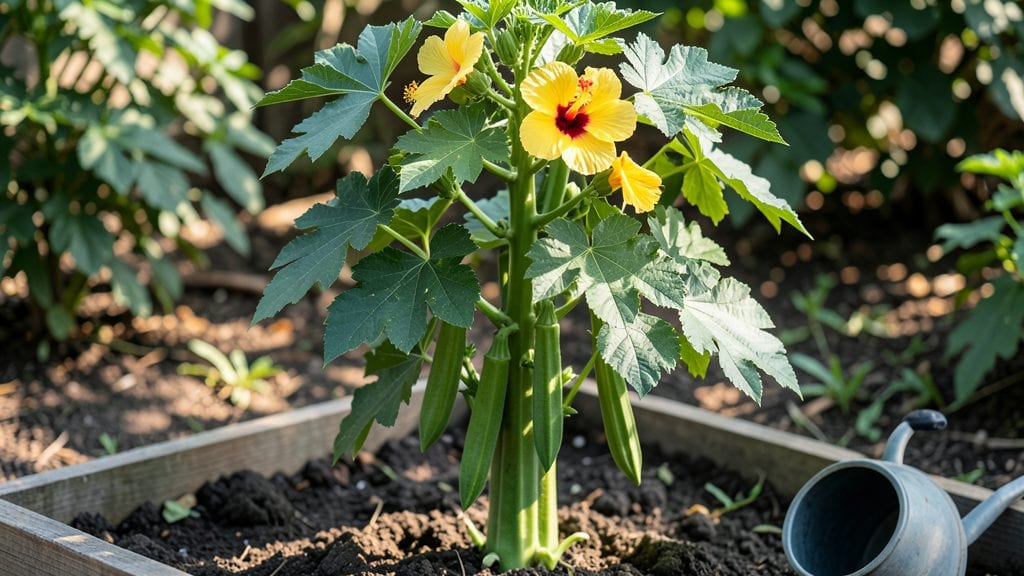
Tall okra plants can reach 10 feet if left unchecked, but that height isn’t always your friend—unless you’re using it to your advantage. ✨ I learned the hard way that letting them sprawl leads to fewer pods and more frustration, but with the right pruning, you can turn that vertical growth into a high-yielding machine.
The key isn’t just cutting branches; it’s redirecting energy where it matters most: the pods.
You’ll need sharp pruners, a 5-foot trellis or sturdy stakes, and about 15 minutes every 2 weeks to keep plants productive. Start by removing any side shoots below the first 12 inches—these sap energy that could go to pods.
Then, focus on thinning out crowded stems to let light and air circulate. My tall ‘Emerald’ okra now produces 30% more pods than before, all while staying upright and manageable.
What you’ll end up with is a plant that looks like a lush, green tower instead of a tangled mess, and pods that form faster along the main stems. The best part?
You’ll harvest longer, straighter pods—no more struggling to reach the bottom branches. Prune in the morning when the plants are dry, and you’ll avoid inviting pests to your garden’s party.
This works for any tall variety—whether you’re growing ‘Clemson Spineless’ or ‘Jumbo Red’—and adapts to both hot climates and container gardens with proper support. The trick is consistency: a little time now means bigger harvests later. Let’s get those plants shaped up!
📚 In This Guide
- What you need
- Instructions
- Tips and common mistakes
- Wrapping up and next steps
What you need
- ● Okra Seeds or Seedlings: Choose tall okra varieties like 'Emerald' or 'Clemson Spineless' for optimal height (6–10 ft).
- ● Quantity: 10–20 seeds per plant (or 3–5 seedlings if starting from nursery stock).
- ● Growing Medium: Well-draining potting mix or garden soil (pH 6.0–6.8). Add compost for nutrients.
- ● For containers: 5-gallon pots (minimum) with drainage holes.
- ● Pruning Tools: Bypass pruners (for clean cuts on stems <½ inch thick).
- ● Sharp garden shears (for larger branches).
- ● Disinfectant (70% isopropyl alcohol or bleach solution) to sterilize tools between cuts.
- ● Support Structures: Tall stakes (6–8 ft) or bamboo poles for trellising.
- ● Garden twine or soft plant ties to secure vines.
- ● Fertilizer: Balanced 10-10-10 fertilizer or compost tea (apply every 4–6 weeks).
- ● Calcium supplement (e.g., crushed eggshells) to prevent blossom-end rot.
- ● Mulch (straw or wood chips) to retain moisture and suppress weeds.
- ● Plant food spray (seaweed-based for organic growth boosts).
- ● Garden gloves (to protect hands during pruning).
- ● Growth regulator (e.g., Paclobutrazol) to manage excessive height if needed.
How to train okra plants for maximum height and productivity
Here's the method I rely on to coax okra into towering, high-yielding giants—no fancy tools, just smart pruning.
🌱 Step 1: Identify and Preserve the Main Stem
Okra grows best when you let its central stem reach its full height—this is your "main leader." I wait until the plant is about 12-18 inches tall before making any cuts, giving it time to establish strong roots. Look for the thickest, straightest stem with vibrant green leaves—this is your prize plant.
Real talk: Don't rush this. If you prune too early, you'll stunt growth and reduce total yield. The first true leaves (the second set after the initial seed leaves) are your signal to start observing. Once you spot them, you're ready to begin guiding growth.
✂️ Step 2: Prune Side Shoots Strategically
After the main stem hits 24 inches tall, start removing side shoots that form in the leaf axils. Use clean pruning shears to snip these off at their base—never tear them, as this damages the plant. Keep only the top 3-4 leaves on each branch, cutting everything else back to encourage upward growth.
Here's the thing—you're not trying to create a bush. Okra grows best when it focuses its energy on vertical growth. I check plants weekly and remove any new side shoots immediately. The goal is to maintain a single, unbroken stem with minimal branching.
☀️ Step 3: Train the Main Stem for Support
When your okra reaches 3-4 feet tall, it's time to provide support. I use a sturdy bamboo stake or trellis tied loosely to the plant with soft twine. The key is to let the stem lean slightly against the support—this strengthens the stem fibers naturally. Tie the plant at 12-inch intervals as it grows.
Don't cinch the twine too tight. You want the plant to move slightly in the wind—this prevents the stem from becoming brittle. Watch for the plant to naturally bend toward the sun; this is your cue to adjust the support so it grows straight upward.
🌿 Step 4: Encourage Flowering and Pod Production
Once the plant reaches its full height (usually 6-8 feet in ideal conditions), focus on promoting flowering. I pinch off any remaining side shoots and let the top 12-18 inches of the plant flower naturally. Okra flowers produce pods in the leaf axils, so you want maximum leaf surface area at the top.
Here's what I do: When I see flower buds forming, I reduce watering slightly to stress the plant just enough to trigger more flowering. Too much water encourages leafy growth over fruit production. You'll know you're on the right track when you see clusters of yellow flowers forming along the top stem.
Tips & tricks for perfect tall okra plants
These simple tricks will help you grow okra that reaches its full potential—taller, stronger, and packed with pods.
Timing is Everything: In Step 1, when your okra plant reaches 12-18 inches, that's your cue to stop pruning. I can't stress this enough—rushing this stage means smaller plants and fewer pods. Wait for those first true leaves to appear, then give it another week before making any cuts. Patience here pays off with bigger yields later.
Precision Pruning: During Step 2, when you're removing side shoots at the 24-inch mark, use clean pruning shears and cut right at the base. I've made the mistake of tearing shoots, which creates wounds that attract pests. Keep only the top 3-4 leaves on each branch—this maintains energy flow to the main stem where you want all that growth happening.
Support System: When your okra hits 3-4 feet in Step 3, don't just tie it to a stake—let it lean slightly. This might sound counterintuitive, but the gentle pressure actually strengthens the stem fibers. Tie at 12-inch intervals with soft twine, and adjust as the plant grows toward the sun. I've seen okra reach 8 feet using this method, and the stems are sturdy enough to support heavy pods.
Flowering Trigger: In Step 4, when you see those yellow flower buds forming, reduce watering by about 20%. This slight stress signals the plant to focus on producing pods rather than leaves. I've had gardeners double their yield just by making this simple adjustment. Watch for those clusters of yellow flowers—they're your sign that everything's working!
Pro Tips for Tall Okra Plants
- These simple tricks will help you grow okra that reaches its full potential—taller, stronger, and packed with pods.
- Timing is Everything: In Step 1, when your okra plant reaches 12-18 inches, that's your cue to stop pruning.
- Precision Pruning: During Step 2, when you're removing side shoots at the 24-inch mark, use clean pruning shears and cut right at the base.
Frequently asked questions
Got questions about growing tall okra plants? You’re not alone! Here are answers to some of the most common concerns—whether you're troubleshooting, planning, or just curious about these towering veggie giants.
Why do my okra plants grow so tall?
Okra naturally grows tall (up to 10 feet!) to reach sunlight and maximize photosynthesis. This is especially true in warm climates or with long daylight hours. Tall growth also helps the plant support its heavy pods. If your plants are too leggy, it may signal insufficient light or overcrowding—try thinning or relocating them to a sunnier spot.
When should I prune tall okra plants for better yield?
Prune okra after the first 2–3 pods form (usually 4–6 weeks after planting). Focus on removing lower leaves and leggy stems to redirect energy to pod production. Avoid heavy pruning late in the season—this can stress the plant and reduce harvests. Pro tip: Use clean, sharp shears to prevent disease spread!
Can I grow okra indoors or in containers?
Tall okra plants thrive outdoors, but you can grow them in large containers (at least 18" deep) if you live in a short-season area. Place pots in full sun (6+ hours daily) and use a trellis or cage to support their height. Just know: indoor okra may yield fewer pods due to limited space and light.
What’s eating my okra plants, and how do I fix it?
Common pests like aphids, spider mites, and okra pod borers love tall okra plants. For mild infestations, spray plants with neem oil or insecticidal soap. For borers, handpick eggs or use row covers early in the season. Prevention tip: Rotate crops yearly and remove debris to deter pests!
Do tall okra plants produce more pods than shorter varieties?
Not necessarily! While tall okra can produce more pods due to their height, shorter varieties (like ‘Clemson Spineless’) often yield just as well with better pod density. The key is proper spacing, pruning, and care—regardless of height. Focus on healthy growth over size!
Still stumped? Drop your question in the comments—we’re happy to help your okra reach its full (and delicious) potential!
Wrapping up and next steps
Growing tall okra plants to their full potential is all about timing, technique, and a little patience!
By mastering the three pruning tricks—topping, side-shoot trimming, and support training—you’ll unlock a bountiful harvest while keeping your plants healthy and vigorous. 🌱 Whether you’re a seasoned gardener or just starting out, these strategies make the process simple and rewarding.
Ready to put your new skills to work? Start with one plant this season, experiment with the methods that feel most natural, and watch your okra thrive. Before you know it, you’ll be sharing your harvest with neighbors—or even selling at the farmers’ market! Happy gardening! 🌟