
Planting
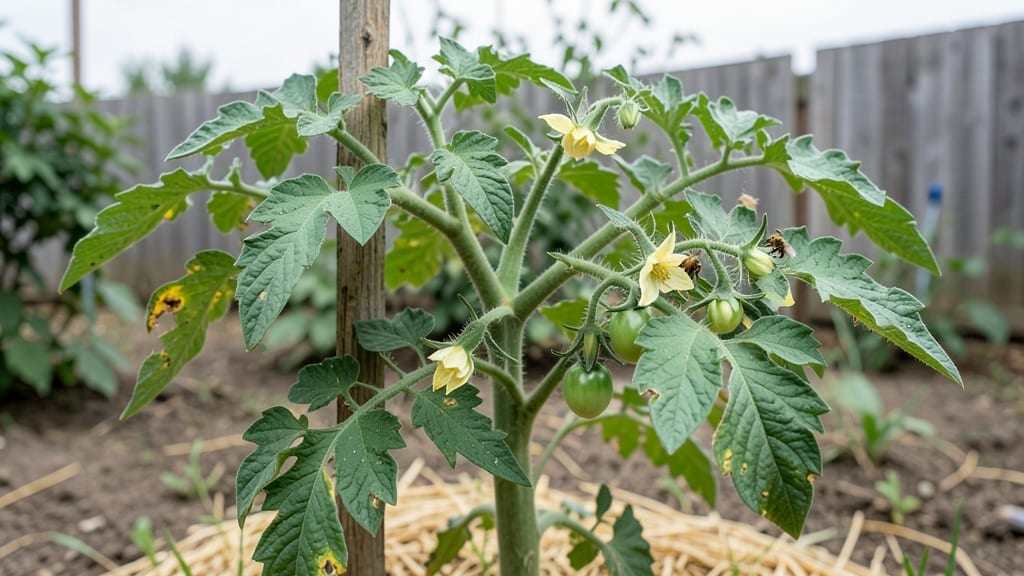
Tomato plant pollination is essential for fruit development, relying on wind, bees, or manual assistance to transfer pollen between flowers. Without it, blossoms drop off, slashing your harvest. Shaking plants gently or using a soft brush to hand-pollinate can dramatically improve fruit set.
Tomatoes depend on pollen transfer to develop fruit, and nature handles this through wind or bees—but not every garden has enough pollinators. 🔥 I’ve found that mornings with calm winds are prime times for natural pollination, while humid or rainy days can hinder it.
Hand-pollinating becomes especially useful in greenhouses or when bee activity is low, giving you direct control over fruit production.
This method isn’t just about quantity; it also ensures stronger, more uniform tomatoes. For instance, indeterminate varieties often need extra help since their flowers bloom continuously, while determinate types may rely more on natural pollinators.
A simple cotton swab or even your fingertip can mimic a bee’s work, making it a foolproof way to boost yields without chemicals.
💡 In This Article
- How Tomato Flowers Are Pollinated Naturally
- Manual Pollination Techniques for Better Tomato Harvests
How tomato flowers are pollinated naturally
Tomato flowers are self-pollinating, meaning their pollen must transfer from the anthers (male reproductive parts) to the stigma (female part) within the same flower or between flowers.
The key here is the flower's structure: tomato blooms have yellow stamens that release pollen when touched, and a central stigma that must receive it. Bees are the primary pollinators, collecting nectar while brushing against the stamens, which picks up pollen that later deposits on the stigma of another flower.
Wind plays a secondary role, especially in open fields where gentle breezes carry pollen between flowers. However, tomato flowers aren't as wind-adapted as grasses—their pollen is heavier and sticks to bee bodies better.
Humidity below 60% and temperatures between 75-85°F create ideal conditions for pollinators, while extreme heat (>90°F) or high humidity (>80%) can deter bees and reduce pollen viability. This is why greenhouse-grown tomatoes often need manual help.
Determinate tomato varieties (bush types) produce flowers all at once, creating a dense bloom period that attracts more bees naturally. Indeterminate varieties (vining types) bloom continuously, spreading out their flowers over weeks—this makes them more reliant on consistent pollinator activity.
The positioning matters too: flowers on lower branches receive more ground-level wind assistance, while upper flowers depend almost entirely on bees or manual intervention.
Here's what's actually happening at the cellular level: when pollen lands on a receptive stigma, it germinates and grows a pollen tube down the style to the ovary, where fertilization occurs.
This process takes about 24-48 hours—if pollination doesn't happen within that window, the flower drops off without setting fruit. The flower's lifespan is typically 3-5 days, adding urgency to the pollination process.
One fascinating detail is how tomato flowers are self-sterile—meaning pollen from the same flower rarely fertilizes itself effectively. This forces cross-pollination between different flowers, creating genetic diversity in your harvest.
The flower's yellow color and sweet nectar evolved specifically to attract pollinators, with studies showing bees can visit up to 50 flowers per minute during peak activity.
What most gardeners don't realize is how environmental factors create hidden challenges. For example, morning dew can temporarily waterlog stigmas, making them less receptive to pollen. Similarly, heavy rainfall can wash away pollen before it's transferred.
These factors explain why some years produce abundant blossoms but few tomatoes—it's not just about the flowers, but the perfect timing of pollination events.