
Planting
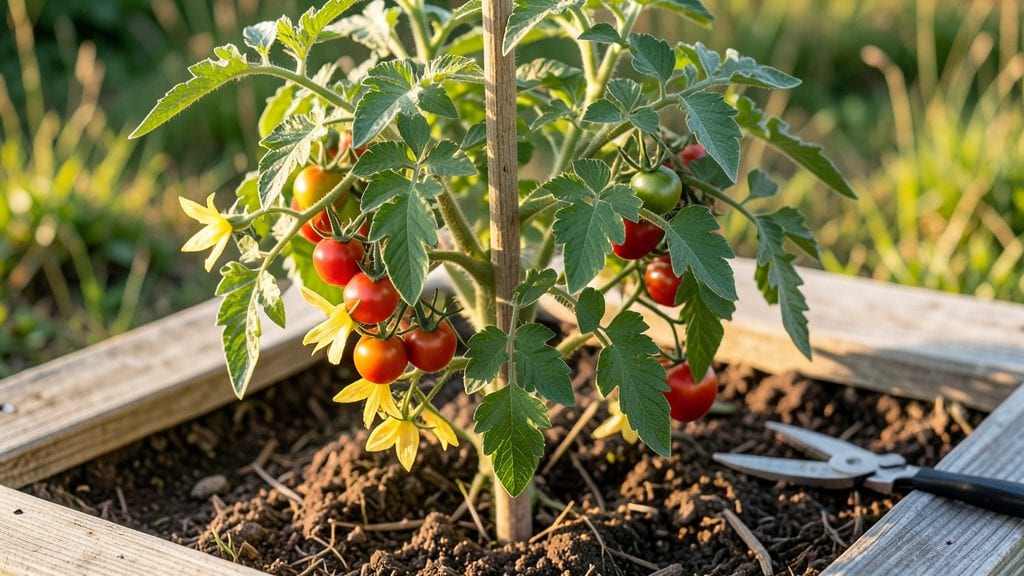
Choosing the right tomato plant size for your garden can make or break your harvest—some varieties sprawl like vines while others stay neatly contained.
Did you know some 🍅 plants stretch taller than a basketball hoop while others stay compact enough for windowsill gardens? Understanding tomato plant size isn’t just about aesthetics—it directly impacts your harvest potential and garden layout strategy.
Indeterminate varieties can grow 6 feet or more, requiring sturdy stakes or cages, while determinate types max out around 3–4 feet and produce all their fruit at once. Getting the spacing right ensures better air circulation, fewer diseases, and bigger yields.
In this guide, I’ll break down how to pick the perfect size for your space, whether you’re working with containers, raised beds, or traditional rows—and how to support them for maximum growth.
Tomato plant size variations by variety: dwarf to vining giants
When planning your tomato garden, size matters more than you might think. Some varieties top out at 18 inches—perfect for container gardening—while others climb to 12 feet or taller, needing trellis support and dedicated space.
These differences stem from two core growth habits: determinate (bush types) and indeterminate (vining types). Understanding these categories helps you choose the right variety for your space, whether you have a balcony garden or a sprawling backyard.
Determinate tomatoes grow to a fixed height and produce fruit all at once, making them ideal for heirloom varieties and high-yield containers. Indeterminate types, on the other hand, keep growing until frost, delivering a continuous harvest but requiring strong staking or cage systems.
Let’s break down the size spectrum so you can pick the perfect tomato for your garden layout.
Here’s how to match your garden space and harvest goals with the right tomato size:
| Size Category | Growth Habit | Mature Height | Spread | Best Varieties | Space Needs |
|---|---|---|---|---|---|
| Dwarf | Determinate | 12–18 inches | 12–18 inches | 'Tiny Tim', 'Micro Tom', 'Patio Princess' | 5-gallon containers, windowsills |
| Semi-Dwarf | Determinate | 2–3 feet | 18–24 inches | 'Balcony Red', 'Roma VF', 'Sweet Million' | 12-inch pots or 18-inch spacing in-ground |
| Standard Bush | Determinate | 3–4 feet | 2–3 feet | 'Celebrity', 'Better Boy', 'Early Girl' | 24–36 inches apart in-ground |
| Indeterminate Vining | Indeterminate | 6–12 feet+ | 3–5 feet | 'Sungold', 'Brandywine', 'Cherokee Purple' | Trellis or 3–4 feet apart with support |
If you’re working with limited space, dwarf varieties like 'Tiny Tim' or 'Micro Tom' thrive in 5-gallon pots or even hanging baskets. These compact tomatoes produce cherry-sized fruit but require the same sunlight needs (6–8 hours daily) as larger plants.
For container gardening, ensure your pots have drainage holes and use a lightweight potting mix to prevent root stress.
On the opposite end, indeterminate giants like 'Sungold' or 'Brandywine' need vertical support—think trellises, stakes, or tomato cages—to handle their unlimited growth. Without support, these vines can flop over, leading to blossom end rot or disease spread.
I recommend pruning suckers (side shoots) regularly to encourage fruit production and improve air circulation.
For small gardens, semi-dwarf determinates like 'Balcony Red' strike a balance, offering moderate height (2–3 feet) and high yields. These work well in raised beds or in-ground plots with 18-inch spacing.
If you’re growing heirloom varieties, many indeterminate types (like 'Cherokee Purple') reward patience with larger, flavorful fruit but demand more maintenance.
One common mistake is assuming all tomatoes need the same spacing rules. Overcrowding leads to poor air flow, increasing the risk of fungal diseases like early blight. For determinate varieties, space plants 18–24 inches apart; for indeterminate types, give them 3–4 feet of clearance.
If you’re growing in containers, one plant per 5-gallon pot is ideal for dwarf types, while indeterminate vines need 10-gallon pots or larger.
Pro tip: Stake early—even for bush varieties—to prevent wind damage and make harvesting easier. Use bamboo stakes or metal cages for support, and tie stems loosely with soft plant ties to avoid stem constriction.
For vertical gardening, consider A-frame trellises to maximize space efficiency while keeping fruit off the ground.
Remember, tomato size isn’t just about height—it’s also about growth habits.
Optimal spacing rules for tomato plants by size to maximize yield
Proper spacing isn't just about fitting plants into your garden—it's a science-backed way to maximize tomato plant size potential. Crowded tomatoes compete for sunlight, nutrients, and air circulation, leading to stunted growth and disease.
The right spacing ensures each plant gets 6-8 hours of sunlight and reduces humidity around leaves, preventing fungal issues like blight.
Tomatoes fall into three main size categories: dwarf (1-3 ft), semi-dwarf (3-4 ft), and standard (4-6+ ft). Each requires different spacing to thrive. For example, indeterminate varieties like 'Sungold' need more room to vine upward, while determinate types like 'Roma' stay compact but still need proper airflow.
| Tomato Type | Mature Height | Spacing (In-Ground) | Container Size | Sunlight Needs |
|---|---|---|---|---|
| Dwarf (e.g., 'Tiny Tim') | 1-3 ft | 18-24 inches apart | 5-gallon pot | Full sun (6+ hrs) |
| Semi-Dwarf (e.g., 'Patio') | 3-4 ft | 24-30 inches apart | 7-10 gallon pot | Full sun (6-8 hrs) |
| Standard (e.g., 'Beefsteak') | 4-6+ ft | 36-48 inches apart | 15+ gallon pot | Full sun (8+ hrs) |
| Indeterminate (e.g., 'Sungold') | 6-10+ ft | 48-60 inches apart | 20+ gallon pot | Full sun (8+ hrs) |
For in-ground planting, follow these spacing rules to prevent competition: dwarf tomatoes need 18-24 inches between plants, while indeterminate giants like 'Cherokee Purple' require 48-60 inches. In containers, match pot size to plant size—5-gallon pots work for dwarfs, but 20+ gallons are needed for vining varieties.
Air circulation is critical for tomato plant size and health. Overcrowding traps moisture, creating ideal conditions for fungal diseases like early blight. Space plants to allow 3-4 feet of airflow around each one.
If growing in rows, leave 3 feet between rows for easy access and better light penetration to lower leaves.
Sunlight requirements vary slightly by size, but all tomatoes need 6-8+ hours of direct sun daily. Taller varieties benefit from morning sun to dry dew quickly, reducing disease risk.
If your garden has partial shade, prioritize dwarf or semi-dwarf varieties like 'Balcony Red' or 'Stupice,' which tolerate 4-6 hours of sun better than standard types.
Remember, proper spacing isn't just about the numbers—it's about creating an environment where your tomato plant size can reach its full potential. With the right layout, you'll see larger fruits, healthier plants, and a higher yield all season long. 🌱🍅