
Diseases
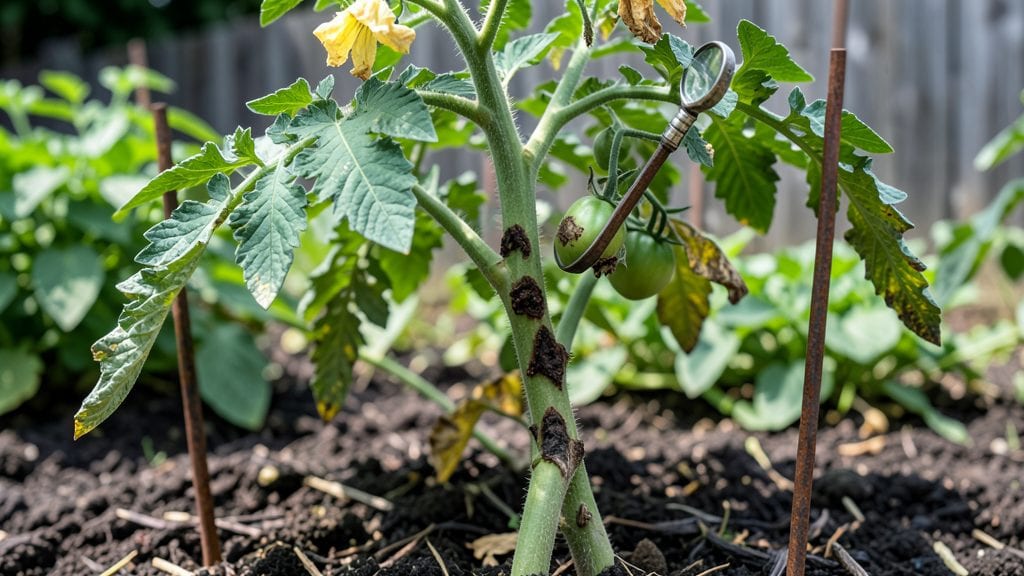
Tomato plant stem diseases can turn your lush vines into sad, wilted sticks in days—unless you catch them fast. 🌱 I’ve seen healthy plants collapse overnight from fungal infections like Fusarium or Verticillium wilt, but knowing the early signs saves the harvest.
The key is acting before the disease spreads beyond the stem.
Most stem diseases start with yellowing leaves, then brown streaks or blackened stems—often missed until the plant topples. Overwatering, poor drainage, or old compost are the usual culprits, but even healthy plants can get hit.
The good news? Organic sprays like copper fungicide or neem oil can stop the spread if you catch it early.
By the time you see wilting, it’s already too late for that plant—but you can save the rest. Prune infected stems immediately, sterilize tools between cuts, and rotate crops next season. Your next tomato harvest will thank you.
This guide covers the 7 worst offenders, their sneaky symptoms, and the fastest fixes—so you can keep your plants standing tall all season. Let’s get those stems healthy again.
Root Causes Behind Stem Woes
Tomato plant stem diseases don’t strike randomly—they thrive when specific conditions align, often leaving gardeners scratching their heads over why their once-vibrant plants suddenly wilt or rot. Understanding the why behind these issues is the first step to prevention and treatment.
Let’s break down the key culprits that weaken tomato stems and invite fungal invaders.
Fungal pathogens like Fusarium and Verticillium (the villains behind wilt diseases) love moisture. When tomato stems stay damp for prolonged periods—whether from heavy rain, poor drainage, or overhead watering—spores germinate and infect plant tissues.
The fungus invades the xylem (the plant’s water-transport system), clogging it like a kinked hose. Without proper water flow, leaves yellow, stems weaken, and the plant collapses.
Why it’s worse:
- Stagnant soil traps water at the stem base, creating a fungal buffet.
- Plastic mulch or thick ground cover can suffocate roots, reducing airflow and increasing humidity near the stem.
- Nighttime dew in dense plantings (like crowded tomato cages) keeps stems wet overnight, extending the fungal party.
A healthy soil ecosystem acts as a natural defense, but compacted, nutrient-poor, or overly sandy soil creates the perfect storm for stem diseases. When soil lacks organic matter, roots struggle to anchor the plant, making stems more susceptible to physical stress—and fungal attacks.
Compaction also restricts drainage, leaving stems sitting in waterlogged conditions.
Key triggers:
- Lack of compost reduces beneficial microbes that suppress fungal growth.
- Over-fertilizing with synthetic nitrogen promotes lush foliage but weakens stems, making them easier targets.
- Clay-heavy soil holds moisture too tightly, while sandy soil drains too fast, neither supporting strong root-stem connections.
Fungal spores are everywhere—on old plant debris, gardening tools, and even the wind. If you’ve reused pots, stakes, or pruners from last season’s infected tomatoes, you’re essentially planting a fungal time bomb. Spores hitchhike onto healthy stems, especially if they’re already stressed from poor growing conditions.
How it spreads:
- Pruning infected stems without sterilizing tools can transfer spores to healthy plants.
- Leaving plant residue (like diseased leaves or stems) in the garden over winter gives fungi a cozy home to multiply.
- Wind or splashing water from irrigation can fling spores onto nearby plants.
Tomato plants under stress—whether from competition for nutrients, physical damage, or transplant shock—have weakened immune systems. A stressed stem is an open invitation for fungi like Phytophthora (cause of damping-off and stem rot) to move in. Even minor injuries (like from harsh pruning or hail) create entry points for infection.
Common stress factors:
- Planting too close together reduces airflow, trapping humidity and slowing drying.
- Sudden temperature swings (e.g., frost followed by heat) shock the plant.
- Improper staking or tying can bruise stems, creating wounds for fungi to exploit.
Tomatoes need a balanced diet of nitrogen, phosphorus, and potassium to grow strong stems. Too much nitrogen (the "green" fertilizer) produces lush leaves but weak, floppy stems. Meanwhile, a deficiency in calcium or magnesium leads to structural weaknesses, making stems prone to cracking or rotting—especially in wet conditions.
Red flags:
- Yellowing lower leaves (nitrogen deficiency) or purple stems (phosphorus deficiency) signal nutritional stress.
- Blossom-end rot (a calcium deficiency) often appears alongside stem weakness.
- Overwatering without proper nutrients dilutes soil minerals, further stressing the plant.
Quick Fixes for Stem Woes
Now that you’ve identified the culprit behind your tomato plant’s stem struggles, it’s time to roll up your sleeves and get to work! 🌱🛠️ The good news? Most stem diseases can be managed—or even reversed—with the right approach.
Below, we’ve mapped out practical, step-by-step solutions tailored to each cause, plus prevention tips to keep your plants thriving long-term.
Fix It Fast:
- Prune Like a Pro 🔪
- Snip off infected leaves and stems at least 6 inches below the visible damage. Use sterilized pruners (wipe with rubbing alcohol between cuts) to avoid spreading spores.
- Dispose of diseased plant debris in the trash (not compost)—fungi love to party there!
- Fungicide Spray Attack 💦 - Copper-based fungicides (like Bordeaux mixture) or neem oil spray (1 tbsp neem oil + 1 tsp mild soap per quart of water) work wonders.
Reapply every 7–10 days or after rain. - For severe cases, try organic fungicides with myclobutanil or chlorothalonil (follow label instructions).
- Boost Plant Immunity 💪
- Water at the base (avoid overhead sprinkling) to keep leaves dry.
- Mulch heavily (2–3 inches of straw or grass clippings) to prevent soil splashing onto stems.
Prevent Future Outbreaks: ✅ Rotate crops—don’t plant tomatoes (or nightshades) in the same spot for 3–4 years. ✅ Choose resistant varieties like ‘Defiant PhR’ (early blight-resistant) or ‘Mountain Merit’ (fusarium-tolerant). ✅ Solarize soil in late summer: Cover beds with clear plastic for 4–6 weeks to kill fungal spores.
Kick the Bugs Out:
- Blast ‘Em Away 💨
- Strong water spray: Hose down plants to dislodge aphids and mites (do this early morning for best results).
- Insecticidal soap (1.5 tbsp per gallon of water) or neem oil (repeat every 5–7 days).
- Trap & Trap Again 🕷️
- Sticky traps near plants catch flying pests.
- For tomato hornworms, handpick them (they’re easy to spot!) and drop them in soapy water.
- Encourage Predators 🦋
- Ladybugs, lacewings, and parasitic wasps love munching on pests. Buy them online or attract them with dill or fennel plants nearby.
Prevent Pest Parties: 🌿 Interplant with basil, marigolds, or garlic—these repel pests naturally. 🌿 Remove weeds (they harbor pest eggs). 🌿 Use reflective mulch (aluminum foil or silver plastic) to confuse whiteflies and aphids.
Revive Your Plant:
- Shade & Shelter ☀️🌬️
- Move pots to partial shade (especially in 100°F+ heat) or use shade cloth (30–50%) for outdoor plants.
- Windbreaks: Place a bamboo fence or straw bales to block harsh winds.
- Fix Your Watering Game 💧
- Overwatering? Let soil dry 1–2 inches deep before watering again. Use a moisture meter if unsure.
- Underwatering? Water deeply once a week (more in extreme heat) and mulch to retain moisture.
- Support Weak Stems 🪑
- Stake or cage floppy plants to prevent wind damage.
- Prune lower leaves to improve airflow (reduces humidity-related stress).
Prevent Stress in the Future: 💡 Acclimate plants gradually to full sun (harden off seedlings over 7–10 days). 💡 Avoid late-season watering (wet foliage at night invites disease). 💡 Use self-watering pots for containers to maintain steady moisture.
Flush & Heal:
- Flush the System 🚰
- For potted plants: Water thoroughly 3–4 times to leach out excess salts.
- For in-ground plants: Dig a 1-inch trench around the base and fill with water to dilute soil chemicals.
- Adjust Your Feeding 🍽️
- Stop fertilizing for 2–4 weeks to let the plant recover.
- Switch to organic matter: Mix compost or worm castings into the soil for gentle nutrition.
- Protect from Future Harm 🛡️
- Test soil pH (ideal for tomatoes: 6.0–6.8). Use lime (to raise pH) or sulfur (to lower it) if needed.
- Read labels carefully: Avoid high-salt fertilizers (like synthetic blends) near young plants.
Prevention Tips: ✅ Dilute fertilizers to half-strength for young or stressed plants. ✅ Water before fertilizing to prevent root burn. ✅ Keep herbicides away—tomatoes are sensitive to glyphosate (Roundup) drift!
- Trim & Regrow: If the main stem is dead but side shoots are healthy, prune above the damage and let new growth sprout. - Hydrogen Peroxide Soak 🧪: Mix 1 tbsp 3% H2O2 per gallon of water and soak roots for 10 minutes to kill fungi/bacteria before replanting. - Baking Soda Spray (for fungal issues): 1 tsp baking soda + 1 tbsp oil + 1 tsp soap per quart of water.
Spray every 10 days.
Pro Tip: 💡 Act fast! The sooner you treat stem diseases, the better your plant’s chances of bouncing back. Keep an eye on your tomatoes daily, and don’t hesitate to sacrifice a heavily infected plant to save the rest of your garden. 🌿🚫🍅
Frequently asked questions about tomato stem diseases
What are the first signs my tomato plant has a stem disease?
Watch for yellowing leaves that start at the bottom and move upward, followed by brown or black streaks on the stem itself. You may also notice wilting even when the soil is moist—this is a classic sign of vascular diseases like Fusarium or Verticillium wilt. Check the stem base for soft, mushy spots if you suspect bacterial rot.
Can I save a tomato plant if the stem is already rotting?
It depends on how far the disease has spread. If only the lower stem is affected, prune it back 6 inches below the damage and treat with a copper fungicide. However, if the main stem is completely blackened or hollow, the plant is likely beyond saving—remove it immediately to prevent spreading spores. For side shoots, they may still produce fruit if healthy.
How do I prevent stem diseases in my tomato garden?
Start with crop rotation—never plant tomatoes in the same spot for 3–4 years. Use sterilized tools and resistant varieties like 'Mountain Merit'. Improve drainage by amending soil with compost, avoid overhead watering, and remove plant debris after harvest to eliminate fungal overwintering sites. Mulching with straw also helps keep stems dry.
Is neem oil safe to use on tomato plants with stem diseases?
Yes! Neem oil is an excellent preventative and early-stage treatment. Mix 1 tbsp neem oil + 1 tsp mild soap per quart of water and spray every 7–10 days, especially after rain. While it won't cure advanced infections, it helps suppress fungal spores and strengthens plant defenses. Apply in the early morning for best results.
Can I reuse last year's tomato cages if my plants had stem diseases?
No—never reuse stakes, cages, or containers from infected plants. Fungal spores can survive for years on these surfaces. Instead, sterilize wooden stakes with a bleach solution (1 part bleach to 9 parts water) or replace them entirely. For metal cages, a hot water soak (20 minutes at 180°F) kills most pathogens. Prevention is easier than cleanup!