
Pruning
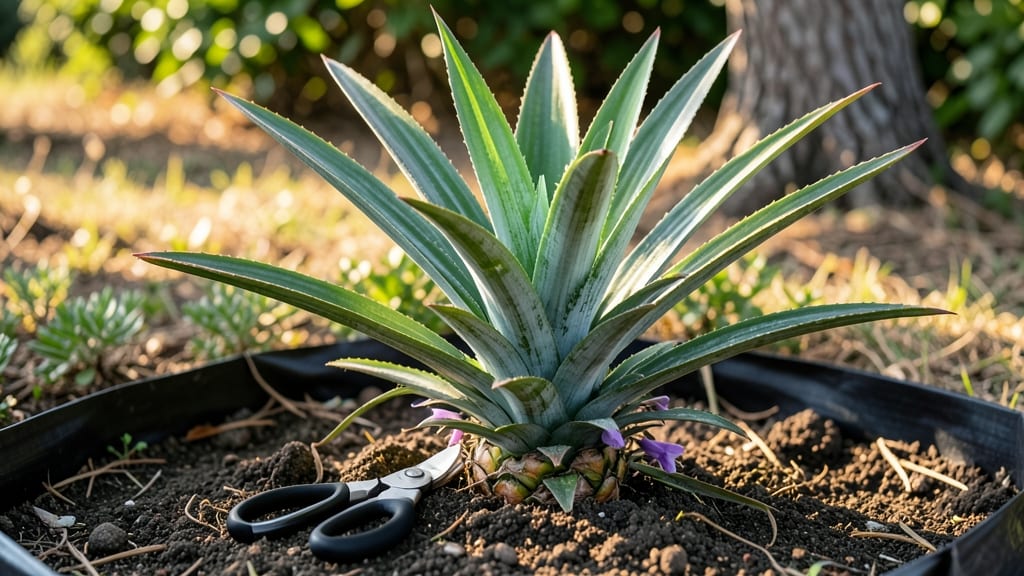
Trimming your pineapple plant isn't just about keeping it tidy—it's the secret to unlocking year-round fruit production with just two simple cuts. 🌱 I learned this the hard way after letting my plant grow wild for months, only to realize it had stopped producing fruit until I finally took the scissors to it.
The right cuts trigger new growth and fruit development, turning a single plant into a continuous harvest machine.
You only need two tools: a sharp knife or pruning shears (sterilized with rubbing alcohol) and a small container of water.
The first cut removes the old fruit crown after harvest, while the second cut redirects energy to the plant's base for new suckers—those baby plants that grow at the base. Most people overlook the second cut, which is where the magic happens for continuous fruiting.
After trimming, you'll see new shoots emerge within 2-4 weeks, and those suckers can be harvested and replanted to create more plants. The original plant will reward you with a new fruit crown within 12-18 months, and with proper care, you can keep this cycle going indefinitely.
The plant stays healthier, grows fuller, and produces fruit more reliably than if left untrimmed.
This method works for both indoor and outdoor pineapple plants, though outdoor plants in warm climates (zones 10-12) produce more aggressively. Even in cooler climates, container-grown pineapples thrive with proper winter care.
The key is consistency—once you start, you'll never want to stop harvesting fruit from the same plant year after year.
📚 In This Guide
- What you need
- Instructions
- Tips and common mistakes
- Wrapping up and next steps
What you need
- ● Pineapple plant – Healthy, mature plant (at least 18–24 months old) with visible flower spikes or side suckers.
- ● Sharp pruning shears or sterilized knife – Choose a tool with a clean, 45-degree angle for precise cuts (e.g., Felco pruners or a garden knife).
- ● Rubbing alcohol (70% or higher) – For sterilizing tools to prevent disease (1–2 tbsp per wipe).
- ○ Rooting hormone (optional but recommended) – A gel or powder (e.g., Rootone) to boost sucker growth.
- ● Well-draining potting mix – A blend of cactus/succulent soil (e.g., 50% peat moss, 30% perlite, 20% sand).
- ● Small pots (3–4 inches in diameter) – For propagating suckers (1–2 pots per sucker).
- ● Spray bottle with water – To mist cuttings and keep them hydrated.
- ● Hydrogen peroxide (3%) – Dilute with water (1:1 ratio) to rinse cuts and prevent infection.
- ● Clear plastic bag or propagator dome – To create a humid environment for new suckers (cut sides open for ventilation).
- ● Slow-release fertilizer (balanced NPK, 10-10-10) – A pinch per pot to give young plants a nutrient boost.
- ● Gloves – Pineapple leaves can be prickly! Opt for gardening gloves with good grip.
- ● Labeling tags – To track sucker growth dates and varieties.
How to trim a pineapple plant for year-round fruit
Here’s the simple two-cut method I’ve used to keep my pineapple plant producing fruit for over three years.
✂️ Step 1: Identify and Remove the Mother Plant’s Crown
Start by locating the topmost crown (the dense cluster of leaves at the very top of the plant). This is where the original fruit grew, and removing it redirects the plant’s energy toward new growth and fruit production. Use a sharp, sterilized knife to cut about 1 inch below the crown, slicing cleanly through the stem.
Don’t worry about the stump—it’ll heal. The key is to make the cut smooth and even, which prevents rot and encourages faster regrowth. If your knife isn’t sharp, the plant will tear, and that’s an open invitation for pests or disease. Once cut, set the crown aside—it can still grow into a new plant if you root it in water or soil!
🌱 Step 2: Harvest the Pups for New Plants
Look for pups—small offshoots growing from the base of the mother plant or along its stem. These are your next generation of pineapple plants, and removing them stimulates the mother plant to produce more fruit. Gently twist or cut each pup at its base, ensuring you leave at least 1 inch of stem attached to the pup itself.
I like to do this 3-4 months after the first cut, when the pups are about 3-4 inches tall—big enough to handle but not so large they’re hard to separate. If you wait too long, the pups may drain too much energy from the mother plant, slowing down its fruit production. Plant the pups in well-draining soil and keep them in bright, indirect light until they’re ready to fruit themselves.
☀️ Step 3: Optimize Light and Care After Trimming
After trimming, move your pineapple plant to a spot with bright, indirect sunlight—think 4-6 hours of morning sun and filtered light the rest of the day. Pineapples hate direct afternoon sun, which can scorch the leaves and stress the plant. If you’re growing indoors, a south-facing window works best, but supplement with a grow light if natural light is weak.
Water only when the top 1-2 inches of soil feel dry—pineapples are drought-tolerant, and overwatering is the #1 killer after trimming. Let excess water drain completely, and avoid letting the plant sit in soggy soil. Fertilize lightly with a balanced, water-soluble fertilizer every 4-6 weeks to support new growth, but cut back in winter when growth slows.
⏰ Step 4: Monitor for New Fruit and Repeat the Process
Within 6-12 months of trimming, your pineapple plant should send up a new flower stalk (a tall, spiky shoot). This is your signal that fruit production is underway! If you don’t see a stalk after a year, check for low light or nutrient deficiencies—pineapples need both to fruit reliably. Once the flower appears, you’ll have a new pineapple in 4-6 months, depending on conditions.
Here’s the thing—this process is cyclical. Once your original plant finishes fruiting, you can repeat the two cuts (mother crown + pups) to keep it producing year after year. Just remember: patience is key. Pineapples grow slowly, but with the right care, one plant can give you fruit for decades—and that’s a reward worth waiting for.
Tips & tricks for perfect pineapple plant trimming
These simple secrets will help you keep your pineapple plant thriving and producing fruit year after year.
Precision Cutting Matters: In Step 1, when removing the mother plant's crown, make sure your knife is sterilized and sharp—a dull blade can crush the stem instead of cutting cleanly. I like to dip my knife in rubbing alcohol before cutting to prevent any chance of infection. A clean cut heals faster and reduces the risk of rot, which is especially important since the stump will need to regrow.
Timing is Everything for Pups: Don’t rush harvesting the pups in Step 2! Wait until they’re 3-4 inches tall—this ensures they’ve developed enough roots to survive on their own. I’ve found that harvesting too early can stunt their growth, while waiting too long drains energy from your mother plant. The 3-4 month window after the first cut is ideal for finding that perfect balance.
Lighting Secrets: Pineapples need bright, indirect light, but too much direct sun can scorch the leaves. If you’re growing indoors, a south-facing window is best, but supplement with a grow light if natural light is weak. I’ve seen pineapples struggle in north-facing windows—just a few hours of direct morning sun can make all the difference in keeping your plant healthy and productive.
Fertilizer Strategy: After trimming, use a balanced, water-soluble fertilizer every 4-6 weeks to support new growth. I switch to a low-nitrogen fertilizer once the flower stalk appears to encourage fruiting rather than leafy growth. Always water thoroughly after fertilizing to prevent root burn, and cut back on fertilizing in winter when growth naturally slows.
Pro Tips for Trim Pineapple Plant
- These simple secrets will help you keep your pineapple plant thriving and producing fruit year after year.
- Precision Cutting Matters: In Step 1, when removing the mother plant's crown, make sure your knife is sterilized and sharp—a dull blade can crush the stem instead of cutting cleanly.
- Timing is Everything for Pups: Don’t rush harvesting the pups in Step 2!
Frequently asked questions
Got questions about trimming your pineapple plant for bigger, sweeter fruit? You’re not alone!
Here are answers to the most common queries—from timing tricks to troubleshooting—so you can master the art of pruning like a pro.
When is the best time to trim a pineapple plant?
Trim your pineapple plant after it flowers (when the fruit starts forming) and again before new suckers sprout—typically 2–3 months later. Avoid trimming during extreme heat or cold, as the plant needs energy to recover. For tropical climates, late spring or early summer is ideal!
How do I know which suckers to cut?
Choose the healthiest, largest sucker (usually the one closest to the base of the mother plant) for propagation. It should be at least 4–6 inches tall with a sturdy stem. Skip weak, leggy, or diseased suckers—they won’t thrive. Pro tip: Cut at a 45° angle to prevent water pooling!
What if my pineapple plant doesn’t produce suckers after trimming?
Don’t panic! Pineapples are slow growers—wait 6–12 months for suckers to appear. Ensure your plant gets full sun (6+ hours/day), well-draining soil, and balanced fertilizer (high in potassium). If it’s still sluggish, check for pests (like mealybugs) or root rot from overwatering.
Can I trim a pineapple plant indoors?
Yes, but with adjustments! Indoor pineapples need bright, artificial light (grow lights work best) and higher humidity (mist leaves or use a pebble tray). Trim indoors the same way, but expect slower growth. Place cuttings in a warm, humid spot (like a greenhouse or sunny windowsill) to root.
How often can I harvest fruit from one pineapple plant?
Each mother plant typically produces one main fruit per year, but you can harvest multiple suckers for new plants. Once the mother plant’s fruit is harvested, it often declines—replace it with a healthy sucker to keep the cycle going. Think of it as a renewable resource!
Wrapping up and next steps
Trimming your pineapple plant isn’t just about aesthetics—it’s the secret to unlocking year-round harvests! 🌱 By mastering those two strategic cuts (the crown and the base), you’ll encourage healthier growth, bigger fruit, and even new suckers for propagation.
With patience and care, your plant will reward you with sweet, tropical bounty well beyond the first harvest.
Ready to turn your green thumb into a pineapple powerhouse? Start by observing your plant this week—note its growth patterns and plan your first trim. And if you’re feeling ambitious, share your progress with fellow gardeners for extra motivation! 🌟