
Pruning
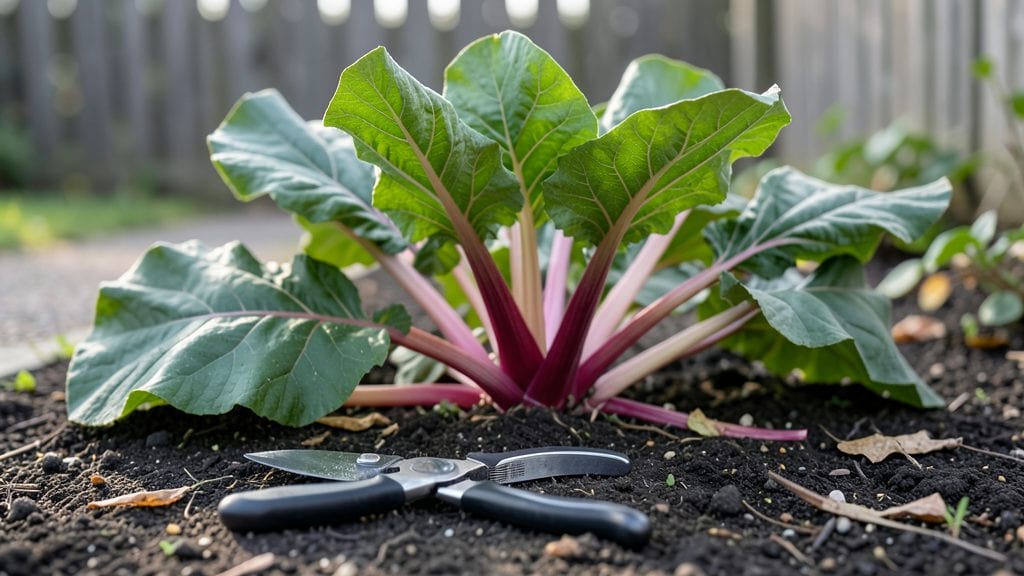
Trimming rhubarb plants in early spring is the secret to thicker stalks and fewer floppy stems. 🌱 I’ve watched my rhubarb go from scraggly to showstopping just by making three precise cuts each year—no fancy tools or gardening degree required.
The key is timing: wait until the soil warms to 50°F before you touch those stalks, or you’ll encourage weak, spindly growth that never matures.
Start by identifying mature stalks—they’re the ones thicker than a pencil and at least 12 inches tall. These are your harvesters and your future harvesters, so treat them gently. Use clean, sharp pruners to cut them at the base, leaving a smooth surface that won’t tear.
Skip the forced growth (thin, pale stalks) unless you’re desperate—they’re tough and stringy, and your plant will thank you for letting them go.
After trimming, give your rhubarb a drink and a light feeding with 10-10-10 fertilizer. The roots will reward you with fresh, vibrant growth within weeks, and your stalks will thicken up beautifully by summer.
Just avoid cutting after early June, or you’ll delay next year’s harvest—trust me, I learned that the hard way.
This method works for rhubarb in zones 3-9, whether you’re growing in full sun or partial shade. The only real mistake? Waiting too long to trim. Your rhubarb’s future harvest depends on this one simple step—so grab those pruners and get to work!
📚 In This Guide
- What you need
- Instructions
- Tips and common mistakes
- Wrapping up and next steps
What you need
- ● Pruning shears or sharp bypass pruners – Choose a pair with clean, sharp blades (4- to 6-inch blades work best). Disinfect them with rubbing alcohol or a 10% bleach solution to prevent disease spread.
- ● Gloves – Heavy-duty gardening gloves (waterproof preferred) to protect your hands from thorns and sap.
- ● Garden twine or plant ties – A small roll (about 50 feet) to secure stems post-trimming if needed.
- ● Compost bin or mulch – To dispose of trimmed stems (avoid composting if stems show signs of disease).
- ● Watering can or hose – For post-pruning hydration (1–2 gallons per plant).
- ○ Optional: Plant food or balanced fertilizer – A 10-10-10 or 5-10-10 NPK ratio (1 tablespoon per plant) to boost recovery.
- ● A sharp knife or loppers for thicker stems (if pruners feel too small).
- ● Plant markers to label trimmed sections if testing new pruning techniques.
- ● Knee pads or a small stool for comfort if your rhubarb patch is large.
- ● Disposable plastic bags for quick disposal of diseased stems.
Step-by-step guide to trimming rhubarb plants
Here's how to give your rhubarb a fresh start with cuts that boost health and harvest.
✂️ Step 1: Identify and Remove Dead or Weak Stems
Start by inspecting your rhubarb crown—look for stems that are brown, mushy, or hollow at the base. These are dead or diseased and need removal immediately. Grab a pair of clean, sharp pruners and cut these stems at the base, leaving no stubs. I always wear gloves for this step because rhubarb leaves can irritate skin, and I don’t want any sap touching my hands.
Focus on stems that feel soft or have blackened areas. Healthy stems should be firm and upright. If you’re unsure, gently scratch the stem with your fingernail—if it leaves a dark mark, it’s time to cut it out. This prevents the disease from spreading to the rest of the plant.
🌱 Step 2: Thin Overcrowded Stems for Better Airflow
Rhubarb plants produce multiple stems each year, and overcrowding weakens the plant. Count the stems—if you have more than 8-10 healthy stems per plant, it’s time to thin. Select the thinnest, smallest stems and cut them at the base with your pruners. I usually keep the strongest, thickest stems because they’ll produce the largest harvest next season.
This step improves airflow, which reduces fungal diseases like crown rot. You’ll notice the remaining stems grow thicker and more vibrant after thinning. If you’re unsure which stems to keep, prioritize the ones closest to the center of the plant—they’re often the most vigorous.
✂️ Step 3: Cut Back Old Flower Stalks and Seed Heads
If your rhubarb has produced flower stalks or seed heads, remove them completely. These drain energy from the plant that could be used for growing new stems. Use your pruners to snip the flower stalks at the base, right where they meet the crown. I always do this in early spring before the plant starts actively growing—it gives the rhubarb a head start.
Even if the flowers haven’t fully bloomed yet, cut them back as soon as you see them forming. This ensures the plant focuses on producing strong, edible stems instead of wasting energy on reproduction. After cutting, discard the flower stalks in the trash—not the compost—since they can spread disease.
💧 Step 4: Mulch and Water to Encourage New Growth
After trimming, spread a 2-3 inch layer of organic mulch around the base of the plant, keeping it 6 inches away from the crown. This helps retain moisture and suppresses weeds. Water the plant deeply right after mulching—soak the soil until it’s damp 6 inches down. You’ll know it’s enough when water runs out of the drainage holes if your rhubarb is in a container.
Over the next 2-3 weeks, keep the soil consistently moist but not soggy. You’ll see new, bright green shoots emerging from the center of the crown—that’s your sign the plant is recovering. Avoid fertilizing right away; let the plant focus on regrowing before adding nutrients.
Tips & tricks for perfect rhubarb trimming
A few key tricks will help you revive your rhubarb plants and set them up for a bountiful harvest.
Timing is Everything: The best time to trim your rhubarb is in early spring, just as new growth begins. This is when the plant is most resilient and ready to recover. I've found that trimming too late in the season can stress the plant unnecessarily, while doing it too early might not give it enough time to recover before summer heat sets in. Aim for late February to early March in most climates.
Tool Prep Matters: Before you start cutting, make sure your pruners are clean and sharp. I always sterilize mine with rubbing alcohol between plants to prevent spreading disease. Dull blades can crush stems instead of making clean cuts, which can damage the plant and invite infections. You can also use a clean, sharp knife if you prefer, but pruners give you more control for these precise cuts.
Visual Cues for Healthy Stems: When selecting which stems to keep, look for vibrant green color and firm texture. Healthy stems should feel crisp when you gently squeeze them, while unhealthy ones will feel soft or mushy. Another trick I use is to check the leaf attachment—healthy leaves should be bright green and crisp, not yellowed or wilted. These visual cues help ensure you're keeping the strongest stems for next season's harvest.
Mulching Strategy: After trimming, that 2-3 inch layer of organic mulch does more than just retain moisture—it also helps regulate soil temperature. I recommend using straw or shredded leaves, as they break down slowly and provide long-term benefits. Keep the mulch 6 inches away from the crown to prevent rot, and avoid piling it up against the stems. This creates the perfect environment for your rhubarb to recover and thrive.
Pro Tips for Trim Rhubarb Plants
- A few key tricks will help you revive your rhubarb plants and set them up for a bountiful harvest.
- Timing is Everything: The best time to trim your rhubarb is in early spring, just as new growth begins.
- Tool Prep Matters: Before you start cutting, make sure your pruners are clean and sharp.
Frequently asked questions
Got questions about trimming rhubarb plants?
You’re not alone—this task can feel tricky, especially for beginners! Below, we’ve tackled the most common queries to help you prune with confidence and keep your rhubarb thriving.
When is the best time to trim rhubarb plants?
Trim rhubarb after harvest, ideally in early spring (March–April) or late fall (October–November). Avoid pruning during active growth (summer) unless removing dead or diseased stems. This timing ensures the plant focuses energy on root and crown health, not recovery.
How do I know which stems to cut?
Remove any stems that are:
- Dead, brown, or mushy (signs of rot or disease)
- Thin or spindly (weak growth)
- Keep only the healthiest, thickest stems (3–5 per plant max) to encourage strong regrowth.
Cut just above a leaf node (where leaves attach) to promote branching.
What if my rhubarb leaves turn yellow or wilt after trimming?
Yellowing or wilting can mean over-pruning or stress. If you’ve cut too much, reduce future trims. For wilted leaves, check for:
- Underwatering (rhubarb loves moisture!)
- Pests (like aphids or crown borers)
- Fungal issues (remove affected leaves and improve airflow).
Give the plant 2–3 weeks to recover before harvesting again.
Can I trim rhubarb in containers or small gardens?
Yes! Container-grown rhubarb needs even more careful trimming—space is limited, so:
- Limit cuts to 1–2 stems per season to avoid crowding.
- Prioritize healthy stems over aggressive pruning.
- Pro tip: Use a small, sharp pair of shears to avoid damaging roots in tight spaces.
Containers also dry out faster, so mulch well to retain moisture.
How often should I trim rhubarb plants?
Trim once a year (spring or fall) for maintenance, but after harvest, remove any damaged or spent stalks immediately to prevent disease. Avoid frequent trimming—rhubarb stores energy in its crown, and over-pruning weakens future yields. Think of it as a light edit, not a haircut!
Wrapping up and next steps
Trimming your rhubarb plants isn’t just about tidying up—it’s the secret to stronger growth, bigger harvests, and healthier stems! By mastering the three strategic cuts (removing dead leaves, thinning crowded stalks, and pruning for airflow), you’ll revive weak plants and set them up for a bountiful next season. 🌱✂️
Ready to see the difference? Grab your pruners and give your rhubarb the care it deserves—your future harvest (and your dinner plate!) will thank you. Next up: Monitor your plants post-trim and adjust as needed for peak performance!