
Pruning
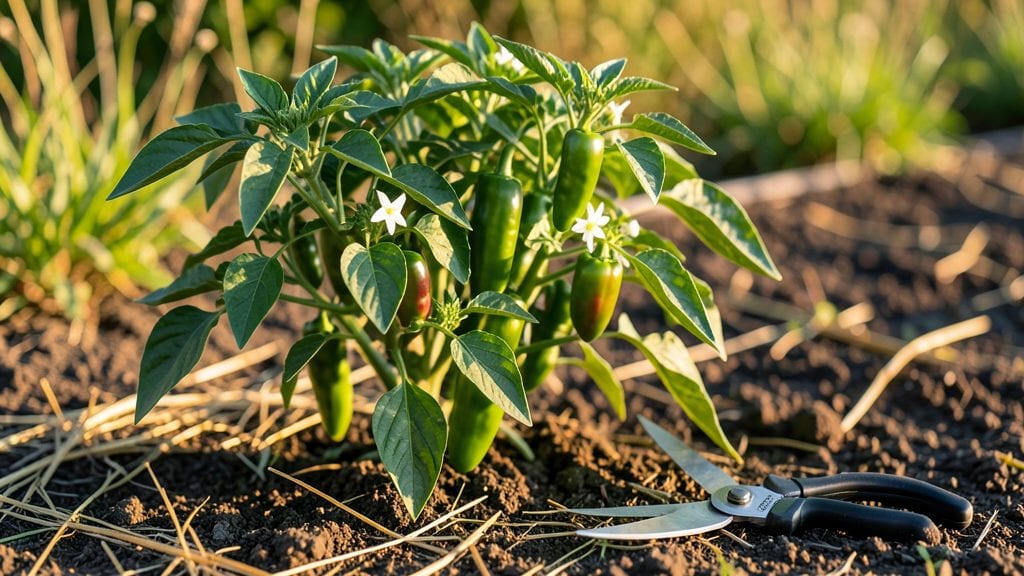
Trimming jalapeno plants is the secret weapon behind my record-breaking harvests—and it’s easier than you think. I used to let mine grow wild, only to end up with a few peppers and a bushy mess.
Now, I shape them like a pro, and the difference is night and day. The key is timing, technique, and knowing what to cut (and what to leave).
You’ll need sharp pruning shears, a clean cutting surface, and about 15 minutes every few weeks. Start when plants hit 12-18 inches tall, focusing on removing suckers—those little shoots that form in the crotch between branches—and thinning crowded stems.
This isn’t about hacking away; it’s about guiding energy into stronger growth and more peppers.
The payoff? Plants stay compact, produce 30-50% more peppers, and resist disease better. You’ll see thicker stems, bushier canopies, and peppers forming closer together. By late summer, your plant will look like a pepper-producing machine instead of a tangled weed.
Just don’t trim too close to harvest—stop 4-6 weeks before picking.
Works for container gardens, raised beds, or in-ground plants—just adjust the scale. The same rules apply whether you’re growing one plant or a full plot. Ready to turn those scraggly bushes into pepper powerhouses?
📚 In This Guide
- What you need
- Instructions
- Tips and common mistakes
- Wrapping up and next steps
What you need
- ● Pruning shears or sharp scissors – Choose bypass pruners (clean cuts) or sterilized scissors (for small jobs). Avoid dull tools to prevent tearing.
- ○ Gloves (optional but recommended) – Wear nitrile or leather gloves to protect your hands from thorns and spicy sap.
- ● Disinfectant (rubbing alcohol or bleach solution) – Mix 1 part bleach to 9 parts water to sterilize tools between cuts (prevents disease).
- ● Compost bin or bag – Collect trimmed branches for nutrient-rich compost (or toss if diseased).
- ○ Garden twine or stakes (optional but helpful) – Use 3–4 ft stakes to support heavy plants post-pruning.
- ● Mature jalapeño plants (6+ weeks old) – Prune only after plants have 3–4 sets of true leaves and are 12+ inches tall.
- ● Sunny weather (morning or late afternoon) – Avoid trimming in peak sun or wet conditions to reduce stress on plants.
- ● Watering can or hose – Lightly water plants 1–2 hours before pruning to reduce sap stickiness.
- ● Plant growth regulator (e.g., seaweed extract) – Spray post-pruning to boost recovery.
- ● Labeling tags – Mark pruned varieties if growing multiple jalapeño types.
- ● Harvest basket or bucket – Keep ripe peppers separate from trimmings to avoid cross-contamination.
Step-by-Step guide for trimming jalapeño plants
Healthy jalapeños thrive with strategic pruning—here’s how to boost yields without stressing your plants.
Identify and Remove Suckers for Stronger Growth
Suckers are the small shoots that grow in the V-shaped junction between the main stem and branches. These divert energy from fruit production, so I always remove them early. Use clean, sharp pruning shears to snip suckers at their base—never tear them, or you risk damaging the plant. Focus on suckers larger than ½ inch first, as smaller ones won’t compete much.
Timing matters: prune suckers when they’re 2-3 inches tall, before they start draining too much energy. If left unchecked, they’ll create weak, crowded growth that produces fewer peppers. After trimming, wipe your shears with rubbing alcohol to prevent spreading disease between cuts.
Prune Lower Leaves to Improve Airflow and Sunlight
Remove the bottom 2-3 sets of leaves on the main stem, especially those touching the soil. This prevents soil-borne diseases and improves airflow, which keeps peppers healthy. Use your fingers to gently twist off leaves—no need for shears here—unless they’re tough. Focus on leaves that look yellowed or diseased first; healthy green leaves can stay.
Prune in the morning when humidity is lower, reducing stress on the plant. Avoid cutting into the stem itself—only remove leaves and small stems growing outward. This step isn’t just about aesthetics; it’s about ensuring the plant’s energy goes to fruit production, not maintaining unnecessary foliage.
Trim Overly Long Branches to Encourage Bushier Growth
If your jalapeño plant has branches longer than 12 inches, trim them back by ⅓ to encourage bushier, more productive growth. Cut just above a leaf node (the bump where leaves grow) to promote new side shoots. Avoid cutting into the main stem unless it’s damaged—this can weaken the plant.
Watch for leggy growth, which signals the plant isn’t getting enough light. If branches stretch toward a window or grow light green, prune them back immediately. This forces the plant to focus energy on shorter, stockier stems that produce more peppers. After trimming, water deeply to help the plant recover.
Bonus: When and How Often to Prune
Prune jalapeños every 2-3 weeks during the growing season (spring through early fall). Stop pruning 6-8 weeks before your first frost to let the plant focus on ripening existing peppers. Always use sterilized tools, and never remove more than ⅓ of the plant’s foliage at once—this prevents shock.
Real talk: Over-pruning is a common mistake. If your plant looks stressed after trimming, it’s a sign you went too far. Next time, trim less aggressively. Healthy jalapeños should still have plenty of leaves after pruning—just fewer suckers and leggy branches.
Tips & tricks for perfect jalapeño plant trimming
A few key strategies will help you avoid common mistakes and keep your jalapeño plants thriving all season.
Tool Prep is Critical: Before you start, sterilize your pruning shears with rubbing alcohol to prevent spreading plant diseases between cuts. I also recommend keeping a small spray bottle of diluted bleach water (1 part bleach to 9 parts water) nearby to disinfect tools between plants. This simple step prevents fungal infections that can ruin your entire harvest. Don't make my mistake of skipping this - I lost three plants one season because I didn't sterilize properly.
Visual Cues for Proper Pruning: In Step 1, when removing suckers, look for the classic V-shaped junction where suckers emerge. The ideal time to trim is when suckers reach 2-3 inches tall - they should have at least 2-3 leaves but not yet be woody. For Step 3, when trimming branches, cut just above a leaf node where you can see a small bump or swelling - this is where new growth will emerge. The node should be clearly visible and about 1/4 inch above the cut.
Seasonal Timing Matters: The instructions mention pruning every 2-3 weeks during growing season, but there's more to consider. If your area experiences high humidity, reduce pruning to every 3-4 weeks to minimize plant stress. Also, avoid pruning when temperatures exceed 90°F - the plant will struggle to recover. I've found that late afternoon pruning works best in hot climates, giving plants several hours to recover before nighttime cooling.
Post-Pruning Care: After trimming, always water deeply to help the plant recover. I recommend watering at the base rather than overhead to prevent fungal issues. For the first 24 hours after major pruning, keep plants in partial shade if possible, especially in hot weather. This gives them time to adjust before returning to full sun exposure. The goal is to reduce stress while maintaining photosynthesis for energy production.
Pro Tips for Trimming Jalapeno Plants
- A few key strategies will help you avoid common mistakes and keep your jalapeño plants thriving all season.
- Tool Prep is Critical: Before you start, sterilize your pruning shears with rubbing alcohol to prevent spreading plant diseases between cuts.
- Visual Cues for Proper Pruning: In Step 1, when removing suckers, look for the classic V-shaped junction where suckers emerge.
Frequently asked questions
Got questions about trimming your jalapeño plants? You’re not alone! Here are some of the most common concerns—and straightforward answers—to help you grow like a pro.
When is the best time to trim jalapeño plants?
Trim your jalapeños after they’ve established 4–6 true leaves (about 4–6 weeks after transplanting) and before flowering. Focus on pruning in the morning when plants are hydrated. Avoid heavy trimming during extreme heat or drought—wait for mild weather for faster recovery.
How much can I cut back without harming the plant?
Remove up to one-third of the plant’s foliage in a single session, but never cut into the main stem (the central stalk). Prune side branches (suckers) and lower leaves to redirect energy to fruit production. Over-trimming stresses plants—think of it like a haircut: less is more for jalapeños!
Will trimming jalapeño plants make them hotter?
No—pruning doesn’t change the plant’s natural heat level (scoville rating). However, trimming can boost fruit production, giving you more peppers (and potentially more heat per harvest!). For hotter peppers, focus on growing hotter varieties like ‘Blazer’ or ‘Lipstick’ instead.
What should I do if my jalapeño plant looks sad after trimming?
If your plant wilts or stops growing post-prune, it’s likely stressed. Recover it fast:
- Water deeply (but don’t overdo it—root rot is a risk!).
- Apply a balanced fertilizer (10-10-10) to replenish nutrients.
- Avoid trimming again for 2–3 weeks to let it bounce back.
Can I use pruned jalapeño stems for propagation?
Snip healthy stems (with at least 2–3 leaves) at a 45° angle and root them in water or moist potting mix. Keep them in bright, indirect light until roots form (2–4 weeks). This is a great way to free up space and grow new plants—just avoid using flowering stems.
Wrapping up and next steps
Trimming your jalapeño plants isn’t just about keeping them tidy—it’s your secret weapon for bigger, healthier harvests! 🌱 By mastering the art of pruning, you’ll encourage bushier growth, more peppers, and plants that thrive all season long.
Whether you’re a seasoned gardener or just starting out, these simple steps will set you up for success.
Ready to put your new skills to work? Grab your pruners and head to the garden—your next harvest is just a trim away! 🌶️💪 For even more tips, check out our guide on when to harvest jalapeños to maximize flavor and yield.