
Watering
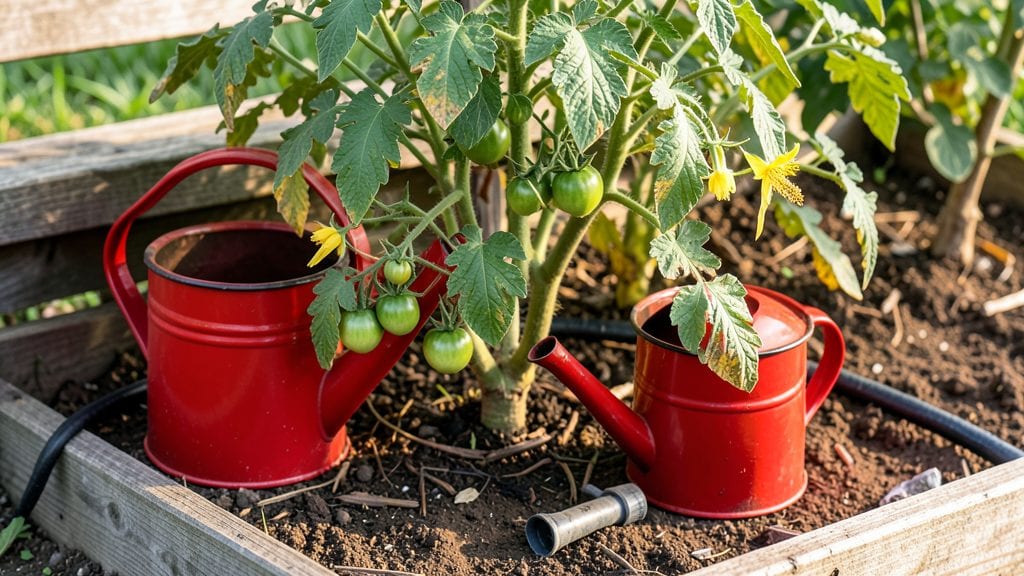
When your underwatered tomato plant looks like it’s throwing in the towel, don’t panic—this is the moment to act. 🌱 I’ve nursed back plants that looked done for with just a few key adjustments, and you can too.
The difference between a sad, drooping tomato and a thriving vine often comes down to how you water, when you check the soil, and what you do next.
First, let’s talk signs: crispy leaf edges, leaves that fold inward like they’re hiding, and soil that pulls away from the pot are your red flags. I’ve seen gardeners overreact to wilting by drowning their plants—only to make things worse.
The fix starts with deep, slow watering until it runs out the bottom, not a quick splash that barely wets the top inch. You’ll know you’ve done it right when the soil feels moist 6 inches down.
Within 24-48 hours, you’ll see the first signs of revival: leaves perking up, new growth at the stem. For long-term success, add 2-3 inches of mulch around the base to lock in moisture and cut down on evaporation.
This isn’t just about saving a plant—it’s about setting up your tomatoes to produce juicy, flavor-packed fruit all season long.
Confusion between underwatering and overwatering? Here’s the quick test: if the soil smells sour or the leaves turn yellow with black spots, it’s too much water. But if the leaves are crispy and the soil feels like sandpaper, you’re on the right track.
Let’s get your tomatoes back to their best—and keep them that way.
Root Causes Behind Wilting Tomatoes
Underwatered tomato plants don’t just happen by accident—they’re often the result of overlooked environmental or gardening factors. Understanding these causes is the first step to preventing future stress in your plants.
Below, we break down the most common reasons your tomato plants might be thirsty, along with the science behind each issue.
Tomatoes thrive on consistent moisture, especially during their fruiting stage. When watering is irregular, the roots struggle to absorb enough water to meet the plant’s demands. Here’s why this happens:
- Shallow Root Systems: Young tomato plants develop roots primarily in the top 6–12 inches of soil.
If water doesn’t penetrate deeply enough, the roots can’t access moisture lower down. - Evaporation Rates: Soil loses water quickly in hot, dry, or windy conditions (up to 1 inch per week in summer).
If you’re only watering every few days, the topsoil may dry out before the roots can replenish it. - Human Error: Many gardeners assume tomatoes need less water once they start flowering, but fruit development actually increases water needs by 20–30% due to transpiration (water loss through leaves).
Actionable Fix: Water deeply 1–2 times per week (or daily in extreme heat) to encourage roots to grow deeper. Use a moisture meter or the "knuckle test"—if the top 1–2 inches of soil feel dry, it’s time to water.
Even if you’re watering regularly, heavy clay or compacted soil can trap air pockets, preventing roots from absorbing moisture efficiently. This creates a "dry but soggy" paradox—water pools on the surface while roots below stay parched.
- Clay Soil: Holds water tightly but strangles roots by cutting off oxygen. Roots suffocate and can’t uptake nutrients or water properly. - Compacted Soil: Often caused by foot traffic, machinery, or poor organic matter.
Compacted layers act like a waterproof barrier, forcing roots to grow in a shallow, dry zone. - Overwatering (Yes, Really): While underwatering is the obvious culprit, frequent light watering can also lead to poor drainage, as it encourages shallow root growth instead of deep, resilient roots.
Actionable Fix:
- Test your soil: Stick a trowel in—if it’s hard to push in more than 1–2 inches, your soil is compacted.
- Amend with compost (2–3 inches mixed into the top 6 inches of soil) to improve aeration and water retention.
- Raise beds if your native soil is clay-heavy, or plant in containers with well-draining mix.
Tomatoes don’t just lose water through their roots—they’re under constant siege from external factors that accelerate dehydration. Here’s what’s siphoning off their H₂O:
| Stressor | Why It Drains Water | Solution |
|---|---|---|
| High Heat | Increases transpiration (water loss through leaves) by up to 50% on sunny days. | Mulch with straw or wood chips to retain moisture and cool roots. |
| Strong Winds | Blows away humidity around leaves, forcing plants to work harder to stay hydrated. | Plant near windbreaks (e.g., cornstalks or fences) or use shade cloth in peak sun. |
| Low Humidity | Dry air pulls moisture out of leaves faster, especially in desert climates. | Group plants together to create a microclimate or use a sprinkler for foliage (early morning only). |
| Salty or Fertilizer Burn | Excess salts (from tap water or over-fertilizing) disrupt root function, making absorption harder. | Flush soil with rainwater or distilled water and avoid fertilizing stressed plants. |
Pro Tip: 💡 Morning watering is ideal—it gives roots time to absorb moisture before the day’s heat evaporates it. Avoid evening watering, which can promote fungal diseases like blight.
Sometimes, the problem isn’t how much you’re watering—it’s where the water is going. Damaged or diseased roots can’t absorb water efficiently, even if the soil is damp.
- Root Rot (Overwatering Paradox): While underwatering is the usual suspect, chronic soggy soil (from poor drainage) causes roots to rot, leaving them unable to uptake water.
Symptoms: Black, mushy roots; wilting despite wet soil. - Pest Damage: Nematodes, grubs, or cutworms chew on roots, reducing their surface area for water absorption.
Infested roots look gnarled or hollow. - Transplant Shock: If roots were disturbed during planting (e.g., circling roots from a pot), they struggle to establish quickly, leading to temporary drought stress.
Actionable Fix:
- Inspect roots: Gently dig up a small section to check for rot (smells sour) or pests (tiny worms or holes).
- Disinfect soil: If root rot is suspected, repot in fresh, sterile soil and avoid watering until new roots form.
- Use row covers early in the season to protect seedlings from cutworms.
Tomatoes in pots dry out 3–5 times faster than in-ground plants due to limited soil volume and exposure. Common container pitfalls:
- Small Pots: Roots outgrow their space, leading to root-bound stress.
A 5-gallon container is the minimum for one plant; larger is better. - Drying Soil Edges: Water evaporates quickly from the sides of pots, leaving the center dry. - No Drainage Holes: Trapped water at the bottom suffocates roots, mimicking underwatering symptoms (but with soggy soil).
Actionable Fix:
- Upgrade containers: Use fabric grow bags or self-watering pots to regulate moisture.
- Check soil temperature: Pots heat up faster than ground soil—water more frequently in hot weather.
- Top-dress with hydrogel: This polymer absorbs and slowly releases water, acting like a reservoir.
Quick Fixes for Reviving Stressed Tomatoes
Now that you know the signs and causes of an underwatered tomato plant, let’s roll up our sleeves and get those leaves perky again! 🌱💦 The good news? Most tomato plants bounce back quickly with the right care.
Below, we’ve broken down practical, step-by-step solutions tailored to the most common causes—plus prevention tips to keep your plants thriving long-term.
Cause: Shallow watering or infrequent drinks leave roots parched, especially in sandy or fast-draining soil.
How to Fix It:
- 💦 Water Deeply (Not Just a Sprinkle)
- Stick your finger 2–3 inches into the soil. If it’s dry, it’s time to water.
- Use a soaker hose or drip irrigation to deliver water slowly to the roots (avoid overhead spraying, which wastes water and encourages disease).
- Rule of thumb: Water until the soil is moist 6–8 inches deep. For container-grown tomatoes, water until it drains from the bottom.
- 🕒 Schedule Consistent Watering - Morning is best (6–8 AM) to reduce evaporation and fungal risks. - Frequency: 1–2 times per day in extreme heat, every other day in cooler weather.
Adjust based on soil dryness. - Pro tip: 💡 Group plants together (hydrozoning) to water more efficiently and conserve moisture.
- 🌱 Mulch to Lock in Moisture
- Spread 2–4 inches of organic mulch (straw, grass clippings, or wood chips) around the base (keep it 4–6 inches away from the stem to prevent rot).
- Mulch acts like a sponge, slowing evaporation and keeping roots cool.
Cause: Overwatering or uneven watering stresses plants just as much as underwatering.
How to Fix It:
- 👨🍳 Check Soil Before Watering
- Press your finger into the soil. If the top 1 inch feels dry, water lightly. If it’s bone-dry 3+ inches down, give a deep drink.
- Avoid the "damp sponge" trap: Soil should be moist but not soggy. Yellowing leaves + mushy stems = overwatering.
- 🥘 Use the Right Tools
- Watering can with a long spout (for containers) or soaker hose (for in-ground plants) ensures water reaches roots.
- Avoid sprinklers—they waste water and can lead to fungal issues like blight.
- ⏰ Time It Right
- Never water at night—wet foliage + cool temps = fungal party. 🍄🚫
- Early morning is ideal for photosynthesis-friendly hydration.
Cause: Poor soil drainage, heat stress, or wind exposure accelerates moisture loss.
How to Fix It:
- 📊 Improve Soil Drainage
- Test your soil: If it’s clay-heavy, amend with compost or perlite to improve aeration.
- For containers: Use a mix of potting soil + coconut coir + perlite (50/30/20 ratio) for better water retention.
- 🌿 Shield from Harsh Conditions
- Wind? Use burlap windbreaks or plant near a fence.
- Scorching sun? Provide light shade (30–50% shade cloth) during peak afternoon heat (12–4 PM).
- Heatwave? Increase watering frequency but water deeper—shallow puddles evaporate fast.
- ✨ Boost Humidity (For Container Plants)
- Place pots on pebble trays filled with water to increase humidity around roots.
- Mist leaves lightly in the morning (avoid evening misting).
- 💡 Monitor Soil Moisture Daily
- Use a moisture meter or the finger test to stay ahead of dry spells.
- 🌱 Choose the Right Variety
- Drought-tolerant tomatoes like ‘Solar Fire’ or ‘Heatmaster’ handle heat better.
- 🥗 Mulch Early, Mulch Often
- Apply mulch right after planting to reduce early-season water stress.
- 🍅 Prune for Efficiency
- Remove suckers (side shoots) to redirect energy to fruit production (less foliage = less water needed).
- 🔄 Rotate Crops
- Avoid planting tomatoes in the same spot yearly to prevent soil depletion and disease buildup.
Final Thought: 🌟 A thirsty tomato plant is like a parched traveler—it just needs a good, long drink and a little shade to recover. With these fixes, your plants should perk up in 24–48 hours, and you’ll be back to harvesting juicy, sun-ripened tomatoes in no time! 🍅🔥
Frequently asked questions
How do I tell if my tomato plant is truly underwatered and not just wilting from heat?
Check the soil first—stick your finger 2-3 inches deep. If it feels dry like sandpaper, that’s underwatering. For heat stress, leaves often droop but soil stays moist. Also, underwatered plants have crispy leaf edges, while heat-wilted plants may recover when shaded. Try watering deeply at the base in the morning to test.
Can I revive a tomato plant that's been underwatered for more than a week?
Yes, but act fast! Give it a deep soak until water runs from the bottom (for containers) or drains 6 inches down (for in-ground plants). After 24 hours, check for new signs of life like perked leaves. If roots are still viable (not black/mushy), it’ll bounce back in 3-5 days. Severe cases may need pruning of damaged foliage to redirect energy.
Why does my tomato plant wilt even after I water it?
This could signal root stress from overwatering, pests, or compacted soil. Dig gently near the base—if roots look black/mushy, you’ve overwatered. If they’re gnarled or have tiny holes, pests (like nematodes) may be at work. Try watering only when the top 1 inch feels dry, and add compost to improve drainage.
Is it better to water tomato plants in the morning or evening?
Always water in the early morning (6-8 AM)—this gives roots time to absorb moisture before evaporation kicks in. Evening watering risks fungal diseases like blight, as wet foliage cools too quickly. Pro tip: Use a soaker hose to deliver water directly to the soil, not the leaves, to cut down on evaporation.
How often should I water potted tomato plants compared to in-ground ones?
Potted tomatoes dry out 3-5x faster than in-ground plants. Check soil daily—water when the top 1 inch feels dry. In-ground plants need watering 1-2x per week (or daily in extreme heat), but aim for 1-1.5 inches of water per week**. Containers may need daily watering in summer, especially in sunny spots.