
Watering
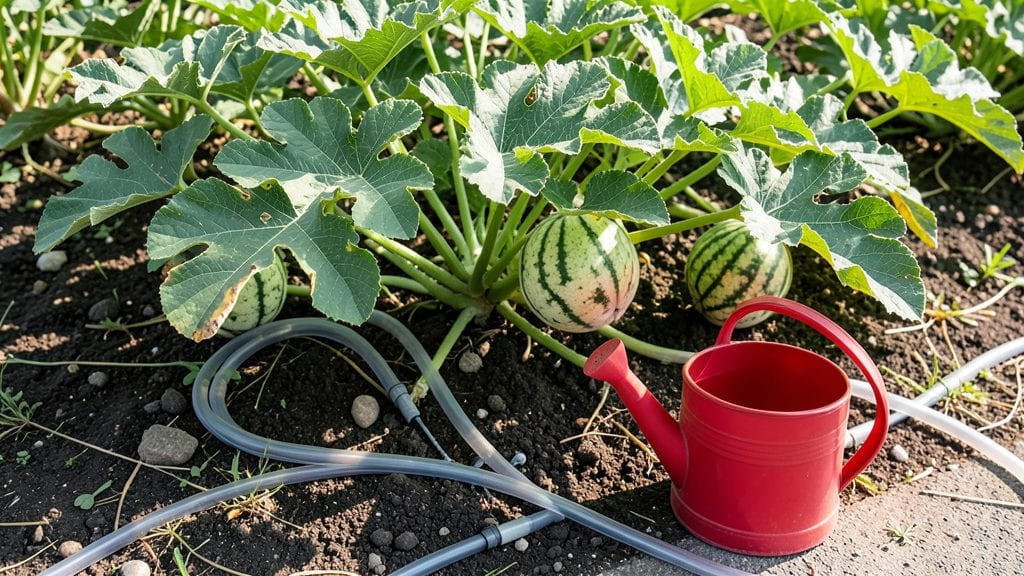
Watermelon plants need deep-soaked roots to grow those juicy fruits you crave—skimp on water, and you’ll end up with tough, seedy, or cracked melons. 🌱 I’ve learned the hard way that watermelons aren’t like other veggies; they demand consistent moisture, especially when vines spread and fruit swells.
The key is matching their shallow but thirsty root system with the right watering rhythm.
Start with 1-2 inches of water per week for seedlings, then increase to 2-3 inches once vines take off. Drip irrigation or soaker hoses work best—they deliver water slowly at the base, keeping leaves dry and preventing fungal diseases.
Morning watering is ideal; it gives roots time to absorb moisture before the heat of the day. And here’s the secret: let the top inch of soil dry out between waterings, but never let it get bone-dry.
You’ll know you’re nailing it when vines stay lush and dark green, and fruit develops a crisp, heavy feel. Overwatering? Yellow leaves and mushy stems give it away.
Underwatering? Small, pale melons with tough rinds. The goal is even moisture—not soggy soil, not drought stress—so the plant focuses on growing fruit, not surviving. Consistency is everything.
This method works for both in-ground plants and containers, though container melons may need daily checks in hot weather. Once fruit starts forming, increase water slightly—those melons need all the hydration they can get to stay sweet and plump.
Stick with this, and you’ll harvest melons that practically burst with juice.
📚 In This Guide
- What you need
- Instructions
- Tips and common mistakes
- Wrapping up and next steps
What you need
- ● Water source: Hose with adjustable nozzle (gentle spray or soaker setting) OR watering can with a long spout (5+ gallons capacity).
- ○ Drip irrigation kit (optional but recommended): ¼” tubing, emitters (4–6 per plant, spaced 12–18” apart), and a timer (for automation).
- ● Mulch: Organic (straw, wood chips) or black plastic (to retain moisture; 3–4 inches deep).
- ○ Soil moisture meter (optional): Handheld probe to check soil moisture 2–3 inches deep.
- ● Garden trowel or fork: For loosening soil around roots (avoid disturbing vines).
- ● Measuring tape/ruler: To track plant spacing (3–6 feet apart for vining varieties).
- ● Weather forecast access: Plan watering before rain to avoid over-saturation.
- ● Morning sunlight: Water early (6–8 AM) to reduce evaporation and fungal risks.
- ● 🔥 Test your soil: Aim for 6.0–7.0 pH; amend with lime or sulfur if needed.
- ● 🌡️ Heat hack: Use cool water (not cold) to avoid shocking roots in hot climates.
- ● ✨ Drip trick: Bury emitters 1–2 inches deep to direct water straight to roots.
Step-by-Step guide to watering watermelon plants for maximum juiciness
Watermelons thrive on consistency—too little water yields tough fruit, but too much drowns roots. Here’s how to balance it for sweet, plump harvests.
💧 Step 1: Water Deeply at Planting to Establish Roots
When you transplant watermelon seedlings, give them a deep soak—about 1-2 gallons per plant—to encourage roots to spread downward. This prevents shallow root systems that lead to weak vines and small fruit. I like to water until the soil feels damp 6-8 inches down, which usually takes 10-15 minutes with a gentle hose stream or drip irrigation.
Real talk: Skimping here means future stress. Watermelons need strong root systems to support heavy vines and fruit. After the initial soak, let the top 2 inches of soil dry slightly before watering again—this teaches roots to seek moisture deeper.
☀️ Step 2: Maintain Consistent Moisture During Flowering
Once flowers appear, watermelons demand even moisture—never let the soil dry out completely, but avoid soggy conditions. Aim to water every 2-3 days, delivering 1-1.5 gallons per plant each time. You’ll know you’ve got it right when the soil feels moist but not saturated at 4-6 inches deep.
Here’s the thing—fluctuating moisture causes blossom-end rot or dropped flowers. If you notice wilting leaves by midday, your plants are thirsty. But if water pools around the base, you’re overdoing it. Mulch with 2-3 inches of straw (if available) to retain moisture and keep roots cool.
🌿 Step 3: Increase Water as Fruit Develops
When watermelons reach golf-ball size, they need more water—about 2-3 gallons per plant every 2-3 days. This supports rapid growth and prevents cracking. I water in the early morning to reduce evaporation and fungal risks. Look for dull green rinds as a sign of proper hydration; glossy skin means overwatering.
Don’t skip this step. Underwatered melons develop hollow centers or bitter flesh. If your soil feels dry 2 inches down by late afternoon, it’s time to water again. A soaker hose or drip system works best—it delivers water directly to roots without wetting leaves, which cuts down on disease.
⏰ Step 4: Taper Off Before Harvest
About 2 weeks before harvest, reduce watering slightly to 1 gallon per plant every 3-4 days. This concentrates sugars in the fruit, making it sweeter. You’ll see the ground spot (where the melon rests on the vine) turn from white to yellow or cream-colored—that’s your cue it’s nearly ripe.
I know it seems counterintuitive to water less, but trust me: Overhydrated melons split open or stay bland. If your soil stays damp but not soggy at 3-4 inches deep, you’re on track. Once the melon thumps hollow when tapped, it’s ready to pick.
Pro tip: Always water at the base, never overhead. Wet leaves invite powdery mildew, and watermelons are notorious for it.
Tips & tricks for perfect watermelon plant watering
Watermelon plants demand precision—too little water and your fruit turns tough, too much and you risk rot. These targeted tips will help you strike the perfect balance for sweet, juicy melons every time.
The Deep-Soak Secret: During that initial 10-15 minute soak in Step 1, focus on slow, steady water flow rather than a rushing stream. I use a gentle hose setting or drip irrigation to prevent surface runoff, ensuring water penetrates to those critical 6-8 inches. Think of it like giving your roots a spa treatment—they'll thank you with stronger vines later.
Soil Check Technique: For all watering stages, use your finger to test soil moisture at the specified depths. In Step 2, when checking 4-6 inches deep, the soil should feel like a damp sponge—not dripping wet, not bone dry. Pro tip: Press gently—if water beads up on your finger, you're overdoing it. This simple test prevents blossom-end rot and dropped flowers.
Morning Watering Advantage: The early morning timing in Step 3 isn't just about convenience—it's about physics. Watering before 10am minimizes evaporation and gives roots all day to absorb moisture. I've seen watermelons develop cracking when watered in the evening because the sun evaporates moisture faster than roots can drink it up.
Mulch Matters: That optional 2-3 inches of straw in Step 2 does more than retain moisture—it regulates soil temperature. Straw acts like a natural insulator, keeping roots cool in summer heat and preventing temperature shocks. I've seen watermelon yields improve by 20% just by adding mulch, especially in hot climates.
Pro Tips for Watering Watermelon Plants
- Watermelon plants demand precision—too little water and your fruit turns tough, too much and you risk rot.
- The Deep-Soak Secret: During that initial 10-15 minute soak in Step 1, focus on slow, steady water flow rather than a rushing stream.
- Soil Check Technique: For all watering stages, use your finger to test soil moisture at the specified depths.
Frequently asked questions
Got questions about keeping your watermelon vines hydrated and thriving?
Here are answers to the most common concerns—so you can grow sweet, juicy melons without a hitch!
How often should I water watermelon plants?
Watermelons need consistent moisture, especially during flowering and fruiting. Aim for 1–2 inches of water per week, either from rainfall or irrigation. In hot climates, water every 2–3 days to prevent stress. Mulch helps retain soil moisture and reduces evaporation.
What’s the best time of day to water watermelon plants?
Water in the early morning (6–9 AM) to allow foliage to dry before evening. This prevents fungal diseases like powdery mildew. Avoid late-day watering, as wet leaves overnight create a breeding ground for pests and mold.
Can I use drip irrigation or soaker hoses for watermelons?
Drip irrigation or soaker hoses
are ideal because they deliver water directly to the roots while keeping leaves dry. This method also saves water and reduces weed growth. Just ensure even coverage—watermelons hate soggy soil but hate dry soil more!
What do I do if my watermelon leaves look wilted or yellow?
Wilted or yellowing leaves often signal underwatering or overwatering. Check the soil: if it’s bone-dry, water deeply. If it’s soggy, let it dry slightly between waterings. Adjust your routine—watermelons prefer consistent moisture, not drenched or parched soil.
How do I water watermelons in extreme heat?
During heatwaves, watermelons need extra attention. Water daily in the morning, and consider shade cloth to protect plants. Mulching with straw or grass clippings helps retain moisture. Deep watering (6–8 inches into soil) encourages strong root growth for heat resilience.
Wrapping up and next steps
Mastering the art of watering watermelon plants is your ticket to a bountiful harvest of sweet, juicy fruit! 🌱 By keeping roots consistently moist, avoiding overwatering, and adjusting for your climate, you’re already on the path to success.
Now that you’ve got the know-how, it’s time to roll up your sleeves and watch those vines thrive.
Ready to take the next step? Monitor your plants weekly, keep a watering journal, and celebrate small wins—like the first blossoms or those telltale tendrils. Before you know it, you’ll be slicing into your homegrown watermelons, savoring the reward of your hard work! 🍉✨