
Plants
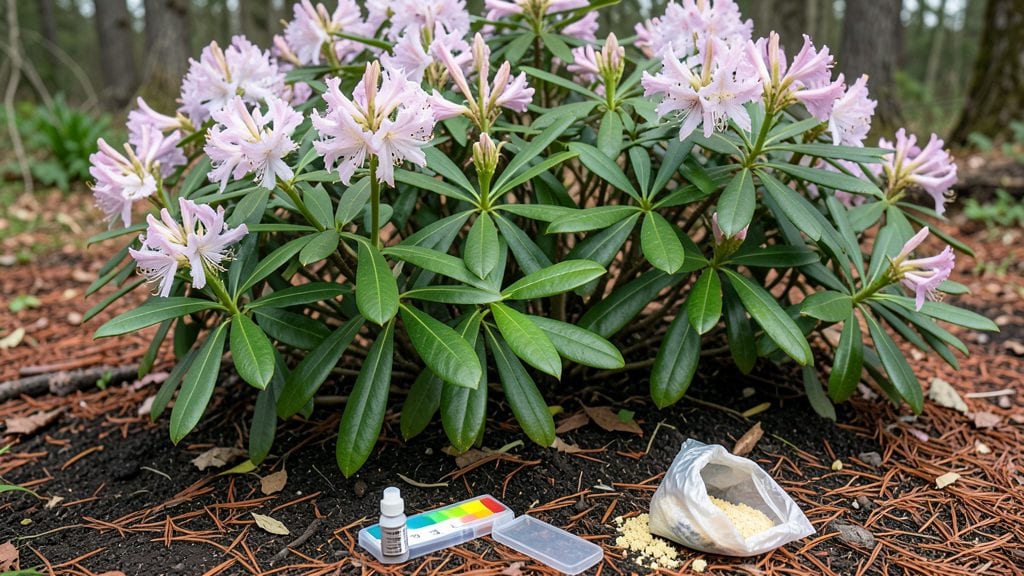
Creating the perfect acidic plant soil mix starts with understanding what your acid-loving plants truly need—lower pH levels that mimic their natural habitats. 🌿 I’ve spent years perfecting a blend that keeps blueberries producing like crazy and hydrangeas blooming in vibrant blues, and the secret lies in balancing organic amendments with precise pH monitoring.
The foundation of this mix is simple: combine equal parts peat moss or coconut coir (for moisture retention) with pine bark fines or finely ground pine needles (to lower pH naturally).
Add composted pine sawdust for nutrients, and mix in sulfur if your soil tests above 5.5—this combo delivers the ideal 4.5–5.5 pH range most acid-lovers crave. The best part? This blend stays effective for 2–3 years with minimal adjustments.
Once established, your plants will reward you with deep green foliage, abundant blooms, and fruit that tastes sweeter—because they’re thriving, not struggling. The key is testing pH every 6 months and reamending only when needed.
Over time, you’ll develop an intuition for when to add sulfur or composted needles, turning soil maintenance into second nature.
This recipe works for container gardens, raised beds, or in-ground plantings, making it versatile for any space. Whether you’re growing blueberries in pots or azaleas along a foundation, the principles stay the same—precision in the mix leads to perfection in the garden.
The Hidden Reasons Behind Soil Acidity
Soil pH isn’t just a random number—it’s the result of a complex dance between natural processes, human activity, and even the plants themselves. If your garden’s soil has become too acidic (pH < 6.0), it’s usually due to one or more of these key factors. Understanding the why behind soil acidity is the first step to fixing it—and keeping your acid-loving plants thriving.
Plants and organic debris (like fallen leaves, roots, and compost) contain compounds that release hydrogen ions (H+) as they decompose. Over time, these ions accumulate, gradually lowering soil pH. This is especially true in regions with:
- High rainfall: Water washes away essential nutrients like calcium and magnesium, leaving behind acidic residues.
- Peat or pine-based soils: These naturally acidic materials resist pH changes, locking soil into a low-pH state.
- Slow microbial activity: Cold or waterlogged soils slow decomposition, allowing acidic byproducts to build up unchecked.
💡 Pro Tip: If your soil is naturally acidic (like in bogs or pine forests), lean into it—many plants thrive in these conditions. But if you’re growing veggies or ornamentals that prefer neutrality, you’ll need to intervene.
Not all water is pH-neutral. If your tap or irrigation water is soft (low in minerals) or slightly acidic, it can erode soil buffers over time. Here’s how:
- Acidic rain/snowmelt: Pollution (like sulfur dioxide from industrial emissions) reacts with water to form weak acids (e.g., sulfuric acid), which seep into the soil.
- Overwatering with distilled or rainwater: These lack calcium and magnesium, which help neutralize acidity. Without them, soil pH drops faster.
- Poor drainage: Waterlogged soil starves roots of oxygen, forcing them to release organic acids as a survival mechanism.
📊 Test Your Water: Use a simple pH test kit for your water source. If it’s below 6.5, consider using alkaline-treated water or rain barrels with added lime.
Certain soil microbes—like mycorrhizal fungi and actinobacteria—produce organic acids as they break down organic matter. While this is normal, an imbalance can tip the scales toward acidity. Causes include:
- Excessive compost or manure: Fresh organic matter (especially high in nitrogen) feeds acid-producing microbes, spiking H+ levels.
- Lack of beneficial bacteria: Soil with too few Bacillus or Pseudomonas strains can’t buffer acidity effectively.
- Old, compacted soil: Tight soil restricts air flow, creating anaerobic zones where microbes shift to acidic byproducts.
✨ Fix It: Add composted hardwood chips or biochar to boost microbial diversity and improve soil structure.
Many common fertilizers are acid-forming, especially when overused. Here’s the breakdown:
| Fertilizer Type | Why It Lowers pH | Actionable Fix |
|---|---|---|
| Ammonium-based fertilizers (e.g., urea, ammonium sulfate) | Bacteria convert ammonium (NH₄⁺) to nitrate (NO₃⁻), releasing H+ ions in the process. | Use slow-release fertilizers or balance with calcium nitrate. |
| Sulfur-coated urea | Sulfur oxidizes into sulfuric acid, directly lowering pH. | Avoid in acidic soils; opt for organic sulfur instead. |
| Peat moss (unamended) | Naturally acidic (pH 3.5–4.5) and lacks buffering capacity. | Mix with pine bark fines or wood ash to raise pH. |
🔥 Warning: If you’ve been using high-nitrogen fertilizers (like lawn foods), your soil may be secretly acidic—even if it looks fine!
Some plants are acid secretors, meaning their roots actively release organic acids to:
- Mobilize nutrients like phosphorus and iron (common in blueberries, azaleas, and rhododendrons).
- Defend against pathogens in acidic conditions.
If you’ve planted acid-loving species in a previously neutral garden, their presence can permanently lower soil pH over years. Solution: Test soil pH before planting and adjust with lime if needed.
In cities or developed areas, soil acidity can spike due to:
- Concrete or asphalt runoff: Leaches calcium, removing natural pH buffers.
- Aluminum contamination: From old buildings or treated wood, which dissolves in acidic conditions.
- Lack of topsoil: Construction often strips away nutrient-rich layers, leaving behind compacted, acidic subsoil.
💡 Urban Gardener Tip: Amend with composted leaves or crushed oyster shell to counteract these effects.
Fixing Soil pH for Happy Plants
Balancing soil acidity isn’t rocket science—it’s about smart, targeted fixes. Below, we map common causes of overly acidic soil to their solutions, plus prevention tips to keep your garden thriving. Think of this as your DIY soil pH first-aid kit!
1.
Overwatering with Soft Water Problem: Rainwater and tap water (especially in areas with limestone) leach calcium and magnesium, leaving hydrogen ions behind—making soil more acidic over time. Fix It: - 💡 Test your water first! Use a simple pH test kit (available at garden centers) to check if your water is acidic (<6.5).
If it is, switch to rainwater collection or distilled water for acid-sensitive plants. - ⚖️ Neutralize with lime: Add pelleted lime (calcium carbonate) to the soil at 5–10 lbs per 100 sq ft, following package instructions.
Work it into the top 6 inches of soil in early spring or fall.
2. Organic Matter Breakdown
Problem: Decomposing leaves, pine needles, or compost releases organic acids (like humic and fulvic acids), lowering pH naturally. Fix It: - 🍂 Balance with wood ash: Sprinkle 1–2 cups of wood ash per 10 sq ft (avoid cedar or pressure-treated wood—these can add toxins).
Ash is alkaline and neutralizes acidity fast. - 🌱 Mix in composted manure: Use well-aged cow, horse, or chicken manure (not fresh!) to buffer pH. Aim for 1–2 inches mixed into the topsoil annually.
3.
Peat Moss Overuse Problem: Peat moss is naturally acidic (pH 3.5–4.5) and can drag down soil pH if used excessively. Fix It: - 🔄 Replace with coconut coir: Swap peat moss for coconut coir, which has a neutral pH (5.5–6.8) and improves drainage. - 🌿 Add dolomitic lime: Mix 1 part dolomitic lime to 5 parts soil to raise pH gradually.
Re-test after 2–3 months.
4. Aluminum or Iron Toxicity
Problem: In highly acidic soil (<5.0 pH), aluminum and iron become soluble and toxic to plants, stunting growth. Fix It: - 🛡️ Raise pH with wood chips: Spread 3–4 inches of hardwood mulch (oak, maple) around plants.
As it decomposes, it releases alkaline compounds. - 🌱 Plant cover crops: Grow clover or alfalfa (legumes) to bind excess aluminum. Chop and drop them into the soil in fall.
5.
Poor Drainage & Waterlogging Problem: Stagnant water in clay or compacted soil creates anaerobic conditions, increasing acidity. Fix It: - 💦 Improve drainage: Amend soil with coarse sand or perlite (1 part amendment to 3 parts soil) to prevent water pooling. - 🌱 Aerate the soil: Use a garden fork to poke holes 12 inches deep, or rent a core aerator for large areas.
- 📊 Test soil every 6–12 months (use a digital pH meter or send a sample to a local extension office).
- 🍄 Avoid over-mulching with pine needles—limit to a 2-inch layer and mix with wood chips.
- 🌿 Rotate crops to prevent nutrient depletion (e.g., swap acid-loving blueberries with alkaline-tolerant kale).
- 💧 Water deeply but less frequently to reduce leaching of nutrients.
- 🌱 Choose plants wisely: Group acid-lovers (azaleas, hydrangeas, blueberries) together and use separate beds for alkaline plants (lavender, rosemary).
- Quick fixes (wood ash, lime): 1–2 weeks for visible pH changes.
- Gradual fixes (compost, mulch): 2–3 months for full effect.
- Re-test! After applying amendments, wait 4–6 weeks before rechecking pH.
Pro Tip: 💡 For container plants, flush the soil with water every 3 months to remove excess salts and acids.
Frequently asked questions
What are the best organic materials to naturally lower soil pH?
For a natural acid boost, use pine bark fines, finely ground pine needles, or composted pine sawdust. These release organic acids as they break down, lowering pH gradually. Avoid cedar or oak leaves—they raise pH instead. Mix 1 part pine fines to 3 parts soil for best results.
How often should I test acidic soil pH?
Test every 6 months for container plants and annually for in-ground beds. Acid-loving plants like blueberries and azaleas prefer 4.5–5.5 pH, but soil naturally shifts over time. Use a digital pH meter or send samples to your local extension office for accurate readings.
Can I use coffee grounds to acidify soil?
Yes, but sparingly! Coffee grounds are mildly acidic (pH 4.5–5.5) and add nitrogen. Work in 1–2 inches per 10 sq ft annually. For stronger acidity, pair with pine needles. Avoid overdoing it—too much can create anaerobic zones and foul odors.
What happens if my soil is too acidic for my plants?
Plants in overly acidic soil (<4.5 pH) suffer from nutrient deficiencies, especially phosphorus and calcium. Symptoms include yellowing leaves, stunted growth, and poor flowering. For quick fixes, add wood ash (1 cup per 10 sq ft) or pelleted lime (5–10 lbs per 100 sq ft) to raise pH gradually.
Are there plants that actually prefer slightly alkaline soil?
While most acid-lovers thrive at 4.5–5.5 pH, plants like lavender, rosemary, and asparagus prefer 6.0–7.5 pH. If you’re mixing plant types, create separate beds or containers. For alkaline soil, use crushed oyster shell or hydrated lime to adjust pH upward.