
Pruning
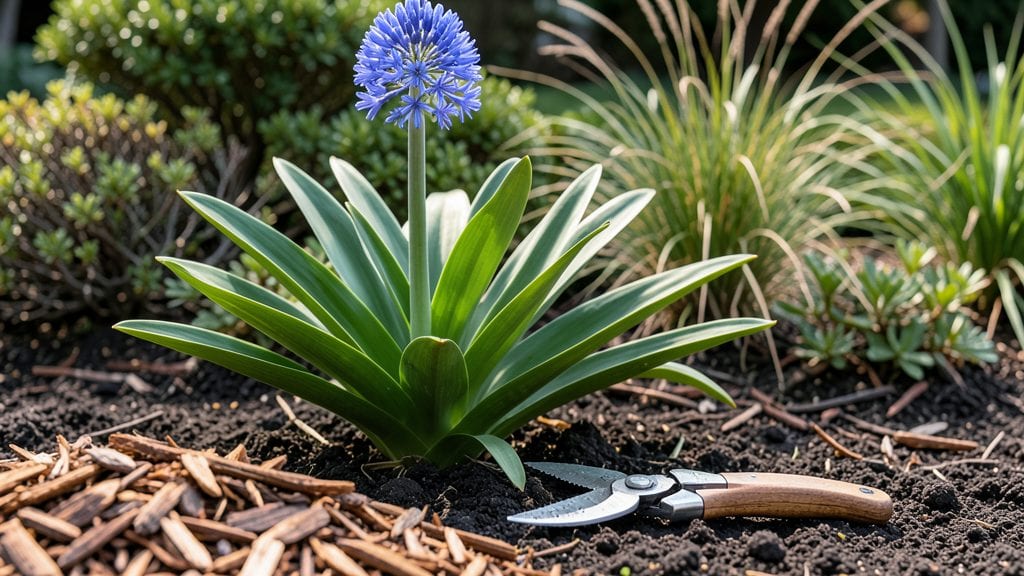
Pruning agapanthus plants twice a year turns those floppy stalks into neat, blooming powerhouses—I’ve gone from struggling with tangled foliage to showstopping clusters of blue every season.
The key isn’t just when to cut (though timing matters) but how—sharp cuts at the right spots keep the plant healthy and eager to rebloom. Most gardeners skip the second prune, which is why their agapanthus peters out by summer’s end.
I’ll show you the two cuts that make all the difference.
You only need three things: clean pruners, a bucket for clippings, and a sunny morning to work. First, snip back the old flower stalks right after blooming—this redirects energy to next year’s buds. Then, in late winter, trim the entire plant down to about 6 inches tall.
It looks brutal at first, but by spring, you’ll have fresh, vibrant growth ready to burst into bloom. The secret? Never cut into old, hardened stems—always target the new growth emerging from the base.
After pruning, your agapanthus will reward you with denser foliage and longer bloom seasons. The plants stay compact, resist flopping, and produce more flowers than ever before.
You’ll notice new shoots appearing within 2-3 weeks of the late-winter cut, and by summer, you’ll have a second wave of blooms if you’re lucky. The trick is consistency—skip either prune, and you’ll lose that second flush of flowers.
This method works for all agapanthus varieties, whether you’ve got the classic blue ‘Midnight Blue’ or the striking white ‘Snow Funeral’. Just adjust timing slightly for your climate—cooler zones might wait until early spring for the second prune.
Now grab those shears and let’s get those plants looking their best for years to come.
📚 In This Guide
- What you need
- Instructions
- Tips and common mistakes
- Wrapping up and next steps
What you need
- ● Pruning shears or secateurs: Sharp, bypass-style (for clean cuts). Quantity: 1 pair (sterilize with rubbing alcohol between cuts).
- ● Garden gloves: Heavy-duty, cut-resistant (protects hands from thorns and sap). Quantity: 1 pair.
- ● Disinfectant (70% isopropyl alcohol or bleach solution): 1:9 bleach-to-water ratio (prevents disease spread). Quantity: Small spray bottle or cloth.
- ○ Pruning saw (optional): For thick stems (only if your Agapanthus has woody growth).
- ● Garden twine or plant ties: For securing supports (if staking is needed post-pruning).
- ● Hand pruners (felco-style): For smaller, precise cuts.
- ● Garden hose or bucket of water: To rinse tools and clean up sap.
- ● Compost bin or bag: For collecting pruned debris (or repurpose as mulch!).
- ● Plant food (balanced fertilizer, 10-10-10): Apply after pruning to boost regrowth.
Instructions for pruning agapanthus to encourage lush, long-lasting blooms
With just two well-timed cuts each year, you can transform your agapanthus into a showstopper that blooms reliably.
Deadhead Spent Blooms After the First Flowering Season
Once your agapanthus flowers fade and the seed pods form, it's time to prune. Use clean, sharp pruners to cut back the flower stalks to about 2 inches above the lowest set of healthy leaves. This prevents the plant from wasting energy on seed production and redirects it toward next year's blooms. I always do this in late summer or early fall, right after the last flowers have dropped.
Watch for the flower stalks to turn brown and crispy—this is your signal that the blooming cycle is complete. Cutting too early removes potential blooms, while cutting too late can stress the plant. If you miss this first cut, don’t worry—just time your next prune carefully to avoid removing next year’s flower buds.
Trim Back Foliage in Late Winter or Early Spring
In late winter or early spring, before new growth appears, give your agapanthus a second prune. Cut back the previous year’s leaves by about one-third—this encourages fresh, vigorous growth and prevents the plant from becoming too top-heavy. I like to do this in February or March, depending on my climate, as soon as the ground thaws but before any new shoots emerge.
Look for the plant’s natural growth habit—you’ll notice the leaves forming a fan shape. Trim just above a leaf node or a set of healthy buds to encourage new growth from the right spot. Avoid cutting into old, woody stems, as agapanthus can become leggy if pruned too aggressively. If your plant looks crowded, this is also a good time to divide it to refresh its energy.
Monitor and Adjust for Year-Round Health
Throughout the growing season, keep an eye out for any dead, damaged, or diseased foliage. Remove it immediately with your pruners to prevent pests or disease from spreading. Agapanthus is generally hardy, but a little maintenance goes a long way in keeping it thriving. If you notice yellowing leaves, check for overwatering or poor drainage—agapanthus prefers well-draining soil and can suffer if left soggy.
In fall, after the second prune, apply a light layer of mulch around the base of the plant to protect the roots from freezing temperatures. This helps the plant store energy for next season’s blooms. If your agapanthus is in a container, move it to a sheltered spot if winter temperatures dip below 20°F, as cold snaps can damage the foliage.
Divide Established Plants Every 3-4 Years
Even with regular pruning, agapanthus benefits from occasional division to maintain its vigor. In early spring, carefully dig up the plant and separate the clumps into smaller sections, ensuring each has at least 3-4 healthy fans of leaves. Replant these divisions in well-draining soil, spacing them about 18-24 inches apart to give them room to grow.
This step is especially important if your agapanthus has become overcrowded or blooms have diminished. Division rejuvenates the plant and gives you extra specimens to share or expand your garden. Water the divisions thoroughly after planting to help them establish quickly. Over time, you’ll notice stronger, more abundant blooms as the plant recovers its energy.
Tips & tricks for perfect agapanthus pruning
Mastering these two seasonal cuts takes your agapanthus from ordinary to extraordinary—here's how to get it right every time.
Timing is Everything: The late summer/early fall prune in Step 1 should happen immediately after flowers fade and stalks turn brown and crispy. This is your plant's natural signal that blooming season is over. I've learned the hard way—waiting too long can stress the plant, while cutting too early removes potential next-year blooms. Mark your calendar for this critical window, typically September to October in most climates.
Pruning Precision Matters: When trimming back foliage in Step 2, aim for clean cuts just above a leaf node or healthy bud. The one-third reduction isn't about exact measurements—it's about maintaining that natural fan shape. I always use sharp pruners to make clean cuts that heal quickly. Avoid cutting into old, woody stems, as this can leave your plant looking leggy and weak over time. For crowded plants, this is your chance to open up the center for better airflow.
Seasonal Care Beyond Pruning: Don't overlook the fall mulching mentioned in Step 3—this simple layer of mulch acts like a blanket for your plant's roots, protecting against winter's chill. For container-grown agapanthus, remember the 20°F threshold: move them to sheltered spots before temperatures drop that low. I've seen beautiful agapanthus plants suffer from cold damage simply because they weren't protected in time. A little preparation now means bigger, healthier blooms next season.
Division Strategy: When dividing established plants in Step 4, focus on those 3-4 healthy fan sections. Each division needs its own set of leaves to support new growth. I've found that spacing them 18-24 inches apart gives them room to establish strong root systems. This is particularly important if your plant has become overcrowded—division rejuvenates both the parent plant and the new divisions, often resulting in more abundant blooms the following year.
Pro Tips for Agapanthus Plants Pruning
- Mastering these two seasonal cuts takes your agapanthus from ordinary to extraordinary—here's how to get it right every time.
- Timing is Everything: The late summer/early fall prune in Step 1 should happen immediately after flowers fade and stalks turn brown and crispy.
- Pruning Precision Matters: When trimming back foliage in Step 2, aim for clean cuts just above a leaf node or healthy bud.
Frequently asked questions
Got questions about pruning your agapanthus? You’re not alone! Here are some of the most common queries—plus straightforward answers to keep your plants thriving.
When is the best time to prune agapanthus?
Prune agapanthus twice a year: late winter/early spring (before new growth starts) to clean up old foliage and late summer/early fall (after blooming) to shape the plant. Avoid pruning in winter when frost is likely—it can stress the plant.
Do I need to prune agapanthus if it’s not overgrown?
Yes! Even healthy agapanthus benefits from pruning. Removing dead or yellow leaves in late winter improves airflow, reducing disease risk. Light trimming after blooming encourages bigger, fuller flowers the next season. Think of it as a spa day for your plant!
What if I cut too much off by mistake?
Don’t panic! If you over-prune, your agapanthus may look bare, but it’s hardy and resilient. New growth will sprout from the base. Just avoid cutting into old wood—focus on leaving at least 1/3 of the plant’s height intact. It’ll bounce back stronger!
Can I prune agapanthus in hot or cold weather?
Nope! Prune when temps are mild (50–75°F). Avoid extreme heat (stresses the plant) or freezing conditions (can damage new cuts). Early morning or late afternoon on a cloudy day is ideal—your agapanthus will thank you!
What should I do with the cuttings?
Use pruned stems for propagation! Dip cuttings in rooting hormone, plant in well-draining soil, and keep moist. They’ll grow into new agapanthus plants in 6–12 months. Or compost the clippings—just avoid woody stems, which take longer to break down.
Wrapping up and next steps
Pruning your agapanthus plants might seem tricky, but with just two strategic cuts—one in late winter and another after blooming—you’ll unlock stunning year-round flowers while keeping your plants healthy and thriving! 🌸 Remember, sharp tools, patience, and timing are your best friends, so don’t hesitate to roll up your sleeves and give it a try.
Now that you’re armed with the know-how, grab those shears and get pruning! Your agapanthus will reward you with bold blooms and lush foliage—what’s not to love? For extra flair, consider dividing overgrown clumps in spring to refresh their growth. Happy gardening! 🌿✨