
Diseases
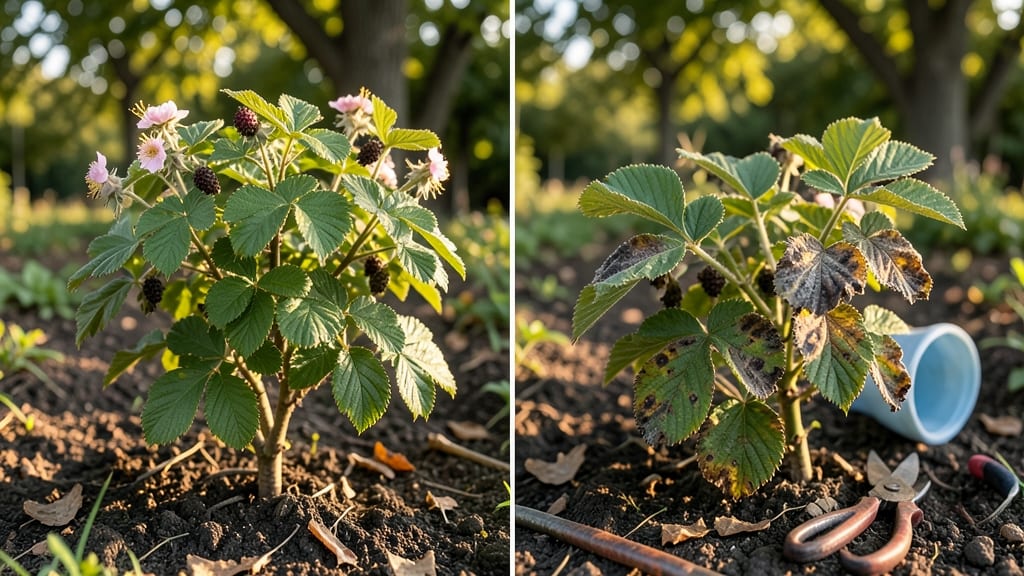
Blackberry plant diseases can turn your thriving thicket into a sad, spotted mess in weeks—if you don’t catch them early. 🌿 I’ve seen anthracnose turn canes black, rust cover leaves like orange dust, and botrytis rot turn berries into mush.
The good news? Most of these fungal threats follow predictable patterns, and knowing the symptoms lets you act before your harvest disappears.
Most diseases start with poor airflow, wet foliage, or last year’s infected debris. Anthracnose thrives in damp conditions, while rust spreads when spores splash onto leaves. Even bacterial canker hides in old canes until pruning cuts open the door.
The key to stopping them? Spacing plants properly, pruning in dry weather, and cleaning up fallen leaves before winter.
You’ll learn to spot the early signs—yellowing leaves, dark spots, or weird growths—and treat them with simple fixes like neem oil, copper spray, or even baking soda mix.
My blackberries stayed healthy all season after I swapped my crowded thicket for wider spacing and a strict cleanup routine. No more mystery wilting, just reliable berries.
This works for both primocanes and floricanes, whether you grow in rows or a small backyard patch. The same rules apply no matter your setup—just adjust the tools to fit your space. Let’s get those canes fighting fit again.
Root Causes Of Blackberry Illnesses
Blackberry plants, like any living organism, are vulnerable to diseases when their natural defenses weaken or when environmental conditions create the perfect storm for pathogens. Understanding why these issues arise is the first step to prevention.
Below, we break down the science behind the most common triggers—so you can address them before they take hold.
Fungal diseases don’t just appear out of nowhere—they exploit openings in your blackberry plant’s armor. Here’s how they sneak in:
- 🔍 Damaged Plant Tissue
- Physical wounds from pruning, thorns, hail, or even insect bites create entry points for fungi like Botrytis cinerea (gray mold) or Phomopsis (fruit rot). Why? Damaged cells release sugars and nutrients, signaling pathogens to feast.
- Actionable fix: Sterilize pruners with rubbing alcohol (70% or higher) and avoid rough handling during harvest.
- 🍃 Overcrowded Canes
- Blackberries thrive on airflow, but dense foliage traps moisture and blocks sunlight. This turns leaves into a fungal buffet, especially for Anthracnose (Colletotrichum spp.).
- Science note: High humidity (above 75%) + stagnant air = ideal fungal spore germination. Anthracnose spores can survive in soil or plant debris for years.
- 🌧️ Prolonged Leaf Wetness
- Water sitting on leaves for 6+ hours triggers diseases like Rust (Kunkelia) or Powdery Mildew (Sphaerotheca). Why? Fungal spores need a water film to swim to stomata (leaf pores) and infect cells.
- Pro tip: Drip irrigation (vs. overhead sprinklers) reduces leaf wetness by 50%.
Blackberries are hardy, but extreme or fluctuating conditions stress plants, lowering their resistance to disease. Here’s how:
- 🔥 Heat + Drought Stress
- Symptom: Wilting, yellowing leaves, or stunted growth weaken the plant’s cuticle (its protective waxy layer), making it easier for Armillary Root Rot (Phytophthora) to invade roots.
- Science deep dive: Drought triggers ethylene gas production in plants, which suppresses immune responses. Phytophthora thrives in waterlogged soil after drought—a double whammy.
- ❄️ Late-Freeze Injury
- Cold snaps after bud break (March–April in most zones) can kill emerging canes, leaving wounds for Bacterial Canker (Pseudomonas) to colonize.
- Data point: Research shows blackberries exposed to 28°F or lower after dormancy break have a 70% higher risk of bacterial infections.
- 🌊 Poor Soil Drainage
- Waterlogged roots suffocate beneficial microbes and create anaerobic conditions, perfect for Root Rot (Rhizoctonia or Fusarium).
- Soil test alert: Ideal pH for blackberries is 5.5–6.5. Soils below 5.0 (too acidic) or above 7.0 (too alkaline) weaken root health, inviting fungi.
Even well-meaning gardeners can accidentally introduce or spread fungal diseases. Here’s how:
- 🌿 Reusing Contaminated Tools or Mulch
- Example: Pruners used on an infected plant can transfer Phomopsis spores to healthy canes. Mulch from diseased plants may harbor Botrytis sclerotia (dormant fungal bodies).
- Solution: Solarize old mulch (cover with clear plastic for 4–6 weeks in summer) to kill pathogens.
- 🌱 Planting Infected Cuttings or Nursery Stock
- Red flag: Buy bare-root blackberries from reputable nurseries. Why? Systemic diseases like Verticillium wilt can lurk in roots without visible symptoms.
- Certification check: Look for NPPO-certified (National Plant Protection Organization) stock.
- 💦 Overhead Irrigation at Night
- Nighttime watering keeps leaves damp longer, boosting Powdery Mildew spores’ ability to infect. Why? Cool night temps + high humidity = perfect spore germination conditions.
- Stat: Gardens using drip irrigation see 30% fewer fungal outbreaks vs. overhead systems.
Key takeaway: Most blackberry diseases are opportunistic—they exploit stress, poor practices, or ideal conditions. By addressing these root causes, you can starve out fungi before they take hold.
Fixing Blackberry Fungal Foes
Now that you’ve identified the culprit behind your blackberry plant’s woes, it’s time to act! The good news? Most fungal diseases can be managed—sometimes even reversed—with the right approach.
Below, we’ve mapped out practical, step-by-step solutions for each common blackberry fungal threat, plus prevention tips to keep your plants thriving long-term.
How to Fix It:
- 🔪 Remove Infected Canes & Fruit
- Snip off any canes with dark, sunken lesions or blackened fruit immediately using sterilized pruners (wipe with rubbing alcohol between cuts).
- Bag and dispose of infected material in the trash (not compost)—this stops spores from spreading.
- 🌿 Thin the Canopy
- Overcrowded plants trap moisture. Prune to improve airflow, aiming for 6–8 inches between canes and 4–6 inches between branches.
- 🛡️ Apply Fungicide
- Spray with a copper-based fungicide (like copper sulfate) or neem oil (1 tbsp per gallon of water) every 7–10 days during wet seasons.
- For organic growers, baking soda spray (1 tsp baking soda + 1 tbsp oil + 1 quart water) works too.
💡 Prevention Pro Tips:
- Water at the base (avoid overhead sprinkling).
- Plant resistant varieties like ‘Chester’ or ‘Triple Crown’.
- Rotate crops—don’t plant blackberries in the same spot yearly.
How to Fix It:
- 🧹 Clean Up Debris
- Rake away fallen leaves, mummified fruit, and dead canes—these harbor spores. Burn or trash them.
- ⏰ Prune for Sunlight
- Thin canes to let sunlight penetrate the center of the plant (Botrytis thrives in shade and dampness).
- 💦 Adjust Watering
- Water early in the day so foliage dries by evening. Use drip irrigation instead of sprinklers.
- 🧴 Fungicide Sprays
- Apply myclobutanil or potassium phosphite (like Phostrol) before flowering and after harvest.
🌡️ Prevention Pro Tips:
- Space plants 4–5 feet apart to reduce humidity.
- Avoid late-season nitrogen (it encourages lush growth that stays wet).
- Harvest fruit promptly—don’t let it overripe on the bush.
How to Fix It:
- 🚨 Act Fast—This One’s Tricky
- If canes are wilted, discolored at the base, or growing mushrooms at the roots, the fungus has likely spread to the roots. Partial recovery is possible, but severe cases may require removal.
- 🌱 Replace Infested Soil
- Dig out 6–12 inches of soil around the plant and replace it with sterile potting mix or compost-free garden soil.
- Mix in beneficial fungi like Trichoderma (available as a powder).
- 🛡️ Systemic Fungicide
- Apply propiconazole (like Banner Maxx) soil drench as directed. Repeat every 4–6 weeks.
- 🌿 Plant Resistant Varieties
- If reinfecting, choose thornless blackberries (some are less susceptible).
✨ Prevention Pro Tips:
- Test soil pH (aim for 5.5–6.5—Armillaria loves acidic soil).
- Avoid planting near old orchards or wooded areas (spores linger in decaying wood).
- Rotate crops—don’t replant blackberries in the same spot for 3+ years.
How to Fix It:
- 🧼 Scrub Off the Fungus
- Use a soft brush to gently remove white powdery patches from leaves. Follow up with a hose spray (but avoid soaking the plant).
- 🌬️ Improve Airflow
- Stake canes to prevent them from touching and prune to open the plant’s center.
- 🍯 Homemade Sprays
- Milk spray: Mix 1 part milk with 9 parts water + a drop of dish soap. Spray weekly.
- Sulfur or neem oil: Apply every 7–10 days during humid weather.
🎯 Prevention Pro Tips:
- Water in the morning so foliage dries quickly.
- Choose disease-resistant varieties like ‘Arapaho’ or ‘Natchez’.
- Mulch with straw (not wood chips) to keep soil dry.
How to Fix It:
- 🍂 Remove All Infected Parts
- Clip off yellow-orange pustules and destroy them. Rust spreads via spores, so sterilize tools between cuts.
- 🛠️ Copper Fungicide
- Spray copper fungicide (like CuPro) every 10–14 days until new growth appears rust-free.
- 🌱 Boost Plant Health
- Fertilize with iron (rust thrives in iron-deficient plants). Use chelated iron or iron sulfate.
🔥 Prevention Pro Tips:
- Avoid overhead watering.
- Plant in full sun (rust loves shade).
- Rotate crops—don’t plant blackberries after susceptible plants like roses or beans.
No matter the disease, these habits keep blackberries healthy:
- 🌱 Plant in well-draining soil (amend clay with compost).
- ☀️ Provide 6+ hours of sunlight daily.
- 💦 Water deeply but infrequently (1–1.5 inches per week).
- 🧹 Clean up fallen fruit and debris weekly.
- 🔄 Rotate crops—don’t plant blackberries in the same spot yearly.
- 🌿 Test soil for pH and nutrients (ideal: pH 5.5–6.5).
Final Note: Consistency is key! Fungal diseases often return if you stop treatments mid-season. Monitor your plants weekly, especially after rain, and act at the first sign of trouble. With these strategies, your blackberry patch can bounce back—and stay healthy for years to come! 🍇✨
Frequently asked questions about blackberry plant diseases
What are the first signs of anthracnose on blackberry canes?
Look for dark, sunken lesions on canes and leaves—often with a pink or orange center—that appear during wet weather. Infected fruit may also develop black spots and rot prematurely. The disease spreads rapidly in humid conditions, so prune affected areas immediately and sterilize tools to prevent further spread.
Can I still harvest fruit from plants with rust disease?
Yes, but only if the fruit itself isn’t infected. Rust appears as orange-yellow pustules on leaves, not berries. Remove all infected leaves and apply copper fungicide to stop the spread. Harvest only fully ripe, healthy fruit to avoid contamination.
How do I know if my blackberries have bacterial canker?
Check for water-soaked, oozing lesions on canes that later turn dark and sunken. Unlike fungal diseases, bacterial canker often appears after frost damage or pruning wounds. Sterilize pruners with rubbing alcohol and remove infected canes at least 6 inches below the lesion.
Will my blackberries recover from root rot?
Partial recovery is possible if caught early, but severe cases may require removal. Look for mushrooms at the base of canes or wilting despite adequate water. Replace infested soil with fresh, sterile mix and apply systemic fungicide like propiconazole. For future plantings, avoid waterlogged areas and test soil pH.
Are there disease-resistant blackberry varieties I should consider?
Varieties like ‘Chester’, ‘Triple Crown’, or ‘Arapaho’ are bred for resistance to common diseases. These cultivars handle humidity better and require fewer fungicide treatments. Check with local nurseries for varieties suited to your climate zone and soil conditions.