
Pruning
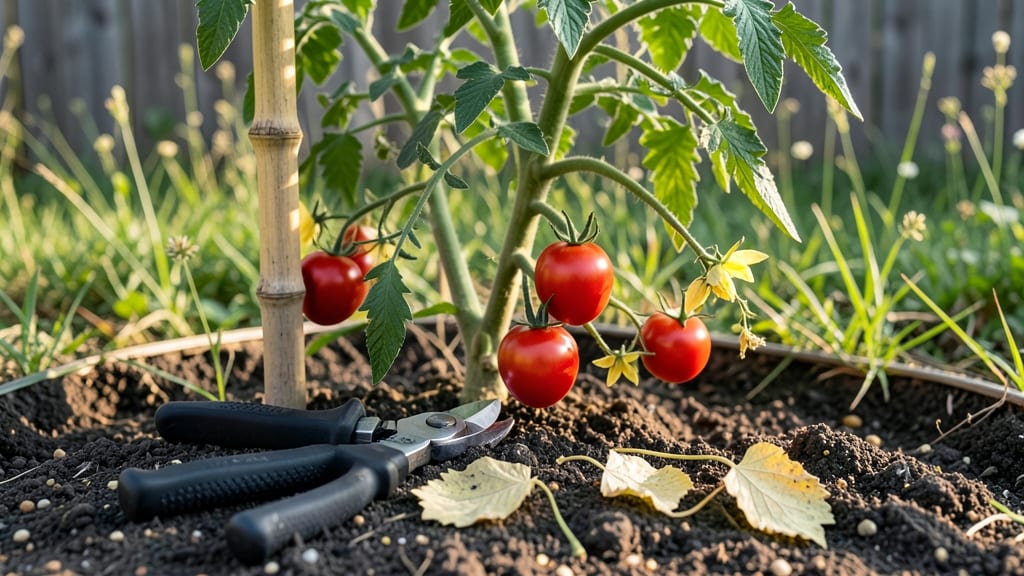
Trimming tomato leaves isn’t just about tidying up—it’s the secret weapon for bigger fruit and stronger vines that every gardener needs. 🌱 I learned this the hard way after watching my tomatoes stay small and my plants wilt under too much shade.
The right cuts redirect energy to where it matters most: the fruit.
You’ll only need sharp pruning shears, a sunny afternoon, and 15 minutes of focused work. The goal is simple: remove leaves that block sunlight from the fruit clusters and improve airflow to prevent diseases like blight.
Start when plants hit 18-24 inches tall, and repeat every 2-3 weeks until harvest.
What you’ll get is juicier, larger tomatoes that ripen faster and stay healthier all season. The vines grow sturdier, too, supporting more fruit without sagging. Plus, you’ll avoid the heartbreak of blight or rot ruining your harvest—something I’ve seen too many times in crowded plants.
This method works for determinate (bush) and indeterminate (vining) varieties, though indeterminate tomatoes benefit the most. Even if you’ve never pruned before, these three steps make it foolproof. Let’s turn those leafy monsters into fruit factories!
📚 In This Guide
- What you need
- Instructions
- Tips and common mistakes
- Wrapping up and next steps
What you need
- ● Pruning shears or sharp scissors: Clean, sterilized, and sharp (avoid dull blades—they crush stems!). 1 pair is all you need.
- ● Rubbing alcohol (70% or higher): For sterilizing tools between cuts. Small bottle (4 oz).
- ○ Gloves (optional but recommended): Protects hands from thorns and dirt. 1 pair (gardening or work gloves).
- ● Disposable bags or bucket: For collecting trimmed leaves/debris. 1-2 bags or a small bucket.
- ○ Water spray bottle (optional): To mist plants post-pruning for stress relief. Small (8 oz).
- ● Hand pruners with long handles: For tall plants (reaches up to 36" without straining).
- ● Disinfectant spray (e.g., hydrogen peroxide 3%): Spray cuts to prevent disease.
- ● Compost bin: For repurposing healthy trimmings (avoid diseased leaves!).
- ● Sunny day + light breeze: Ideal conditions for trimming (reduces stress on plants).
Step-by-Step guide to pruning tomato leaves for healthier plants
Here’s how to trim tomato leaves like a pro—no guesswork, just bigger fruit and stronger vines.
🌿 Step 1: Identify and Remove Suckers Early
Suckers are the little shoots that grow in the crotch between the main stem and a branch. These compete with your fruit for energy, so snip them off when they’re no bigger than a pencil. Use clean pruning shears or your fingers—just pinch them cleanly at the base. I check my plants every 5-7 days during the growing season because suckers grow fast.
Focus on the lower third of the plant first. Removing suckers here improves airflow and reduces disease risk. You’ll see new growth at the top of the plant—this is where you want energy directed. If you miss a sucker, don’t worry; it’s better late than never, but early removal means fewer distractions for your tomatoes.
✂️ Step 2: Prune Lower Leaves for Airflow and Sunlight
Once your plant reaches 18-24 inches tall, start removing the largest leaves from the bottom 6-12 inches of the stem. These leaves shade the fruit and trap moisture, creating perfect conditions for blight. Aim to leave 12-18 inches of bare stem below the first fruit cluster. You’ll notice the remaining leaves turn slightly lighter—this is normal and a sign they’re getting more direct sunlight.
Don’t go overboard. Keep a few leaves near the base to protect the stem from sunburn. I like to leave a small cluster at the very bottom to act as a shield. Prune on a dry morning so the cuts heal faster, and avoid trimming when the plants are wet—this can spread disease.
☀️ Step 3: Thin Leaves Near Fruit Clusters
When your plant flowers and sets fruit, focus on the leaves directly behind clusters. Remove 1-2 leaves per cluster to let sunlight and air reach the developing tomatoes. This prevents sunscald and improves fruit quality. I look for leaves that are larger than the fruit cluster itself—these are the ones to trim. Use sharp shears to make clean cuts just above a leaf node or branch.
Watch for signs of stress after pruning, like wilting or yellowing. This usually means you removed too much foliage at once. If you see this, pause pruning for a week and monitor closely. The goal is to balance airflow and sunlight without shocking the plant. Once your tomatoes turn pink and start ripening, reduce pruning—now the plant’s energy should focus on fruit maturation.
Tips & tricks for perfect tomato plant pruning
Here’s what nobody tells you about trimming tomato plants—these tricks will keep your vines thriving and your fruit bountiful.
The Timing Secret: I check my plants every 5-7 days during the growing season because suckers grow faster than you think. The key is to catch them when they’re no bigger than a pencil—this prevents them from sapping energy from your fruit. If you’re busy, set a reminder on your phone so you don’t miss this critical window.
Pruning Technique: When removing suckers in Step 1, don’t just yank them—pinch them cleanly at the base with your fingers or use sharp shears. This prevents tearing that can introduce disease. For larger suckers, make a clean cut just above a leaf node to encourage healthy regrowth. I always sterilize my shears with rubbing alcohol between plants to avoid spreading pathogens.
Visual Cues for Pruning: In Step 2, aim to leave 12-18 inches of bare stem below the first fruit cluster. This creates a "skirt" that improves airflow and sunlight penetration. You’ll know you’re doing it right when the remaining leaves turn slightly lighter—they’re getting more direct sunlight. For Step 3, focus on leaves larger than your fruit clusters; these are the ones blocking precious light and air.
Recovery Strategy: If your plant shows signs of stress after pruning—like wilting or yellowing—pause for a week and monitor closely. This usually means you removed too much foliage at once. The goal is to balance airflow and sunlight without shocking the plant. Once your tomatoes turn pink, reduce pruning entirely so all energy goes into fruit maturation.
Pro Tips for Tomato Plants Trimming Leaves
- Here’s what nobody tells you about trimming tomato plants—these tricks will keep your vines thriving and your fruit bountiful.
- The Timing Secret: I check my plants every 5-7 days during the growing season because suckers grow faster than you think.
- Pruning Technique: When removing suckers in Step 1, don’t just yank them—pinch them cleanly at the base with your fingers or use sharp shears.
Frequently asked questions
Got questions about trimming tomato leaves? You’re not alone! Here are some of the most common concerns—and the answers you need to keep your plants thriving.
Why should I trim tomato leaves at all?
Trimming leaves improves airflow, reduces disease risk, and directs energy toward fruit production. Removing suckers and lower leaves also prevents soil-borne pathogens from splashing onto the plant. Think of it as giving your tomatoes a spa day—less clutter, more flavor!
When is the best time to trim tomato leaves?
Start trimming when plants are young (6–12 inches tall) and continue throughout the growing season. For indeterminate varieties, prune suckers weekly. Early morning is ideal—cooler temps reduce stress on the plant. Avoid trimming late in the day, as it can invite pests.
How much should I trim off? What’s too much?
Remove up to one-third of the foliage if needed, but never strip the plant bare. Focus on:
- Lower leaves touching the soil
- Yellow or diseased leaves
- Suckers (shoots between the stem and branches)
Can I trim tomato leaves in hot or humid weather?
Trimming in extreme heat (above 90°F) or high humidity can stress plants. If you must, do it in the early morning or late evening. Humidity also increases disease risk, so sterilize your pruners with rubbing alcohol and avoid wet foliage. Wait for cooler, drier conditions if possible.
What if my tomato plant looks sad after trimming?
Don’t panic! A little wilt is normal as the plant adjusts. Water deeply and provide shade for a day or two if needed. If leaves turn yellow or drop excessively, you may have over-pruned. Next time, trim more gradually. Healthy roots and consistent watering will help it bounce back.
Are there alternatives to trimming leaves?
If pruning feels overwhelming, try these low-maintenance options:
- Mulching: Cover soil with straw or grass clippings to block spores and retain moisture.
- Staking/Trellising: Elevate plants to improve airflow and reduce leaf-soil contact.
- Resistant Varieties: Choose disease-resistant tomatoes (like ‘Celebrity’ or ‘Mountain Merit’) to minimize trimming needs.
Wrapping up and next steps
Trimming your tomato plants isn’t just about aesthetics—it’s a game-changer for bigger, healthier fruit and stronger vines! 🌱 By focusing on proper pruning techniques, you’ll boost airflow, reduce disease risks, and guide energy toward fruit production.
Remember, consistency is key, so grab those shears and give your plants the TLC they deserve.
Ready to level up your harvest? Start small—prune just a few leaves this week—and watch your tomato plants thrive! 🍅 For extra confidence, track your progress with photos or notes to see the difference over time.