
Plants
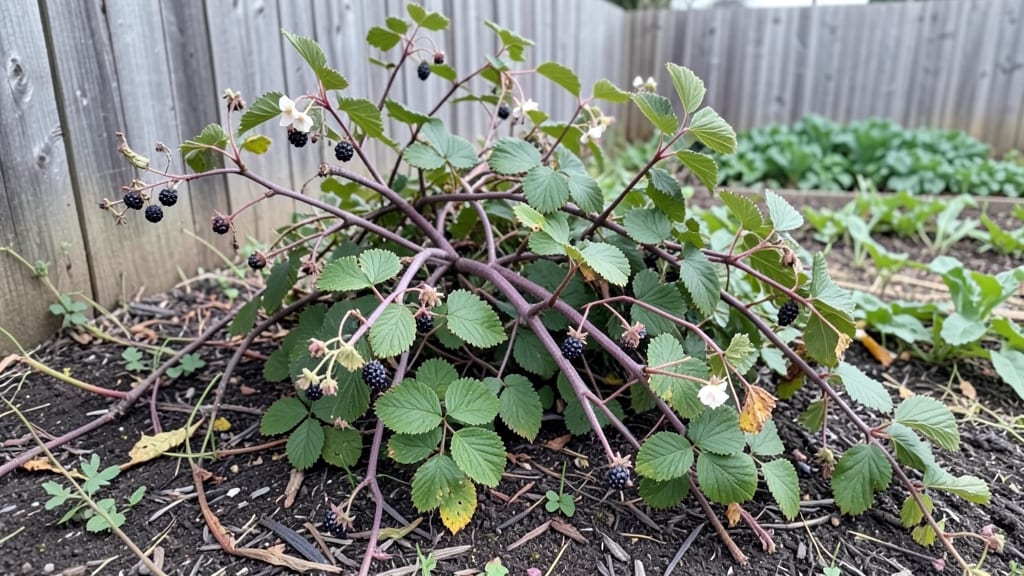
Identifying blackberry plants starts with those jagged leaves and wicked thorns—features that set them apart from raspberries and dewberries. 🌿 I’ve spent years distinguishing them in my own patch, and the key lies in the leaf shape (5-7 serrated lobes) and the way thorns cluster near the stem.
These details matter because blackberries need specific care: trellising, pruning, and soil pH that raspberries can’t handle.
Most blackberry varieties also produce berries that grow from the tips of canes, not the sides like raspberries. The thorns on blackberries tend to be longer and more aggressive, too—a warning sign if you’re reaching for those ripe summer fruits.
If your plant has smooth, arching canes with berries on the underside, it’s likely a dewberry, which thrives in shadier spots and doesn’t need heavy pruning.
Once you’ve confirmed it’s a blackberry, you’ll know exactly how to support it—whether that means installing a sturdy trellis or adjusting your watering routine for summer heat. Misidentifying your plant could mean wasted effort on the wrong care, like over-fertilizing for raspberries or under-trellising for thornless varieties.
Here’s how to spot the differences before you invest time in it.
If your plant looks sickly—yellowing leaves, no berries, or odd growth patterns—it might be struggling with pests or disease. Blackberries are prone to cane blight and Japanese beetles, so keep an eye out for chewed foliage or blackened canes.
A healthy plant should have glossy leaves, sturdy canes, and a bushy habit by mid-summer. Here’s what to do next if yours isn’t quite right.
Root Causes Of Misidentification
Identifying a blackberry plant can sometimes feel like solving a botanical puzzle—especially when leaves and thorns look eerily similar to other brambles. But why does this confusion happen in the first place?
The answer lies in a mix of genetic similarities, environmental factors, and human perception quirks. Let’s break down the science behind why even seasoned gardeners sometimes get tripped up.
Blackberries belong to the Rubus genus, a sprawling family that includes raspberries, dewberries, and loganberries. Many of these plants share identical leaf structures, thorn patterns, and growth habits, making them look like cousins rather than distinct species.
- Hybridization: Nature loves mixing things up. Blackberries often crossbreed with raspberries or other Rubus species, creating hybrids that blur the lines. For example, a Rubus allegheniensis (Allegheny blackberry) might look nearly identical to a Rubus idaeus (red raspberry) if you’re not paying attention to the fruit shape or cane texture.
- Polyploidy: Many brambles have multiple sets of chromosomes, leading to variations in size, leaf shape, and thorn density. A tetraploid blackberry (4 sets) might have broader leaves than a diploid (2 sets), but both could still be classified under the same genus.
- Cultural Varieties: Cultivated blackberries (like Cheyenne or Triple Crown) are bred for specific traits—some may lack thorns entirely or have smoother canes—making them harder to distinguish from thornless raspberries.
💡 Pro Tip: If you’re unsure, examine the fruit. Blackberries grow as aggregates of drupelets (tiny individual fruits fused together) that do not separate from the core when picked. Raspberries, on the other hand, leave a hollow core. This is your #1 clue!
Plants don’t grow in a vacuum—they adapt to their surroundings. When blackberries (or their lookalikes) face stressors like poor soil, pests, or disease, their physical traits can change in ways that make identification trickier.
| Stressor | How It Affects Blackberry Traits | What It Looks Like |
|---|---|---|
| 🌡️ Temperature Extremes | Cold snaps or heatwaves can stunt growth, altering leaf size and thorn density. | Smaller, darker leaves; fewer thorns than expected. |
| 💧 Water Stress | Drought causes canes to grow thinner, and leaves may curl or develop irregular shapes. | Narrower leaves; canes appear "weaker" or more flexible. |
| 🐛 Pest Damage (e.g., Japanese beetles, spider mites) | Insects chew on leaves, creating jagged edges that mimic natural variations. | Ragged leaf margins; holes or discoloration. |
| 🍄 Fungal Infections (e.g., anthracnose, powdery mildew) | Diseases can distort leaf patterns, making them appear "lobed" or uneven. | Spotted, yellowed, or misshapen leaves. |
✨ Key Insight: If a blackberry plant’s traits seem "off," check for symptoms of distress. Healthy blackberry leaves should be bright green, serrated, and uniformly shaped. Anything else might be a red flag for environmental factors.
Even with a magnifying glass, we sometimes miss the details that separate a blackberry from its doppelgängers. Here’s why our brains might play tricks on us:
- Focus On Fruit, Not Leaves: Many gardeners prioritize fruit identification over foliage. But blackberries and raspberries can have identical-looking berries in early stages—until they ripen.
- Thorn Confusion: Blackberry thorns are typically sharper and more curved than raspberry thorns, which are often straighter. However, thornless varieties (common in modern cultivars) erase this clue entirely.
- Seasonal Changes: New growth (primocanes) and old wood (floricanes) look different. A juvenile leaf on a blackberry might resemble a raspberry’s mature leaf, leading to mistakes.
- Cultural Assumptions: If you’ve only seen one type of blackberry (e.g., Thornfree varieties), you might overlook the classic serrated, 5-lobed leaf of wild types.
🎯 Actionable Fix: Train yourself to check three things when identifying:
- 🍇 Fruit attachment: Does it leave a core? (Blackberry = no; raspberry = yes.)
- 🌿 Leaf arrangement: Blackberries have 3-5 leaflets per stem; raspberries often have 3-7 but with a more "feathery" look.
- 🪨 Thorn placement: Blackberry thorns grow along the cane; raspberry thorns may be more clustered at nodes.
By understanding these root causes—genetic similarities, environmental stress, and human oversight—you’ll be better equipped to spot the subtle (or not-so-subtle) differences that define a true blackberry. Next up: How to Confirm Your ID Like a Pro!
Quick fixes for common blackberry issues
Blackberries are hardy plants, but they can still face challenges like pests, diseases, or environmental stress. The good news? Most problems have simple, effective solutions—if you act fast. Below, we’ve matched common issues with step-by-step fixes, plus tips to keep your plants thriving long-term.
Cause: Spider mites, aphids, or Japanese beetles sucking sap or chewing leaves. Fix: 🔥 Step 1: Inspect & Isolate – Check undersides of leaves and stems for tiny bugs or webbing. Remove heavily infested leaves immediately.
🍳 Step 2: Blast with Water – Use a strong spray nozzle to dislodge soft-bodied pests like aphids (do this in the morning for best results).
👨🍳 Step 3: Apply Neem Oil – Mix 1 tbsp neem oil + 1 tsp mild soap in 1 quart of water. Spray foliage thoroughly (reapply every 5–7 days).
🌿 Prevention Tip: 💡 Encourage natural predators like ladybugs and lacewings by planting companion flowers (e.g., marigolds or dill) nearby.
Cause: Powdery mildew, anthracnose, or botrytis from excess moisture or poor airflow. Fix: 🔥 Step 1: Prune for Airflow – Trim crowded canes and remove fallen leaves/debris to reduce humidity.
🍳 Step 2: Fungicide Spray – Use a copper-based fungicide (like Bordeaux mixture) or baking soda spray (1 tsp baking soda + 1 quart water + a drop of soap). Apply every 10–14 days.
👨🍳 Step 3: Water Wisely – Water at the base (not overhead) in the early morning to let foliage dry quickly.
🌡️ Prevention Tip: 💡 Space plants 3–4 feet apart and avoid overhead irrigation to keep leaves dry.
Cause: Insufficient pollination, nutrient deficiency, or environmental stress (heat/drought). Fix: 🔥 Step 1: Hand-Pollinate (If Needed) – Gently shake branches or use a small brush to transfer pollen between flowers.
🍳 Step 2: Fertilize Smartly – Apply a balanced fertilizer (10-10-10) in early spring, then switch to a high-potassium (like 0-10-10) when flowers appear.
👨🍳 Step 3: Mulch & Water Deeply – Spread 2–3 inches of mulch (straw or wood chips) to retain moisture and cool roots. Water 1–2 inches per week during fruit development.
✨ Pro Tip: 🎯 Plant bee-friendly flowers (e.g., clover or lavender) nearby to attract pollinators naturally.
Cause: Root rot, bacterial canker, or herbicide drift damaging roots. Fix: 🔥 Step 1: Dig & Inspect Roots – Gently lift a cane to check for black, mushy roots (root rot) or cankers (sunken lesions). Cut away diseased sections with sterilized pruners.
🍳 Step 2: Improve Drainage – Amend soil with compost or perlite if it’s heavy clay. Ensure pots (if using) have drainage holes.
👨🍳 Step 3: Treat with Hydrogen Peroxide – For root rot, soak roots in a 3% hydrogen peroxide solution (1 part peroxide to 10 parts water) for 10 minutes before replanting.
🌡️ Prevention Tip: 💡 Test soil pH (ideal: 5.5–6.5) and avoid overwatering—blackberries hate soggy roots!
Cause: Nutrient deficiency (iron, nitrogen, or magnesium) or viral infection. Fix: 🔥 Step 1: Soil Test First – Send a sample to a local extension office to confirm deficiencies.
🍳 Step 2: Apply Targeted Fertilizer
- Yellow between veins? → Iron chelate (spray or soil drench).
- Pale green overall? → Balanced NPK fertilizer (e.g., 10-10-10).
- Brown spots? → Epsom salt (1 tbsp per gallon of water) for magnesium.
👨🍳 Step 3: Quarantine Suspicious Plants – If leaves show mosaic patterns (viral symptoms), remove and destroy affected canes immediately.
🎯 Pro Tip: 💡 Avoid over-fertilizing with nitrogen—it can lead to lush leaves but few berries!
Final Reminder: 🌱 Prevention is key! Regular pruning, proper spacing, and monitoring will save you hours of troubleshooting later. Happy growing!
Frequently asked questions
How do I tell if my plant is a blackberry and not a raspberry?
Look at the fruit and leaves: blackberries grow as clusters of tiny drupelets that don’t separate from the core when picked, while raspberries leave a hollow core. Also, blackberry leaves typically have 5-7 serrated lobes and sharper thorns along the cane.
Can I identify blackberry plants by their thorns alone?
Thorns help, but don’t rely on them exclusively—some modern varieties are thornless. Focus instead on the leaf shape (5-7 lobes) and fruit attachment. Blackberry thorns are usually longer and more curved than raspberry thorns, but this varies by cultivar.
What should I do if my plant looks like a blackberry but isn’t producing fruit?
Check for pollination issues (hand-pollinate if needed) or nutrient deficiencies. Blackberries need well-draining soil (pH 5.5-6.5) and balanced fertilizer (10-10-10). If it’s a young plant, give it 1-2 more years
Are there blackberry varieties that look completely different from wild types?
Yes! Modern cultivars like ‘Natchez’ (thornless) or ‘Arapaho’ (semi-erect canes) may have smoother canes, larger leaves, or different growth habits. Always verify by checking fruit attachment and leaf structure, as these traits remain consistent.