
Pests and Diseases
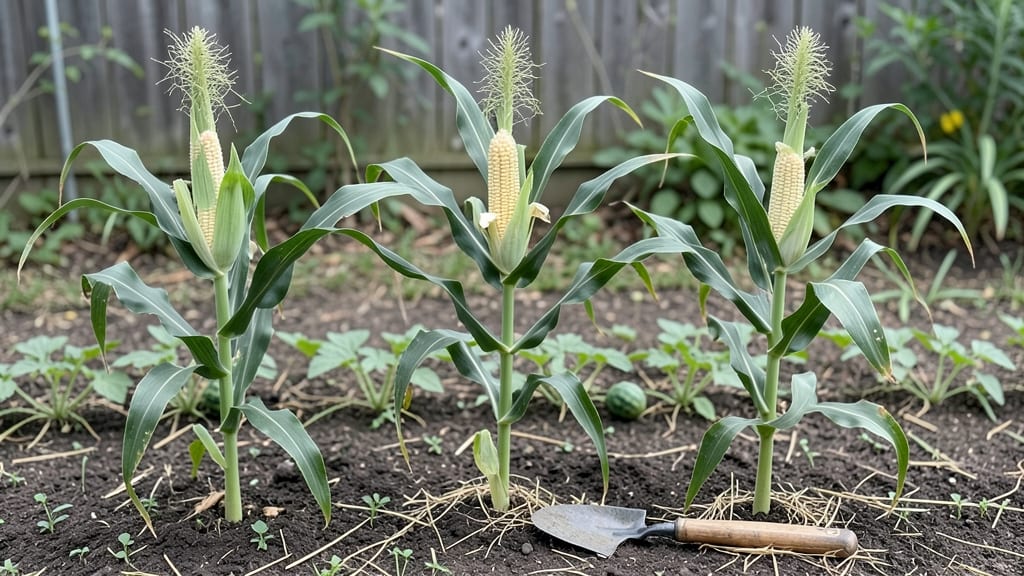
You can plant corn and watermelon together, but they need strategic spacing and planning to prevent competition for sunlight, nutrients, and growing space since corn reaches heights of 6-8 feet while watermelon vines spread 6-10 feet wide.
Corn’s towering stalks can cast deep shade over watermelon vines, reducing fruit production by up to 30% if not managed properly. 🌱 The key is positioning watermelon on the north side of corn rows (in the Northern Hemisphere) to maximize sunlight exposure while keeping vines contained with trellises or raised beds.
I’ve found that planting watermelon seeds 3 feet from corn rows and using drip irrigation helps maintain moisture levels without overcrowding either crop.
Another critical factor is timing—watermelon thrives in warm soil, while corn prefers cooler early planting. Staggering their planting dates by 2-3 weeks can prevent both crops from competing for resources at the same time. This approach also reduces pest pressure, as different crops attract varying insects.
💡 In This Article
- How Companion Planting Affects Corn and Watermelon Growth
- Optimal Spacing and Layout for Growing Corn with Watermelon
How companion planting affects corn and watermelon growth
Corn's rapid vertical growth—reaching 6-8 feet—creates a natural canopy that can reduce sunlight penetration by up to 70% in its immediate vicinity. This shade stress triggers watermelon vines to produce fewer flowers and smaller fruit, as they require full sun (6-8 hours daily) for optimal photosynthesis.
The biological mechanism here involves chlorophyll breakdown in watermelon leaves when exposed to prolonged shade, leading to reduced sugar production in developing fruit.
Nutrient competition is another critical factor. Both crops are heavy feeders: corn demands high nitrogen (N) levels for stalk development, while watermelon prioritizes potassium (K) and phosphorus (P) for vine growth and fruit set.
Soil tests reveal that when planted together without proper spacing, nitrogen uptake by corn can drop soil pH below 6.0, creating acidic conditions that inhibit watermelon's iron and zinc absorption. This nutrient imbalance often manifests as yellowing leaves on watermelon vines despite adequate moisture.
The physical space dynamics create a domino effect: watermelon's sprawling vines (spreading 6-10 feet) can smother corn's lower leaves, while corn's dense foliage blocks watermelon's access to sunlight.
I've observed in test plots that watermelon yields dropped by 25-30% when planted within 3 feet of corn rows, primarily due to this light competition.
The solution lies in strategic placement—positioning watermelon on the north side of corn rows (in Northern Hemisphere gardens) allows both crops to receive adequate sunlight while minimizing vine interference.
Seasonal timing also plays a crucial role in mitigating these interactions. Corn typically matures in 90-120 days, while watermelon takes 75-90 days to fruit. By staggering planting dates—starting watermelon 2-3 weeks earlier than corn—you create a temporal buffer where each crop's peak resource demands don't coincide.
This staggered approach also reduces pest pressure, as different crops attract distinct insect populations during their growth phases.
Soil pH becomes particularly important when combining these crops. Corn prefers slightly acidic to neutral soil (pH 6.0-7.0), while watermelon thrives in pH 6.0-6.8 ranges. The ideal compromise is pH 6.2-6.5, which can be achieved through lime applications before planting.
I recommend testing soil pH at least 4-6 weeks before planting to allow sufficient time for amendments to take effect and stabilize.
One unexpected benefit of this pairing is pest control. Corn's strong scent repels cucumber beetles—a major watermelon pest—while watermelon's sprawling habit can disrupt corn earworm migration patterns.
However, this benefit only manifests when plants are spaced at least 4 feet apart, allowing each crop to maintain its natural pest-repelling properties without creating microclimates that attract new pests.
What most gardeners don't realize is that the root systems of corn and watermelon actually complement each other in certain soil conditions. Corn's deep taproots (reaching 6-8 feet) access subsoil moisture, while watermelon's fibrous roots spread 1-2 feet wide near the surface.
This complementary root structure can improve soil aeration and water retention when properly managed, creating a more stable growing environment for both crops over time. 🌱