
Diseases
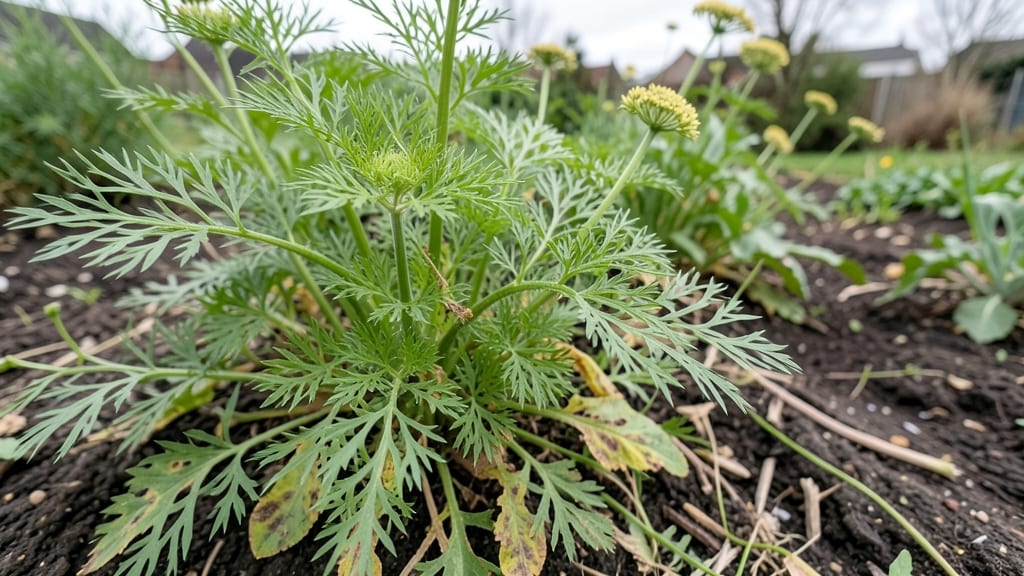
Dill plants can go from fragrant and lush to crispy and sad in just a few weeks when diseases like powdery mildew or bacterial leaf spot strike. 🌿 I’ve watched my own dill plants turn from healthy and vibrant to nearly lost—until I learned the early warning signs and organic fixes that actually work.
The key is catching problems before they spread, and knowing which treatments to use without harsh chemicals.
Most dill diseases start with tiny white spots, yellowing leaves, or slimy patches that feel unnatural to the touch. These aren’t just cosmetic issues—they weaken the plant, reducing your harvest and sometimes killing the plant entirely.
The good news? Proper spacing, watering at the base (not overhead), and removing infected leaves early can prevent 90% of these problems before they start.
Once you spot trouble, organic solutions like neem oil, baking soda sprays, or copper fungicides can turn things around—if you act fast. I’ve saved entire plants by treating them within 48 hours of noticing symptoms.
The goal isn’t just to stop the disease but to restore your dill’s health so it keeps producing those feathery leaves and flavorful seeds all season.
This works for both container gardens and in-ground plantings, and the methods are just as effective in partial shade as they are in full sun. Let’s get your dill back to its best—before the next harvest slips away.
Root Causes of Dill Plant Troubles
Dill plants, with their delicate fern-like foliage and aromatic seeds, are surprisingly vulnerable to a range of diseases. But why do these issues pop up in the first place?
Understanding the underlying triggers—whether biological, environmental, or cultural—helps you take proactive steps to protect your garden. Let’s break down the science behind the most common culprits.
Fungi thrive in damp, stagnant conditions, and dill plants are no exception. These microscopic invaders latch onto weak spots—often caused by poor airflow or overwatering—and multiply rapidly. Here’s how it happens:
- Excess Moisture 🌧️ Fungi like downy mildew (Peronospora) and powdery mildew (Erysiphe) love humidity.
When leaves stay wet for prolonged periods (e.g., from overhead watering or dense foliage), spores germinate and spread like wildfire. Downy mildew causes yellow, oily patches on the upper leaf surface, while powdery mildew leaves a chalky white residue on both sides.
- Poor Air Circulation 🌬️ Tightly packed dill plants or those grown in shaded spots create a greenhouse effect, trapping moisture. Fungi exploit this by spreading uncontrollably. Early signs? Brown, mushy stems or gray mold (Botrytis cinerea) on flowers or seeds.
- Weakened Plants 🌱 Stressed dill—from nutrient deficiencies, transplant shock, or pest damage—has fewer defenses. Fungi seize the opportunity, often starting at the base of the stem where wounds or old growth provide entry points.
Bacteria are opportunistic pests that exploit wounds or natural openings (like stomata) to invade plant tissues. Unlike fungi, they spread via water, tools, or even contaminated seeds. Common offenders include:
- Bacterial Leaf Spot 🍃 Caused by Pseudomonas syringae, this bacteria thrives in warm, wet weather. It enters through rain splashes or irrigation, colonizing leaf edges and creating small, water-soaked spots that turn brown and crispy. Key trigger? Overhead watering or crowded plants with poor drainage.
- Soft Rot 🥬 Erwinia bacteria cause this slimy, foul-smelling decay, often in the stem base or roots. It’s spread by contaminated soil, tools, or even human hands.
Once established, it turns tissues mushy, leading to collapse. Why does it start? Overwatering or compacted soil traps bacteria near the roots.
Viruses are the sneaky invaders of the plant world—spread by insects (like aphids), infected seeds, or even garden tools. Once inside, they hijack the plant’s cellular machinery, causing stunted growth, mosaic patterns, or deformed leaves. Dill’s most common viral foes:
- Cucumber Mosaic Virus (CMV) 🌿 Transmitted by aphids or infected dill seeds, CMV causes yellow mottling, leaf curling, and stunted growth. It thrives in warm temperatures (70–85°F) and spreads rapidly in mixed gardens where aphids feast on multiple hosts.
- Tomato Spotted Wilt Virus (TSWV) 🐛 Spread by thrips (tiny winged insects), this virus creates brown spots with yellow halos on leaves. It’s worse in dry, hot conditions where thrips multiply unchecked.
Sometimes, diseases aren’t the direct cause—they’re the final blow after environmental factors weaken the plant. Common triggers:
- Extreme Temperatures ❄️☀️ Dill prefers cool to moderate climates (55–75°F). Frost damage or heat stress (above 90°F) disrupts cellular function, making plants susceptible to secondary infections. Example: Heat-stressed dill is more likely to succumb to Alternaria leaf spot.
- Nutrient Imbalances 🌱 Over-fertilization (especially nitrogen) leads to lush, weak growth prone to fungal attacks. Conversely, deficiencies in potassium or calcium weaken cell walls, making them easier targets for bacteria.
- Poor Drainage or Waterlogging 💦 Roots deprived of oxygen (from soggy soil) develop root rot (Phytophthora or Pythium). These water-mold fungi thrive in anaerobic conditions, turning roots black and mushy.
Even the best gardeners can unintentionally fuel plant diseases. Common mistakes that invite trouble:
- Overhead Watering 💦 Splashing water onto leaves spreads spores and bacteria. Fix: Use drip irrigation or soaker hoses to keep foliage dry.
- Reusing Contaminated Tools ⚔️ Pruners, trowels, or hands can carry pathogens from plant to plant. Solution: Sanitize tools with 70% rubbing alcohol or a 10% bleach solution between uses.
- Ignoring Crop Rotation 🔄 Planting dill (or other umbellifers like parsley or cilantro) in the same spot year after year allows soil-borne pathogens to build up. Rule of thumb: Rotate with non-related crops (e.g., legumes or brassicas) every 3 years.
Some diseases don’t act alone—they hitch a ride on pests. For dill, these include:
- Aphids 🐜: Spread viruses like CMV while feeding on sap.
- Slugs/Snails 🐌: Create wounds that invite bacterial infections.
- Whiteflies 🦋: Transmit viruses and weaken plants with their feeding.
Pro tip: 💡 Monitor pest populations early—use neem oil or insecticidal soap to prevent them from becoming disease vectors.
Fixing Common Dill Plant Problems
Dill plants, like any herb, can fall victim to diseases and pests that threaten their health—and your harvest. But don’t worry! With the right approach, you can revive struggling plants and prevent future issues.
Below, we’ve mapped out practical solutions for the most common dill plant problems, along with prevention tips to keep your garden thriving.
If you’ve spotted yellowing leaves, black spots, or wilting stems, it’s time to take action. The key is early intervention—the sooner you address the issue, the better your dill’s chances of recovery.
🍄 Powdery mildew: white fuzz on leaves
Cause: Fungal infection from high humidity or poor airflow. Fix:
- Prune infected leaves immediately to stop the spread. 🔪
- Spray with a homemade mix of 1 tsp baking soda, 1 quart water, and a few drops of dish soap.
Apply in the early morning so leaves dry quickly. - Improve airflow by spacing plants 12–18 inches apart and avoiding overhead watering. - Prevention: Apply neem oil as a preventative spray every 2 weeks during humid seasons.
Pro Tip: 💡 Resistant varieties like ‘Bouquet’ dill handle humidity better than others.
🟣 Black spot: dark spots on leaves
Cause: Fungal disease thriving in wet conditions. Fix:
- Remove and destroy heavily infected leaves (don’t compost them!).
- Water at the base (not overhead) to keep foliage dry.
- Apply copper fungicide (organic option) or a garlic spray (blend 1 chopped garlic bulb with 1 quart water, strain, and spray).
- Rotate crops—don’t plant dill in the same spot next year.
Pro Tip: ✨ Reflective mulch (like aluminum foil) can reduce fungal spores by reflecting sunlight.
🐛 Aphids & spider mites: tiny pests sucking sap
Cause: These pests cluster on undersides of leaves, weakening plants. Fix:
- Blast them off with a strong stream of water. 💦
- Introduce beneficial insects like ladybugs or lacewings (they eat aphids!).
- Spray with insecticidal soap (1 tbsp castile soap + 1 quart water) or neem oil.
- Encourage predatory birds by adding a small birdbath nearby.
Pro Tip: 🌡️ Hot pepper spray (1 tsp cayenne + 1 quart water) repels pests naturally.
🌿 Root rot: soft, brown stems at the base
Cause: Overwatering or poor drainage leads to fungal root damage. Fix:
- Stop watering immediately and let the soil dry out.
- Repot in fresh, well-draining soil (mix in perlite or sand).
- Ensure pots have drainage holes—if growing in-ground, amend soil with compost.
- Avoid soggy conditions—dill prefers moderate moisture, not soggy roots.
Pro Tip: 🎯 Raise containers slightly off the ground to prevent water pooling.
🍃 Bacterial leaf spot: water-soaked lesions
Cause: Bacterial infection from splashing water or contaminated tools. Fix:
- Remove infected leaves and sterilize pruners with rubbing alcohol.
- Avoid overhead watering—use drip irrigation or water at the base.
- Apply a copper fungicide (follow label instructions).
- Rotate crops to prevent soil-borne bacteria from lingering.
Pro Tip: 🔥 Solarize soil (cover with clear plastic for 4–6 weeks) to kill bacteria before replanting.
The best cure? A strong defense. Here’s how to prevent diseases before they start:
- 🌱 Choose disease-resistant varieties (e.g., ‘Mammoth’ or ‘Fernleaf’ dill).
- ⚡ Rotate crops—don’t plant dill in the same spot yearly.
- 💦 Water early in the day so leaves dry quickly.
- 🌿 Space plants properly for airflow (12–18 inches apart).
- 🧼 Clean tools between uses to avoid spreading pathogens.
- 🌿 Mulch with straw or grass clippings to reduce soil splashing.
By following these simple, organic fixes, your dill plants will bounce back—and you’ll enjoy a bountiful, disease-free harvest all season long! 🌿✨
Frequently asked questions about dill plant diseases
What are the first signs my dill plants might have a disease?
Watch for white powdery residue (powdery mildew), yellow or brown spots (bacterial leaf spot), or oily-looking patches (downy mildew) on leaves. Check the undersides of leaves too—many fungal issues start there. If stems feel soft or mushy at the base, it could be root rot from overwatering.
Can I still use dill leaves if they have a little powdery mildew?
Yes, but remove the infected leaves first! The rest of the plant can still produce safe, edible foliage. Just wash leaves thoroughly before using. For severe cases, treat the plant to prevent spread—powdery mildew won’t harm you, but it can weaken your harvest.
How do I know if my dill plant has a fungal or bacterial infection?
Fungal diseases (like powdery mildew) show up as white powder or fuzzy growth, while bacterial infections (like leaf spot) create water-soaked, crispy brown patches. Fungi thrive in humidity, while bacteria spread through water splashes. Check stems too—mushy, slimy bases indicate bacterial soft rot.
Will neem oil work for all dill plant diseases?
Neem oil is excellent for fungal diseases (like powdery mildew) and some pests, but it’s not effective against bacterial infections. For bacterial issues, use copper fungicide instead. Always apply neem oil in the early morning or evening to avoid harming beneficial insects.
How can I prevent diseases in my dill plants before they start?
Focus on proper spacing (12–18 inches apart), watering at the base (never overhead), and removing infected leaves immediately. Use disease-resistant varieties like 'Mammoth' dill, rotate crops yearly, and ensure good airflow by pruning crowded foliage.