
Diseases
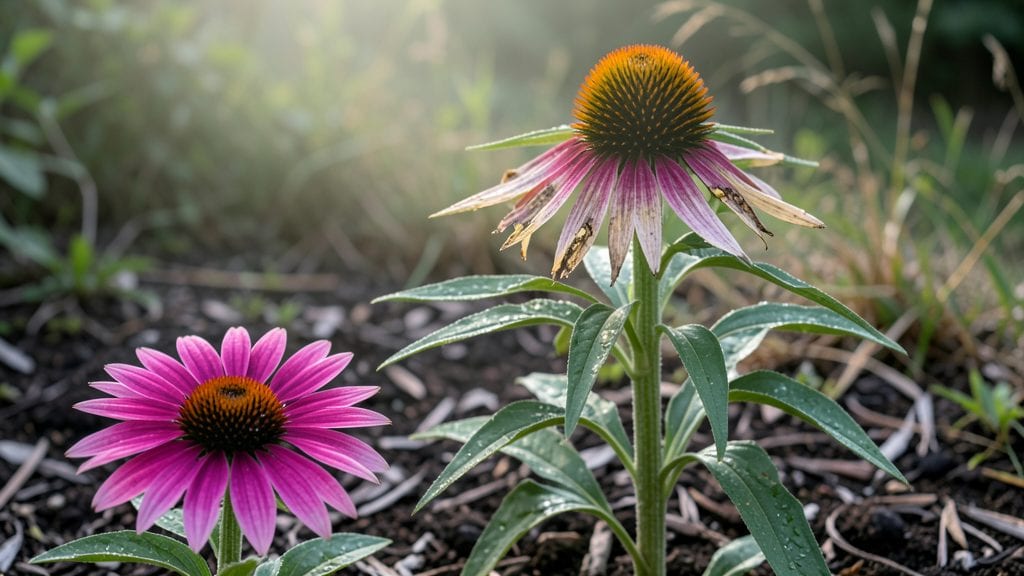
Echinacea plant diseases often include powdery mildew, rust, and fungal leaf spots, which weaken stems and reduce flowering. Early signs are white powder, orange pustules, or dark brown spots. Prevent spread with proper spacing, air circulation, and organic fungicides like neem oil or baking soda solutions.
Echinacea plants are tough but not disease-proof.
Fungal infections like powdery mildew thrive in damp conditions, creating that telltale white dust on leaves, while rust diseases show up as orange spots that eventually turn leaves brittle. 🌱 Bacterial leaf spots often appear after rain or overhead watering, causing dark lesions that spread quickly if humidity stays high.
The good news? Catching these early with proper airflow and organic sprays can save your plants—and your garden's beauty.
Beyond the obvious symptoms, watch for stunted growth or flowers that refuse to open. These are red flags that your echinacea's immune system is fighting an internal battle.
I've found that a weekly neem oil spray during humid months keeps most issues at bay, but if you spot those first signs, act fast—prune infected foliage immediately and avoid watering the leaves to prevent further spread.
💡 In This Article
- Identifying Common Echinacea Fungal and Bacterial Infections
- Organic Remedies for Reviving Diseased Echinacea Plants
Identifying common echinacea fungal and bacterial infections
Here's what's actually happening when your echinacea plants show signs of distress: fungal pathogens like powdery mildew (Erysiphe cichoracearum) thrive in humidity levels above 75%, forming those signature white, powdery colonies on leaf surfaces.
The fungus produces microscopic spores that germinate when moisture lingers, creating a thick, cottony layer that blocks sunlight and stunts photosynthesis. Rust diseases, caused by Puccinia species, take a different approach—they inject orange-red spores into leaf tissue, triggering cellular breakdown that creates pustules visible on both leaf surfaces.
The key difference between these infections lies in their spread mechanisms. Powdery mildew spores travel via wind but can also hitch rides on garden tools or contaminated water droplets, while rust spores require wind currents to jump between plants over distances up to 50 feet.
Bacterial leaf spots, often caused by Xanthomonas or Pseudomonas, enter through wounds created by rain, overhead irrigation, or even insect bites. These bacteria multiply rapidly in warm, wet conditions (ideal at 70-85°F
The visual contrast is striking: mildew's chalky white versus rust's fiery orange versus bacterial spots' water-soaked black centers. What most people don't realize is how environmental factors create perfect disease conditions. Poor drainage leads to waterlogged soil that keeps humidity near leaves elevated for days, while overcrowded plants reduce air circulation below 10 mph—the minimum needed to disrupt fungal spore clouds. I've seen gardens where plants spaced 18 inches apart stayed healthy, while those packed 12 inches apart developed mildew within weeks. The first sign of trouble is often wilting that doesn't improve with watering, accompanied by leaves that feel papery or develop strange discoloration patterns. Let's break down the visual symptoms by infection type for easier identification: The most critical time for intervention is when you first notice these symptoms—before spores mature and spread. For example, powdery mildew spores become infectious within 3-5 days of appearance, while rust pustules release spores that can survive in soil for years. That's why I recommend removing infected leaves immediately (don't compost them!) and treating with organic fungicides within 24 hours of first sighting for best results. One advanced technique I've found effective is using a reflective mulch (like aluminum foil) around plants—this increases light intensity by 20-30% and reduces humidity near foliage, creating conditions less favorable for fungal growth. The science behind this works because higher light levels increase leaf temperature slightly, which makes the leaf surface less hospitable to fungal spores while boosting the plant's natural defenses.