
Pruning
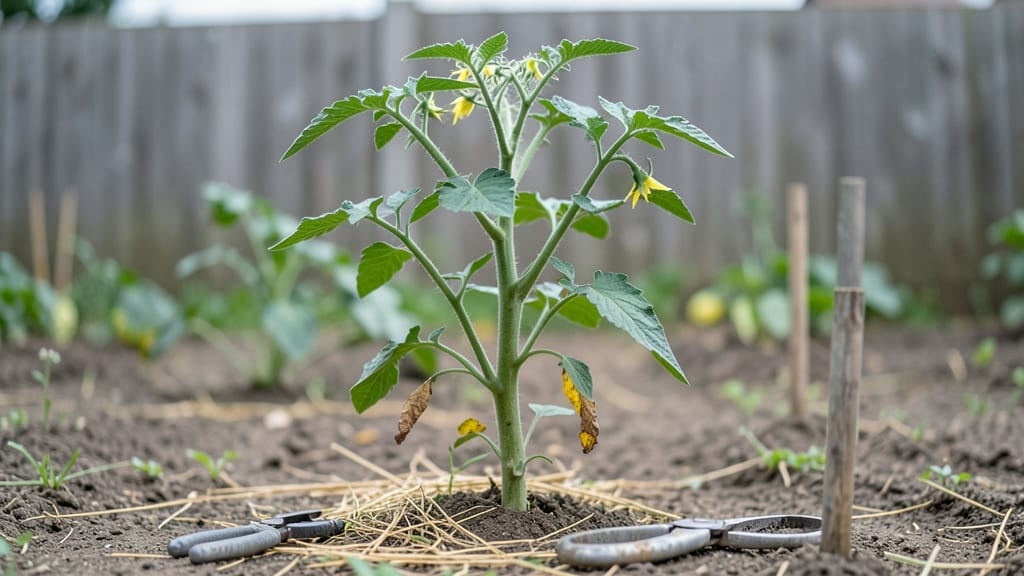
Pruning young tomato plants transforms a scraggly mess into a high-yielding powerhouse—here’s how I went from confused to confident in just a few minutes per plant. 🌱 The key isn’t cutting everything you see; it’s directing energy where it matters most.
I used to skip pruning entirely, and my plants grew wild with tiny fruits. Now, my tomatoes produce pounds of beefsteak-sized fruit by summer’s end.
Start when plants hit 12-18 inches tall, using just sharp pruners and a clear morning for visibility. The goal is simple: remove suckers (those little shoots between the stem and branches) and any leaves touching the soil.
This might sound intimidating, but it’s more about light and airflow than precision—think of it as giving your plant a spa day, not a haircut. Even my black thumb can’t mess this up once you see the before-and-after.
What you’ll end up with is a strong, upright plant that puts all its energy into fruit instead of leafy growth. The first harvest arrives 2-3 weeks earlier than unpruned plants, and the tomatoes keep coming until frost.
The secret? Consistency—prune weekly once you start, and watch your plants reward you with bigger, sweeter fruit all season.
Works for determinate (bush) and indeterminate (vining) varieties, though indeterminates need more frequent pruning. Here’s where it gets interesting—once you master this, you’ll notice your plants bounce back faster from pests and disease too. Let’s get those shears out and turn those skinny stems into harvest gold.
📚 In This Guide
- What you need
- Instructions
- Tips and common mistakes
- Wrapping up and next steps
What you need
- ● Pruning shears or sharp bypass pruners – Choose sterilized, sharp tools (avoid dull blades to prevent tearing plant tissue). A 4- to 6-inch blade works best for young plants.
- ○ Gloves (optional but recommended) – Wear gardening gloves to protect your hands from thorns (especially on indeterminate varieties) and dirt.
- ● Disinfectant (rubbing alcohol or bleach solution) – Clean your tools before and after pruning to prevent disease spread (mix 1 part bleach to 9 parts water for a quick sanitize).
- ● Small container or bucket – For collecting pruned branches (compost them later!).
- ● Stake or tomato cage (if not already in place) – Supports healthy growth as the plant matures. Opt for 5-6 foot stakes for indeterminate varieties.
- ● Twine or plant ties – Soft, stretchy garden twine (¼-inch width) to secure the plant to its support.
- ● Hand lens or magnifying glass – Helps spot early signs of pests or disease on small branches.
- ○ Plant growth regulator (optional) – Products like seaweed extract or hydrogen peroxide spray can aid healing after pruning.
- ● Pruning sealant (not always necessary) – A cinnamon-based powder can help prevent infections on larger cuts (skip for small trims).
- ● Notebook & pen – Track pruning dates, plant progress, and notes on growth patterns.
Step-by-Step guide to pruning young tomato plants
Here’s how to shape your tomato plants for stronger growth and bigger yields—without stressing the stems.
✂️ Step 1: Remove Lower Leaves and Suckers for Airflow
Start by stripping all leaves from the bottom 6 inches of the stem. These lower leaves trap moisture and invite disease. Use clean, sharp pruners to avoid tearing the plant. I like to make a small cut just above the leaf stem to prevent ragged edges that slow healing.
Next, hunt for suckers—those little shoots growing in the V-shaped junction between the main stem and a branch. Pinch them off early, before they grow more than 1 inch. Suckers divert energy from fruit production, so removing them now means more tomatoes later.
✂️ Step 2: Prune for Structure as the Plant Grows
Once your plant reaches 3-4 feet tall, focus on maintaining a single main stem with 2-3 strong branches. Cut back any weak or crossing stems at their base. This prevents overcrowding and lets sunlight and air reach the center of the plant—critical for preventing blight.
Watch for shoots growing from the leaf axils (where leaves meet the stem). These are future suckers. Remove them while they’re still small, or they’ll compete with your main branches. A quick twist with your fingers works for tiny suckers—no pruners needed.
✂️ Step 3: Thin Fruit Clusters for Larger Tomatoes
When flowers appear, let only 2-3 tomatoes per cluster develop. Remove the smaller or weaker fruit by twisting gently at the stem. This ensures the remaining tomatoes get all the plant’s energy, growing bigger and sweeter. I always keep the lowest cluster intact—those early tomatoes ripen first and signal when to harvest.
If your plant is small or struggling, leave just 1 tomato per cluster to avoid overburdening the vine. You’ll still get a great harvest, just smaller in quantity. The key is balance—never let more than 4-5 tomatoes grow on a single branch at once.
✂️ Step 4: Maintain Pruning Through the Season
Every 2-3 weeks, check for new suckers and trim them immediately. As the plant matures, reduce pruning to just removing diseased or dead leaves. Stop pruning entirely when the plant flowers—fresh cuts can attract pests and slow fruit set.
By late summer, focus on support and cleanup. Remove any leaves shading the lower fruit clusters to speed ripening. If your plant is determinate (bush-type), prune lightly to keep it compact. Indeterminate varieties (vining types) need more aggressive pruning to direct energy upward.
⏰ Step 5: Prepare for Harvest and Winter
When tomatoes start coloring, prune only to remove dead or yellowing leaves. This keeps the plant focused on ripening fruit. Stop all pruning 4-6 weeks before your first frost—you want the plant to put its energy into ripening existing fruit, not healing wounds.
After harvest, cut the plant back to 6 inches above the ground. This makes cleanup easier and reduces disease overwintering. Compost the pruned material—just avoid tossing it in the yard if fungal spots appear.
Tips & tricks for perfect tomato plant pruning
Pruning young tomato plants might seem intimidating, but these key techniques will transform your harvest—literally. The difference between a modest yield and a bounty comes down to these strategic cuts.
Timing is Everything: In Step 1, when you're removing those bottom 6 inches of leaves, do it early in the morning when the plant is turgid with water. This makes the stems firmer and reduces tearing. I also recommend wearing gloves—tomato stems can be surprisingly prickly, especially on heirloom varieties. The goal is to expose the stem to sunlight and air circulation, which prevents fungal diseases like early blight that thrive in damp foliage.
Sucker Removal Strategy: The 1-inch rule in Step 1 is non-negotiable—suckers grow aggressively, and by the time they reach 2 inches, they've already siphoned significant energy from your fruit production. Here's what I do: I check for suckers every 7-10 days during the growing season, especially after heavy rains when new growth surges. For stubborn suckers, I use my thumbnail to make a clean break rather than tearing, which minimizes damage to the main stem.
Branch Balance Technique: In Step 2, when maintaining 2-3 strong branches, pay special attention to their placement. The strongest branch should be positioned at roughly 1/3rd up the main stem, with others spaced evenly. This creates a natural scaffold that supports fruit weight without overloading any single branch. I also avoid creating "V" shapes between branches—this creates weak points where fruit clusters can tear under weight.
Fruit Thinning Psychology: The 2-3 tomatoes per cluster rule in Step 3 works because it forces the plant to invest all its resources into fewer, larger fruit. Here's a pro move: when you're thinning, keep the tomato that's positioned to catch the most morning sunlight—these tend to ripen first and signal when to harvest the rest. For indeterminate varieties, I actually mark my calendar 14 days after pollination to check for fruit development, as this is when they start forming properly.
Pro Tips for Prune Young Tomato Plants
- Pruning young tomato plants might seem intimidating, but these key techniques will transform your harvest—literally.
- Timing is Everything: In Step 1, when you're removing those bottom 6 inches of leaves, do it early in the morning when the plant is turgid with water.
- Sucker Removal Strategy: The 1-inch rule in Step 1 is non-negotiable—suckers grow aggressively, and by the time they reach 2 inches, they've already siphoned significant energy from your fruit production.
Frequently asked questions
Got questions about pruning young tomato plants? You’re not alone! Here are answers to the most common concerns—so you can grow like a pro.
When should I start pruning my tomato seedlings?
Begin pruning after your plants have 2–3 sets of true leaves (not the initial seed leaves). This usually happens when they’re 6–8 inches tall. Early pruning helps direct energy to root and stem growth, setting the stage for a stronger plant. Pro tip: Wait until the soil is warm and seedlings are sturdy—cold stress can slow recovery.
How much should I cut off my young tomato plants?
For indeterminate varieties (like cherry tomatoes), pinch off the top set of leaves just above a leaf node (where leaves or branches sprout). For determinate types (bush tomatoes), prune minimally—just remove damaged or yellowing leaves. Never cut more than 1/3 of the plant at once! Think "trim, don’t hack."
Can I prune tomatoes in hot or cold weather?
Avoid pruning during heatwaves (above 90°F) or frosty nights—plants struggle to heal. Ideal temps are 60–80°F. If you must prune in heat, do it early morning or late evening to reduce stress. Cold snaps? Wait until soil warms up; pruning can invite disease if wounds don’t close properly.
What if my tomato plant looks sad after pruning?
Don’t panic! Mild wilting or yellowing is normal as the plant redirects energy. Water deeply and keep soil moist (but not soggy) for 3–5 days. If leaves turn brown or mushy, you may have over-pruned or introduced disease—sterilize your shears next time! Pro tip: Feed with a balanced fertilizer (like 10-10-10) a week after pruning to boost recovery.
Do I need to prune determinate (bush) tomatoes?
Determinate tomatoes don’t require heavy pruning like indeterminate types. Focus on removing only:
- Yellow/diseased leaves
- Suckers growing between the stem and branches (if any)
- Leaves touching the soil (to prevent rot)
Wrapping up and next steps
Pruning young tomato plants might seem daunting at first, but with the right techniques, you’ll unlock healthier vines, more abundant fruit, and a thriving garden! 🌱 The key is to start early, stay consistent, and focus on removing what doesn’t serve your plant’s growth.
Now that you’re armed with these season-long hacks, it’s time to roll up your sleeves and watch your tomatoes flourish.
Ready to take the next step? Grab your pruners, head outside, and give your plants the care they deserve—your future harvest will thank you! 🍅✨