
Pruning
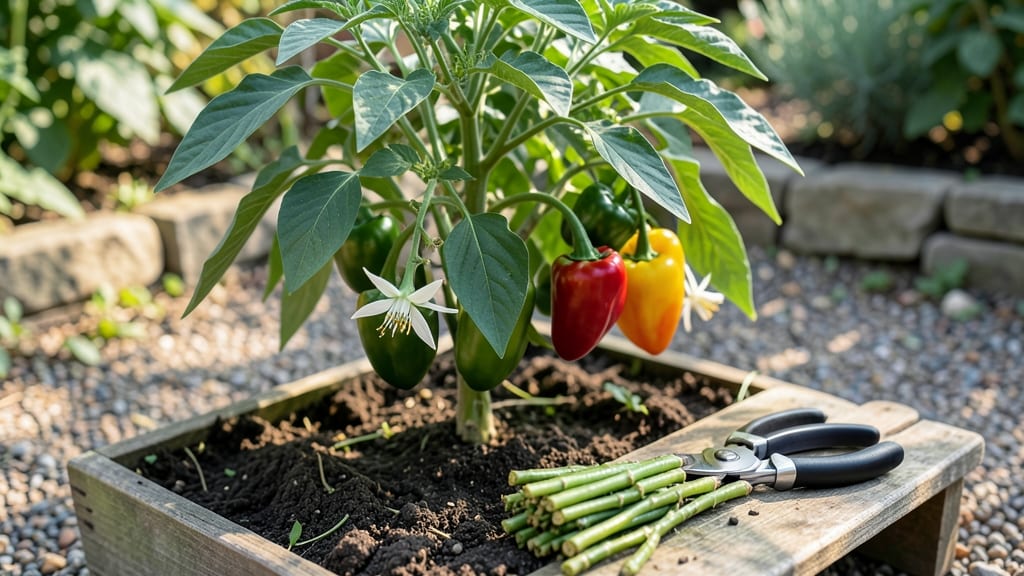
Trimming green pepper plants isn't just about shaping—it’s about pest-resistant growth and bigger harvests. ✂️ I learned the hard way that skipping this step means leggy plants, fewer peppers, and a magnet for aphids.
The right cuts redirect energy to fruit production while keeping the plant sturdy enough to support heavy harvests.
You only need three simple cuts per plant, made with clean pruners or scissors, and the best time is right after planting or when plants hit 12 inches tall. Focus on removing suckers (those little shoots between the main stem and branches) and any yellow or diseased leaves.
This isn’t about drastic pruning—just strategic trimming to open airflow and sunlight.
The payoff? Plants stay compact and productive, with thicker stems that resist wind and pests. You’ll see 20-30% more peppers by midseason, and the ones you do get will be larger and sweeter.
The key is patience—don’t rush the cuts, and always leave at least two healthy leaves above where you trim.
Works for bell peppers, jalapeños, and even habaneros, whether you’re growing in raised beds or containers. Here’s how to do it without stressing the plant—or yourself.
📚 In This Guide
- What you need
- Instructions
- Tips and common mistakes
- Wrapping up and next steps
What you need
- ● Pruning shears or bypass pruners: Sharp, clean, and sterilized (70% isopropyl alcohol works). Choose bypass-style (not anvil) for precise cuts. Example: Felco F2 or Corona Tools Classic.
- ○ Gloves: Heavy-duty gardening gloves (nitrile-coated for grip and protection against thorns). Optional: Add a pest-resistant layer if aphids or mites are a concern.
- ● Disinfectant solution: 1 part bleach (unscented) to 9 parts water (or 70% isopropyl alcohol) to sterilize tools between cuts.
- ● Trash bag or compost bin: For clippings (avoid composting diseased plant parts).
- ● Pest control (preventative): Neem oil spray: 1 tbsp neem oil + 1 tsp mild soap + 1 quart water (spray on leaves before pruning).
- ● Diatomaceous earth (DE): Food-grade DE (1–2 tbsp per plant) to deter crawling pests like slugs or ants.
- ● Hand pruners (smaller version): For tight spaces or delicate stems.
- ● Plant tie or soft twine: To support branches if you’re doing heavy pruning.
- ● Garden journal: To track pruning dates, plant health, and pest activity.
- ● Pest traps: Yellow sticky traps for whiteflies or aphids.
Step-by-Step guide to trimming green pepper plants for healthier yields
Here’s how to encourage bushier growth and bigger peppers—without inviting pests or disease.
✂️ Step 1: Remove Suckers at the Base of Branches
Suckers are those tiny offshoots that grow in the V-shaped crotches where branches meet the main stem. These energy vampires drain nutrients from your peppers, so snip them off cleanly with sharp pruners. Wait until they’re about 2-3 inches tall—smaller ones can be pinched by hand, but larger ones need a cut to avoid tearing the plant.
Make your cut at a 45-degree angle, about ¼ inch above the leaf node. This prevents water from pooling on the wound, which could rot the stem. I always trim in the morning so the plant has the whole day to heal before evening moisture sets in.
✂️ Step 2: Prune Leggy Growth to Encourage Bushiness
If your pepper plant stretches tall and spindly, it’s reaching for light—usually a sign it’s not getting enough sun or is overcrowded. Look for stems that grow beyond 24 inches tall or have long gaps between leaves. These leggy sections need to go. Cut just above a leaf node where new growth can sprout.
Leggy growth also weakens the plant’s structure, making it more susceptible to wind damage and pests. After pruning, the plant redirects energy to lower branches, producing more compact, fruit-bearing stems. You’ll see thicker stems and more peppers within 2-3 weeks of proper pruning.
✂️ Step 3: Thin Overcrowded Foliage for Airflow
Pepper plants need airflow to stay pest-free and disease-resistant. If leaves are crowded so tightly you can’t see through the plant, it’s time to thin. Focus on the lower third of the plant first—these older leaves contribute little to fruit production but trap moisture and attract pests.
Remove entire branches, not just leaves, to improve airflow. Aim to leave 3-4 inches of space between branches. This also lets sunlight reach the lower fruit, preventing sunscald on peppers near the soil. I always sterilize my pruners with rubbing alcohol between cuts to prevent spreading any hidden fungal spores.
⏰ Step 4: Time Your Cuts for Maximum Recovery
Never prune when the plant is stressed—avoid cutting during heatwaves or after heavy rain. The best time is on a cool, cloudy morning after the soil has dried slightly. Pepper plants recover fastest when temperatures are between 65-75°F and humidity is moderate.
After pruning, water deeply at the base to help the plant recover. You’ll notice new growth within 7-10 days, signaling that the plant is redirecting energy to stronger, healthier branches. This is also when you should apply a balanced fertilizer to support the plant’s recovery and fruit production.
Tips & tricks for perfect green pepper plant trimming
These precision techniques will transform your pepper plants into robust, high-yielding powerhouses while keeping pests at bay.
Tool Preparation: Sterilize your pruners between cuts with rubbing alcohol—this prevents cross-contamination of fungal spores that could infect your plants. I also keep a small spray bottle of diluted alcohol (1 part alcohol to 3 parts water) handy for quick sanitization between different plants. Sharp, clean tools make all the difference in preventing damage that invites disease.
Visual Cues for Pruning: In Step 3, when thinning foliage, look for branches where sunlight can't penetrate to the center of the plant. Imagine you're looking at the plant from 3 feet away—if you can't see through the leaves, it's time to thin. Focus on removing entire branches rather than just leaves, as this creates better airflow and stronger structural growth. The 3-4 inch spacing between branches is your target for optimal light exposure.
Seasonal Timing Strategy: The 75°F temperature range mentioned for optimal recovery is perfect for spring and fall pruning. In summer heat, prune in early morning when temperatures are cooler, and avoid pruning during heatwaves entirely. I've learned this the hard way—pruning during summer stress can shock plants and set back fruit production by weeks. Always check for wilting or yellowing leaves as signs your plant isn't ready for trimming.
Post-Pruning Care: After making your cuts, especially in Step 4, water deeply at the base to help the plant recover. The 7-10 day window for new growth is your opportunity to monitor closely—look for fresh green shoots at the leaf nodes where you made cuts. If you notice any brown or mushy stems after pruning, that's a sign of bacterial infection from improper cutting technique or contaminated tools. Remove any affected branches immediately to prevent spread.
Pro Tips for Trim Green Pepper Plants
- These precision techniques will transform your pepper plants into robust, high-yielding powerhouses while keeping pests at bay.
- Tool Preparation: Sterilize your pruners between cuts with rubbing alcohol—this prevents cross-contamination of fungal spores that could infect your plants.
- Visual Cues for Pruning: In Step 3, when thinning foliage, look for branches where sunlight can't penetrate to the center of the plant.
Frequently asked questions
Got questions about trimming your green pepper plants?
You’re not alone! Here are answers to the most common concerns—from timing to troubleshooting—to keep your peppers thriving.
When is the best time of day to trim green pepper plants?
Trim your plants in the early morning when the air is cool and humidity is low. This reduces stress on the plant and minimizes the risk of disease. Avoid trimming in the heat of the day—it can shock the plant and slow recovery.
How often should I trim my green pepper plants?
Prune your green peppers every 2–4 weeks during the growing season (spring to fall). Focus on removing suckers, yellowing leaves, and overcrowded branches. Regular trimming encourages bushier growth and better fruit production.
What should I do if my green pepper plant looks wilted after trimming?
Wilting is normal for a day or two post-pruning. Keep the plant well-watered and in partial shade until it recovers. If wilting persists beyond 48 hours, check for root rot or pests. A balanced fertilizer can also help speed up recovery.
Can I use pruning shears or scissors to trim green pepper plants?
While scissors can work for small cuts, sterilized pruning shears are ideal. They make cleaner cuts, reducing the risk of disease. Always disinfect your tools with rubbing alcohol before and after use to prevent bacterial spread.
Will trimming my green pepper plant reduce my harvest?
Not at all! Pruning actually boosts productivity by redirecting energy to fruit production. Removing suckers and dead leaves improves airflow, reducing pests and diseases. With proper trimming, you’ll often get a bigger and healthier harvest.
What if I missed the ideal trimming window—can I still do it?
Yes! While early-season trimming is best, you can prune throughout the growing season. Just avoid heavy cuts late in the season (after harvest) to prevent stress. Focus on removing only diseased or damaged growth to keep the plant healthy.
Wrapping up and next steps
Trimming your green pepper plants isn’t just about keeping them tidy—it’s a game-changer for healthier, pest-resistant, and more productive growth! 🌱 By mastering those three strategic cuts (removing suckers, pruning leaves, and trimming dead growth), you’ll encourage stronger stems, better airflow, and a bountiful harvest.
Plus, a little maintenance now means fewer headaches later with pests or disease.
You’ve got this! Start small, stay consistent, and soon you’ll be reaping the rewards of your green-thumbed efforts. Next up? Try experimenting with companion planting (like basil or marigolds) to boost your peppers’ defenses even more. Happy gardening! 🌿