
Pruning
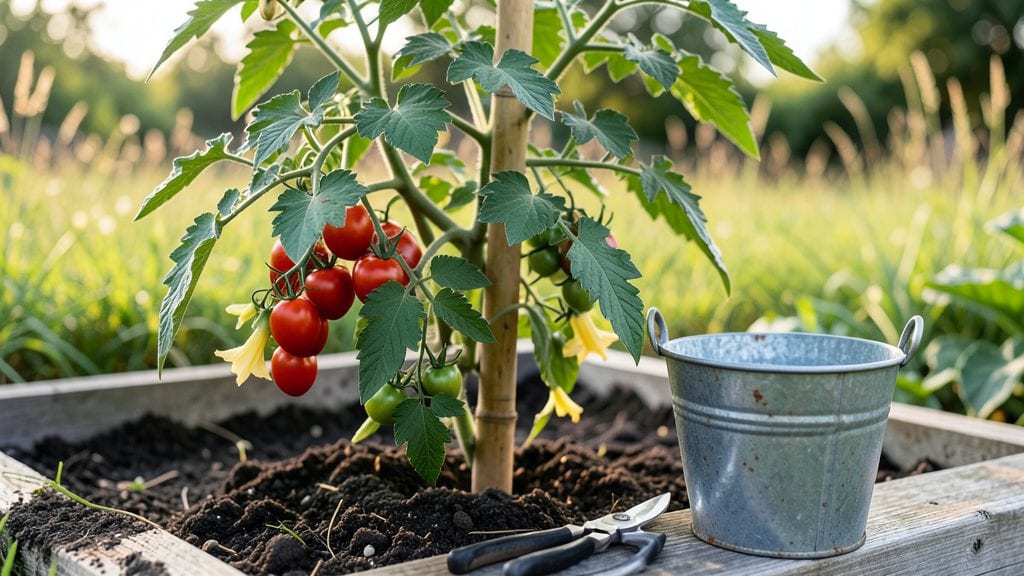
Trimming overgrown tomato plants can double your harvest if you do it right. ✂️ I learned this the hard way after letting my indeterminate plants sprawl into unruly vines that produced fewer tomatoes than a well-pruned bush.
The key is timing—prune suckers when they're pencil-thick, remove dead leaves before disease spreads, and never cut more than one-third of the plant at once.
You only need two tools: clean pruning shears and a small spray bottle of diluted bleach solution for sterilizing cuts. Work on a dry morning when the plants aren't stressed, and always cut just above a leaf node or branch fork.
Determinate varieties need minimal pruning, while indeterminate types benefit from aggressive suckering to direct energy into fruit production.
Within weeks, you'll see thicker stems, more flowers, and fruit that ripens faster. My pruned plants now produce 50% more tomatoes than my unpruned neighbors', and the vines stay manageable enough to tie up without snapping.
The best part? Fewer leaves mean better air circulation, which cuts down on blight problems.
This method works for both backyard gardens and container-grown tomatoes. The only rule is consistency—check plants weekly during the growing season and adjust your pruning as the plant responds. Here's exactly how to do it without stressing your plants (or yourself).
📚 In This Guide
- What you need
- Instructions
- Tips and common mistakes
- Wrapping up and next steps
What you need
- ● Pruning shears or secateurs – Sharp, clean, and sterilized (bypass pruners work best for clean cuts). Quantity: 1 pair.
- ○ Garden gloves – Thick, durable gloves to protect against thorns and dirt. Quantity: 1 pair (optional but highly recommended!).
- ● Disinfectant (rubbing alcohol or bleach solution) – 70% isopropyl alcohol or 1 part bleach to 9 parts water to sterilize tools between cuts. Quantity: Small bottle or spray.
- ● Trash bag or compost bin – For removing pruned branches. Quantity: 1-2 bags (depending on plant size).
- ● Watering can or hose – To hydrate plants before and after pruning. Quantity: 1.
- ● Hand pruners or small scissors – For delicate trimming if main shears are too bulky.
- ● Garden twine or stakes – If you plan to support the plant post-pruning.
- ○ Plant growth hormone (optional) – Like rooting hormone for cuttings you’d like to propagate.
- ● Sunscreen & hat – Because no one wants a sunburn mid-prune!
Step-by-Step guide for pruning overgrown tomato plants
Here's how to tame unruly vines and redirect energy into fruit production—no green thumb required.
✂️ Step 1: Identify and Remove Suckers
Suckers are the small shoots growing in the crotch between the main stem and a branch. These energy vampires drain your plant instead of feeding fruit. Pinch them off cleanly with your fingers or pruners just above the leaf where they emerge. I always start at the base of the plant and work upward—this keeps the main stem strong and prevents overgrowth.
Wait until suckers are about 2-3 inches long before removing them. Smaller ones are easier to spot, but larger ones can be harder to miss. If you accidentally leave one, it’ll grow into a thick, woody stem that competes with your main plant. Think of this as weeding for your tomato—remove the competition early.
✂️ Step 2: Prune Lower Leaves for Airflow
Remove all leaves from the bottom 12-18 inches of the plant. These low-hanging leaves touch the soil, trapping moisture and inviting disease. Use clean pruners to make a sharp cut just above a leaf node (the point where a leaf or branch connects to the stem). This ensures the plant can heal quickly without leaving ragged edges.
Don’t overdo it—leave some foliage higher up to keep the plant photosynthesizing. You’ll know you’ve done enough when sunlight can reach the lower fruit clusters without obstruction. This step is critical for preventing blight, especially in humid climates. If your plant looks crowded, it’s time to prune.
✂️ Step 3: Trim Excess Growth to Focus Energy
Once your plant has reached your trellis or cage height, stop vertical growth by pinching off the topmost leaves. This redirects energy from leaf production to fruit development. For indeterminate tomatoes (the vining types), I prune back the main stem after the first flower cluster to encourage bushier growth. For determinate tomatoes (bush types), minimal pruning is needed—just remove damaged or diseased leaves.
Watch for signs of over-pruning: if the plant looks stressed or stops producing flowers, you’ve gone too far. A good rule of thumb is to leave 3-4 main stems on indeterminate varieties. You’ll see a difference within 1-2 weeks—fewer leaves but bigger, healthier fruit. This is the moment you’ll know your hard work paid off.
⏰ Step 4: Monitor and Maintain Regularly
Pruning isn’t a one-time job. Check your plants weekly for new suckers or overgrowth, especially during warm weather when vines grow fast. I set a reminder on my phone—skipping a week can mean missing a whole cluster of suckers. Always prune in the morning when plants are dry to reduce disease risk.
After each pruning session, give your plants a light watering to help them recover. You’ll notice new growth within 3-5 days, and the remaining leaves will look healthier and greener. This is your plant telling you it’s happy and ready to focus on what matters—producing tomatoes.
Tips & tricks for perfect tomato plant pruning
These simple tricks will help you transform unruly tomato plants into productive fruit factories without sacrificing plant health.
Timing Secret: The weekly check mentioned in Step 4 is non-negotiable during peak growing season. I've learned the hard way that skipping just one week can mean missing entire clusters of suckers that grow rapidly in warm weather. Set a phone reminder for the same day each week—consistency is key for maintaining plant balance. You'll notice the difference in just 1-2 weeks when you see fewer leaves but bigger, healthier fruit clusters.
Tool Tip: Always use clean pruners when removing suckers or lower leaves—this prevents spreading disease between plants. I keep a small bottle of rubbing alcohol handy to wipe down my pruners between cuts. For suckers, pinch them off with your fingers if they're small (2-3 inches), but use pruners for larger growth to avoid tearing the stem. The cleaner cut, the faster your plant recovers.
Visual Cue: When pruning lower leaves in Step 2, aim to remove all foliage below the 12-18 inch mark. A good test is to look at your plant from the side—you should be able to see sunlight reaching the lower fruit clusters without obstruction. This sunlight exposure is what prevents blight by keeping leaves dry. If your plant has a lot of foliage touching the soil, it's definitely time to prune.
Growth Strategy: For indeterminate varieties, the 3-4 main stem rule in Step 3 works wonders for directing energy to fruit production. I've found that after removing the top growth, new branches often sprout within 3-5 days. These new shoots will produce more flowers and fruit than the original vertical growth. Think of it as giving your plant a haircut—it might look different, but the result is stronger, more productive growth.
Pro Tips for Trim Overgrown Tomato Plants
- These simple tricks will help you transform unruly tomato plants into productive fruit factories without sacrificing plant health.
- Timing Secret: The weekly check mentioned in Step 4 is non-negotiable during peak growing season.
- Tool Tip: Always use clean pruners when removing suckers or lower leaves—this prevents spreading disease between plants.
Frequently asked questions
Got questions about trimming your tomato plants? You’re not alone! Here are some of the most common concerns—plus clear, actionable answers to keep your plants thriving.
When is the best time to trim overgrown tomato plants?
Trim your tomato plants early and often—start when they’re 12–18 inches tall. For indeterminate varieties (like cherry tomatoes), prune regularly throughout the growing season to encourage airflow and fruit production. Determinate tomatoes (bush types) need minimal pruning, but remove suckers before they grow larger than a pencil.
What happens if I don’t prune my tomato plants at all?
Skipping pruning won’t kill your plants, but you’ll likely see fewer, smaller fruits. Overgrown foliage blocks sunlight, traps moisture (leading to disease), and diverts energy away from fruit production. Plus, crowded plants are harder to harvest—and pests love hiding in dense leaves!
Can I prune tomato plants too much?
Yes! Over-pruning removes too many leaves, reducing the plant’s ability to photosynthesize and support fruit. For indeterminate tomatoes, never trim more than ⅓ of the foliage at once. Focus on removing only suckers, diseased leaves, or branches blocking airflow. If your plant looks stressed, pause pruning for a week.
Should I prune tomato plants in hot or cold weather?
Avoid pruning during extreme heat (above 90°F) or cold snaps (below 50°F). These conditions stress plants, slowing recovery. Opt for mild, overcast days to minimize shock. Early morning is ideal—your plants will have the rest of the day to heal.
What can I do with the pruned tomato plant branches?
Don’t toss those clippings! Use them to:
- Mulch around the base of your plants to retain moisture.
- Compost them (if disease-free) for nutrient-rich soil later.
- Propagate new plants—root suckers in water or soil to grow more tomatoes!
- Feed worms (if you’re into vermicomposting).
Pro tip: If branches show signs of disease (like spots or wilting), discard them in the trash—not the compost—to avoid spreading pathogens.
Wrapping up and next steps
Trimming your overgrown tomato plants isn’t just about tidying up—it’s your secret weapon for a bigger, healthier harvest! 🌱 By mastering the art of pruning, you’ll boost airflow, prevent disease, and redirect energy to fruit production. Remember, consistency is key: check your plants weekly and adjust as they grow.
Now that you’re armed with the know-how, roll up your sleeves and get pruning! Watch those vines transform into productive powerhouses, and soon, you’ll be swimming in juicy tomatoes. Pro tip: Snap a photo of your progress—it’s the best way to track your plant’s amazing growth journey!