
Pruning
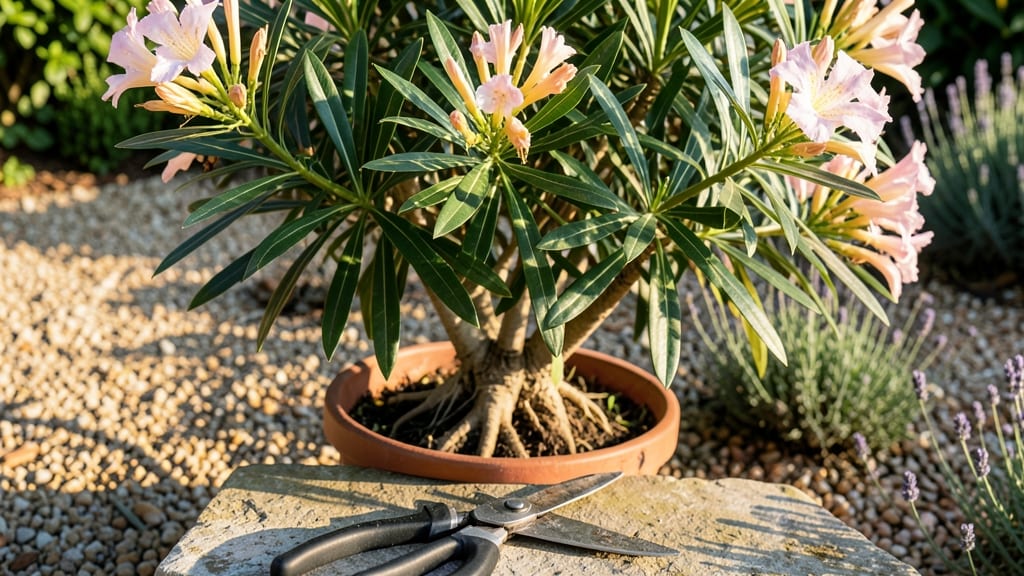
Pruning oleander plants the right way turns those scraggly stems into glossy, toxin-free showstoppers that bloom like crazy. 🌿 I’ve learned the hard way—skipping pruning leads to weak, leggy bushes with sparse flowers, but a few strategic cuts in late winter or early spring transforms them into dense, vibrant shrubs.
The key is timing, technique, and knowing where to cut without triggering that nasty sap reaction.
You’ll need sharp pruning shears (dull blades tear stems and invite disease), rubber gloves for safety, and a bucket for clippings—oleander sap is toxic, so handle it carefully. Focus on removing dead or crossing branches first, then shape by cutting just above a leaf node or bud.
Avoid heavy pruning in summer; it stresses the plant and attracts pests. Think of it like giving your oleander a fresh haircut—clean lines, not choppy layers.
After trimming, you’ll see thicker foliage and more blooms by midsummer, with fewer gaps where pests hide. The plant redirects energy to new growth instead of struggling with overcrowded branches.
Just don’t overdo it—oleanders bounce back, but they’ll sulk if you strip them bare. A little patience, and you’ll have a bush that’s both beautiful and low-maintenance.
Works for both container and in-ground oleanders, and the same rules apply whether you’re dealing with a 3-foot shrub or a towering 10-foot specimen. The goal is balance: enough structure to support those iconic flowers, but not so rigid it looks like a topiary gone wrong.
Let’s get those shears ready!
📚 In This Guide
- What you need
- Instructions
- Tips and common mistakes
- Wrapping up and next steps
What you need
- ● Pruning shears: Sharp, bypass-style shears (4- to 6-inch blades) for clean cuts on smaller stems. Dull blades crush stems, inviting disease!
- ● Lopping shears: For thicker branches (1- to 2-inch diameter). Look for extended handles (20-24 inches) for leverage.
- ● Pruning saw: A curved-tooth saw (8-10 inches) for stubborn, woody branches. Avoid straight-tooth saws—they tear wood.
- ● Gloves: Heavy-duty, nitrile-coated gloves (gardening or mechanic’s grade) to protect against sap and toxins.
- ● Safety glasses: To shield your eyes from debris and sap splatters.
- ● Disinfectant: 70% isopropyl alcohol or a bleach solution (1 part bleach to 9 parts water) to sterilize tools between cuts.
- ● Trash bags: Heavy-duty, leak-proof bags (20-gallon size) for disposing of pruned branches. Never compost oleander clippings—they’re toxic!
- ● Ladder: A stable, extendable ladder (16-20 feet) if your oleander is tall. Use non-slip feet and a spotter for safety.
- ● Hand pruners: Compact shears for precision trimming on delicate stems.
- ● Rubbing alcohol wipes: For quick tool cleanups mid-pruning.
- ○ Plant sealant: Pruning paste to coat larger cuts and prevent sap oozing (optional but reduces dieback).
- ● Work apron: To keep your clothes clean from sap and debris.
Step-by-Step instructions for oleander plant pruning
Here’s the straightforward method I use to keep oleanders thriving while controlling their size and shape.
✂️ Step 1: Time Your Pruning for Best Results
Prune oleanders in early spring—just as new growth begins—when the plant is entering its active season. This timing ensures you encourage fresh, vigorous shoots while avoiding winter dormancy stress. If you must prune later, do it before mid-summer to prevent stunted growth from late-season cuts. Oleanders bloom on old wood, so avoid heavy pruning in fall or winter—you’ll risk losing next year’s flowers.
Check for bud swell along the stems—this is your signal that the plant is waking up. Wait until you see 1-2 inches of new growth before cutting, or you’ll delay flowering. If you’re pruning for shape, lightly trim back leggy branches anytime during the growing season, but always leave at least 6-8 inches of stem to support future blooms.
✂️ Step 2: Gather the Right Tools and Safety Gear
Use clean, sharp pruning shears—oleander sap can gum up dull blades, making cuts messy and uneven. Disinfect your tools with rubbing alcohol before and after pruning to prevent disease spread. Wear gloves (oleander sap is toxic) and long sleeves to avoid skin contact with the milky sap, which can cause irritation. I also keep a bucket of soapy water nearby to clean tools between cuts.
Never use hedge trimmers for detailed pruning—they tear stems instead of making clean cuts. For larger branches over ½ inch thick, switch to loppers to avoid damaging the plant. Always cut at a 45-degree angle just above a leaf node or bud to encourage healthy regrowth. Oleanders respond well to precise cuts, so take your time—rushing leads to jagged wounds that heal poorly.
✂️ Step 3: Prune for Shape and Health
Start by removing dead, diseased, or crossing branches—these compete for energy and invite pests. Cut back to the nearest healthy growth point or outward-facing bud. For shaping, focus on open centers—oleanders grow bushier when light penetrates the interior. Trim back the outermost growth first to maintain a rounded form, then fill in gaps by pruning inward branches.
If your oleander is overgrown, never cut more than ⅓ of the plant at once. Heavy pruning stresses oleanders, and they may take years to recover. Instead, spread cuts over 2-3 seasons—this keeps the plant healthy while gradually reshaping it. After pruning, step back and check for balance. Uneven growth often means you’ve cut too much on one side.
✂️ Step 4: Clean Up and Encourage Regrowth
Remove all pruned branches and debris from the area—oleander clippings are toxic and can harm pets or children. Seal larger cuts with pruning sealant (optional but helpful in humid climates) to prevent disease entry. Water the plant deeply after pruning to help it recover, but avoid soaking the soil—oleanders prefer well-draining conditions and hate soggy roots.
Within 4-6 weeks, you’ll see new growth emerging from the pruned areas. Fertilize lightly with a balanced, slow-release fertilizer to support regrowth, but skip heavy feeding—oleanders thrive in lean soil. If you pruned for flowers, expect blooms to return 6-8 weeks later, though the first flush may be smaller if you cut back heavily.
⏰ Step 5: Maintain Through the Season
Monitor the plant for new shoots—these are your priority for future pruning. Pinch back leggy growth in late spring to encourage bushier growth. Avoid pruning in fall or winter, as the plant needs time to harden off before dormancy. If you notice yellowing leaves, it’s usually a sign of overwatering or poor drainage—oleanders are drought-tolerant once established.
Repeat the shaping process in early spring each year to keep the plant compact and flowering. With consistent pruning, your oleander will stay dense, toxin-free, and blooming beautifully for years. The key is patience—oleanders respond best to gradual, thoughtful cuts rather than drastic makeovers.
Tips & tricks for perfect oleander plant pruning
Here's what I've learned from years of shaping oleanders without stressing the plant or sacrificing those stunning blooms.
Timing is Everything: That early spring timing in Step 1 is non-negotiable for flowering. I've seen oleanders skip blooming entirely when pruned too late in summer - the buds need that winter dormancy period to develop properly. Watch for those 1-2 inches of new growth as your green light, not just calendar dates. In colder climates, wait until after the last frost when nighttime temps stay above 50°F consistently.
Tool Precision Matters: Step 2 emphasizes sharp tools, but I'll add this critical detail: always wipe your blades with rubbing alcohol between cuts on different branches. Oleander sap contains cardiac glycosides that can transfer between plants, potentially causing stress or disease. I keep a small spray bottle of 70% isopropyl alcohol handy for quick disinfection - it's faster than washing and dries instantly. For stubborn branches, I use my loppers but make the cut just outside the branch collar where the stem meets the trunk.
Pruning Strategy for Busy Gardeners: If you can't commit to the full 2-3 season reshaping in Step 3, focus on just one area each year. I've pruned oleanders in stages for years - one side one spring, the opposite side the next, then the top the following year. This maintains balance while giving the plant time to recover. Mark your pruning zones with colored stakes if needed, but always leave those 6-8 inches of stem to support next year's blooms.
Post-Pruning Care Secret: The 4-6 week regrowth window in Step 4 is your chance to really boost new growth. After pruning, I mix a tablespoon of fish emulsion (10-10-10) into my watering can and give the plant a light feeding. The fish emulsion provides quick nitrogen for leaf growth while the balanced fertilizer supports overall health. Just avoid heavy feeding - oleanders are drought-tolerant but hate soggy roots, so always let the top 2 inches of soil dry between waterings.
Pro Tips for Oleander Plant Pruning
- Here's what I've learned from years of shaping oleanders without stressing the plant or sacrificing those stunning blooms.
- Timing is Everything: That early spring timing in Step 1 is non-negotiable for flowering.
- Tool Precision Matters: Step 2 emphasizes sharp tools, but I'll add this critical detail: always wipe your blades with rubbing alcohol between cuts on different branches.
Frequently asked questions
Got questions about oleander pruning?
You’re not alone! Here are answers to the most common concerns—from timing to safety—so you can trim with confidence.
When is the best time to prune oleander?
The ideal time is late winter or early spring (before new growth begins) to avoid stimulating pests or disease. Light pruning can also happen in summer to shape the plant, but avoid heavy cuts after July—it may reduce winter hardiness in cooler climates.
Can I prune oleander in fall?
Fall pruning is not recommended because it encourages tender new growth that won’t survive winter frosts. If you must trim, do it lightly in early fall (September) for minor shaping, but avoid major cuts. Oleanders are evergreens—wait until spring for heavy pruning!
How do I prune oleander safely?
Oleander sap is highly toxic—wear gloves, long sleeves, and safety goggles to avoid skin contact or inhalation. Never burn pruned branches (toxic fumes!)—compost them instead. Wash tools and hands thoroughly with soap and water afterward.
What’s the best way to prune oleander for bushier growth?
For a fuller shape, cut back 1/3 of the oldest stems to the ground in early spring. Then, trim just above a leaf node (where leaves meet the stem) at a 45° angle to encourage branching. Avoid "heading back" (cutting mid-stem)—it can lead to leggy growth.
What if my oleander doesn’t bloom after pruning?
Lack of blooms often means over-pruning or nutrient deficiency. Try these fixes:
- Prune less aggressively next time—oleanders bloom on old wood.
- Fertilize with a balanced, low-nitrogen formula (e.g., 6-6-6) in spring.
- Ensure it gets 6+ hours of sun—shady spots reduce flowering.
Pro Tip:
Label pruned branches with the date—oleanders grow fast! Tracking growth helps you adjust pruning intensity yearly. Pro tip: Mulch after pruning to retain moisture and reduce stress.
Wrapping up and next steps
Pruning your oleander isn’t just about keeping it tidy—it’s your secret weapon for healthier, more vibrant growth while managing its natural toxins safely.
By following seasonal timing, the right techniques, and safety precautions, you’ll transform your plant into a stunning, low-maintenance focal point. Now’s the perfect time to grab those shears and get pruning!
Ready to take the next step? Plan your pruning schedule based on your climate and start small—confidence grows with every snip! 🌿 For extra guidance, bookmark this guide or share it with fellow gardening enthusiasts.