
Watering
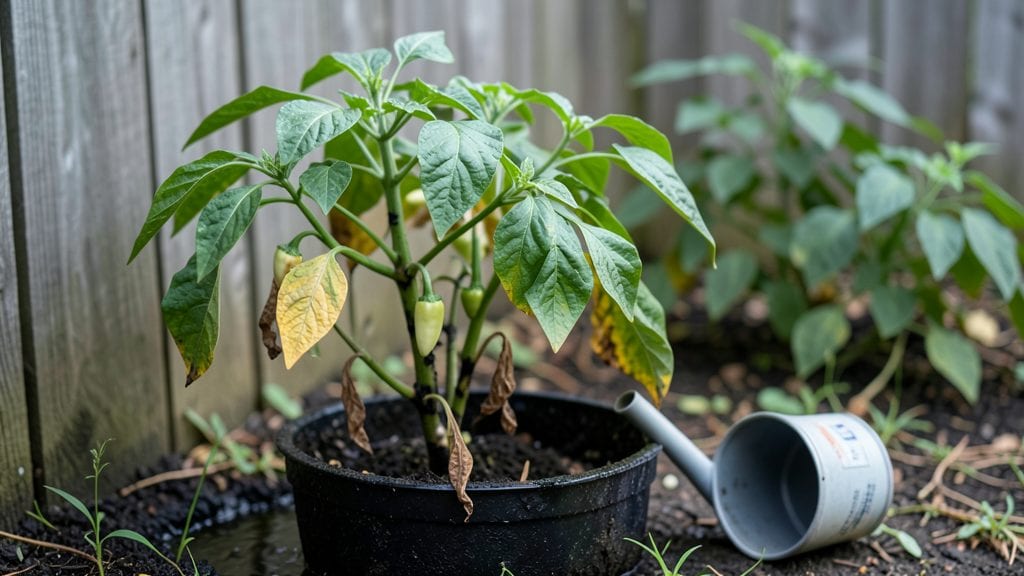
An overwatered chilli plant can go from thriving to drooping in days—we’ve all been there. 🌱 The first time we saw seedlings sprout from seeds we planted ourselves, we also learned the hard way that soggy soil is the silent killer of peppers.
Yellowing leaves, mushy stems, and that dreaded mold smell? Those are your plant’s SOS signals. But here’s the good news: with the right moves, you can nurse it back to health and save your harvest.
Most gardeners overdo it because they think peppers need constant moisture—wrong. Chillies hate soggy roots, and once the soil stays wet for more than a day, root rot takes over.
The fix starts with checking drainage: if water pools in the pot or tray after 10 minutes, you’ve got a problem. We switch to terracotta pots and add perlite to sandy soil to keep roots breathing.
And yes, we check soil moisture with a finger before any watering decision—damp but not soggy is the goal.
By the time you’re done, your chilli will be standing tall again with fresh green leaves and new growth. The key is patience: prune any blackened stems, repot if the roots are mushy, and cut back on watering to every 3-4 days.
Within two weeks, you’ll see the plant perk up—just like our first rescued plant did last summer. The best part? You’ll spot the signs sooner next time.
This works for backyard gardens, containers, and even raised beds—just adjust the watering schedule for your climate. Once you’ve mastered the recovery, prevention becomes second nature. Trust us, your future peppers will thank you.
Why it happens
When your chilli plant starts looking sad—yellowing leaves, wilting stems, or even root rot—it’s often a sign of overwatering. But why does this happen in the first place? Let’s break down the science behind it so you can avoid future mishaps.
🌧️ Overzealous Watering Habits
Chilli plants are tropical but not water-loving. Unlike succulents or cacti, they still need well-draining soil, but too much water disrupts their natural balance. When you water on a strict schedule—like every day or even every other day—you’re forcing excess moisture into the soil.
This prevents oxygen from reaching the roots, a process called anoxia. Without oxygen, roots suffocate, leading to:
- Root rot: Fungal infections like Phytophthora or Pythium thrive in soggy conditions, breaking down root tissue.
- Nutrient lockout: Waterlogged soil flushes out essential nutrients (like nitrogen, phosphorus, and potassium) that roots need to absorb.
- Weakened structure: Roots become mushy and unable to support the plant, causing leaves to droop.
Pro tip: 💡 Stick your finger 1-2 inches into the soil—if it’s damp, wait. If it’s dry, water deeply but only until the top 2-3 inches are moist.
🏺 Poor Drainage In Containers
Chilli plants in pots are especially vulnerable because containers trap moisture. If your pot lacks drainage holes or you’re using heavy, compacted soil (like clay-heavy mixes), water pools at the bottom instead of draining away.
This creates a permanent wet zone where roots can’t escape saturation. Even "self-watering" pots can backfire if not monitored.
Watch for these red flags:
- Water sitting in the saucer hours after watering.
- Soil that stays clumpy and doesn’t crumble when dry.
- Leaves turning yellow from the bottom up (a classic rot sign).
Fix it: 🔧 Repot in a container with drainage holes and amend soil with perlite or coconut coir (20-30%) to improve aeration.
🌡️ Humidity And Temperature Mismatches
Chilli plants love warmth (70–85°F) but hate humidity extremes. If your plant is in a bathroom with high humidity or a cold greenhouse with poor airflow, excess moisture lingers on leaves and soil longer. This creates a perfect storm for:
- Fungal spores: Damp leaves become breeding grounds for Botrytis (gray mold) or Alternaria (black spots).
- Evaporative stress: High humidity slows evaporation, keeping soil wetter for days.
- Temperature shock: Cold roots (below 60°F) can’t process water efficiently, leading to edema (blistered leaves).
Solution: ✨ Place a small fan nearby to improve airflow, and avoid watering in the evening when temps drop.
🌱 Wrong Soil Or Fertilizer Choices
Not all soil is created equal. Heavy, nutrient-rich mixes (like garden soil) compact easily, trapping water. Over-fertilizing—especially with high-nitrogen or water-soluble blends—can also burn roots and attract pests that weaken the plant’s defenses. Even "organic" fertilizers can contribute to moisture retention if overused.
Signs your soil is the culprit:
- Crusty soil surface after watering (indicates poor structure).
- Salty white residue on the soil (from fertilizer buildup).
- Slow recovery after watering (roots are "drowned" in nutrients).
Action step: 🌡️ Test your soil’s pH (ideal: 6.0–7.0 for chillies) and switch to a light, airy mix with 50% potting soil, 30% perlite, and 20% compost.
Reviving Your Chilli Plant Fast
If your chilli plant is looking sad from too much water, don’t panic—it’s often an easy fix! The key is to act quickly, adjust your watering habits, and give your plant the right care to bounce back.
Below, we’ll break down the most common signs of overwatering and the exact steps to revive your chilli plant, plus tips to keep it thriving long-term.
If your chilli plant’s leaves are turning yellow or mushy, root rot may be the culprit. This happens when roots sit in soggy soil for too long, cutting off oxygen and inviting fungal infections.
🔥 Step 1: Stop Watering Immediately
- Why? More water = more rot. Let the soil dry out completely before watering again.
- How? Skip your next watering session and wait until the top 1–2 inches of soil feel dry to the touch.
🍳 Step 2: Check the Roots (Gently!)
- Remove the plant from its pot and gently shake off excess soil.
- Inspect the roots:
- Healthy roots are firm and white.
- Rotten roots are brown, mushy, or smell foul.
- Trim the bad bits with clean scissors, cutting away any soft or discolored roots.
👨🍳 Step 3: Repot in Fresh, Dry Soil
- Use a clean pot (sterilize with a 10% bleach solution if reusing).
- Add fresh potting mix—choose one labeled for vegetables or peppers with good drainage.
- Plant at the same depth and water lightly only after 3–5 days.
🥘 Step 4: Boost Recovery with Care
- Move to bright, indirect light (no harsh sun yet—it stresses weak plants).
- Hold off on fertilizers for 2–3 weeks to avoid burning recovering roots.
- Mist leaves lightly (if humidity is low) to help with transpiration.
If your chilli plant is wilting but the leaves aren’t mushy or yellow, it’s likely just thirsty from overwatering. The soil may still be damp, but the roots need air to recover.
⏰ Step 1: Let the Soil Dry Out Completely
- Test with your finger: Stick it 1–2 inches into the soil. If it’s damp, wait.
- Use a moisture meter if you’re unsure—aim for the "dry" range before watering again.
🔪 Step 2: Improve Drainage Fast
- Add perlite or sand to the soil (1 part perlite to 3 parts soil) to help water drain faster.
- Elevate the pot by placing it on a saucer with pebbles or a cake stand to prevent water pooling.
🌡️ Step 3: Water Only When Needed
- Water deeply but infrequently: Soak the soil until water runs out the drainage holes, then wait until the top 2 inches are dry.
- Water in the morning so excess moisture evaporates during the day.
Once your plant is back on track, follow these habits to avoid overwatering again:
🎯 Choose the Right Pot
- Use terracotta or fabric pots—they dry out faster than plastic.
- Ensure drainage holes are present (no exceptions!).
🌡️ Monitor Soil Moisture Like a Pro
- Stick your finger in the soil before watering—if it’s damp, wait.
- Weigh your pot: If it feels light, it’s time to water.
✨ Adjust for Your Climate
- Hot/dry climates? Water more frequently but deeply.
- Cool/humid areas? Water less often—chilli plants hate soggy conditions.
🔥 Fertilize Wisely
- Wait until new growth appears before adding fertilizer (overwatering + fertilizer = root burn).
- Use a balanced NPK (10-10-10) or low-nitrogen formula for peppers.
With these steps, your chilli plant should perk up in 1–2 weeks—just give it time and consistent care. And remember, better to underwater slightly than drown your peppers! 🌶️
Frequently asked questions
How do I tell if my chilli plant is overwatered vs. underwatered?
Check the soil first—stick your finger 1-2 inches deep. Overwatered plants have soggy soil that stays damp for days, yellowing leaves (especially bottom ones), and drooping stems. Underwatered plants have dry, cracked soil, crispy leaf edges, and a wilted but firm appearance. Pro tip: Lift the pot—if it feels heavy, it’s likely overwatered.
Can I save a chilli plant with root rot?
Yes, but act fast! Remove the plant, trim all mushy brown roots with clean scissors, and repot in fresh, dry soil with perlite or vermiculite (30% mix). Skip watering for 3-5 days and place in bright, indirect light. Within 2 weeks, you should see new growth—if not, the plant may be too far gone.
Why does my chilli plant keep getting overwatered even when I stop?
Poor drainage is the #1 culprit. If your pot lacks holes or uses heavy soil, water pools at the roots. Fix it by repotting in a container with drainage holes and amending soil with 20-30% perlite or coconut coir. Also, avoid saucers that trap water—use pebble trays instead. Test your setup: After watering, if water still sits in the saucer after 10 minutes, your drainage needs work.
Is it okay to water my chilli plant every day in hot weather?
No—chillies hate daily watering! In heat, water deeply every 2-3 days instead. The key is letting the top 2-3 inches of soil dry out between waterings. Use your finger to check moisture, and water in the morning so excess evaporates. Overwatering in heat actually stresses roots more than drought does.
How long does it take for an overwatered chilli plant to recover?
With proper care, you’ll see improvement in 7-14 days. Focus on drying the soil, improving drainage, and avoiding fertilizer until new growth appears. Severe cases (like advanced root rot) may take 3-4 weeks to fully recover. Patience is key—don’t rush by watering again too soon! Track progress by monitoring leaf color and stem firmness.