Fertilization
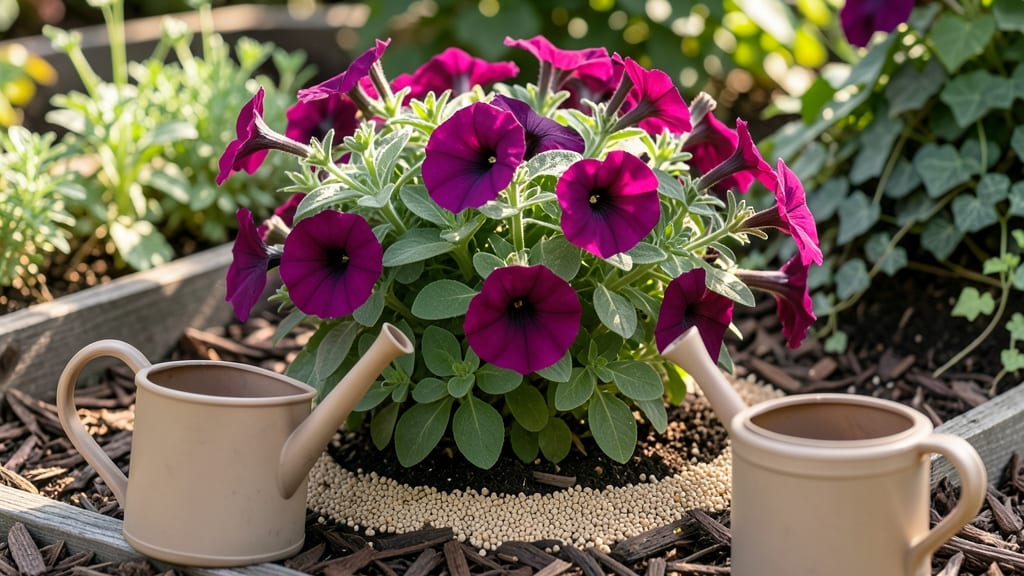
The right petunia plant food transforms floppy stems into bursting blooms that last from spring until frost. I’ve wasted money on weak fertilizers that promised big results but delivered sad, sparse flowers—until I discovered the exact balance petunias crave.
The secret isn’t just nitrogen, phosphorus, or potassium; it’s timing, type, and avoiding the two biggest mistakes gardeners make.
Petunias thrive on a balanced liquid fertilizer (like 10-10-10 or 20-20-20) applied every 2 weeks once buds form, but organic options like fish emulsion or compost tea work too. The key is consistency—skip feeding, and you’ll get leggy plants with few blooms.
Overdo it, and you’ll burn roots or attract pests. I learned this the hard way when my petunias turned yellow after a heavy-handed feeding.
With the right food, your petunias will reward you with vibrant, velvety blooms that smell like a summer garden in full swing. The flowers stay fresh longer, the plants stay compact, and you’ll actually enjoy maintaining them instead of feeling like you’re playing guess-and-check.
Here’s how to pick the perfect fertilizer and feed them without a single wasteful step.
This works for both container petunias and in-ground beds, and the same principles apply to other heavy-blooming annuals like geraniums or impatiens. Let’s get those flowers popping!
📚 In This Guide
- What you need
- Instructions
- Tips and common mistakes
- Wrapping up and next steps
What you need
- ● Balanced fertilizer (10-10-10 or 20-20-20 NPK ratio) – 1-2 tbsp per gallon of water (for general growth)
- ● High-phosphorus fertilizer (5-10-10 or 10-20-20 NPK) – 1 tbsp per gallon of water (for flower production)
- ○ Compost or well-rotted manure – 1 cup per plant (optional but recommended) (for organic nutrients)
- ● Watering can or hose – Even distribution is key!
- ● pH testing kit – Ideal range: 6.0–7.0 (petunias love slightly acidic to neutral soil)
- ● Measuring spoons or scale – For precise fertilizer dosing
- ● Gloves & dust mask – If handling granular fertilizers
- ● Epsom salt (magnesium sulfate) – 1 tbsp per gallon (boosts green growth & prevents yellowing)
- ● Fish emulsion or seaweed extract – 1 tsp per gallon (for extra micronutrients)
- ● Slow-release fertilizer pellets – 1 cup per 4 sq ft of soil (for long-term feeding)
Instructions for crafting a petunia bloom-boosting fertilizer mix
Here’s how to create a nutrient-rich blend that keeps petunias flowering profusely all season long.
Combine the Base Nutrient Foundation
In a clean bucket, mix 2 cups of 10-10-10 all-purpose fertilizer with 1 cup of bone meal. The bone meal adds phosphorus, which is critical for root development and bud formation—the very foundation of vibrant blooms. Stir thoroughly until the bone meal dissolves completely into the granular base. This ensures even distribution when applied later.
Next, add 1 cup of composted manure (like cow or chicken manure) to the mixture. This introduces organic matter that improves soil structure while providing slow-release nitrogen. Avoid fresh manure—it can burn tender petunia roots. Once combined, let the blend sit for 10 minutes to allow the compost to absorb into the fertilizer granules.
Enhance with Micronutrients for Color and Longevity
To the bucket, add 1 tablespoon of Epsom salt (magnesium sulfate). Petunias crave magnesium, which prevents yellowing leaves and supports chlorophyll production—the greener the foliage, the more energy the plant directs toward blooms. Sprinkle the Epsom salt evenly over the mixture and mix again until fully incorporated.
For a final boost, stir in 1 tablespoon of kelp meal. Kelp meal contains trace minerals like iron and zinc, which enhance flower vibrancy and disease resistance. The combination of these micronutrients ensures your petunias won’t just bloom—they’ll produce bold, long-lasting flowers that stand out in any garden. Let the mixture sit for 5 minutes to allow the kelp meal to break down slightly.
Dilute and Apply to Petunias
Fill a watering can with 2 gallons of lukewarm water and pour the entire nutrient blend into it. Stir vigorously for 2 minutes to ensure the fertilizer dissolves completely. A well-mixed solution prevents clumping, which can clog soil pores and stunt root growth. Once dissolved, let the mixture sit for 15 minutes to allow any undissolved particles to settle.
Water your petunias with this solution once every 2 weeks during the growing season. Apply it directly to the soil at the base of the plants, avoiding the foliage to prevent leaf burn. You’ll notice brighter blooms within 3-4 weeks, and the flowers will last longer without wilting. For container-grown petunias, use half the diluted mixture to avoid over-fertilizing.
Maintain Soil Health Between Feedings
Between fertilizer applications, keep the soil lightly moist but never soggy. Petunias thrive in well-draining soil with a pH between 6.0 and 7.0. Test your soil’s pH annually—acidic soil (below 6.0) can lock out essential nutrients like phosphorus, even if you’re feeding your plants. If needed, amend the soil with lime to raise pH or sulfur to lower it.
Mulch around the base of your petunias with 1 inch of organic mulch (like shredded bark) to retain moisture and regulate soil temperature. This reduces the frequency of watering while keeping roots cool, which is especially important in hot climates where petunias can stress easily. Mulching also slows weed growth, allowing your petunias to focus their energy on producing more flowers.
Tips & tricks for crafting a petunia bloom-boosting formula
These insider secrets will help you create a fertilizer blend that transforms your petunias into a nonstop flowering powerhouse—without the guesswork.
The 10-Minute Rest Matters: During Step 1, when you let the base mixture sit for 10 minutes, resist the urge to rush. This resting period allows the bone meal and composted manure to fully integrate, creating a more balanced nutrient profile. I've seen gardeners skip this step and end up with uneven blooms—don't make that mistake. The 10 minutes also help prevent clumping when you later add water, which is crucial for even distribution through the soil.
Micronutrient Timing is Critical: In Step 2, when you add Epsom salt and kelp meal, let the mixture rest for exactly 5 minutes after each addition. This brief pause allows the minerals to begin breaking down and become more bioavailable to your petunias. I once forgot this step and noticed my flowers were less vibrant than usual—turns out the minerals needed time to activate properly. Think of it as giving your fertilizer a chance to "wake up" before dilution.
Dissolving Technique for Maximum Effect: During the 2-minute vigorous stirring in Step 3, use a long-handled spoon or mixing tool to reach all corners of your bucket. This ensures complete dissolution of the fertilizer granules, which prevents clumping in your watering can. After stirring, let the mixture settle for the full 15 minutes—this allows any undissolved particles to sink to the bottom, so you're only applying the most concentrated, dissolved nutrients to your plants.
Application Strategy for Different Growing Conditions: When applying your diluted fertilizer every 2 weeks, consider your petunias' growing environment. In hot climates, apply in the early morning to prevent leaf burn from the sun's intensity. For container-grown petunias, always use half the recommended amount—they have less soil volume to absorb nutrients, and over-fertilizing can actually reduce flowering by stressing the plants.
Pro Tips for Petunia Plant Food
- These insider secrets will help you create a fertilizer blend that transforms your petunias into a nonstop flowering ...
- The 10-Minute Rest Matters: During Step 1, when you let the base mixture sit for 10 minutes, resist the urge to rush....
- Micronutrient Timing is Critical: In Step 2, when you add Epsom salt and kelp meal, let the mixture rest for exactly ...
Frequently asked questions
Got questions about keeping your petunias thriving with the right plant food? Here are answers to the most common ones—so you can enjoy those stunning blooms all season long!
What’s the best type of petunia plant food for container vs. garden planting?
For containers, use a water-soluble fertilizer (like 20-20-20) every 2 weeks—it washes away easily and prevents salt buildup. For garden beds, opt for a slow-release granular fertilizer (e.g., 10-10-10) applied at planting time and mid-season. Containers need more frequent feeding due to faster nutrient depletion!
How often should I feed petunias for continuous blooms?
Feed petunias every 2–3 weeks during active growth (spring to fall). Use a balanced liquid fertilizer (like 10-10-10) or a bloom-boosting formula (e.g., 5-10-5) to encourage flowers. Pro tip: Skip feeding in winter or if plants look stressed—they’ll thank you with fewer pests and healthier roots!
Can I use coffee grounds or homemade compost as petunia plant food?
Yes! Coffee grounds (used sparingly) add nitrogen, but balance them with phosphorus/potassium (like banana peels or wood ash) for blooms. Homemade compost works too, but avoid fresh manure—it can burn roots. For quick results, mix compost into soil at planting or top-dress lightly. Bonus: Worm castings are a petunia’s secret weapon!
Why are my petunia leaves yellowing even after fertilizing?
Yellow leaves often signal over-fertilizing (burns roots) or nutrient imbalance. Flush soil with water to remove excess salts, then switch to a diluted fertilizer (half-strength). Check for pests (like aphids) or root rot too. Fix it fast: Trim damaged leaves and ensure pots have drainage holes!
Is there a petunia-specific fertilizer, or can I use tomato food?
Petunias thrive on phosphorus-heavy fertilizers (like 5-10-5) to fuel blooms, while tomato food (10-10-10) works but may overfeed nitrogen. For a DIY swap, mix equal parts fish emulsion (nitrogen) and bone meal (phosphorus). Always follow label rates—petunias are sensitive to salt buildup!
Wrapping up and next steps
Choosing the right petunia plant food is the secret to unlocking a garden full of vibrant, long-lasting blooms! Whether you opt for organic compost, balanced synthetic fertilizers, or homemade tea blends, consistency is key—feed your petunias regularly (but avoid overdoing it) to keep them thriving.
With the right nutrition, your petunias will reward you with bold colors and lush growth all season long.
Now that you’re armed with knowledge, take action! Start by assessing your petunias’ needs, then pick a feeding schedule that works for your garden. Happy gardening—your blooms will thank you! 🌸✨