
Transplanting
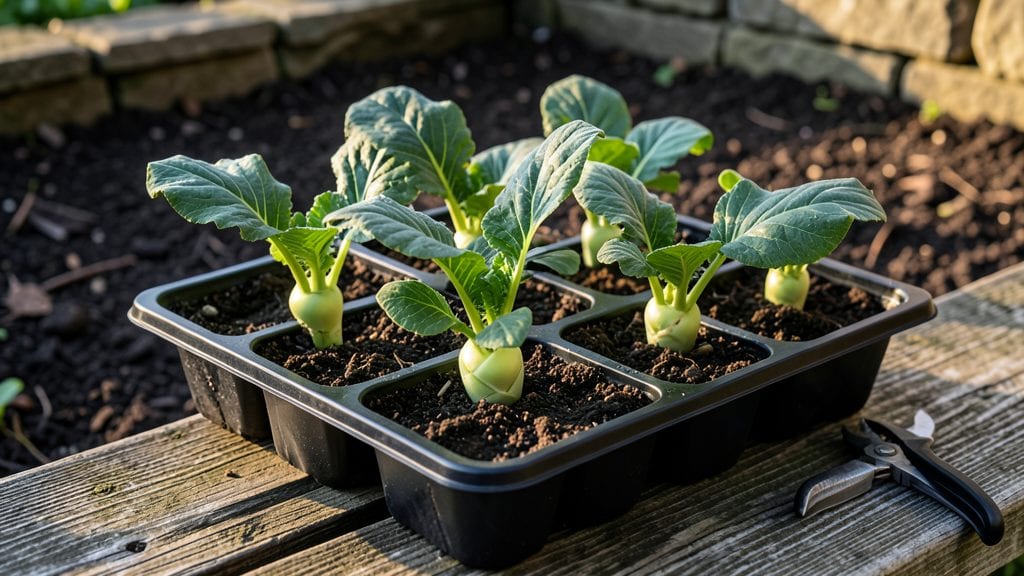
Planting kohlrabi seedlings the right way means the difference between dinner-table bulbs and sad, stunted plants. I’ve learned that cramming them too close leads to bitter, misshapen harvests—so spacing matters more than most gardeners realize.
The secret isn’t just inches between plants; it’s giving roots room to swell without competing for nutrients.
Start with loose, well-draining soil amended with compost—kohlrabi hates soggy feet. Plant seedlings about 12-18 inches apart in rows spaced 18-24 inches apart, just deep enough to bury the first true leaves.
Water gently but thoroughly after planting, and keep the soil consistently moist (not soggy) for the first 2-3 weeks—this is when roots establish or fail. A morning watering schedule works best in my zone 5 garden.
Within 3-4 weeks, you’ll see those distinctive bulbous stems forming—thick, crisp, and ready to harvest. The key is watching for 3-4 inch diameter bulbs; any larger and they turn woody. Kohlrabi thrives in full sun but appreciates afternoon shade in hot climates, so adjust based on your summer temps.
Early success comes from patience—don’t rush the harvest, or you’ll miss the sweetest window.
Transplanting works better than direct sowing for most gardeners, especially in cooler climates where seedlings get a head start indoors. Just wait until nighttime temps stay above 45°F before moving them outside.
If you’re in a warm zone, you can direct-sow in early spring or fall—just protect young plants from slugs, which adore tender kohlrabi leaves. The payoff? A harvest that’s shockingly lush and foolproof once you nail the spacing.
📚 In This Guide
- What you need
- Instructions
- Tips and common mistakes
- Wrapping up and next steps
What you need
- ● Kohlrabi seedlings: 12–24 healthy, 4–6 week-old seedlings (check spacing needs below!)
- ● Garden bed or containers: Well-draining soil (pH 6.0–6.8)
- ● Minimum 18–24 inches of depth for bulbs to develop (or deep pots for container growing)
- ● Fertilizer: Balanced organic fertilizer (e.g., 5-5-5) or compost (mix 1–2 cups per planting hole)
- ● Watering can or hose: With a gentle spray nozzle for post-planting hydration
- ● Gloves & trowel: For easy handling and digging
- ● Mulch: Straw or shredded leaves to retain moisture and suppress weeds
- ● Row covers: Lightweight fabric to protect seedlings from pests (e.g., flea beetles)
- ● Plant markers: Labels to track varieties (kohlrabi comes in purple, white, and green!)
- ○ Epsom salt: 1 tbsp per gallon of water for magnesium boost (optional foliar spray)
Instructions for planting kohlrabi seedlings: spaced perfectly for bulbous success
Here's how I ensure kohlrabi bulbs grow plump and uniform—no crowding, no competition.
Prepare the Soil for Optimal Growth
Kohlrabi thrives in loose, fertile soil with excellent drainage. Before planting, loosen the top 12 inches of soil with a garden fork, breaking up any compacted layers. Amend the bed with 2-3 inches of well-aged compost mixed into the top 6 inches—this ensures roots spread easily without resistance. Kohlrabi is sensitive to heavy clay; if your soil drains poorly, add a 50/50 mix of sand or perlite to improve aeration.
Test the pH before planting. Kohlrabi prefers a slightly acidic to neutral range of 6.0-7.0. If your soil runs higher, work in sulfur a month before planting to adjust. I like to spread a thin layer of composted cow manure over the bed first—it adds nitrogen without burning young roots. Rake it in lightly so it doesn’t clump.
Space Seedlings for Maximum Bulb Development
Proper spacing is critical—crowded kohlrabi produces small, misshapen bulbs. Plant seedlings 18-24 inches apart in rows 24 inches apart. This gives each plant enough room to swell without competing for nutrients. Dig holes just deep enough to cover the roots, then place each seedling gently, ensuring the soil line matches the pot’s original level.
If you’re transplanting from flats, harden off seedlings first by exposing them to outdoor conditions for 5-7 days before planting. Kohlrabi hates transplant shock. Water the holes deeply before inserting seedlings—this prevents air pockets that can strangle roots. After planting, firm the soil around each stem with your fingers to eliminate gaps.
Water and Mulch for Consistent Moisture
Water immediately after planting to settle the soil and remove air pockets. Kohlrabi bulbs develop best with consistent moisture—never let the soil dry out completely, but avoid soggy conditions. Water deeply once a week, applying 1 inch of water at each session. Early morning is ideal to prevent fungal diseases from lingering dampness.
Apply a 2-3 inch layer of straw mulch around each plant, keeping it 2 inches away from the stem to prevent rot. Mulch conserves moisture and keeps roots cool, which is especially important in hot climates. Replenish mulch as it decomposes—this ensures the soil stays evenly moist without fluctuations that cause cracking or uneven bulb growth.
Thin and Monitor for Bulb Formation
Check seedlings 7-10 days after planting for signs of stress or uneven growth. If any plants look weak or leggy, thin them immediately by snipping at soil level—this prevents competition and directs energy to the remaining seedlings. Kohlrabi bulbs begin forming when the stems reach 3-4 inches in diameter, usually 4-6 weeks after transplanting. At this stage, reduce water slightly to encourage firmness.
Watch for yellowing leaves—this can signal overwatering or nutrient deficiency. If leaves yellow between veins, it’s likely iron chlorosis; apply a chelated iron supplement to correct it. Harvest bulbs when they reach 2-3 inches in diameter before they become woody. The sooner you harvest, the sweeter and more tender they’ll be.
Tips & tricks for perfectly spaced kohlrabi growth
These practical insights will help you avoid common pitfalls and cultivate kohlrabi bulbs that are uniformly plump and delicious.
Soil Preparation Insight: When loosening the top 12 inches of soil in Step 1, pay special attention to any compacted layers—these can restrict root growth. I find using a garden fork works best, but if your soil is particularly dense, consider renting a tiller for the initial prep work. The goal is to create a loose, almost fluffy texture that allows roots to expand freely. For clay-heavy soils, add the sand-perlite mix in thin layers while loosening, then mix thoroughly to prevent clumping.
Seedling Spacing Secret: The 18-24 inch spacing in Step 2 might seem generous, but trust me on this—crowded kohlrabi will produce small, misshapen bulbs with tough skins. For larger gardens, you can plant in staggered rows (like a brick pattern) to maximize space while maintaining proper spacing. When transplanting, gently squeeze the soil around each stem after planting to eliminate any air pockets that could cause stress. This is especially important if you're working with seedlings from flats.
Watering Technique: The once-weekly, 1-inch watering guideline in Step 3 works well, but timing matters just as much as quantity. I've found that watering in the early morning gives the plants time to dry slightly before evening, reducing fungal risks. For container-grown kohlrabi, you may need to water more frequently—check soil moisture daily by sticking your finger about 1 inch deep. If it feels dry, it's time to water.
Mulching Strategy: That 2-3 inch straw mulch in Step 3 serves multiple purposes beyond moisture retention. It also helps regulate soil temperature, which is crucial for kohlrabi development. In particularly hot climates, consider adding a second layer of mulch after the initial 2-3 inches once the plants are established. Just remember to keep it 2 inches away from stems to prevent rot—this is where many gardeners make mistakes when trying to maximize moisture conservation.
Pro Tips for Planting Kohlrabi Seedlings
- These practical insights will help you avoid common pitfalls and cultivate kohlrabi bulbs that are uniformly plump and delicious.
- Soil Preparation Insight: When loosening the top 12 inches of soil in Step 1, pay special attention to any compacted layers—these can restrict root growth.
- Seedling Spacing Secret: The 18-24 inch spacing in Step 2 might seem generous, but trust me on this—crowded kohlrabi will produce small, misshapen bulbs with tough skins.
Frequently asked questions
Got questions about planting kohlrabi seedlings?
You’re not alone! Here are answers to the most common queries to help you grow a thriving crop with confidence.
How far apart should I space kohlrabi seedlings when transplanting?
Space seedlings 12–18 inches apart in rows that are 24–30 inches apart. This gives their bulbs room to swell without competing. If growing for greens, you can plant them closer (10–12 inches apart), but bulbs need extra space for optimal size.
When is the best time to transplant kohlrabi seedlings outdoors?
Transplant seedlings 2–3 weeks after the last frost when soil is at least 50°F (10°C). Kohlrabi thrives in cool weather—avoid planting in hot summers (above 75°F/24°C), as it can cause bitter bulbs. For fall harvests, plant seedlings 8–10 weeks before your first frost.
Can I plant kohlrabi seedlings in containers or do they need a garden bed?
Yes! Kohlrabi grows well in containers at least 12 inches deep and wide, especially if you’re growing smaller varieties like ‘Purple Vienna.’ Use well-draining potting mix and ensure the container gets 6+ hours of sunlight daily. Just avoid overcrowding—stick to 1 plant per 5–6 inches of container space.
What pests or diseases should I watch for after transplanting kohlrabi seedlings?
Keep an eye out for cabbage worms, aphids, and flea beetles, which love kohlrabi leaves. Use row covers or neem oil for prevention. For diseases, avoid overhead watering to prevent downy mildew. If you notice yellowing leaves, rotate crops next season to break disease cycles.
What can I plant near kohlrabi seedlings to improve growth?
Kohlrabi benefits from companion planting with:
- Herbs like dill or thyme (repel pests)
- Beets or lettuce (share similar growing conditions)
- Avoid planting near tomatoes or strawberries—they compete for nutrients.
Wrapping up and next steps
Planting kohlrabi seedlings is a rewarding way to grow this versatile vegetable, and with the right spacing and care, you’ll enjoy a bountiful harvest! Remember, proper spacing (12–18 inches apart) and well-draining soil are key to those plump, delicious bulbs you crave.
Whether you’re a seasoned gardener or just starting, your efforts will pay off with crisp, flavorful kohlrabi ready for salads, roasting, or snacking.
Now that you’re ready to plant, take the next step—mark your calendar for harvest time (typically 50–60 days) and start planning how you’ll enjoy your homegrown goodness! 🌱✨