
Aphids
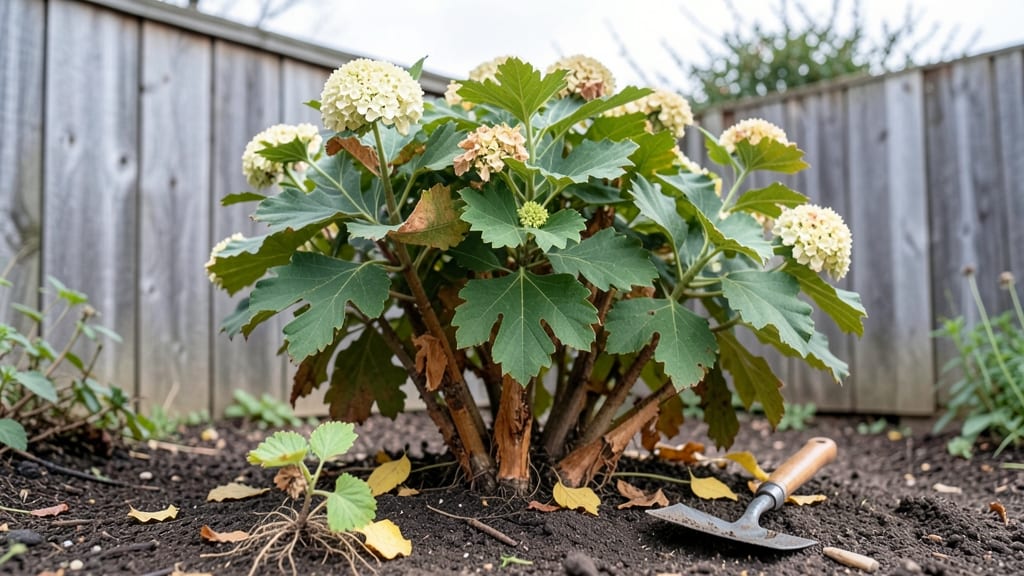
Planting oakleaf hydrangea transforms your yard into a four-season showpiece with almost no upkeep. 🌿 I’ve watched mine go from a bare spot to a lush, ever-changing backdrop that outshines most annuals—and the secret isn’t complicated.
These hydrangeas thrive in partial shade, handle tough soil, and reward you with burgundy fall foliage that lasts until winter. The key is getting them in the ground right, and once they’re settled, they’ll spread into that effortless, natural beauty you didn’t know you needed.
The best time to plant is early spring or fall, when temperatures are mild and the roots can establish without competing with summer heat. You’ll need a spot with morning sun and afternoon shade—think dappled light under mature trees—and soil that drains well but stays moist.
Amend heavy clay with compost or peat moss, and avoid soggy spots where roots could rot. Space plants 5 to 6 feet apart to give them room to grow into their full, rounded shape without crowding.
Most nurseries sell them in 1-gallon pots, so you’ll know you’re getting a sturdy starter.
Once planted, water deeply to settle the soil, then mulch around the base to keep moisture in and weeds out. The first year is all about patience—your hydrangea will focus on root growth, not flashy blooms.
By year two, you’ll see those iconic cone-shaped flowers in summer, followed by foliage that shifts from green to deep burgundy as fall arrives. The best part? You’ll prune them only once, in late winter, to shape them up for the next season.
No deadheading, no constant trimming—just let them do their thing.
Here’s where most gardeners trip up: overwatering or planting in full sun, which scorches the leaves. Oakleaf hydrangeas are tough, but they’ll reward you best when treated like the low-maintenance stars they are.
Whether you’re filling a shady corner or lining a walkway, these plants deliver year-round interest with almost no effort. Ready to see what all the fuss is about?
📚 In This Guide
- What you need
- Instructions
- Tips and common mistakes
- Wrapping up and next steps
What you need
- ● Oakleaf hydrangea plants: 1–3 plants (depending on desired spacing; 3–5 ft apart for full coverage)
- ● Choose between: Bare-root (dormant season, cheaper, but requires immediate planting)
- ● Container-grown (year-round planting, easier to handle)
- ● Well-draining soil: Amend with 2–3 inches of compost or peat moss (oakleaf hydrangeas thrive in acidic to neutral soil (pH 5.5–6.5)).
- ● Mulch: 2–3 inches of pine bark or shredded leaves (retains moisture and mimics natural woodland conditions).
- ● Gardening gloves (to protect hands from thorns and soil)
- ● Trowel or spade (for digging holes; 12–18 inches wide and deep)
- ○ Garden fork (optional, for loosening compacted soil)
- ● Watering can or hose with a gentle spray nozzle (hydrangeas love moisture!)
- ○ pH testing kit (optional but helpful for adjusting soil acidity)
- ● Pruning shears (for trimming dead or overgrown stems post-planting)
- ● Sunlight: Partial shade (morning sun + afternoon shade) is ideal, especially in hot climates.
- ● Water source: Consistent access to water (oakleaf hydrangeas need 1–1.5 inches of water weekly).
- ● Spacing: Plant 3–5 feet apart for mature size (they can grow up to 6–8 ft tall/wide!).
- ● Timing: Best planting seasons: Early spring or fall (avoid extreme heat or frost).
- ● Container-grown plants: Can be planted year-round (with proper care).
- ● Slow-release fertilizer (balanced 10-10-10 or acidic-loving plant food)
- ● Epsom salt (for boosting magnesium and enhancing flower color)
- ● Plant supports (stakes or cages) (for young plants in windy areas)
- ● Drip irrigation system (for automated watering)
Step-by-Step instructions for planting oakleaf hydrangea
Transform your garden into a lush, seasonal masterpiece with this stunning shrub—it’s easier than you think!
🌱 Step 1: Choose the Perfect Planting Spot
Oakleaf hydrangeas thrive in partial shade to full sun, but they’ll reward you with the most vibrant foliage in morning sun with afternoon shade—especially in hotter climates. Look for a spot with well-draining soil where the roots won’t sit in soggy conditions. I always test the soil by digging a 12-inch hole—if water pools at the bottom, amend with compost or organic matter to improve drainage.
This shrub loves a little room to spread, so plant it at least 6 feet away from other shrubs or structures. The mature size is 6-8 feet tall and wide, so plan accordingly. If you’re planting multiple hydrangeas, space them 8-10 feet apart for a stunning, layered effect.
🪴 Step 2: Prepare the Soil and Plant
Dig a hole twice as wide as the root ball but only as deep—planting too deep can suffocate the roots. Loosen the sides of the hole with a shovel or hands to encourage root spread. Mix the native soil with compost or peat moss (about 1 part compost to 3 parts soil) to give your hydrangea a nutrient-rich start.
Gently remove the hydrangea from its container and place it in the hole so the top of the root ball sits level with the surrounding soil. Fill in around the roots with the amended soil, pressing lightly to remove air pockets. Water deeply to settle the soil and eliminate gaps.
💧 Step 3: Water and Mulch for Success
After planting, water the hydrangea deeply for 10-15 minutes to ensure the roots make full contact with the soil. Oakleaf hydrangeas are drought-tolerant once established, but young plants need consistent moisture—water 2-3 times per week during the first growing season, especially if rainfall is light. You’ll know it’s getting enough water when the top inch of soil feels slightly damp but not soggy.
Spread a 2-3 inch layer of mulch (like shredded bark or pine straw) around the base, keeping it 3 inches away from the stem to prevent rot. Mulch helps retain moisture, regulate soil temperature, and suppress weeds—just refresh it annually as it breaks down. Avoid piling mulch too high, or it can smother the roots.
☀️ Step 4: Provide Care for Year-Round Beauty
Oakleaf hydrangeas are low-maintenance stars, but they do best with balanced fertilizer in early spring. Use a slow-release, all-purpose fertilizer (like 10-10-10) at half-strength to avoid burning the roots. Water well after applying to help distribute the nutrients. You’ll see richer foliage and more vibrant blooms with just this simple feeding.
Prune lightly in late winter or early spring to shape the shrub and remove any dead or crossing branches. I like to trim back old wood by about a third to encourage new growth. Unlike some hydrangeas, oakleaf varieties don’t need heavy pruning—they reward patience with stunning fall foliage and winter interest from their exfoliating bark.
⏰ Step 5: Enjoy Year-Round Interest
Here’s the magic: Oakleaf hydrangeas deliver four-season appeal with minimal effort. In spring, you’ll get showy blooms, followed by bold fall foliage that rivals maple trees. Even in winter, the peeling bark adds texture and warmth to the garden. Just keep an eye out for powdery mildew—a common issue in humid climates—and treat with neem oil or fungicide if you spot white spots on the leaves.
With this easy-care shrub, you’ll spend less time pruning and more time admiring its lush, ever-changing beauty. Plant one now, and you’ll have a garden centerpiece that keeps giving for decades!
Tips & tricks for perfect oakleaf hydrangea planting
These game-changing tips will help you create a thriving oakleaf hydrangea that delivers stunning foliage all year with minimal effort!
Soil Prep Secret: In Step 2, when mixing your native soil with compost, I recommend adding a handful of slow-release organic fertilizer to the hole. This gives your hydrangea an extra nutrient boost right from planting—think of it as a head start for those vibrant leaves. The 1:3 compost-to-soil ratio is perfect, but don't skimp on the compost quality.
Watering Wisdom: That 10-15 minute deep watering in Step 3 is crucial, but timing matters too. Water in the early morning to let the roots absorb moisture before the heat of the day. I've found that using a soaker hose for this initial watering helps ensure even distribution without disturbing the soil. The goal is to get water down to those roots without creating surface runoff.
Mulch Mastery: For the 2-3 inch mulch layer in Step 3, I prefer pine straw over wood chips because it breaks down more slowly and stays in place better. Keep that mulch 3 inches away from the stem to prevent rot, but don't be afraid to go slightly thicker (up to 4 inches) in very hot climates. This extra layer helps regulate soil temperature and keeps moisture locked in during dry spells.
Pruning Pro Tip: When you trim back old wood by about a third in Step 4, look for branches that are thinner than a pencil—these are the ones to remove completely. I always make my cuts just above a leaf node or outward-facing bud to encourage healthy new growth. And here's a little secret: the more you resist the urge to prune heavily, the more dramatic your fall foliage will be!
Pro Tips for Planting Oakleaf Hydrangea
- These game-changing tips will help you create a thriving oakleaf hydrangea that delivers stunning foliage all year with minimal effort!
- Soil Prep Secret: In Step 2, when mixing your native soil with compost, I recommend adding a handful of slow-release organic fertilizer to the hole.
- Watering Wisdom: That 10-15 minute deep watering in Step 3 is crucial, but timing matters too.
Frequently asked questions
When is the best time to plant oakleaf hydrangeas?
The ideal planting window is early spring (after the last frost) or fall (4-6 weeks before the first frost). This gives roots time to establish before extreme temperatures. Avoid planting in summer heat or winter’s freeze—both stress young plants.
How long does it take for oakleaf hydrangeas to bloom?
With proper care, expect first blooms in 2–3 years for container-grown plants and 1–2 years for bare-root varieties. Patience pays off—mature plants reward you with stunning summer-to-fall flowers plus year-round burgundy foliage!
Can I plant oakleaf hydrangeas in full sun?
While they tolerate partial shade (morning sun + afternoon shade), full sun can scorch leaves in hot climates. In cooler regions (Zones 5–9), they handle 3–6 hours of direct sun daily. Always prioritize afternoon shade to preserve their iconic foliage color.
Why aren’t my oakleaf hydrangea leaves changing color in fall?
Lack of color? Check these fixes:
- Sunlight: Move to more shade if in full sun.
- Water: Drought stress dulls foliage—water deeply 1–2x/week.
- Soil pH: Test for acidity (ideal: 5.0–6.0); amend with sulfur if needed.
- Fertilizer: Over-fertilizing reduces fall color—use low-phosphorus options.
What’s a good alternative if oakleaf hydrangeas are too large for my space?
Consider these compact hydrangea varieties:
- ‘Little Lime’ (H. paniculata): Lemon-lime blooms, 3–4 ft tall.
- ‘Endless Summer’ (H. macrophylla): Reblooms, 3–5 ft tall.
- ‘Annabelle’ (H. arborescens): White blooms, 3–5 ft tall, drought-tolerant.
Wrapping up and next steps
Planting an oakleaf hydrangea is a rewarding way to transform your garden into a lush, low-maintenance paradise with stunning year-round foliage! 🌿 With the right location, soil prep, and minimal pruning, you’ll enjoy vibrant blooms and rich fall colors with ease.
Whether you’re a seasoned gardener or just starting out, this versatile shrub makes gardening effortless—and even more beautiful.
Ready to get growing? Grab your gloves, pick a sunny spot, and plant your oakleaf hydrangea today! Once established, it’ll thrive with minimal fuss, giving you months of color and joy—so why wait? 🌸